

If you are interested in birds, you have probably heard the terms “New World” and “Old World” that describe the species’ range and geographic origin.
In short, “New World” refers to the Americas and some related islands, while “Old World” refers to pretty much the rest of the planet’s land mass. The birds living in these areas are known as New World birds and Old World birds.
However, there are issues with this division. On one hand, such a simplified worldview is sometimes useful. On the other hand, it is outdated, with the potential to cause a lot of confusion.
Defining Old World & New World
Old World and New World aren’t scientific categories. We could call these terms cultural or political, but overall, I have to point out that they are pretty Euro-centric. Still, although outdated, they have remained in use for practical reasons.
The Old World refers to continents known before the discovery of the Americas. These include Europe, Africa, and Asia. Thus, a more fit term for the Old World would be Afro-Eurasia. Somewhat counter-intuitively, Australasia (Australia, New Zealand, and the surrounding islands) also go by as part of the “Old World,” predominantly due to geography and south-eastern position.
The New World refers to most of the Western Hemisphere, especially the Americas, plus some Atlantic and Pacific islands. The term “New” comes from the fact that Europeans first became aware of these lands only in the 15th and 16th centuries, during the Age of Exploration.
Why Are These Terms Confusing and Imprecise?
Geologically speaking, the concepts of “Old World” and “New World” got it all wrong. They give the false impression that North America and South America have common (and exclusive) geologic origins and evolutionary history.
The truth is much, much more complex. In reality, this is what happened during the continental drift.
To say it as easily as possible, South America originates from an ancient continent called Gondwana. It was a huge land mass that later separated into Antarctica, South America, Africa, Arabia, Madagascar, the Indian Subcontinent, Australia, and Zealandia (New Zealand with its sunk parts).
On the other hand, the North American core comes from a separate continental entity called Laurentia. Laurentia later connected with other land masses, forming Euramerica, which included significant parts of Europe and Asia.
In the Late Devonian (382.7 to 372.2 million years ago), Gondwana and Euramerica first came into contact, eventually lumping together into the supercontinent Pangea. It formed the late Paleozoic and early Mesozoic eras and was ruled by dinosaurs (aka bird ancestors).
Pangea Split and the Formation of the “New World”
Still, the Pangea couldn’t last forever either. It started splitting in the Jurrasic era. The first phase of separation was between North America and Africa. At this point, North America (Laurentia) was still connected to parts of today’s Europe, thus keeping a land connection with Eurasia for some time.

The second major phase came in the Early Cretaceous (140 Mya), when West Godawana was ripped apart by the opening of the South Atlantic Ocean, dividing South America and Africa. In the same period, India split from Antarctica and Australia, creating the central Indian Ocean in the process.
After this phase, North America finally completely separated from Eurasia. The new land masses slowly started drifting into positions we know today.
This process shows that South America had a lengthy geological connection with Africa and India and North America with Eurasia.
South America Hooks Up With North America – “New World’s” Final Form
After Pangea and Gondwana split up, South America spent millions of years alone as a large island. That allowed for the evolution of completely unique flora and fauna from the original Gondawanian stock (sadly, with most of those unique large animals now extinct).
Finally, three million years ago, South America stopped being single and connected with North America via the newly formed Isthmus of Panama. Panama’s “land bridge” facilitated the Great American Interchange in the late Cenozoic, meaning that many animals migrated from South to North America and vice-versa.
Through this analysis, I wanted to show you that, despite their connection and biological exchange over many million years, North America and South America (and their creatures) also evolved separately during much of the Earth’s geological history.
Gondwana continents have a lot in common, plus they mostly belong to the Equatorial belt, ensuring unique biodiversity traits. Therefore, the “New World” concept can’t explain the entire complexity of life within its range, and we can’t look at it fully independently.
When it comes to birds, the Southern Hemisphere (ex Gondwana) continents share many similarities. For example, we have the New World parrots and the Old World parrots, which live in the Neotropics and the Old World tropics, respectively. However, New World (Neotropic) parrots are in the same family as African parrots!
Likewise, North America shares many similarities with northern parts of Asia and Europe. Together, they form a biome called the Holarctic.
Differences in Species
Although the terms “Old World” and “New World” are outdated in many ways, they are still frequently used to discuss biological organisms. Because, true, there are many specific things about the Americas in terms of biology, and sometimes it’s simpler to refer to them this way.
The “Old” and the “New” worlds share many similarities regarding bird biodiversity, but notable differences also exist.
Birds Unique to the New World
Now, finally, let’s look at birds that are unique to each of our Worlds.
Hummingbirds
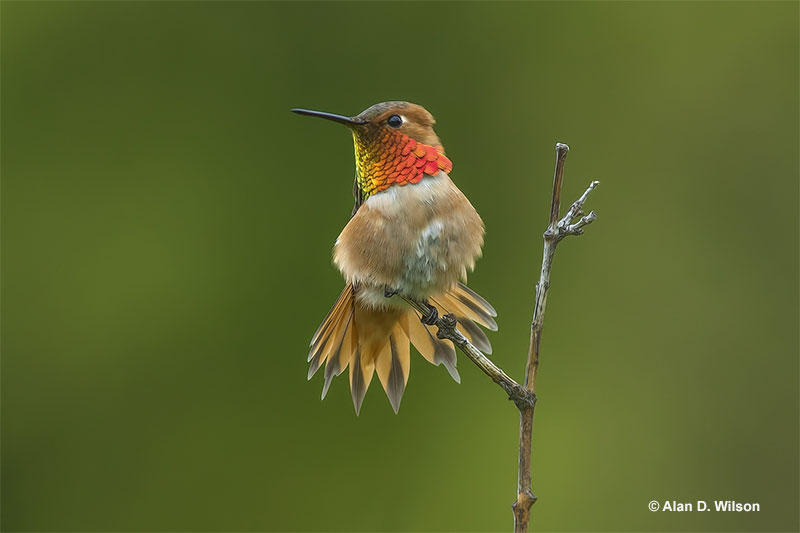
Hummingbirds are the smallest birds in the world, and in some cases, they are no larger than a butterfly or a large bee. They feed on nectar and sport brilliant, metallic colors.
These tiny jewels are exclusive to the Americas, with no similar living birds found anywhere in the Old World. However, this has been true only for the past 30 million years.
The latest research tells us that hummingbirds actually originated from Europe or Asia, where there are 28-34 million years old hummingbird-like fossils! These birds split from their sister taxons – swifts and treeswifts – about 42 million years ago.
Hummingbirds likely reached South America via Asia around 22 million years ago (but their exact route is still a mystery). Here, with an abundance of new ecological niches, their diversity exploded. They made a jump to North America some 10 million years later when the Americas were still separated by several hundred miles of sea.
Toucans
Known for their enormous colorful beaks, the largest in relation to body size, toucans are one of the avian symbols of South American tropical forests, including the Amazon. You can find them throughout Central and South America.
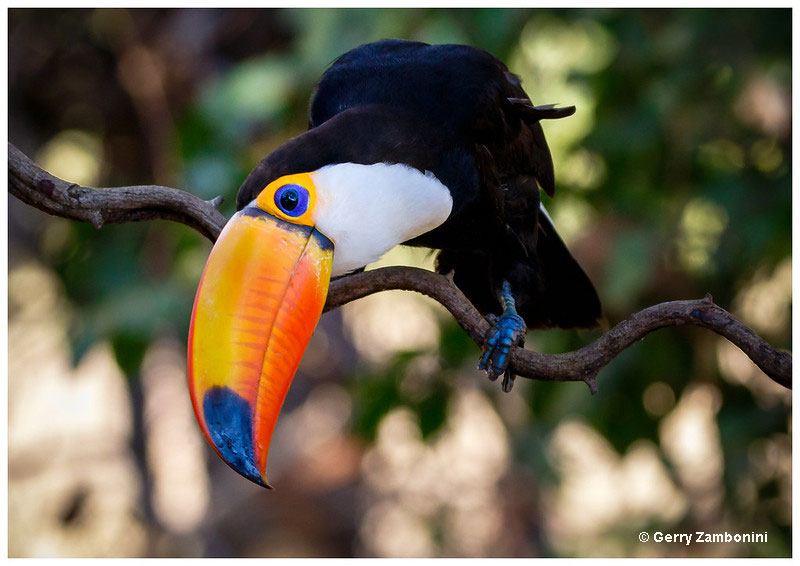
Their bills help them with their specific diet, which consists mostly of forest fruits; thus, toucans have an important role in seed dispersal.
Modern toucans appeared and diversified in South America in the middle to late Miocene era (16-5.3 million years ago). Their closest relatives (and likely ancestors) are the barbets.
Northern Cardinal
Although passerines (perching songbirds) can be found in both worlds, one of the showiest North American birds belongs to a family unique to the Americas: Cardinalidae, or simply cardinals.
Male Nothern Cardinals are famous for their brilliant crimson-red plumage, contrasted with a black mask over the face and eyes. Females are not as vibrant but are still beautiful – with red markings against various shades of olive and brown. Both sexes have the trademark crests and orange bills.
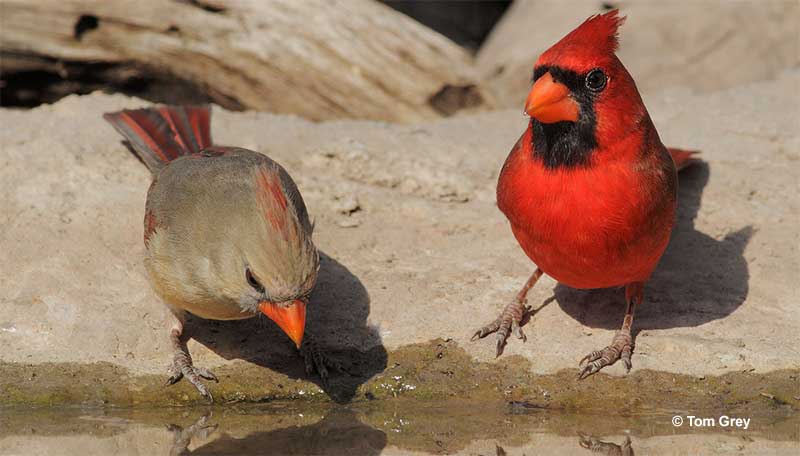
Cardinals are primarily seed-eaters, so they’re often one of the main attractions on backyard bird feeders.
Interestingly, genomic research tells us that cardinals (and also woodpeckers) evolved from an unknown hawk-like ancestor!
Besides cardinals, the cardinal family consists of New World grosbeaks and buntings.
The Dark-eyed Junco
The Dark-Eyed Junco is one of the most widespread North American birds and is endemic to the continent. This sparrow-like passerine is a common sight in northern boreal forests, where it nests during spring and summer and in parks, gardens, and bird feeders during autumn and winter.
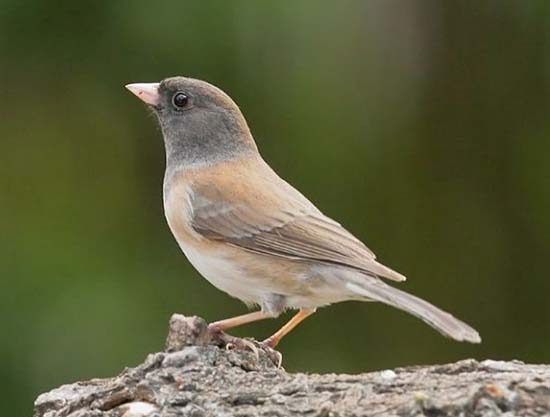
They are often known as “snowbirds” for two reasons: first, they often migrate to their wintering grounds right before the first snow, and second, because of their white bellies.
Junco subtypes (and there are 15 of them, six recognized as subspecies) are unique to the New World. They are only rare vagrants in Western Europe. They are the ecological equivalent of Old World sparrows.
More Exclusively New World Birds
This was just a tiny part of the birds unique to the New World. Many of these endemic families have very similar counterparts in the New World. That is why we have groups such as:
- New World Sparrows (Passerellidae)
- New World Vultures (Cathartidae)
- New World Parrots (Arinae)
- New World Blackbirds (Icteridae)
- New World Warblers (Parulidae)
- New World Barbets (Capitonidae)
There are also more completely unique New World bird families (yes, entire families), like:
- Tanagers (Thraupidae)
- Tinamous (Tinamidae)
- Screamers (Anhimidae)
- Guans, Chachalacas, and Curassows (Cracidae)
- Motmots (Momotidae)
- Todies (Todidae)
- Puffbirds (Bucconidae)
- Jacamars (Galbulidae)
- and more.
Birds Unique to the Old World
Hornbills
Hornbills would be the Old World’s forever-record holders in the “biggest bill competition,” if there was one. The 62 hornbill species of these jungle birds live in subtropical Africa, Asia, and Melanesia. Most species are predominantly fruit-eaters. However, a few species are predominantly carnivorous (which must be frightening for their small prey animals).
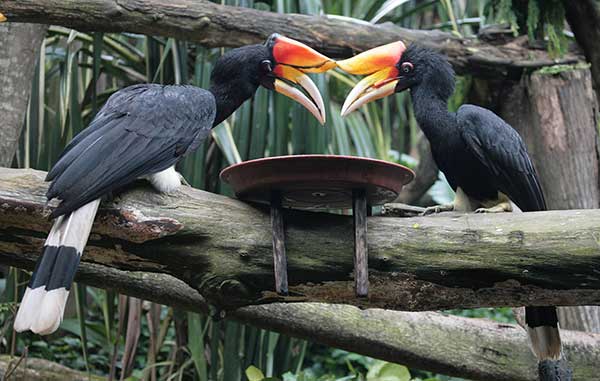
Although hornbills look like they’re closely related to the New World toucans, the two groups are only distantly related. However, they share the same ecological niche – they are both (mostly) fruit-eaters in tropical forests. Thus, they are an example of convergent evolution – a case where unrelated organisms from different parts of the world develop similar or the same traits because of their mirroring environments.
Nightingales
Nightingales are among the most renowned singers of the avian world, extra special because they sing throughout the night. Their glorious nighttime melodies left a deep trace in Eurasian culture, inspiring musicians, poets, writers, and general romantics for millennia.
To add to their charm, nightingale males and females are completely drab in color, which helps them hide themselves well visually (useful when you give out your position continuously by prolonged singing). Thus, nightingales totally have that hidden genius vibe.
Romancing aside, Nightingales belong to the genus Luscinia, which contains only four species—two “true” nightingales and two showier and closely related birds. All four are found only in the Old World—their family belongs to the Old World flycatchers genus.
Fishing Owls
Fishing owls and/or Fish owls are a very special group of owls. They have adapted to hunt fish instead of small mammals and have special features (like completely different claws and bill structures) when compared to other owls. Various riparian areas of Asia are their natural home.
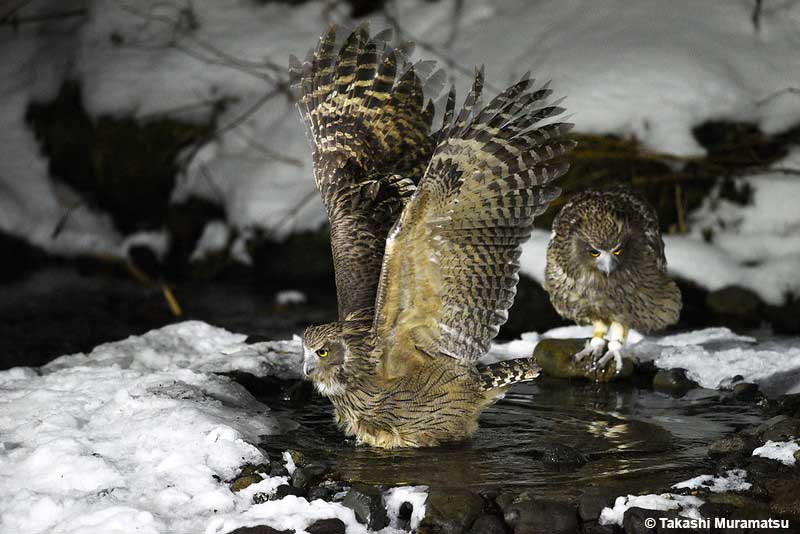
The taxonomy of these owls is a bit confusing. The genus Scotopelia includes “Fishing owls,” with its three species. However, there is also the genus Ketupa, which contains ” Fishing owls,” but also former members of the genus Bubo that scientists added recently. Nevertheless, the two are very closely related and might be merged in the future.
Fish owls include the Blakiston’s Fish Owl (Ketupa Blakiston), the largest existing owl species. This impressive bird is found in riparian forests of Russia’s Far East, China, and Japan.
What About Parrots?
Parrots are native to the global tropics, meaning they are present both in the Old World and the New World tropics (the Neotropics)
Parrots are an ancient bird group that has likely evolved on Gondwana. As the continent split, so did the parrot groups. The reconstruction suggests that the New World parrots, likely Old World parrots, shared the last common ancestor with the Australian cockatoos around 33 million years ago.
Today, we recognize four parrot families:
- Psittaculidae – Old World parrots
- Psittacidae – African parrots and New World parrots
- Cacatuoidea – cockatoos (Australia)
- Strigopidae – New Zealand parrots
We find the greatest parrot diversity in South America and Australasia (most frequently considered a part of the Old World).
Do you notice how New World parrots and African parrots are grouped in the same family despite Africa officially belonging to the Old World? Weird? Well, remember that in Gondwana times, Africa and South America practically merged. As you can see, the terms “New World” and “Old World” have betrayed us again.
In parrot science, they are considered misnomers; however, they do simplify things enough for regular people, so they stick around.
Differences Between New World Parrots and Old World Parrots
Here is a short list of differences between the roughly divided New World and Old World parrots.
| New World Parrots | Old World Parrots | |
| “Superpower” (special trait) | Flamboyant displays, sociality | Mimicry, including human voices; dusty powdery down |
| Natural habitat | Rainforests, tropical forests | Old World Rainforests, but also many of its arid regions. |
| Bill/Beak | Often more slender and pointed bill – suited for fruit and flower consumption | Often thicker with a pronounced upper bill for cracking nuts and seeds. |
An important difference if you keep parrots as pets: Old World parrots are really “dusty.” Their skin produces tiny white particles that fall everywhere in the form of fine white dust – the so-called powder down.
In New World parrots, powder down is more granular and not all over the place. However, Old World parrot powder can make New World parrots severely ill if they’re kept together! Therefore, it is not recommended that they be mixed.
Introduced Species
A number of bird species were introduced to the New World from the Old World. It is possible that some of these Old World thugs would end up in the New World accidentally anyway, but most were brought there purposefully. Here are two famous examples.
European Starlings
The introduction of starlings was a consequence of probably the most romantic idea in the history of ornithology. It is also one that failed spectacularly.
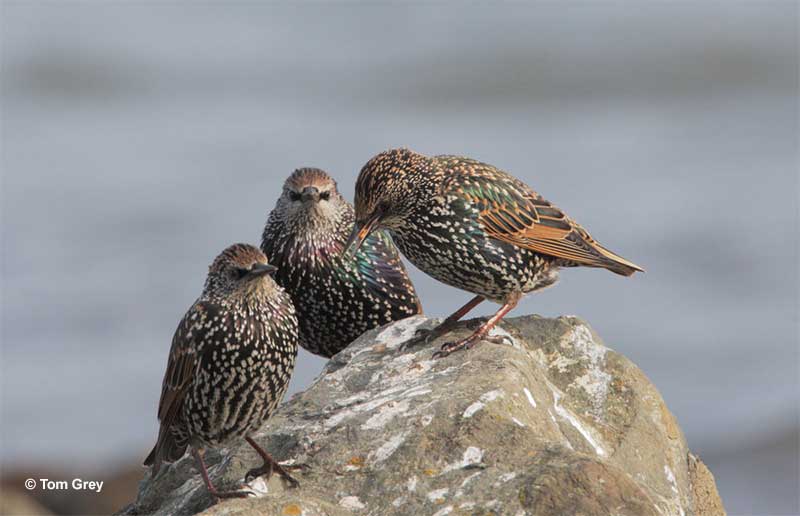
An eccentric Shakespeare admirer named Eugene Schieffelin thought it would be a great idea to introduce some European birds—specifically, all the birds that Shakespeare mentioned in his plays.
In the 1890s, Schieffelin released 60 European Starlings into Central Park. Those 60 birds created an empire, birthing a population of 46 million birds. Unfortunately, they are seen as pests for taking over nesting sites and food sources.
House Sparrow
The House Sparrow, one of the most widely distributed birds, was another intentional introduction, although for more practical reasons. In 1851, they were brought into Brooklyn as a measure of biocontrol—to feast on caterpillars of Linden Moths that damaged New York City’s basswood trees.
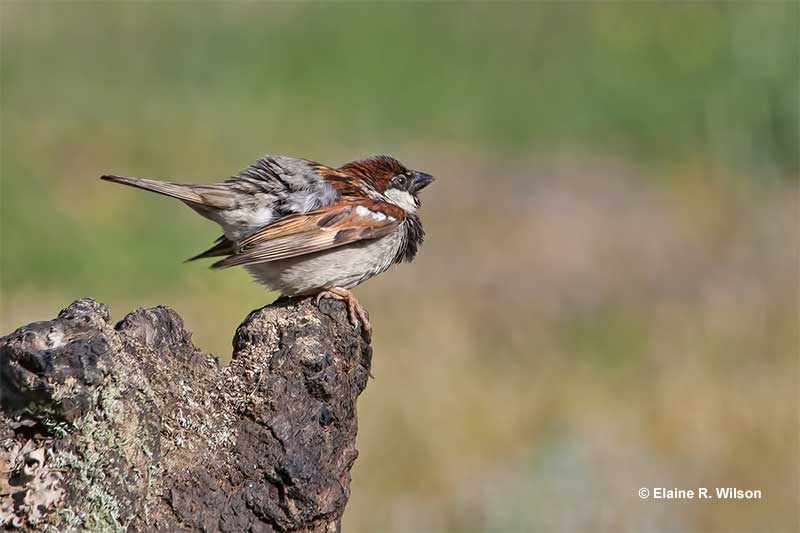
In less than 50 years, they have spread across the entire country. Today, they are one of the most common birds in the United States—their population is more than 7 million.
Other (in)famous birds introduced from the Old World include the Rock Pigeon, Ring-necked Pheasant (also introduced into Europe and Australia from Asia), and Eurasian Collared Dove.
