

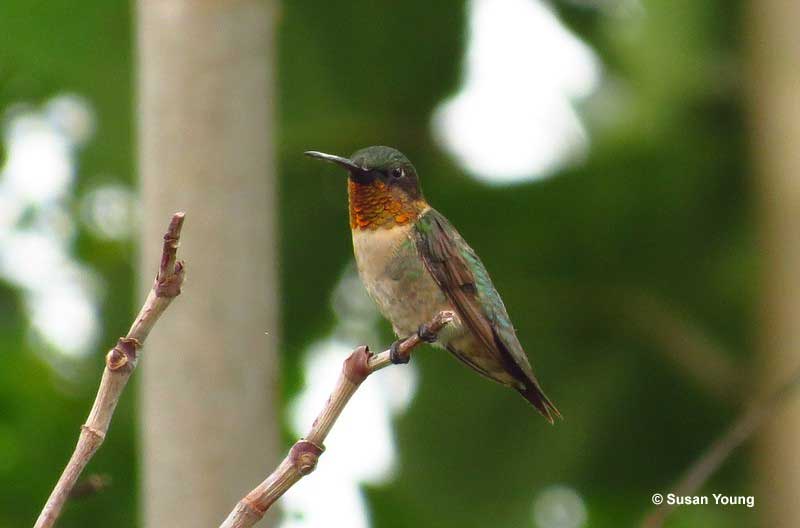
If you’ve ever kept a feeder in Florida, you already know the joy of spotting a Ruby-throated Hummingbird zipping in for a sweet sip.
This is the main hummingbird species that migrates through the state each year.
Their cycle is simple yet remarkable: they arrive, feed, raise young, and then continue on their journey.
And while Ruby-throateds are the stars, birders sometimes catch a glimpse of rarer visitors like Rufous or Black-chinned hummingbirds.
Curious about when they leave?
Let’s walk through their story in Florida.
Why Is the Ruby-throated Hummingbird the Only Species in Florida?
Geography
Florida’s position makes it a natural passageway. With its long coastline, rivers, and lush vegetation, the state provides both food and shelter during migration.
Because Florida extends so far south, it becomes the final stretch of land many hummingbirds see before their long flight across the Gulf of Mexico. This makes the state a crucial fueling spot where birds can rest and gather strength before their nonstop journey.
Migration Routes
Ruby-throateds take advantage of Florida’s direct path to Central and South America.
Many will cross the Gulf of Mexico in a single flight, launching from the southern tip of the state. Others follow the coastline before making their big leap.
These routes are guided by instinct, yet weather patterns can push birds slightly east or west, sometimes leading to unexpected sightings in unusual places.
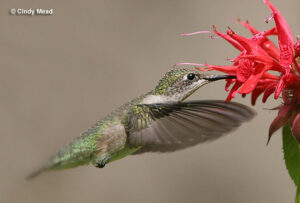
Ruby-throated Hummingbird is the most common hummingbird species in Florida
Climate & Habitat
Warm temperatures and abundant blooms mean plenty of nectar. Florida gardens, parks, and wild spaces create the perfect fueling stations.
Even in early spring or late fall, food sources remain available longer than in many northern states. The subtropical climate ensures a steady supply of insects too, an important protein source for growing chicks and migrating adults.
Vagrants
Every now and then, a rare species strays into Florida.
Rufous hummingbirds are spotted most often, usually in winter months, and they can sometimes overwinter successfully in backyard gardens. Black-chinned or Buff-bellied hummingbirds may also appear, thrilling backyard birders lucky enough to host them.
These rare visitors are often seen at feeders, blending in with Ruby-throateds until a sharp-eyed observer notices differences in plumage or behavior.
The Departure Window in Florida
Ruby-throated Hummingbirds begin leaving Florida in late August, though many linger into September.
By mid-October, the majority are on their way south, though a few stragglers may still be seen at feeders into late October or even early November if the weather is mild.
Their journey doesn’t end in the state, though. Some travel thousands of miles farther, wintering in Mexico, Central America, and even as far as Panama.
Florida serves as both a launch pad and a refueling point, giving them the strength for the long trip ahead.

If you’re lucky enough, you might spot a Rufous Hummingbird.
If you’ve noticed fewer visits to your feeder by late fall, that’s the clearest sign—they’ve already continued their migration. Watching this change from busy summer feeders to quieter autumn ones is a reminder of just how quickly these tiny travelers move through.
What Triggers Their Departure?
Daylight plays a big role. As the hours of sunlight shorten, hummingbirds sense it’s time to move, even if food is still available.
Nectar-rich flowers begin to fade, and insects grow less abundant as the season shifts. Instinct tells them it’s best to head south where resources are more reliable. Weather also nudges them along—cooler nights and the approach of seasonal storms act as reminders.
In some cases, an early cold front can encourage birds to leave a bit ahead of schedule. All these cues work together, ensuring they leave at the right moment to survive their incredible journey. For backyard birders, it can feel sudden, but for the hummingbirds, it’s simply nature’s timing at work.
The Right Time to Take Feeders Down
It can be tempting to bring feeders inside as soon as you notice fewer visits. But patience is key. Keep them up for at least two weeks after your last sighting, just in case a late migrant is passing through. Some hummingbirds fly later than the rest, and others may be delayed by storms or detours.
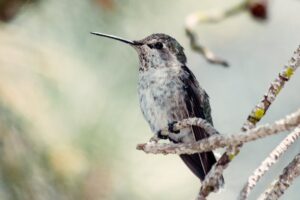
Black-chinned Hummingbird is a rare visitor in Florida
Late migrants or even rare hummingbirds might still stop by, grateful for an easy meal. Leaving your feeders up doesn’t delay their departure; it simply helps any bird passing through on its journey.
A general rule: mid to late October is safe for most areas of Florida, but always let the birds guide your timing. Think of your feeder as a welcome sign—ready just in case a hungry traveler needs it.
A Seasonal Guide for Florida Homes
Watching hummingbirds is a year-round joy in Florida, even if they aren’t always present in large numbers. Here’s a quick look at their seasonal pattern:
| Season | What to Expect in Florida |
|---|---|
| Spring (March–April) | Hummingbirds arrive, searching for food and nesting areas. |
| Summer (May–July) | Peak season for feeding and nesting. Feeder activity is steady. |
| Fall (August–October) | Departure begins; numbers drop off by mid-October. |
| Winter (November–February) | Most Ruby-throateds are gone, though rare vagrant species may appear. |
Final Thoughts on When Hummingbirds Leave Florida
Florida plays an important role in the hummingbird journey. By knowing when they leave, you can better time your feeders and enjoy their presence to the fullest.
Keep watching—your yard just might be part of their incredible story. And if you’re lucky, you may even spot one of those rare winter visitors, a reminder that migration always has its surprises.