


Some of the smallest birds in the world carry some of the longest beaks. These bills may look oversized, but they are perfectly shaped for survival. A long bill can reach nectar deep inside flowers, pull insects from cracks in bark, or probe into tricky places where food hides.
From hummingbirds that hover at blossoms to wrens creeping through brush, small birds with big bills come in many shapes and habitats. Each one has adapted its beak for a unique way of feeding. Here are seventeen species that show just how important — and impressive — a long beak can be.
- 1. Ruby-throated Hummingbird (Archilochus colubris)
- 2. Black-chinned Hummingbird (Archilochus alexandri)
- 3. Bananaquit (Coereba flaveola)
- 4. Purple Sunbird (Cinnyris asiaticus)
- 5. Little Spiderhunter (Arachnothera longirostra)
- 6. Carolina Wren (Thryothorus ludovicianus)
- 7. House Wren (Troglodytes aedon)
- 8. Brown Creeper (Certhia americana)
- 9. Short-toed Treecreeper (Certhia brachydactyla)
- 10. Long-billed Gnatwren (Ramphocaenus melanurus)
- 11. Bewick’s Wren (Thryomanes bewickii)
- 12. Marsh Wren (Cistothorus palustris)
- 13. Rock Wren (Salpinctes obsoletus)
- 14. Cactus Wren (Campylorhynchus brunneicapillus)
- 15. Curve-billed Thrasher (Toxostoma curvirostre)
- 16. Sword-billed Hummingbird (Ensifera ensifera)
- 17. Eastern Spinebill (Acanthorhynchus tenuirostris)
- Bottom line
1. Ruby-throated Hummingbird (Archilochus colubris)
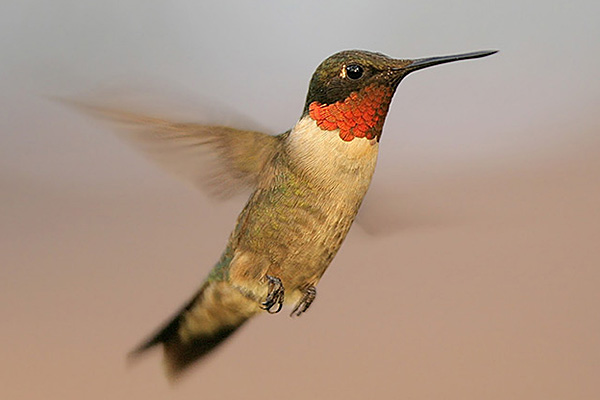
Photograph © Greg Lavaty.
The Ruby-throated Hummingbird is the only hummingbird that breeds in eastern North America, including Florida. Tiny but bold, it zips through gardens and woodlands looking for nectar-rich flowers. Its straight, needle-like bill is perfectly shaped for reaching into deep blooms.
Males show off a brilliant ruby-red throat that flashes in sunlight, while females are plainer but just as agile. These birds can also catch small insects mid-air, giving them vital protein. Ruby-throated Hummingbirds are regular summer visitors across much of the U.S., but in Florida they’re seen longer into the year, especially where flowers and feeders are available.
2. Black-chinned Hummingbird (Archilochus alexandri)

Although better known in the western United States, the Black-chinned Hummingbird occasionally strays east.
This small species has a slender, straight bill used to reach nectar in tubular flowers. Males look mostly plain until the light catches their throat, revealing a thin purple band under the chin. Like other hummingbirds, they hover easily and can even fly backward while feeding.
They supplement their nectar diet with tiny insects. Black-chinned Hummingbirds are adaptable, showing up in deserts, gardens, and woodlands.
Their understated colors make them harder to spot, but their buzzy flight and long bill often give them away.
3. Bananaquit (Coereba flaveola)

The Bananaquit is a lively, small bird found in the Caribbean and parts of South America, with occasional appearances in southern Florida.
It has a slender, curved bill that allows it to feed on nectar by poking into flowers, sometimes even piercing the base for an easier sip.
Black upperparts contrast with a bright yellow belly, making it a colorful sight in tropical gardens. Bananaquits also eat fruit and insects when available.
They move quickly through vegetation, giving only brief glimpses before darting away. In areas where they’re common, these cheerful birds are frequent visitors to backyard feeders filled with sugar water.
4. Purple Sunbird (Cinnyris asiaticus)
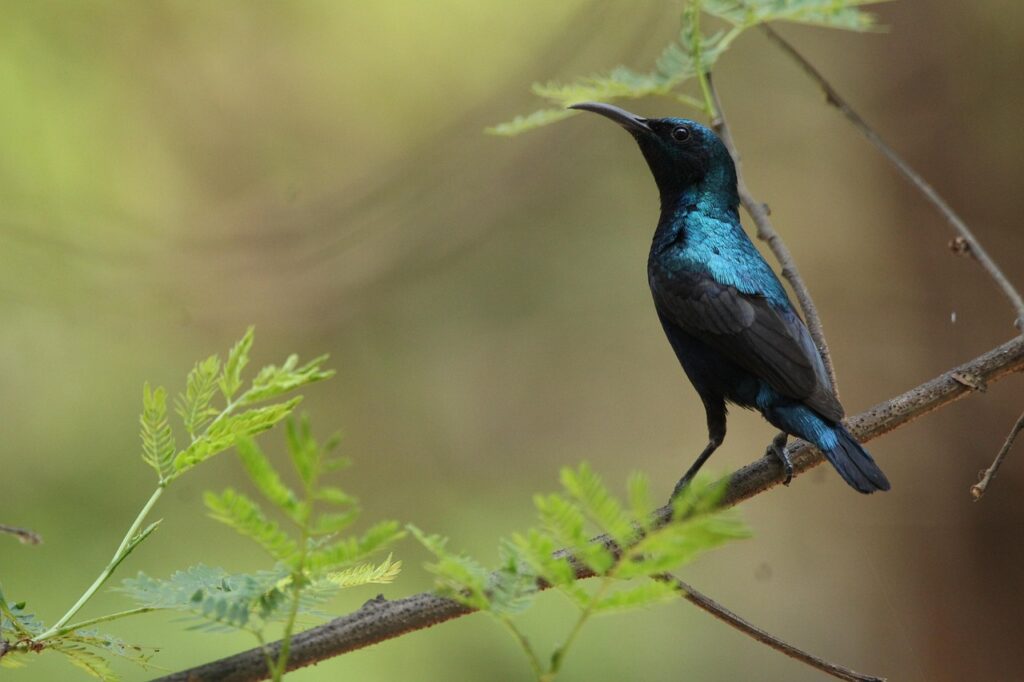
The Purple Sunbird is a tiny bird from South Asia, known for its long, downcurved bill and dazzling colors.
Males shine with deep blue-purple plumage, while females are yellowish with plainer tones. Despite their small size, they are energetic and often seen flitting among flowers, hovering briefly or clinging while they probe for nectar. Their curved bill lets them reach into tubular blooms with ease.
Purple Sunbirds also snap up insects, especially during breeding season. They thrive in gardens, parks, and open forests, and their rapid movements and sharp calls often reveal them before their shimmering colors come into view.
5. Little Spiderhunter (Arachnothera longirostra)
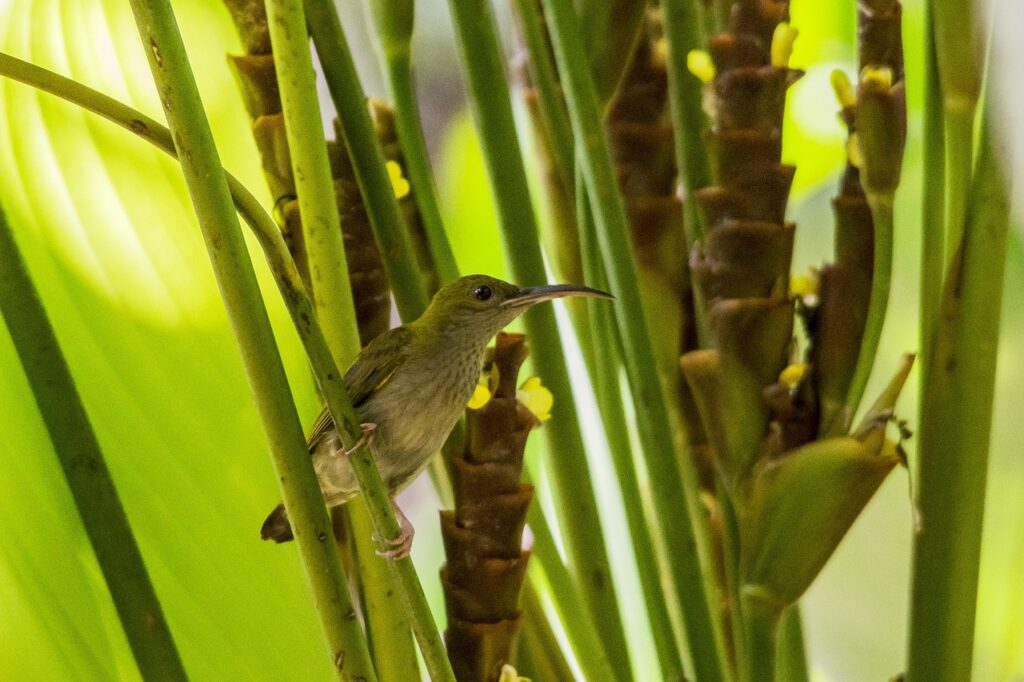
The Little Spiderhunter lives in the tropical forests of South and Southeast Asia and is instantly recognized by its very long, downward-curved bill.
Despite its name, it isn’t limited to eating spiders. Instead, it feeds mainly on nectar, using its bill to probe deep into flowers that most other small birds can’t reach.
Its olive-brown body and pale underparts aren’t flashy, but its bill makes it stand out.
These birds are often heard giving sharp, high-pitched calls as they zip between flowering plants. They play an important role as pollinators, moving pollen while feeding.
Their long bills are essential tools of survival.
6. Carolina Wren (Thryothorus ludovicianus)

The Carolina Wren is small but full of energy and sound. Its loud “teakettle-teakettle” song can be heard year-round in Florida.
It has a slightly curved bill that it uses to probe bark, leaf litter, and crevices for insects.
Warm brown plumage and a bold white eyebrow make it easy to recognize.
Carolina Wrens often explore backyards, woodpiles, and shrubs, sometimes even nesting near homes. Their curious nature and strong voices make them one of the most noticeable small birds in the Southeast.
7. House Wren (Troglodytes aedon)
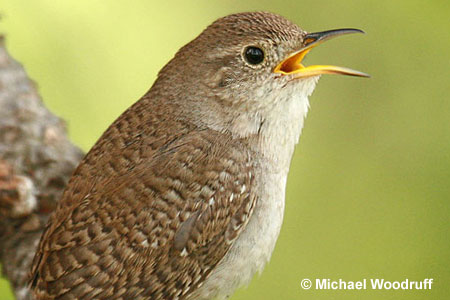
house wren
The House Wren is a tiny, restless bird found across much of the Americas. In Florida, it shows up mainly in winter.
It has a slender, slightly curved bill perfect for catching insects and spiders. These wrens are brown overall with faint barring, blending well with branches and brush.
House Wrens are famous for nesting in almost any cavity they can find, from tree holes to birdhouses and even odd spots near people. Their bubbly song and nonstop movements make them easy to notice when they’re around.
8. Brown Creeper (Certhia americana)
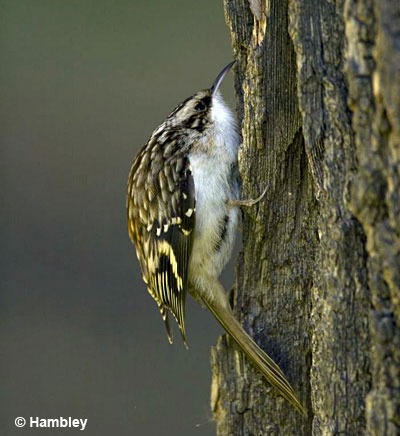
The Brown Creeper is a master of camouflage. Its brown, streaked back blends perfectly with tree bark as it climbs upward in search of food.
This bird uses its thin, downcurved bill to pick insects and spiders from cracks in the bark. After reaching the top of a trunk, it flutters down to the base of another and starts again.
Brown Creepers are quiet and often overlooked, but once you notice their foraging pattern, they become easier to spot. Their long bill is the perfect tool for their specialized feeding style.
9. Short-toed Treecreeper (Certhia brachydactyla)

Found in Europe and parts of Asia, the Short-toed Treecreeper is very similar in habits to the Brown Creeper.
It has a slim, downcurved bill that it uses to probe for insects hiding in bark crevices. Its plumage is mottled brown and white, making it almost invisible against tree trunks.
These little birds spiral upward on tree bark with quick, jerky movements. They often go unnoticed unless you hear their high-pitched calls or catch a glimpse of their feeding behavior.
10. Long-billed Gnatwren (Ramphocaenus melanurus)
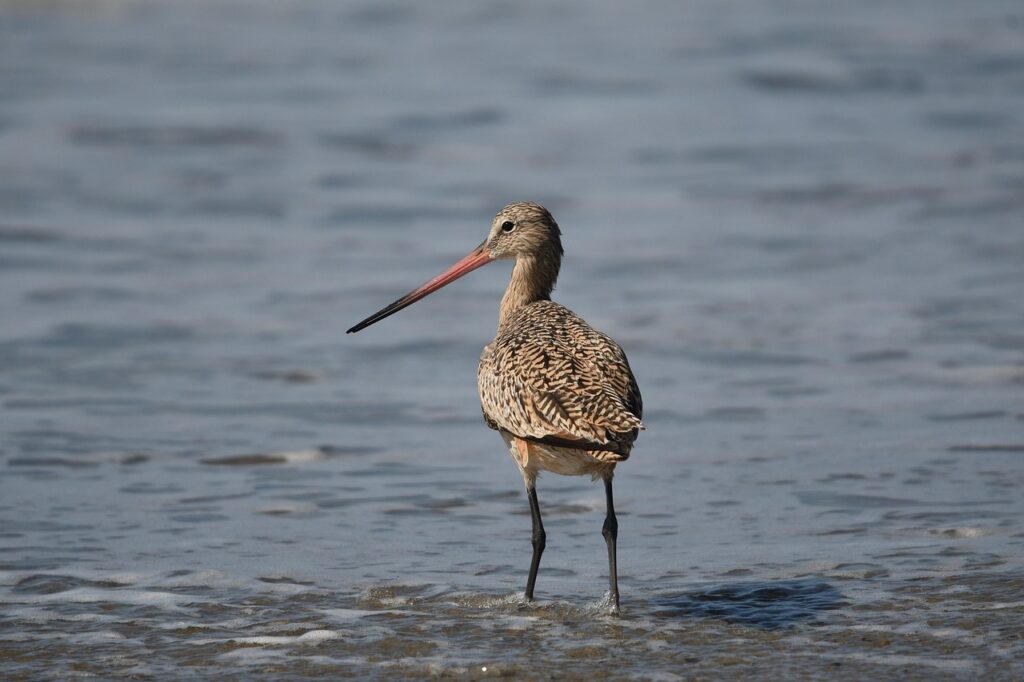
The Long-billed Gnatwren is a tiny, delicate bird from Central and South America.
It has an unusually long, thin bill for its size, which it uses to snatch insects from leaves and branches. Its long tail often flicks nervously as it forages in dense vegetation.
Despite being small and plain-colored, its proportions are unique, and its quick, sharp calls often give it away. The Long-billed Gnatwren’s bill looks almost oversized, but it’s the perfect tool for its insect-hunting lifestyle.
11. Bewick’s Wren (Thryomanes bewickii)
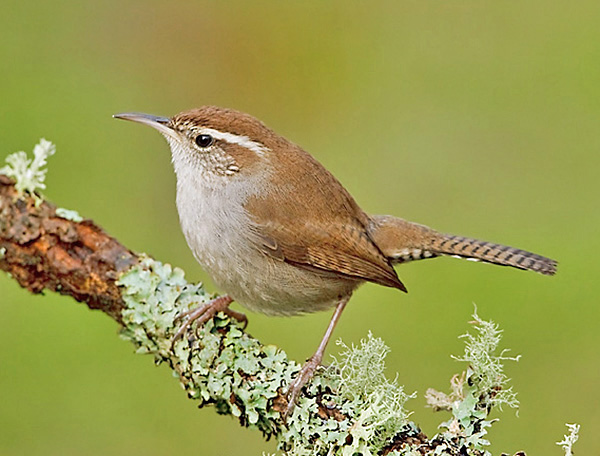
Photograph © Glenn Bartley
Bewick’s Wren is a small, lively bird of thickets, brush, and open woods.
It has a long, thin bill that curves slightly downward, perfect for reaching insects in bark and tangled vegetation. A bold white eyebrow makes it easy to recognize compared to other wrens.
Bewick’s Wrens are curious and quick, often flicking their tails as they forage. Their songs are rich and varied, sometimes mimicking other birds. Though more common in the western United States today, they were once widespread across the East. Their slender bill is a key tool in their nonstop search for hidden insects.
12. Marsh Wren (Cistothorus palustris)
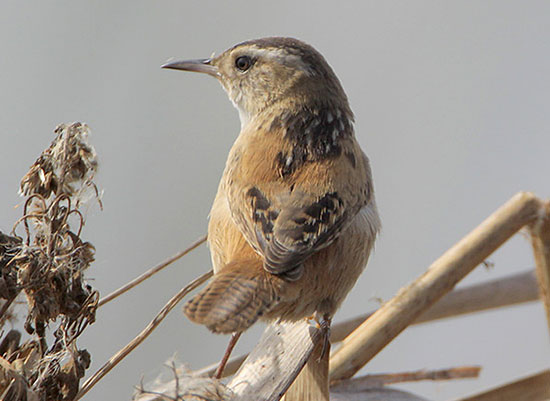
Photograph © Greg Lavaty
The Marsh Wren is a small but noisy resident of wetlands.
It carries a long, slightly curved bill that helps it pick insects and spiders from reeds and cattails. Its back is brown with pale streaks, while its small size allows it to dart quickly through dense marsh vegetation.
These wrens are best known for their loud, bubbling songs delivered from the tops of cattails. They also build multiple dome-shaped nests, though only one is used for raising young. Despite their tiny size, Marsh Wrens are bold and active, always on the move with their bills probing for food.
13. Rock Wren (Salpinctes obsoletus)
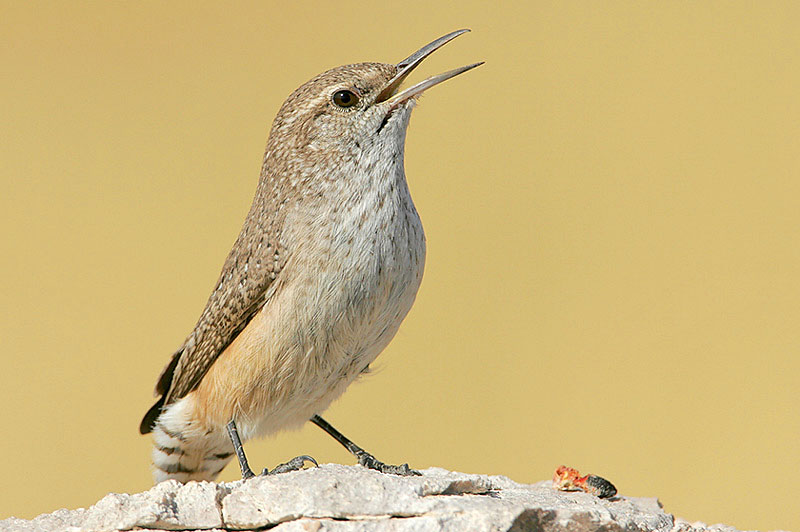
The Rock Wren is a small bird found in dry, rocky areas of the western United States and Mexico.
It has a slender, slightly downcurved bill that it uses to probe crevices for insects and spiders. Its pale grayish-brown plumage helps it blend with rocks and soil.
Rock Wrens often bounce on their legs as they move and deliver a steady series of whistles and trills. They are known for carrying small stones into their nesting cavities, a unique behavior among wrens. Though plain in color, their long bill and busy foraging style make them interesting to watch.
14. Cactus Wren (Campylorhynchus brunneicapillus)
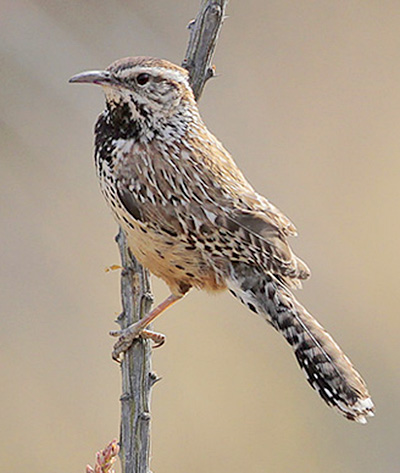
The Cactus Wren is the largest wren in North America, but still a small bird compared to most songbirds.
It has a long, slightly curved bill that it uses to probe for insects among cactus pads, rocks, and desert plants. Its bold white eye stripe and heavily spotted chest make it stand out in the dry landscapes of the Southwest.
Cactus Wrens build bulky nests inside prickly cactus for protection. They are noisy, active, and highly adapted to desert living. Their long bills help them take advantage of tough habitats where food is often hidden deep in spiny plants.
15. Curve-billed Thrasher (Toxostoma curvirostre)
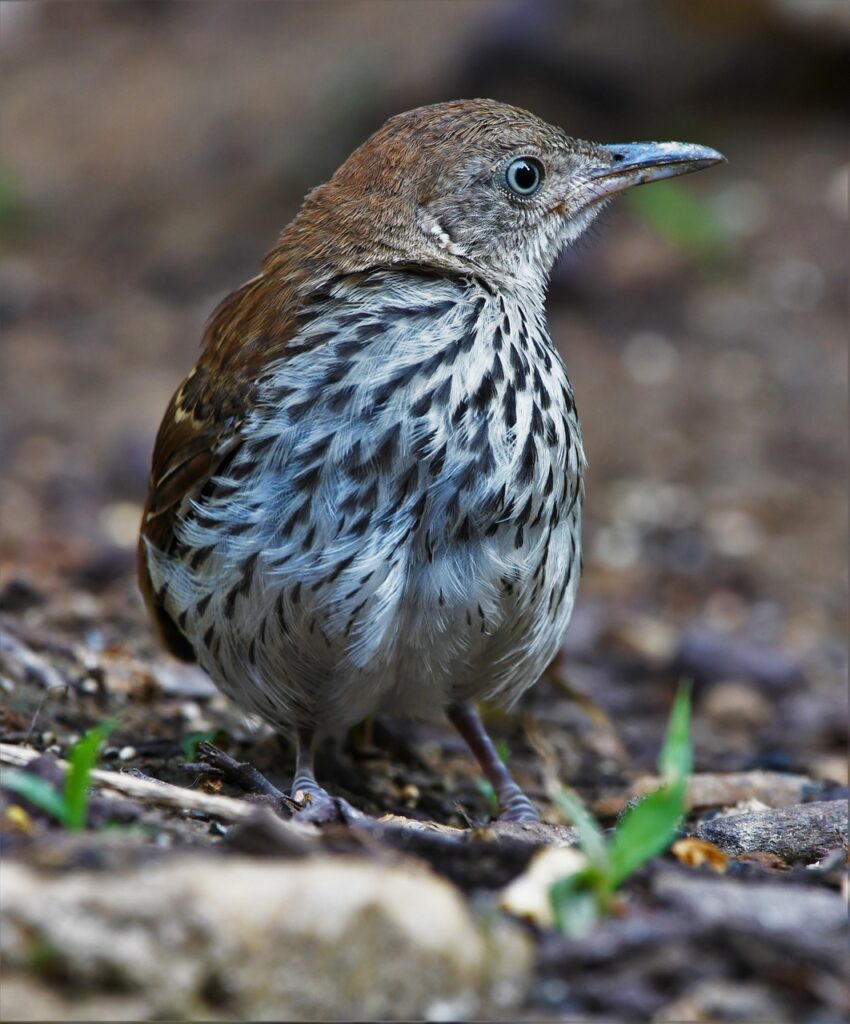
The Curve-billed Thrasher is a medium-small desert bird recognized by its strong, downcurved bill.
This bird uses its bill to dig in soil, flip leaves, and pry insects and seeds from the ground. Its gray-brown plumage blends with desert surroundings, but its bright orange eye gives it a striking look.
Curve-billed Thrashers are bold and curious, often visiting feeders or hopping around yards in the Southwest. Their long bills make them versatile foragers, and their sharp “whit-wheet” call is a common desert sound. The bill’s length and curve are essential tools for their wide-ranging desert diet.
16. Sword-billed Hummingbird (Ensifera ensifera)
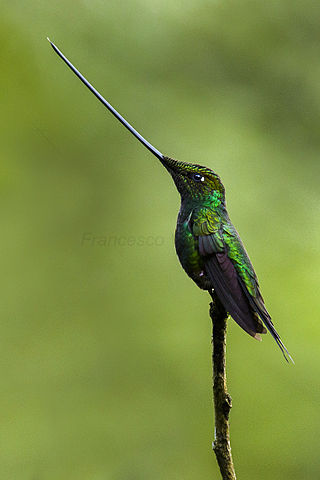
The Sword-billed Hummingbird is one of the most remarkable small birds in the world.
Its bill is longer than its body — an incredible adaptation that lets it feed from long, tubular flowers no other bird can reach. Despite the oversized bill, this hummingbird hovers with ease and even grooms itself with its feet instead of its bill.
Found in the Andes of South America, it shines with metallic green and bronze feathers. Watching it drink nectar from flowers that match the length of its bill is unforgettable. The Sword-billed Hummingbird is the ultimate example of small bird, big bill.
17. Eastern Spinebill (Acanthorhynchus tenuirostris)
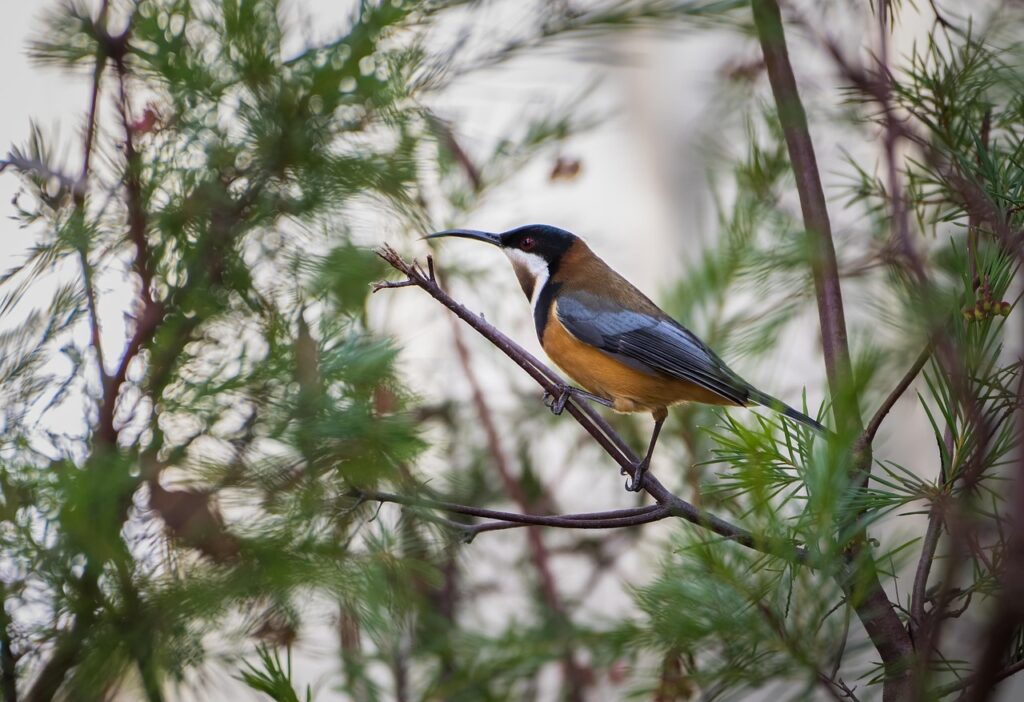
The Eastern Spinebill is a small honeyeater from eastern Australia.
It carries a long, downcurved bill that is perfectly shaped for reaching nectar inside deep flowers. Males show a striking pattern of chestnut, black, and white, while females are a little duller but just as active.
Eastern Spinebills dart quickly among flowering shrubs, often hovering briefly like a hummingbird. They also snap up insects in midair when the opportunity arises. With their long bills, they play an important role in pollination. Despite their small size, they are among the most recognizable birds in Australian gardens and forests.
Bottom line
Long bills are more than just a striking feature. For these small birds, the shape and size of their beak is the difference between survival and struggle. It allows them to find food where others cannot, thrive in tough habitats, and sometimes even pollinate the very plants they feed from.
Whether you spot a wren probing bark or a hummingbird sipping nectar, remember: that long beak is a finely tuned tool, shaped by millions of years of adaptation. Small birds may look delicate, but their big bills prove they are perfectly built for the lives they lead.