

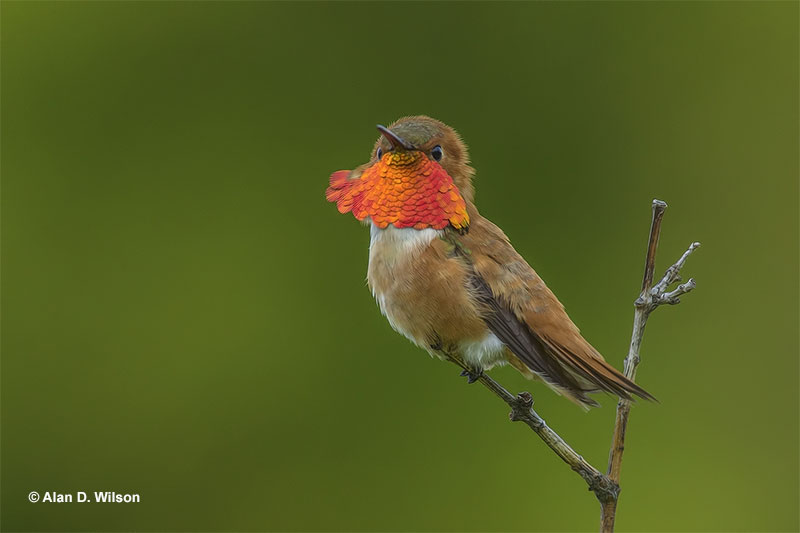
Step outside in a Montana summer and you might spot a spark of orange darting past or a tiny green blur sipping from wildflowers.
Those quick flashes aren’t all the same bird—Montana is lucky enough to host several hummingbird species each year.
Rufous, Calliope, Black-chinned, and Broad-tailed Hummingbirds all visit the state, bringing color and energy to gardens and meadows.
They arrive with the warming days of spring, spend a short but busy summer raising families, and then vanish as the nights turn cold. On rare occasions, birders even glimpse an Anna’s Hummingbird that has wandered far from its usual range.
If you’ve ever wondered when they leave—and why—let’s take a closer look at Montana’s hummingbird cycle.
Why Do These Hummingbirds Visit Montana?
Geography
Montana’s rugged geography is a magnet for hummingbirds. With its towering mountains, open valleys, and fields that burst with wildflowers in late spring, the state offers a perfect summer stop.
Unlike the East, where only one species dominates, Montana’s location along the Rocky Mountains creates opportunities for multiple species to nest and feed. It’s a crossroads of migration routes, especially for birds that prefer cooler climates and high elevations.
Migration Routes
Each species follows a slightly different path. Rufous Hummingbirds are marathon travelers, flying from as far as Alaska down through Montana on their way to Mexico and Central America.
Calliope Hummingbirds, the tiniest in North America, breed in Montana’s high meadows and mountain slopes before heading south. Broad-tailed Hummingbirds settle into the Rockies, their wingbeats making a distinct whirring sound as they hover.
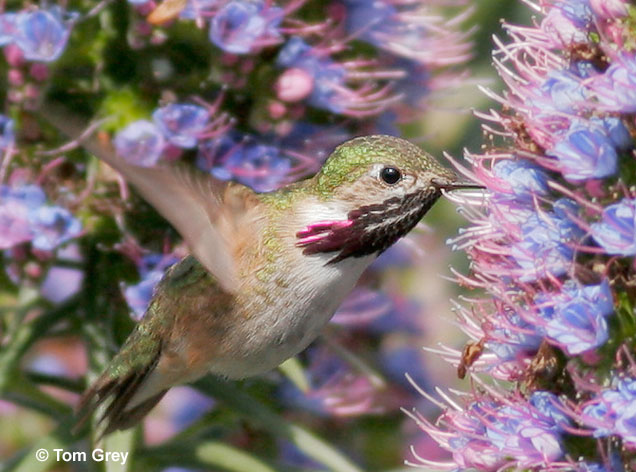
Calliope Hummingbird is a common visitor in Montana
Black-chinned Hummingbirds prefer foothills and river valleys. Together, these routes make Montana one of the best states for seeing a variety of hummingbirds during summer.
Climate & Habitat
Montana’s summers may be short, but they’re rich with resources. From June to August, wildflowers explode across alpine meadows and mountain streams. Insects are plentiful, offering protein for nestlings.
Backyard gardens also play a role—many Montana bird lovers plant salvia, bee balm, and penstemon just for hummingbirds. But when the frosts arrive, food sources disappear quickly. The same mountains that offer safe nesting grounds in summer become inhospitable by fall, pushing hummingbirds to leave sooner than in milder states.
Vagrants
Though Montana already hosts a good mix of species, vagrants occasionally add a surprise. Birders sometimes report Anna’s Hummingbirds in late fall or early winter.
These visitors are unusual here, but they remind us that migration paths are not fixed highways. Birds sometimes wander off course, giving lucky homeowners a rare chance to see something unexpected at their feeders.
The Departure Window in Montana
Hummingbirds leave Montana earlier than many people expect. Because summers are so brief, the cycle moves quickly.
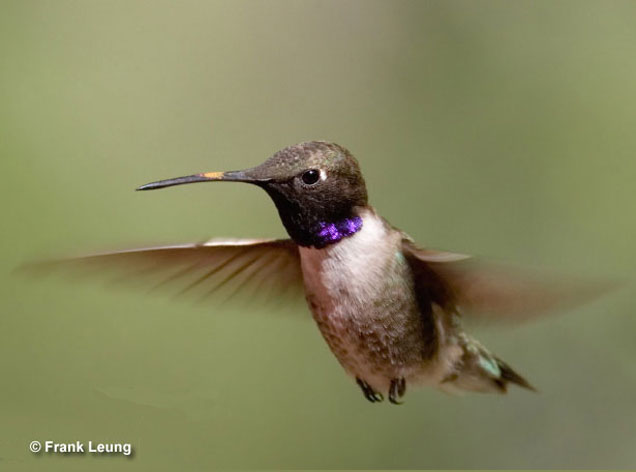
You can spot Black-chinned Hummingbirds quite often in late spring and throughout summer in Montana
Rufous Hummingbirds, which nest farther north than almost any other hummingbird, begin their southbound migration as early as mid-July. Calliope Hummingbirds also start their journey before August is over.
Broad-tailed and Black-chinned Hummingbirds linger a little longer, but by late September, most are gone. A straggler or two might hang on into early October, but that’s unusual. If you’ve ever noticed your feeder bustling one week and nearly empty the next, you’ve witnessed the swift change migration brings.
What Triggers Their Departure?
What makes a hummingbird decide it’s time to leave Montana?
The biggest signal is daylight.
As the days grow shorter in late summer, a hummingbird’s body responds by storing fat reserves needed for migration. They eat constantly, building the energy that will carry them hundreds—or even thousands—of miles.
The cooler nights and fading flowers of Montana reinforce this natural clock. Each species has its own schedule, but all are tuned to avoid the harsh conditions of a Montana winter. It’s not a choice they make; it’s an instinct written into their very being.
The Right Time to Take Feeders Down
One question comes up every year: “If I leave my feeders out, will the hummingbirds stay too long?” The answer is no.
Hummingbirds leave when nature tells them, not when feeders are available. In fact, keeping feeders up into the fall can be a lifesaver for late migrants, especially young birds making their first long journey south. The best rule for Montana homeowners is to leave feeders out for two weeks after your last sighting.
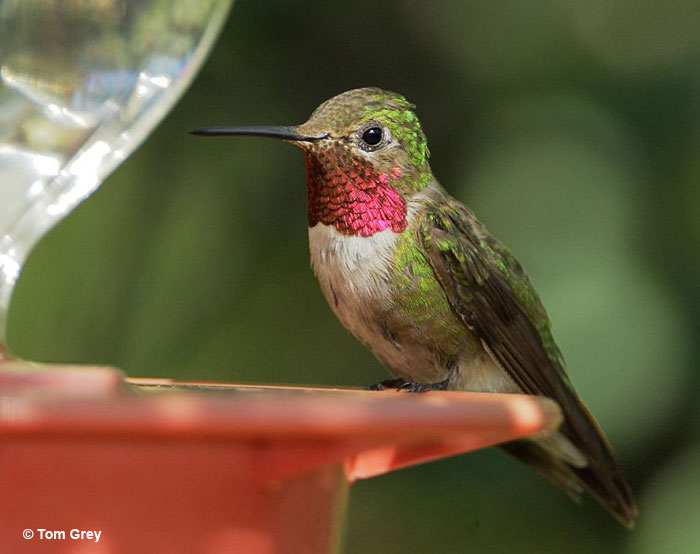
Broad-tailed Hummingbirds love spending summer in Montana’s mountains.
By early to mid-October, you can safely take them down, clean them well, and store them until spring returns.
A Seasonal Guide for Montana Homes
Montana’s hummingbird season may be short, but it’s filled with action. Here’s a guide to what you can expect through the months:
| Season | What’s Happening in Montana |
|---|---|
| Late Spring | Calliope, Rufous, Black-chinned, and Broad-tailed Hummingbirds arrive (May). Early arrivals often appear near blooming chokecherries and apple trees. |
| Early Summer | Nesting begins; females weave tiny nests from spider silk and plant fluff. Calliope often choose sheltered spots in mountain shrubs. |
| Midsummer | Young hummingbirds fledge and feeders grow busier by the day. Rufous Hummingbirds show up in large numbers as they move south through the state. |
| Late Summer | Rufous migration peaks in July and August; other species feed heavily to build fat reserves. Gardens buzzing with hummingbirds are at their peak activity. |
| Fall | Most hummingbirds are gone by mid-September. A few linger into October, but feeders quickly grow quiet. |
| Winter | No hummingbirds remain in Montana. Feeders can be cleaned and stored until spring. |
Have you ever noticed how one day your feeder seems like an airport runway, packed with birds zipping in and out, and the next it’s almost silent?
That contrast is part of Montana’s hummingbird rhythm.
Final Thoughts on When Hummingbirds Leave Montana
Montana’s hummingbirds live life in fast-forward.
They arrive with the first warmth of May, spend a whirlwind summer nesting and feeding, and then disappear south before the snow flies.
By September, most are gone, but their departure is just another part of a cycle that repeats faithfully each year. Keeping feeders out a little longer helps the last travelers on their way—and before long, spring will bring them back to your yard again.