

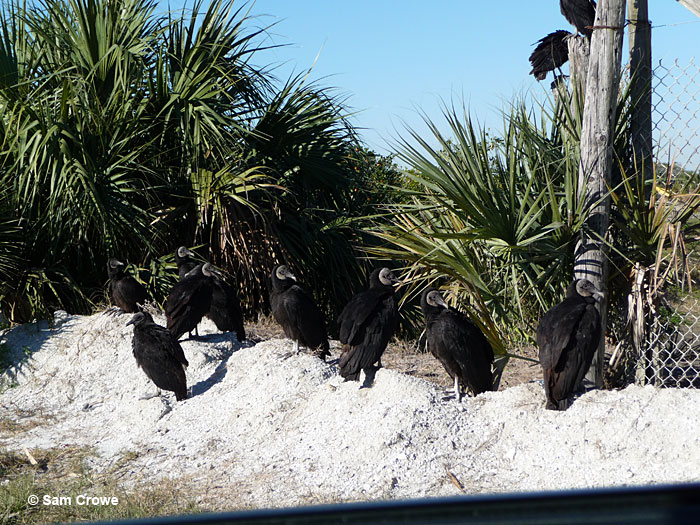
When people think of vultures, they often imagine dark shapes circling high in the sky—but the truth is far more interesting.
The three types of vultures found in North America are few in number, yet each one is unique. And in this writing, we will dig deeper!
Highly specialized and essential to the environment. From the widespread and graceful Turkey Vulture to the bold and social Black Vulture, and the massive, rare California Condor, these birds all play a critical role as nature’s cleanup crew.
Vultures may not have the bright colors of songbirds or the fierce reputation of eagles, but they are among the most efficient and important birds in the ecosystem. They quietly remove dead animals, helping prevent the spread of disease and keeping landscapes clean.
Without them, nature would quickly become overwhelmed with decay.
The three main types of vultures in North America each bring something different to the table, yet all share the same essential purpose: cleaning up what others leave behind.
What makes North America’s vultures especially fascinating is how different they are from one another. Some rely on an incredible sense of smell, while others depend on eyesight and teamwork.
Some are thriving and expanding their range, while others are still fighting their way back from the edge of extinction.
Once you take a closer look, these birds stop being “just vultures” and start becoming something much more—masters of survival, perfectly adapted to a role that no other birds can fill quite as effectively.
Turkey Vulture
(Cathartes aura)
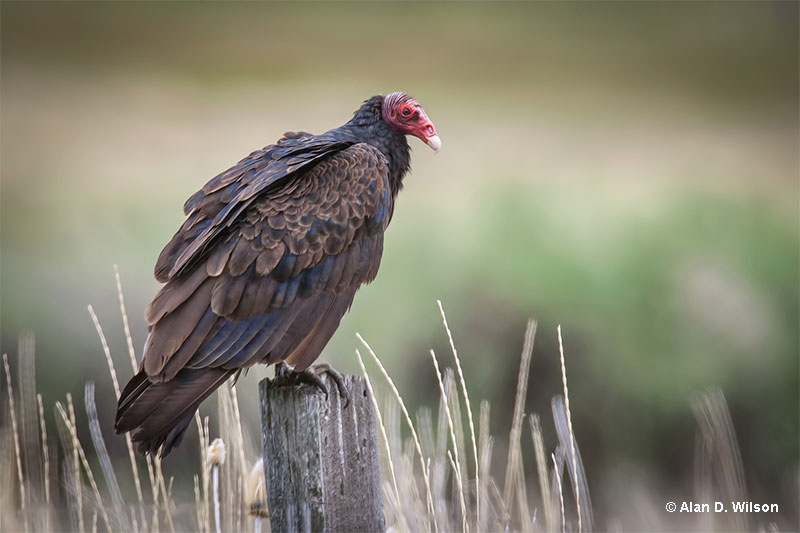
Identification – size / weight / colors
- The Turkey Vulture is one of the most recognizable large birds in North America.
- It has a wingspan of about 5.5 to 6 feet (1.7–1.8 meters)
- Adults typically weigh between 2 to 5 pounds (0.9–2.3 kg)
- Plumage is mostly dark brown to black, but the underside of the wings shows a striking two-toned pattern—dark leading edges with silvery-gray flight feathers.
- The head is small, featherless, and bright red in adults (grayish in juveniles), giving it a somewhat eerie but distinctive look.
Where found
Turkey Vultures are incredibly widespread. You can find them across most of North America, from southern Canada all the way down through the United States and into Central and South America. During warmer months, they expand northward, while many migrate south in winter.
They thrive in a wide variety of habitats—open countryside, forests, deserts, and even suburban areas—as long as there are open spaces for soaring and a steady supply of carrion.
Conservation status
This species is currently listed as Least Concern, and for good reason—it’s doing very well. Turkey Vulture populations are stable and even increasing in some regions. Their adaptability plays a big role in their success.
Unlike many birds, they benefit from human-altered environments, such as roads (which unfortunately provide roadkill) and open land. They are protected under the Migratory Bird Treaty Act in the United States, making it illegal to harm or disturb them.
Compared to other vultures
Compared to other North American vultures, especially the Black Vulture, the Turkey Vulture stands out in several ways. It relies heavily on its sense of smell to locate food—something rare among birds. Black Vultures, on the other hand, depend more on sight and often follow Turkey Vultures to carcasses.
In flight, Turkey Vultures are more graceful and buoyant, often seen teetering slightly as they soar, while Black Vultures flap more frequently and fly with stronger, more direct wingbeats.
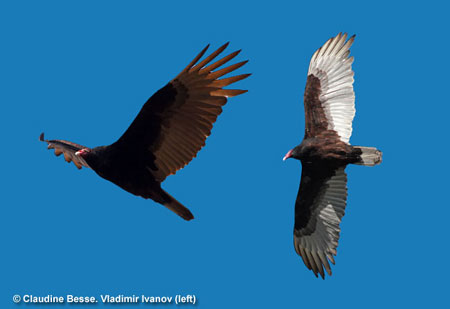 Turkey Vulture pair flying
The Turkey Vulture is nature’s cleanup crew, and it plays its role with quiet efficiency. Often seen gliding effortlessly high in the sky, this bird rarely flaps its wings, instead riding warm air currents called thermals. With wings held in a shallow “V” shape, it rocks gently from side to side—a signature flight style that makes it easy to identify even from a distance.
Despite its somewhat spooky appearance, the Turkey Vulture is harmless to humans.
It feeds almost exclusively on carrion—dead animals—which it locates using its keen sense of smell. This ability gives it a huge advantage over many other scavengers. Even a small, hidden carcass under forest cover won’t escape its notice.
On the ground, however, it appears awkward and hunched. Its bare head, though unusual, is actually perfectly adapted for its lifestyle. By lacking feathers, it stays cleaner while feeding, and exposure to sunlight helps kill bacteria. It’s a practical design for a bird that deals with decay daily.
Turkey Vultures are also surprisingly social.
While they often forage alone, they gather in groups to roost, sometimes in large numbers. At dusk, you might spot several perched in tall trees, wings spread wide to dry or warm themselves—a behavior that adds to their dramatic presence.
Read more: What is a Group of Vultures called?
Their importance in the ecosystem cannot be overstated. By removing carcasses, they help prevent the spread of disease and keep environments cleaner. Without them, the natural world would be far messier—and far less healthy.
In many ways, the Turkey Vulture is misunderstood. It may not have the beauty of a songbird or the power of an eagle, but it excels in its niche. Graceful in the air, efficient on the ground, and essential to the ecosystem, it’s one of North America’s most fascinating birds once you take a closer look.
Black Vulture
(Coragyps atratus)
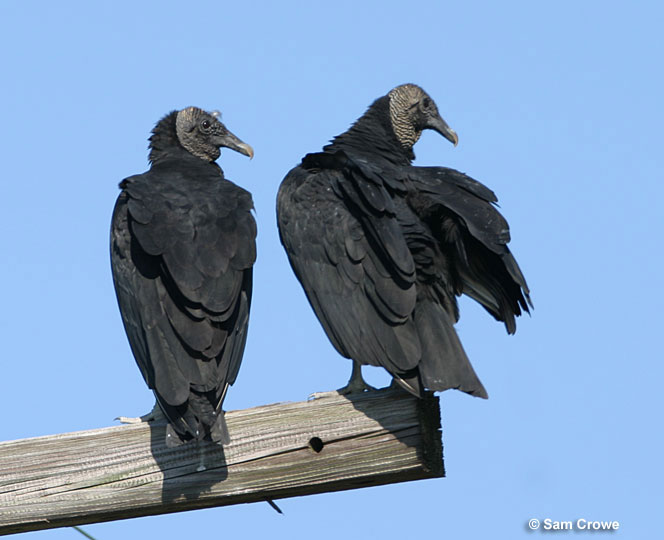
Identification – size / weight / colors
- The Black Vulture is slightly smaller but stockier than the Turkey Vulture.
- Wingspan of about 4.5 to 5 feet (1.4–1.5 meters)
- Weighs between 3.5 to 6.5 pounds (1.6–3 kg), making it heavier-bodied despite its shorter wings.
- Its plumage is almost entirely black, giving it a bold, solid look in flight.
The wings show distinctive white patches near the tips, which are easy to spot from below. Its head is bare and dark gray to black, with wrinkled skin and a short, hooked beak. The tail is noticeably short and square-shaped—another key feature for identification.
Where found
Black Vultures are mostly found in the southeastern United States but have been steadily expanding their range northward in recent years.
They are common in states like Florida, Texas, and along the Gulf Coast, and are now increasingly seen farther inland and even into parts of the Midwest.
They prefer open areas mixed with forests, farmland, and human-influenced landscapes. Unlike Turkey Vultures, they are less migratory and often stay in the same general region year-round.
Conservation status
The Black Vulture is also listed as Least Concern, with populations increasing across much of its range. Its adaptability and opportunistic feeding habits have helped it thrive, especially in areas influenced by human activity.
However, conflicts can arise, particularly with farmers, as Black Vultures are sometimes known to attack weak or newborn livestock—behavior not typical of Turkey Vultures.
Compared to other vultures
When compared to the Turkey Vulture, the Black Vulture is more aggressive, more social, and less reliant on smell. Instead of sniffing out food, it uses sharp eyesight and often follows Turkey Vultures to carcasses. Once food is found, Black Vultures can dominate the scene, using their strength and group behavior to push other scavengers away.
In flight, they appear more compact and flap their wings more frequently, alternating between quick flaps and short glides, unlike the smooth soaring of the Turkey Vulture.
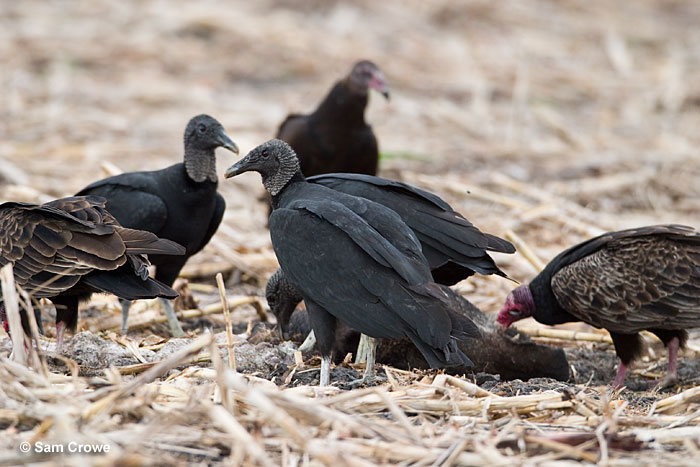
The Black Vulture is bold, tough, and surprisingly clever. While it may not soar as elegantly as its Turkey Vulture cousin, it makes up for it with confidence and teamwork. Often seen in groups, this species thrives on cooperation—something unusual among birds of prey.
In the sky, Black Vultures are easy to recognize once you know what to look for. Their shorter wings and quick, choppy wingbeats give them a more energetic flight style.
Those bright white patches near the wingtips flash as they move, creating a striking contrast against their otherwise jet-black bodies.
On the ground, their behavior is even more interesting. Black Vultures rarely rely on luck when it comes to food. Instead, they watch and learn. If a Turkey Vulture starts circling downward, chances are a group of Black Vultures won’t be far behind. They follow, observe, and then move in quickly.
Thanks to their stronger build and assertive nature, they often take control of the meal.
Unlike many birds, Black Vultures are highly social. They roost in large flocks, sometimes numbering in the hundreds. This group lifestyle helps them locate food more efficiently and offers protection.
You might see them gathered on rooftops, trees, or even communication towers, wings spread out in the morning sun.
Related: Why are vulture heads bald?
Their adaptability has allowed them to expand their range steadily. Human environments, with roads, farms, and open waste areas, provide easy feeding opportunities. While this has helped their population grow, it has also brought them into closer contact with people, sometimes leading to conflict.
Despite their reputation, Black Vultures play a crucial role in keeping ecosystems clean. Like all vultures, they help dispose of dead animals quickly, reducing the spread of disease. They are efficient, resilient, and highly effective at what they do.
The Black Vulture may not win any beauty contests, but it doesn’t need to. With its sharp instincts, strong social bonds, and fearless attitude, it stands out as one of North America’s most fascinating scavengers.
California Condor
(Gymnogyps californianus)
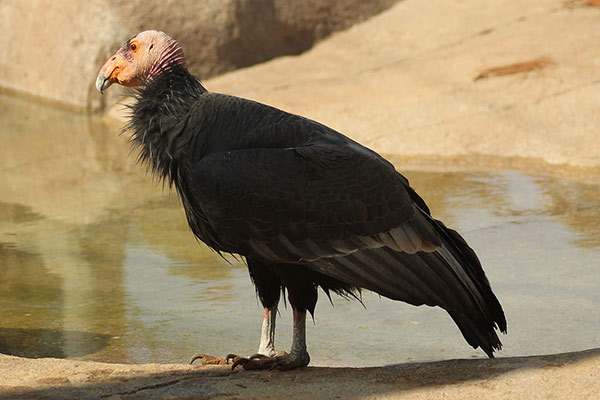
The California Condor is the largest flying land bird in North America—and it truly looks the part.
- Enormous wingspan of up to 9.5 feet (2.9 meters), making it far bigger than any other vulture on the continent.
- Adults weigh between 15 to 26 pounds (7–12 kg).
- Its body is mostly black, but large white patches under the wings create a bold contrast in flight.
- The head is bare and can appear pink, orange, or even yellowish, depending on mood and age. Around the neck sits a ruff of dark feathers, giving it a powerful, almost prehistoric appearance.
Where found
California Condors are extremely limited in range. Today, they are found mainly in parts of California, Arizona, and Utah. Key areas include rugged canyons, cliffs, and mountainous regions where they can nest safely and catch strong updrafts for soaring.
Places like the Grand Canyon and central California coastal ranges are among their primary habitats. Unlike the more widespread vultures, you won’t just stumble upon a condor—they are rare and carefully monitored.
Conservation status
The California Condor is listed as Critically Endangered, making it one of the rarest birds in North America.
By the 1980s, the species nearly went extinct, with only 27 individuals remaining in the wild and captivity combined. A massive conservation effort, including captive breeding and reintroduction, has slowly brought them back.
Today, their numbers have increased, but they still rely heavily on human support. Threats like lead poisoning, habitat loss, and power line collisions remain serious concerns.
Compared to other vultures
Compared to Turkey and Black Vultures, the California Condor is in a league of its own in terms of size.
It is far larger, heavier, and more powerful in flight. While Turkey Vultures rely on smell and Black Vultures on sight and teamwork, condors depend mostly on vision and their ability to cover vast distances while soaring. They are less common, less adaptable to human environments, and far more sensitive to environmental threats.
In behavior, they are also less aggressive than Black Vultures and tend to feed more cautiously.
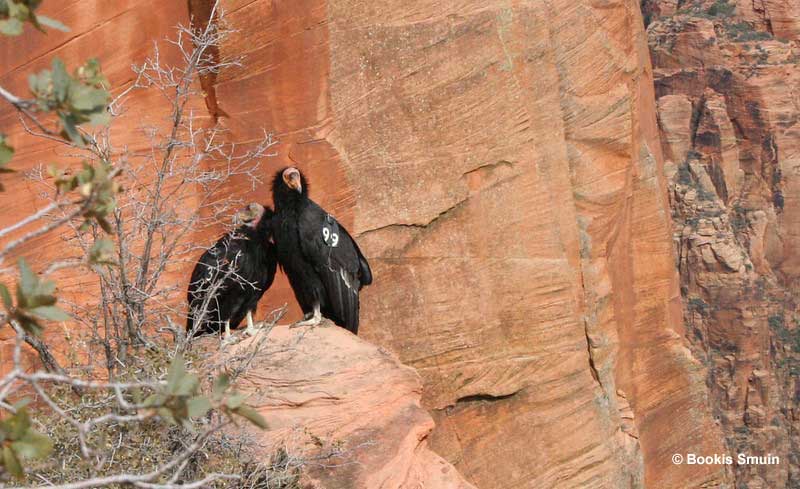 California Condor pair
The California Condor feels like a bird from another time. With its massive wings and commanding presence, it dominates the skies in a way few other birds can. Watching one glide overhead is unforgettable—it barely flaps its wings, instead soaring effortlessly for miles on rising air currents.
This species is built for efficiency. Its huge wingspan allows it to travel long distances in search of food without wasting energy. Like other vultures, it feeds on carrion, often locating large animal carcasses such as deer or livestock. With keen eyesight, it can scan vast landscapes from high above, spotting opportunities far below.
On the ground, the condor is surprisingly cautious. It approaches food slowly and often waits its turn, especially if other scavengers are present. Despite its size, it doesn’t rely on aggression as much as Black Vultures do. Instead, it uses patience and presence—eventually, its sheer size usually earns it access to the meal.
One of the most fascinating aspects of the California Condor is its story of survival. This bird came incredibly close to disappearing forever. Human efforts, including captive breeding programs and careful releases into the wild, have given it a second chance. Each condor flying today is part of that recovery story.
You might notice tags or markers on their wings—these help researchers track and protect them. Every individual matters, and their movements are closely monitored to ensure the species continues to recover.
You Might Like: What Do Vultures Symbolize?
Unlike more common vultures, California Condors avoid busy human areas and need large, open spaces to thrive. Cliffs provide safe nesting sites, while wide landscapes offer the wind currents they depend on.
The California Condor is more than just a scavenger—it’s a symbol of conservation success and ongoing effort. It reminds us how close we can come to losing something irreplaceable, and how much work it takes to bring it back.
Massive, rare, and unforgettable, this bird stands as the true giant among North America’s vultures.
Conclusion
Vultures are often misunderstood, but they are absolutely vital to the health of natural ecosystems.
The three main types of vultures in North America—the Turkey Vulture, Black Vulture, and California Condor—each bring something different to the table, yet all share the same essential purpose: cleaning up what others leave behind.
The Turkey Vulture stands out for its effortless flight and