

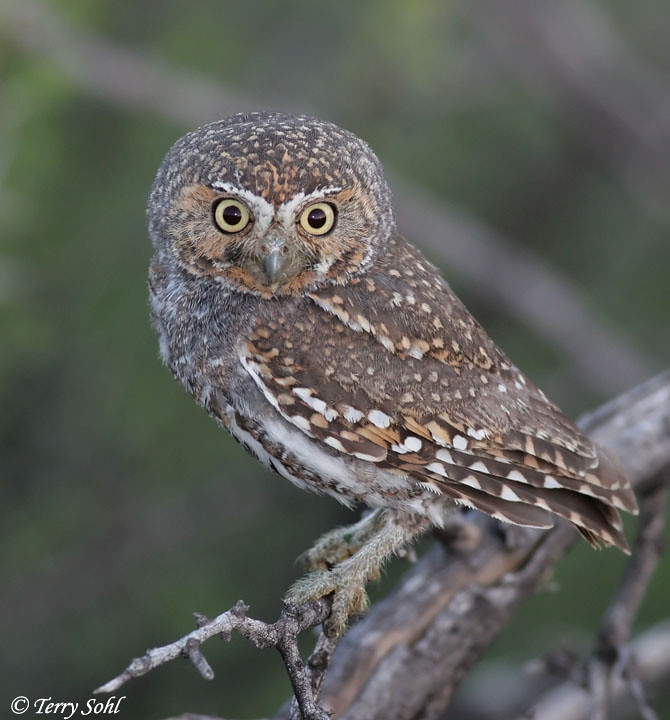
Owls are often imagined as large, powerful birds sitting silently in dark forests.
But not all owls fit that picture. Some are incredibly small—so small they can sit comfortably in the palm of your hand.
- What Are the Smallest Owls in the World?
- 4. Why Are Some Owls So Small?
- 5. How Are Small Owls Adapted to Their Size?
- 6. How Small Owls Survive Next to Bigger Birds
- 7. Where Small Owls Live Around the World
- 8. Conservation and Challenges
- 9. Interesting Facts About Small Owls
- Why Small Owls Matter More Than You Think
These tiny hunters may look delicate, but they are skilled predators with sharp senses and clever survival strategies.
The smallest of them all, the Elf Owl, lives in deserts and woodlands, proving that even the tiniest owl can thrive in challenging environments.
In this guide, we’ll explore the world of the smallest owl species, how they evolved their size, how they survive alongside larger birds, and why they are some of the most fascinating creatures in the bird world.
What Are the Smallest Owls in the World?
1. Elf Owl
- Length: 4.7–5.5 in (12–14 cm)
- Wingspan: 9.8–12.2 in (25–31 cm)
- Weight: 1.2–1.8 oz (35–50 g)
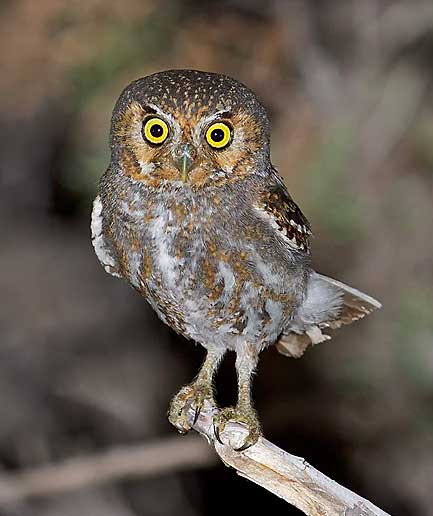
Photograph © Glenn Bartley
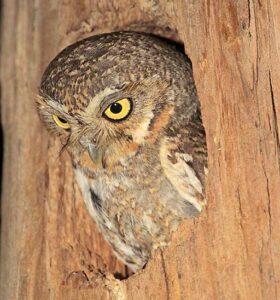
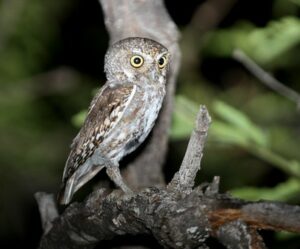
The elf owl is the smallest owl in the world, yet it behaves like a true predator in every sense. Found mainly in the deserts and dry woodlands of the southwestern United States and Mexico, this tiny owl is perfectly adapted to warm, arid environments.
It is especially well known for nesting in old woodpecker holes inside large cacti, particularly saguaros, where it finds both shelter and protection from predators.
Despite its small size, the elf owl is an active and efficient hunter. Instead of going after mammals like larger owls, it feeds mostly on insects such as moths, beetles, crickets, and even scorpions. It hunts at night, using its excellent hearing and vision to locate prey in darkness.
Its flight is quiet and agile, allowing it to move easily through dense vegetation and open desert areas.
The elf owl is also migratory, which is unusual for many owl species. During the breeding season, it lives in the United States, but as temperatures drop and insect numbers decrease, it moves south into Mexico for the winter. This seasonal movement helps it maintain a steady food supply year-round.
Although it may look delicate, the elf owl is highly adaptable. Its small size allows it to use narrow nesting spaces and avoid competition with larger birds, making it a successful survivor in challenging habitats.
2. Long-whiskered Owlet
- Length: 5.1–5.5 in (13–14 cm)
- Wingspan: ~11.8 in (~30 cm)
- Weight: 1.6–1.8 oz (45–50 g)
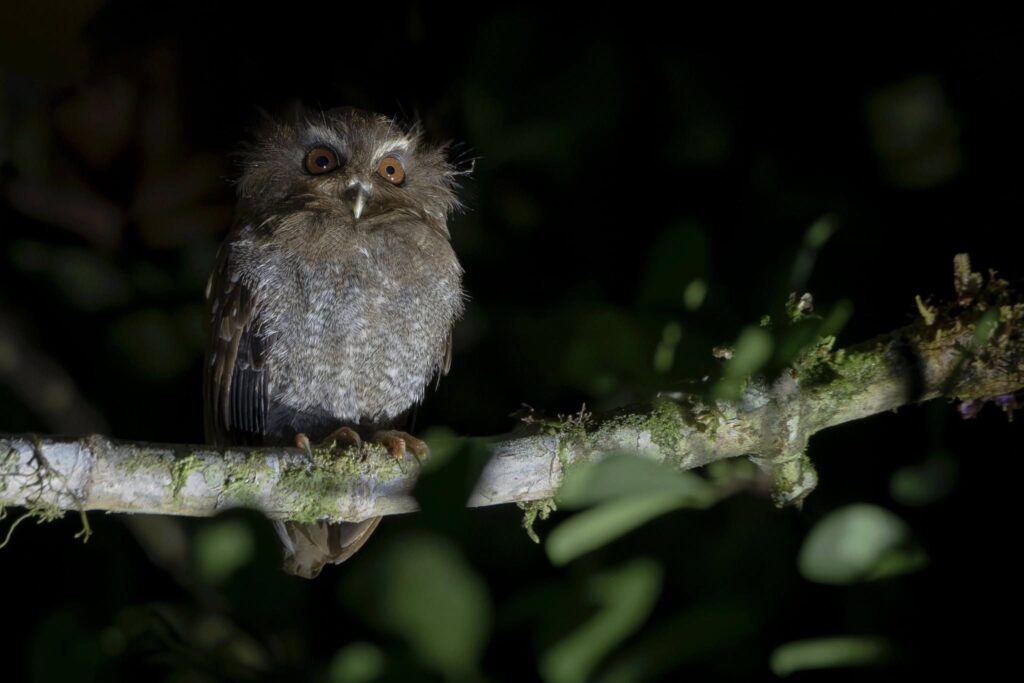
The long-whiskered owlet is one of the rarest and least-known owls in the world. Native to a small region of cloud forests in northern Peru, this tiny owl remained undiscovered until 1976, which is surprisingly recent for a bird species.
Its remote habitat and secretive behavior make it extremely difficult to study, and even today, sightings are rare.
This species gets its name from the long, fine facial feathers that resemble whiskers, giving it a unique and slightly unusual appearance. Unlike many other owls, it has a more rounded body and a relatively short tail, which helps it move easily through dense forest vegetation.
Its plumage is mostly brown with subtle markings, providing excellent camouflage among moss-covered trees and branches.
The long-whiskered owlet is believed to feed mainly on insects and other small invertebrates, similar to other small owl species. It is active at night, quietly hunting in the forest understory where it can avoid larger predators. Because it lives in thick, humid forests, it likely relies more on short, controlled flights rather than long-distance gliding.
Very little is known about its breeding behavior, but like many small owls, it probably nests in tree cavities. Habitat loss due to deforestation is a major concern for this species, making conservation efforts especially important. Its rarity and limited range make it one of the most mysterious small owls in the world.
3. Tamaulipas Pygmy Owl
- Length: 5.1–5.9 in (13–15 cm)
- Wingspan: ~12.6 in (~32 cm)
- Weight: 1.9–2.3 oz (55–65 g)
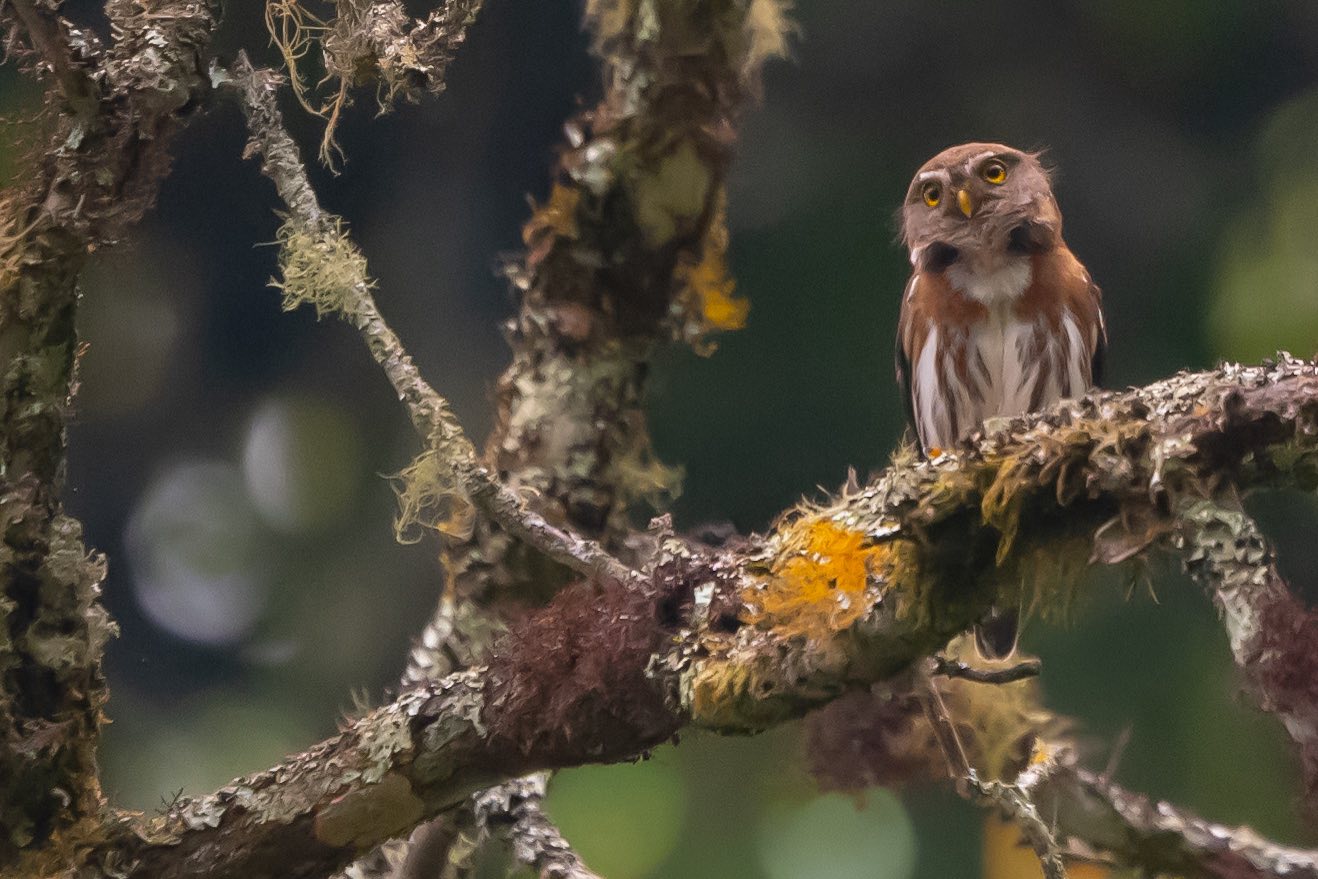
The Tamaulipas pygmy owl is a small and elusive owl species found only in a very limited area of northeastern Mexico. Because of its restricted range and secretive nature, it is one of the least studied pygmy owls in the Americas.
It inhabits humid mountain forests, where thick vegetation and uneven terrain provide both shelter and hunting opportunities.
In terms of size, this owl is compact but strongly built, with a rounded head and no ear tufts. Its plumage is generally brownish with lighter markings that help it blend into tree bark and shaded forest environments.
Like many small owls, it has large, forward-facing eyes that give it strong night vision, essential for hunting in low light conditions.
The Tamaulipas pygmy owl feeds mainly on insects and small arthropods, but it may also take small vertebrates when available. Unlike larger owls that rely on open hunting grounds, this species prefers to hunt from perches, scanning its surroundings before making quick, short flights to capture prey. Its hunting style is efficient and energy-saving, which is important for a small bird with limited energy reserves.
Very little is known about its breeding habits, but it is assumed to nest in tree cavities like other pygmy owls. Due to habitat loss from logging and land conversion, its population is believed to be vulnerable, although exact numbers are unknown. This makes it an important species for future research and conservation attention.
4. Least Pygmy Owl
- Length: 4.7–5.5 in (12–14 cm)
- Wingspan: 11.0–12.6 in (28–32 cm)
- Weight: 1.6–1.9 oz (45–55 g)

Copyright: Lars Petersson
The least pygmy owl is one of the smallest owl species in the Americas and lives across a wide range of forested habitats in Central and South America. Despite its name, it is not the absolute smallest owl, but it is among the most compact members of the pygmy owl group.
It is typically found in tropical and subtropical forests, where dense vegetation offers both cover and hunting opportunities.
This owl has a rounded head, no ear tufts, and a short tail, giving it a compact, streamlined shape. Its plumage is usually brownish or gray-brown with fine streaking, allowing it to blend easily into tree bark and shadowed branches.
Like other small owls, its eyes are relatively large compared to its body, which enhances its ability to hunt in low light.
The least pygmy owl is an active predator despite its small size. It feeds mainly on insects such as grasshoppers, beetles, and moths, but it may also take small lizards or other tiny vertebrates when available. It often hunts by perching quietly and scanning its surroundings before launching quick, precise attacks.
One interesting behavior of this species is its daytime activity. Unlike many strictly nocturnal owls, it can sometimes be seen hunting during early morning or late afternoon hours. This flexibility helps it avoid competition with other predators.
Like most small owls, it nests in natural tree cavities, often using old woodpecker holes. Its wide distribution and adaptable habits have helped it remain relatively stable compared to more specialized owl species.
5. Ferruginous Pygmy Owl
- Length: 5.9–6.7 in (15–17 cm)
- Wingspan: 15.0–16.5 in (38–42 cm)
- Weight: 2.1–2.6 oz (60–75 g)
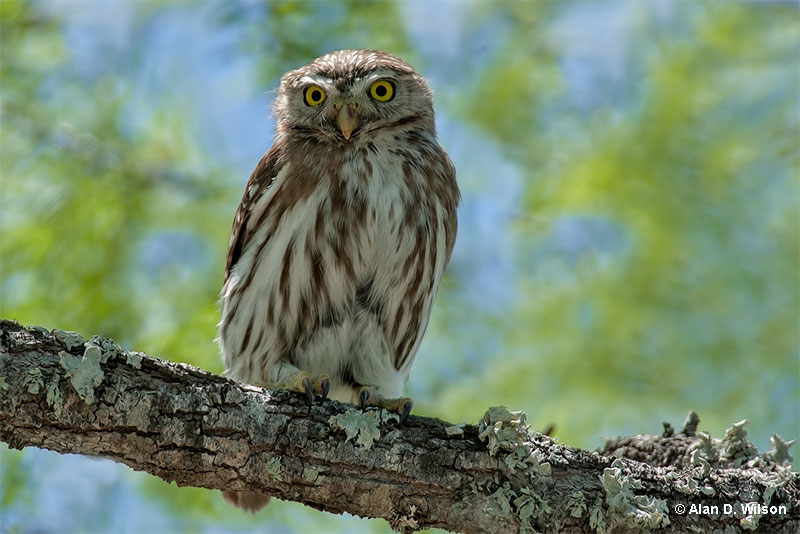
The ferruginous pygmy owl is one of the most widespread small owls in the Americas, found from the southern United States through Central America and deep into South America. It is slightly larger than the tiniest owl species, but still firmly in the “small owl” category.
It lives in a variety of habitats, including dry forests, savannas, scrublands, and even semi-open areas near human settlements.
This species has a compact body with a rounded head and short tail. Its plumage is typically brown with rusty or ferruginous tones, giving it excellent camouflage among tree bark and dry vegetation.
One of its most distinctive features is its “false eyes” on the back of its head—dark markings that may help confuse predators.
Despite its size, this owl is an aggressive hunter. It feeds on a wide range of prey, including large insects, small birds, lizards, and rodents. Unlike many tiny owls that focus mainly on insects, the ferruginous pygmy owl is more opportunistic and can take relatively large prey for its size. It often hunts during early morning and late afternoon, making it more visible than strictly nocturnal species.
It nests in natural tree cavities and old woodpecker holes. Because it is adaptable and uses many different habitats, it has managed to maintain a stable population across much of its range, even in areas with moderate human activity.
6. Northern Pygmy Owl
- Length: 5.9–7.1 in (15–18 cm)
- Wingspan: 12.6–15.0 in (32–38 cm)
- Weight: 2.1–2.5 oz (60–70 g)
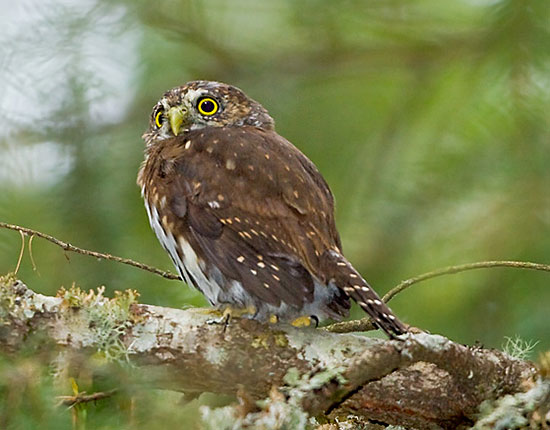
The northern pygmy owl is a small but bold predator found in western North America, especially in coniferous and mixed forests.
Despite its tiny size, it is known for its fearless behavior and ability to take on prey similar to itself in size, including small birds.
This owl has a compact body, a rounded head, and a relatively long tail compared to other pygmy owls. Its coloration is grayish-brown with white spotting on the head and back, helping it blend into tree bark and forest shadows.
One of its most interesting features is its false eye spots on the back of its head, which may help deter predators or confuse other birds.
Unlike many owls, the northern pygmy owl is often active during the day, especially around dawn and dusk. It hunts from exposed perches, scanning for movement before launching quick, direct attacks. Its diet includes insects, small mammals, and birds, making it one of the more versatile small owl hunters.
It nests in tree cavities, often reusing old woodpecker holes. Even though it is small, it is highly territorial and will aggressively defend its hunting area from other birds, including much larger species.
7. Eurasian Pygmy Owl
- Length: 5.9–7.5 in (15–19 cm)
- Wingspan: 12.6–15.4 in (32–39 cm)
- Weight: 1.8–2.8 oz (50–80 g)
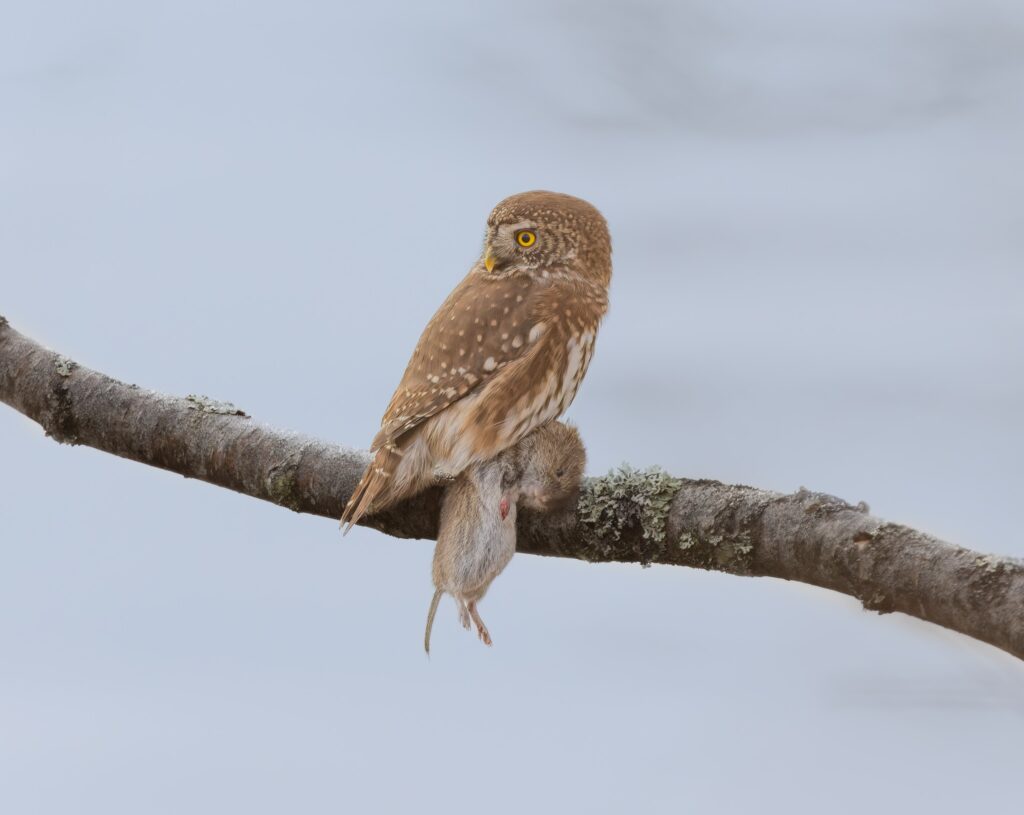
The Eurasian pygmy owl is the smallest owl species in Europe and is found across boreal and montane forests from Scandinavia to parts of Asia. It prefers dense coniferous forests, where it can easily hide and hunt from shaded perches.
This species is very small and compact, with a rounded head, short tail, and relatively large eyes.
Its plumage is brownish-gray with white spotting, which provides excellent camouflage against tree bark and lichen-covered branches. Like several pygmy owls, it also has false eye markings on the back of its head.
The Eurasian pygmy owl is a surprisingly active predator. It feeds on insects, small birds, and rodents, often hunting during daylight hours. It is known for its high hunting efficiency and will sometimes store prey in tree cavities for later use, a behavior not commonly seen in all owl species.
It nests in old woodpecker holes, usually in mature forest stands. Despite its small size, it is territorial and can be quite aggressive when defending its nest or hunting area, even against larger birds.
8. Asian Barred Owlet
- Length: 7.9–9.1 in (20–23 cm)
- Wingspan: 15.7–17.7 in (40–45 cm)
- Weight: 4.2–5.3 oz (120–150 g)
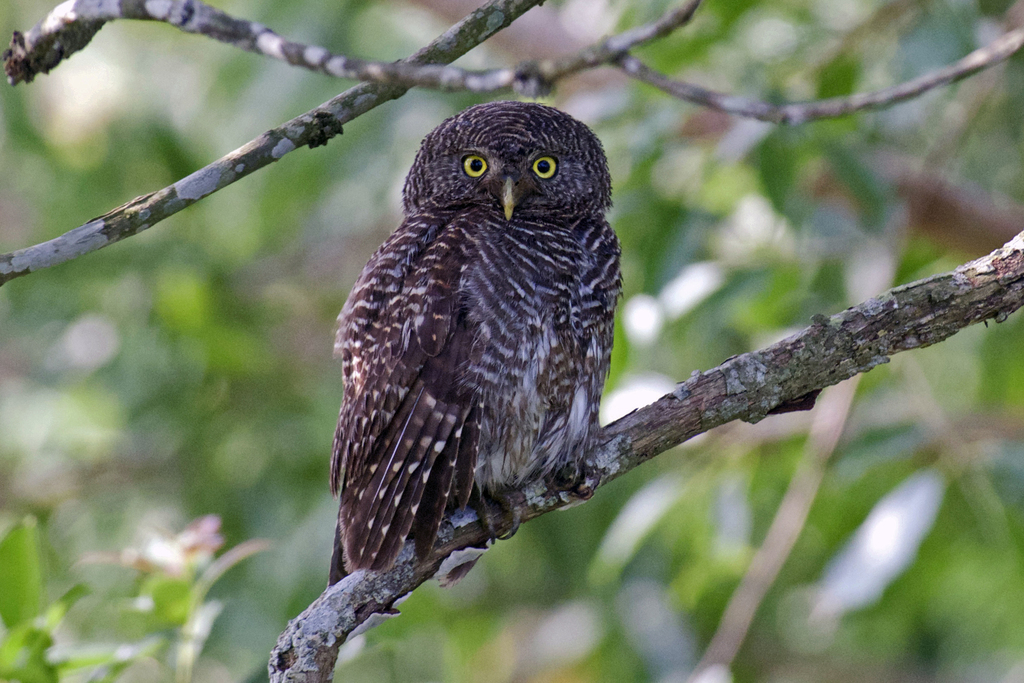
(c) Vijay Anand Ismavel, some rights reserved (CC BY-NC-SA)
The Asian barred owlet is a small owl found across parts of South and Southeast Asia, including India, Nepal, and surrounding regions.
It prefers open woodlands, forest edges, and agricultural areas with scattered trees, making it one of the more visible small owl species in its range.
This owl is slightly larger than the tiniest pygmy owls but still compact in form. It has a rounded head, no ear tufts, and a relatively short tail. Its plumage is brown with fine barring across the chest and belly, giving it a striped appearance that helps it blend into tree trunks and branches.
The Asian barred owlet is active both during the day and at night, which is unusual for many owls. It hunts a variety of prey, including insects, small reptiles, and occasionally small birds. It often hunts from a perch, watching carefully before making quick, direct strikes.
It nests in natural tree cavities and sometimes uses abandoned woodpecker holes. Because it adapts well to modified landscapes, it is relatively common in many parts of its range.
9. Jungle Owlet
- Length: 7.9–8.7 in (20–22 cm)
- Wingspan: 15.7–17.7 in (40–45 cm)
- Weight: 3.9–4.9 oz (110–140 g)
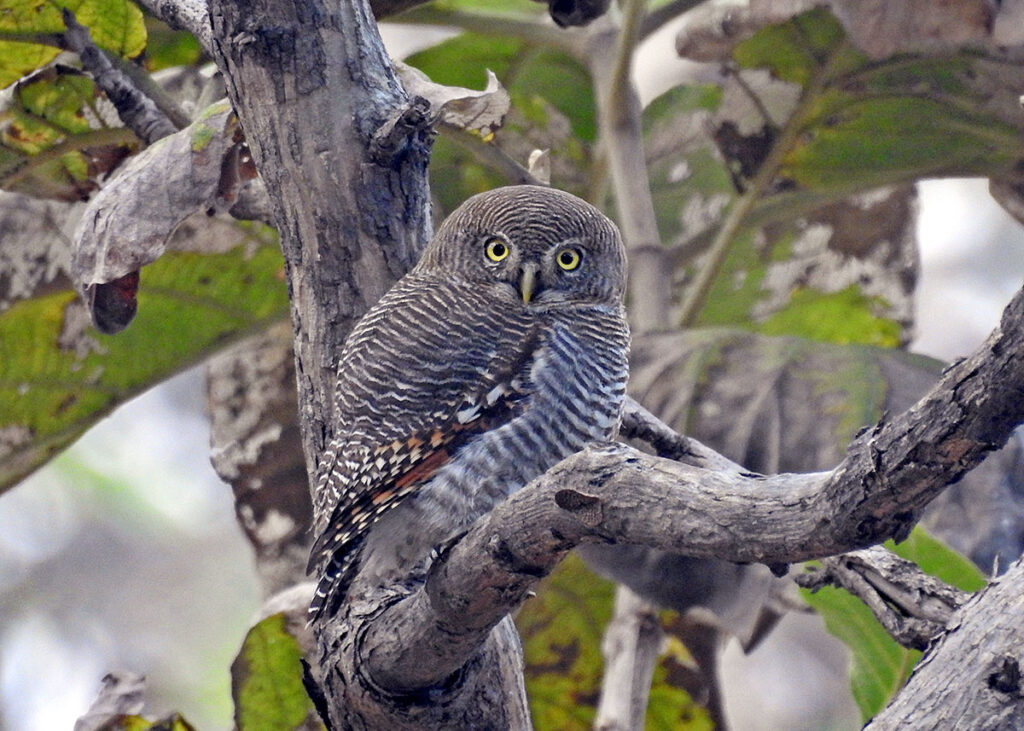
Jungle Owlet (Glaucidium radiatum). Photo by Zainab Khan.
The jungle owlet is a small owl native to the forests and wooded regions of South Asia, including India, Sri Lanka, and surrounding countries. It is commonly found in deciduous forests, plantations, and even suburban wooded areas.
This species has a compact, rounded body with a short tail and relatively large head. Its plumage is brown with fine barring and streaking, which provides excellent camouflage in dappled forest light. Its eyes are bright yellow, giving it a striking appearance when seen up close.
The jungle owlet is a diurnal hunter, often active during early morning and late afternoon hours. It feeds mainly on insects, small reptiles, and occasionally small mammals. It is an alert and agile hunter, often seen perched openly before quickly darting after prey.
It nests in tree cavities, especially old woodpecker holes. Despite being small, it is territorial and will defend its nesting area aggressively against intruders.
10. Spotted Owlet
- Length: 7.5–8.3 in (19–21 cm)
- Wingspan: 19.7–22.0 in (50–56 cm)
- Weight: 4.2–6.0 oz (120–170 g)
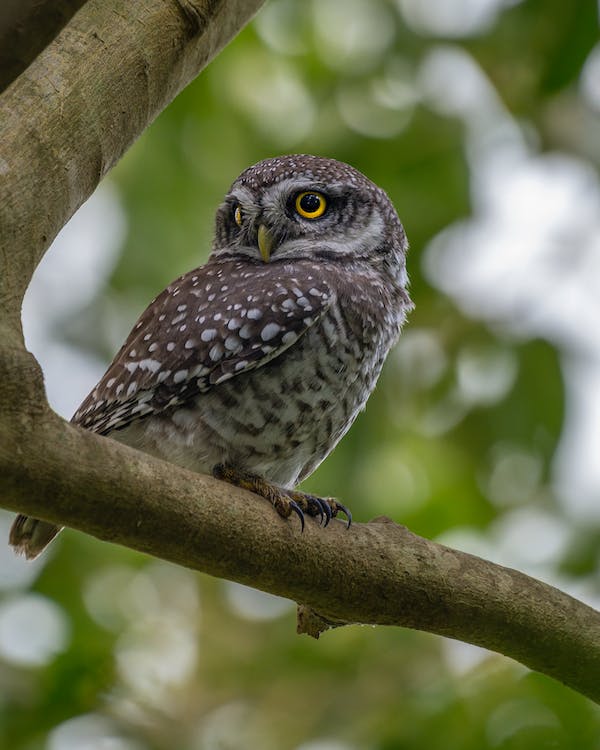
The spotted owlet is one of the most familiar small owls in South Asia and is often seen in open landscapes, farmlands, and even urban areas. Unlike many secretive owls, it is quite adaptable and frequently lives near human settlements.
This owl has a stocky body, rounded head, and short tail. Its plumage is gray-brown with distinct white spotting, especially on the head and wings.
Its bright yellow eyes give it a bold, alert expression.
The spotted owlet is both nocturnal and crepuscular, meaning it is active during night and twilight hours. It feeds on insects, small rodents, and reptiles, often hunting from low perches or even on the ground.
It nests in tree cavities, buildings, and abandoned structures, making it highly adaptable. Its ability to thrive in human-modified environments has helped it remain widespread and common across much of its range.
Related: The Intelligence Of Owls
4. Why Are Some Owls So Small?
Not all owls evolved into large, powerful hunters. In fact, several species became smaller over time because it simply worked better for their environment. Small size is not a weakness in these birds—it is a solution. In many cases, being tiny helps them survive in places where larger owls would struggle to find food, shelter, or even space.
One of the main reasons owls become small is food specialization. Small owl species, including birds like the Elf Owl, mainly feed on insects rather than mammals or birds. Insects are abundant in many habitats, but they are small and scattered. A smaller body needs less energy to survive, so it makes sense to evolve into a size that matches this type of prey. Over time, natural selection favors individuals that can survive efficiently on a lighter diet.
Another key factor is habitat size and structure. Many small owls live in dense forests, deserts, or thick vegetation where flying long distances is not practical. Smaller bodies are more agile, allowing them to move easily through tight spaces, branches, or cactus cavities. In contrast, large owls need open areas to hunt effectively.
Competition also plays a major role. In regions where large owls already dominate the ecosystem, smaller species reduce competition by focusing on different prey and hunting styles. This ecological separation allows both large and small owls to exist in the same general area without directly competing.
Finally, energy efficiency is a major evolutionary driver. Small owls require less food overall, which is especially useful in environments where prey availability fluctuates seasonally. Instead of needing a constant supply of mammals or birds, they can survive on insects that appear in bursts.
In short, small owls are not “less evolved”—they are finely tuned to specific ecological roles. Their size is the result of millions of years of adaptation, balancing food availability, habitat constraints, and competition in a way that maximizes survival.
5. How Are Small Owls Adapted to Their Size?
Small owls may look delicate at first glance, but their bodies are built with very specific adaptations that make their tiny size highly effective. Every part of their anatomy and behavior is shaped to help them survive, hunt, and avoid danger in environments where efficiency matters more than strength.
One of the most important adaptations is their lightweight body structure. Species such as the Least Pygmy Owl have reduced body mass, which allows them to fly with less energy and maneuver quickly through dense forests or tight vegetation. Their bones are light but strong, giving them agility without sacrificing durability.
Their wings are short and rounded, designed for quick bursts of flight rather than long-distance gliding. This helps them navigate cluttered habitats like dense forests or cactus deserts. Instead of soaring like larger owls, they rely on rapid acceleration and precise control.
Another key adaptation is their proportionally large head and eyes. Even in very small species, the eyes take up a significant portion of the skull. This improves night vision and helps them detect even the smallest movement in low light conditions. Their hearing is also highly developed, allowing them to locate insects or small prey hidden in vegetation.
Behavior is just as important as physical traits. Small owls often use perch-and-wait hunting strategies, staying still for long periods before launching quick attacks. This conserves energy and increases hunting success. Many species also use tree cavities or natural hollows for nesting, reducing the need to build nests and providing protection from predators and weather.
Camouflage is another crucial adaptation. Species like the Ferruginous Pygmy Owl have feather patterns that blend perfectly with bark, branches, or dry foliage. This helps them stay hidden from both prey and larger predators.
In combination, these adaptations show that small owls are not limited by their size—they are specialized for it. Every feature, from wings to behavior, is optimized for survival in a very specific ecological niche.
6. How Small Owls Survive Next to Bigger Birds
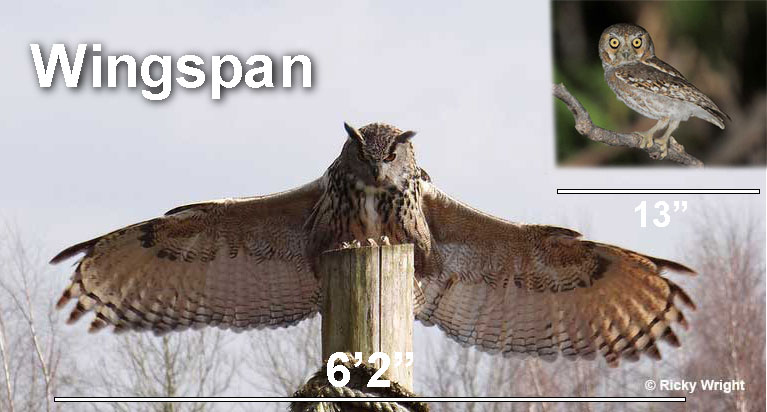
Living alongside larger owls and birds of prey might seem risky for such small hunters, but small owl species have developed smart ways to avoid direct competition. One of the most important strategies is niche separation. Bigger owls, such as the Eurasian Eagle-Owl, focus on hunting mammals, birds, and larger prey in open areas. Small owls, like the Northern Pygmy Owl, shift toward insects, small reptiles, and tiny vertebrates, reducing overlap in food sources.
Habitat choice also plays a major role. Small owls tend to stay in dense forests, thick brush, or cactus-filled deserts where larger owls struggle to move efficiently. This natural separation keeps encounters to a minimum.
Another survival trick is stealth and behavior. Small owls often remain still and hidden during the day, using camouflage to avoid being noticed. When they do hunt, they rely on quick, precise movements rather than prolonged chases, making them less visible and less vulnerable.
In some cases, they even benefit from being small—fitting into tree cavities or tight spaces that larger birds cannot access. This reduces both competition and predation pressure, allowing them to quietly share the same ecosystems with much bigger and stronger predators.
7. Where Small Owls Live Around the World
Small owl species are spread across many different regions, but they are most diverse in warm climates. The Americas are especially rich in pygmy owls and tiny forest hunters, while Asia and parts of Europe host their own unique species adapted to local forests and open landscapes.
In North America, species like the Elf Owl live in desert regions, while others such as the Northern Pygmy Owl inhabit mountain forests and coniferous woodlands. In South America, tropical forests provide ideal conditions for small insect-eating owls that thrive in dense vegetation.
Europe and northern Asia are home to species like the Eurasian Pygmy Owl, which prefers cold, boreal forests with plenty of old trees for nesting cavities. In contrast, Asia hosts adaptable species such as the Spotted Owlet, which is often seen in open farmland and even near human settlements.
Across all these regions, the common factor is habitat structure. Small owls prefer environments where they can find shelter, hunt small prey, and avoid direct competition with larger predators.
Read More: Owl Eyes In Full: How Well Can Owls See?
8. Conservation and Challenges
Although many small owl species are still widespread, some face growing pressure from habitat loss and environmental change. Forest clearing, agriculture, and urban expansion reduce the number of old trees and natural cavities they depend on for nesting.
Species with limited ranges, such as the Long-whiskered Owlet, are especially vulnerable because they cannot easily move to new areas. Even common species may experience local declines if insect populations drop due to pesticide use or climate change.
©Matt Grube
Protecting forests, preserving old trees, and maintaining natural ecosystems are essential for keeping these small predators part of the landscape.
9. Interesting Facts About Small Owls
- Some of the smallest owls, like the Elf Owl, can fit easily inside a human hand.
- Despite their tiny size, many small owls are bold hunters and may attack prey close to their own body weight.
- Several species, including pygmy owls, have “false eyes” on the back of their heads to confuse predators.
- Some small owls are active during the day as well as at night, unlike most owl species.
- The Northern Pygmy Owl is known for hunting birds nearly as large as itself.
- Many small owls rely heavily on old woodpecker holes or natural tree cavities for nesting.
- The Eurasian Pygmy Owl sometimes stores extra prey in tree holes for later use.
- Some species can rotate their heads up to 270 degrees despite their small body size.
- Small owls often have extremely fast reflexes, allowing them to catch insects mid-flight.
- Even the tiniest species play an important ecological role by controlling insect populations in their habitats.
Why Small Owls Matter More Than You Think
Small owl species show that size does not define success in nature. From desert-dwelling hunters like the elf owl to forest specialists hidden in dense canopies, each species has found a unique way to survive and thrive. Their adaptations—light bodies, efficient hunting strategies, and smart use of habitat—allow them to live alongside much larger and more powerful birds.
In the end, these tiny owls are a powerful reminder that nature often rewards specialization over size, and that even the smallest predators can play a big role in the ecosystem.