

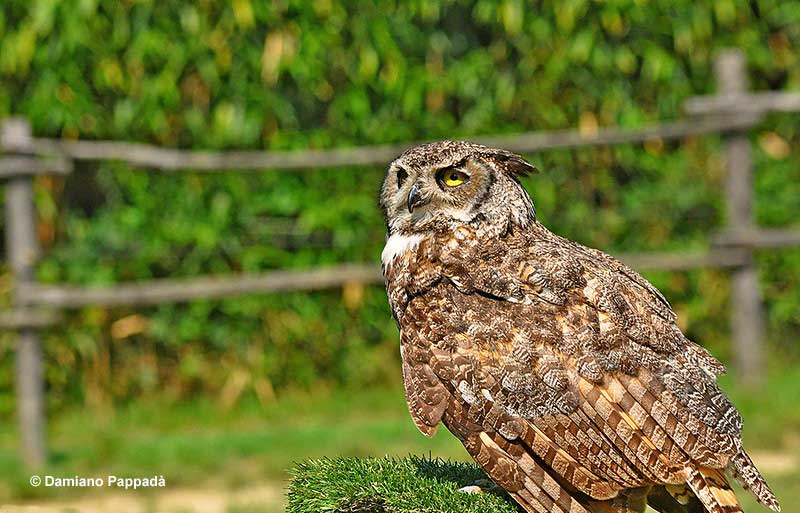
The Blakiston’s fish owl holds the title of the world’s largest owl. This giant of the night can reach a wingspan of up to 2 meters (over 6.5 feet) and weigh as much as 4.6 kilograms (10 pounds), making it heavier and broader-winged than any other owl on Earth.
Owls have always fascinated us—silent hunters of the night, cloaked in mystery and majesty. Yet among their many species, a few stand out not just for their haunting calls or piercing eyes, but for their incredible size.
- 1. Blakiston’s Fish Owl – The Heaviest Owl Species
- 2. Eurasian Eagle-Owl – The Most Widespread Giant
- 3. Great Grey Owl – The Tallest Owl Species
- 4. Philippine Eagle-Owl – The Largest Owl in the Philippines
- 5. Great Horned Owl – North America’s Apex Predator
- 6. Snowy Owl – The Arctic Giant
- 7. Spot-bellied Eagle-Owl
- Other Notable Large Owl Species
Some are the heaviest, others the tallest, and a few dominate with their immense wingspans.
In this guide, we’ll explore seven of the most impressive giant owls, comparing their measurements, habitats, and hunting adaptations. From frozen Siberian forests to tropical African savannas, these nocturnal predators show the remarkable variety of nature’s largest owls. Whether you’re a birdwatcher, a wildlife enthusiast, or simply curious, prepare to meet the true giants of the owl world.
1. Blakiston’s Fish Owl – The Heaviest Owl Species
Bubo blakistoni
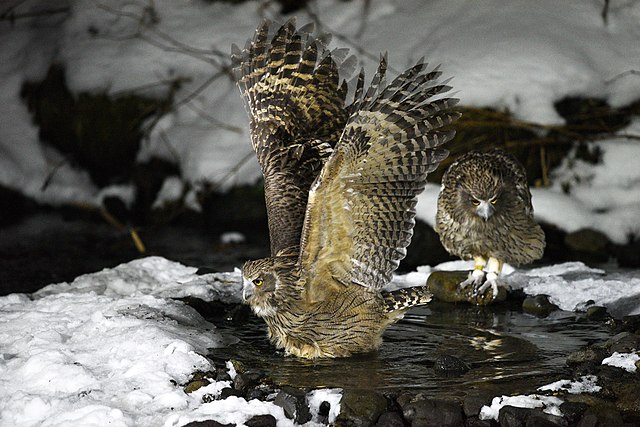
Photo by Takashi Muramatsu
Wingspan: Up to 2.0 meters (6.6 feet)
Weight: Up to 4.6 kg (10.1 lbs)
Length: Up to 72 cm (28.3 inches)
Habitat: Riparian forests of Eastern Russia, northeastern China, and Hokkaido, Japan
Conservation Status: Endangered. The Blakiston’s Fish Owl holds the title of the largest owl species by weight, with females reaching up to 4.6 kg. This formidable bird primarily inhabits dense forests near rivers, preying on fish and other aquatic animals. Its impressive size and rarity make it a subject of conservation efforts across its range.
The Blakiston’s Fish Owl is a true giant among owls, earning its reputation as the heaviest owl species in the world. While its massive wingspan allows for surprisingly silent flight, it is the sheer bulk of this bird that sets it apart from other large raptors.
Native to the riparian forests of Eastern Russia, northeastern China, and Hokkaido, Japan, it has adapted to thrive along rivers and streams, where its primary diet consists of fish, amphibians, and small mammals. Its powerful talons are perfectly designed to snatch slippery prey from water, and its keen eyesight enables it to hunt effectively even in low-light conditions.
Despite its dominance in its habitat, the Blakiston’s Fish Owl remains a rare and elusive species. Deforestation, river modification, and human disturbance have significantly reduced its populations, making it a key focus of conservation programs in the regions it inhabits.
Observing one in the wild is a rare and unforgettable experience, offering a glimpse of the extraordinary scale and elegance of the biggest owls in the world. Its presence is not only a testament to the diversity of owl species but also a reminder of the delicate balance required to protect these remarkable nocturnal predators.
2. Eurasian Eagle-Owl – The Most Widespread Giant
Bubo bubo
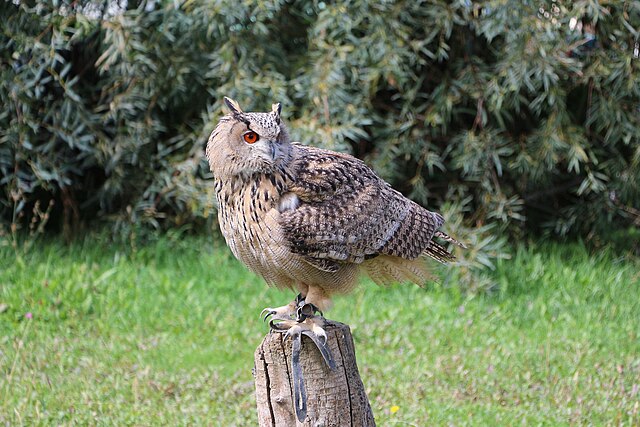
Photo copyright Wikicommons
Wingspan: Up to 2.0 meters (6.6 feet)
Weight: Up to 4.6 kg (10.1 lbs)
Length: Up to 75 cm (29.5 inches)
Habitat: Across Eurasia, from Iberia and Scandinavia to China
Conservation Status: Least Concern. The Eurasian Eagle-Owl is often considered the largest owl in the world by wingspan and weight. With its striking orange eyes and prominent ear tufts, this owl is a formidable predator, capable of hunting a wide range of prey, including mammals as large as foxes and young deer.
The Eurasian Eagle-Owl is a true symbol of power and adaptability, earning its reputation as one of the largest owls in the world. Its striking orange eyes and prominent ear tufts make it instantly recognizable, while its immense wingspan—up to 2 meters—allows for both silent flight and impressive maneuverability.
Unlike many large owls that are restricted to specialized habitats, the Eurasian Eagle-Owl thrives across a vast range of environments, from the rocky cliffs of Iberia to the dense forests of China.
This adaptability is matched by its formidable hunting skills. It preys on a diverse array of animals, from small rodents and birds to larger mammals such as foxes and young deer, showcasing remarkable strength and precision. Its hunting strategy combines stealth, patience, and explosive bursts of speed, demonstrating why it is considered a top predator in its ecosystem.
Despite its size and prowess, the Eurasian Eagle-Owl has a relatively stable population, earning a status of Least Concern, though it still faces threats from habitat destruction, human disturbance, and illegal hunting in some regions.
Observing this owl in the wild is awe-inspiring—its presence commands respect and highlights the incredible diversity and adaptability of the biggest owl species in the world.
3. Great Grey Owl – The Tallest Owl Species
Strix nebulosa
- Wingspan: Up to 1.8 meters (5.9 feet)
- Weight: Up to 2.5 kg (5.5 lbs)
- Length: Up to 84 cm (33 inches)
- Habitat: Boreal forests of North America and northern Eurasia
- Conservation Status: Least Concern
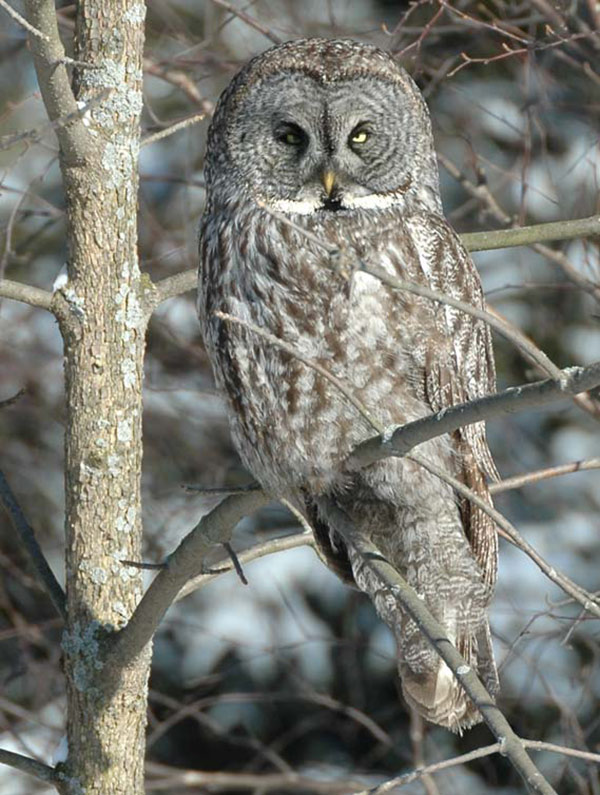
The Great Grey Owl stands out among its relatives not for bulk, but for height, making it the tallest owl species in the world. With a body length reaching up to 84 centimeters and an impressive wingspan approaching 1.8 meters, this owl cuts a striking figure as it glides silently through the boreal forests of North America and northern Eurasia.
Its large, round facial disc, framed by concentric rings of feathers, is not just for show—it functions as a radar, funneling sound to its exceptionally sensitive ears and allowing it to locate prey even beneath layers of snow.
Unlike heavier owl species, the Great Grey relies more on stealth and precision than brute strength. It primarily hunts small mammals such as voles, lemmings, and occasionally birds, plunging from perches to swoop silently onto unsuspecting prey. Its long tail aids in maneuverability, and despite its size, it can hover briefly to pinpoint movement below.
Though not considered endangered, the Great Grey Owl is relatively elusive, often remaining hidden deep within dense forests. Spotting one is a rare and memorable experience, reminding observers that size is not the only measure of power in the world of owls. This gentle giant embodies both the elegance and the cunning that make the largest owls in the world so fascinating.
4. Philippine Eagle-Owl – The Largest Owl in the Philippines
Bubo philippensis
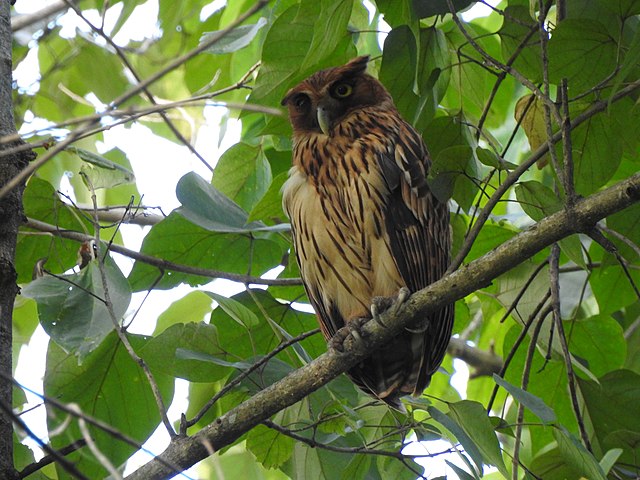
- Wingspan: Approximately 1.5 meters (4.9 feet)
- Weight: Up to 4.2 kg (9.2 lbs)
- Length: Up to 60 cm (23.6 inches)
- Habitat: Forests of the Philippines
- Conservation Status: Critically Endangered
The Philippine Eagle-Owl is a striking example of one of the largest owl species in Southeast Asia, known for its impressive size, distinctive plumage, and commanding presence. Endemic to the forests of the Philippines, this owl thrives in dense, tropical woodlands where it quietly patrols its territory under the cover of night.
With a wingspan approaching 1.5 meters and a body weight of up to 4.2 kilograms, it is the biggest owl in its region, combining power with the stealth typical of nocturnal hunters.
Its large, forward-facing eyes and facial disc enhance night vision and sound localization, enabling it to detect even the slightest movements of prey. Unlike some of the heavier owls that may rely on brute strength, the Philippine Eagle-Owl exhibits remarkable agility, swooping silently from tree to tree to catch mammals, birds, and occasionally reptiles.
Sadly, this magnificent bird is critically endangered. Habitat loss due to deforestation, human encroachment, and hunting pressures have significantly reduced its population, making encounters in the wild increasingly rare. Observing a Philippine Eagle-Owl is both awe-inspiring and humbling—a reminder of nature’s grandeur and fragility. Its presence underscores the importance of conservation efforts to protect the largest and most remarkable owls in the world for future generations.
5. Great Horned Owl – North America’s Apex Predator
Bubo virginianus
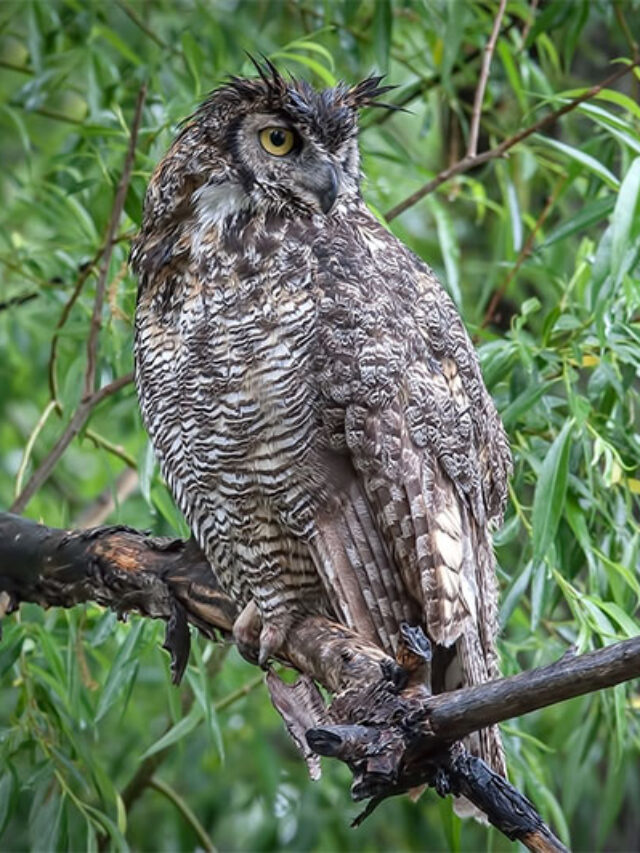
- Wingspan: Up to 1.5 meters (4.9 feet)
- Weight: 2.0–2.5 kg (4.4–5.5 lbs)
- Length: 46–63 cm (18–25 inches)
- Habitat: Forests, wetlands, deserts, and suburban areas across the Americas
- Conservation Status: Least Concern
The Great Horned Owl is one of the most iconic and widely recognized owls in the Americas, known for its striking ear tufts, deep hoots, and impressive predatory skills. Often considered one of the largest owl species in the Western Hemisphere, it combines power, adaptability, and intelligence to dominate a variety of habitats—from dense forests and wetlands to suburban landscapes.
Its muscular build and sharp talons allow it to take prey much larger than itself, including rabbits, skunks, and even other birds of prey. Despite its size, the Great Horned Owl relies on stealth and precision, gliding silently to strike unsuspecting prey. Its remarkable hearing and night vision make it a master hunter, perfectly adapted for nocturnal life.
Widespread and abundant, the Great Horned Owl continues to thrive even near human settlements, demonstrating the versatility and resilience of this formidable bird. Observing one in the wild is a thrilling experience, as it embodies the perfect balance of strength, cunning, and grace that defines some of the biggest owls in the world.
6. Snowy Owl – The Arctic Giant
Bubo scandiacus
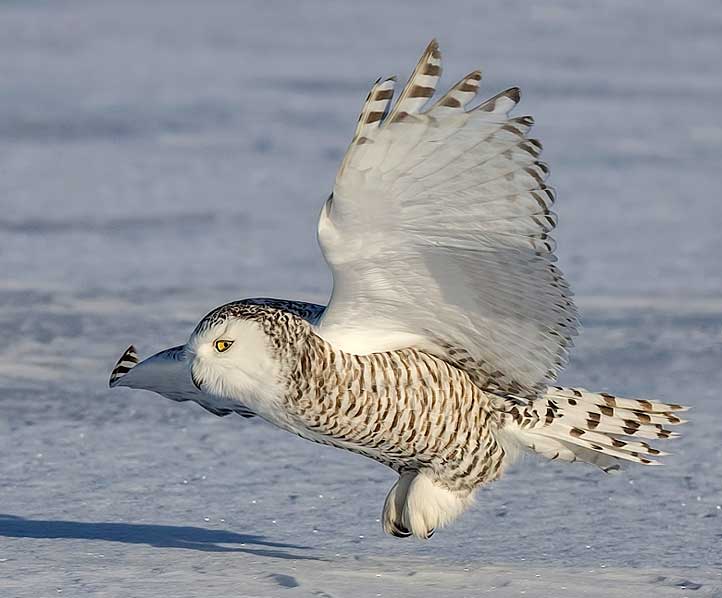
- Wingspan: Up to 2.0 meters (6.6 feet)
- Weight: Up to 3.0 kg (6.6 lbs)
- Length: Up to 71 cm (28 inches)
- Habitat: Arctic tundra of North America and Eurasia
- Conservation Status: Least Concern
The Snowy Owl is one of the most striking and easily recognizable owls in the world, famous for its pristine white plumage and commanding presence. As one of the largest owl species by wingspan and height, it dominates the Arctic tundra where it hunts across open landscapes. Its broad wings, combined with powerful muscles, allow it to glide silently over snowfields, spotting prey from great distances.
This owl primarily feeds on small mammals, particularly lemmings, but it can also take rabbits, birds, and other available prey, showcasing its adaptability and impressive hunting skills. Its keen eyesight and acute hearing enable it to detect movement even beneath layers of snow, while its thick feathers provide insulation against extreme cold.
Although the Snowy Owl is currently not endangered, it faces challenges from climate change and habitat disruption, which can affect prey availability. Seeing a Snowy Owl in the wild is a rare and unforgettable experience. Its sheer size, striking plumage, and Arctic prowess make it one of the biggest owls in the world and a true emblem of the northern wilderness.
7. Spot-bellied Eagle-Owl
Bubo nipalensis
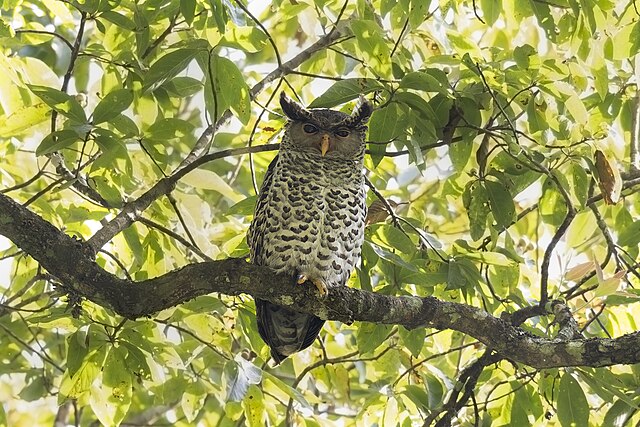 Photo by Anjan Kumar Kundu (Creative Commons Attribute-Share Alike 4.0)
- Wingspan: Up to 1.7 meters (5.6 feet)
- Weight: 2–3 kg (4.4–6.6 lbs)
- Length: 60–75 cm (23–29.5 inches)
- Habitat: Forested hills and mountains of the Himalayas, Southeast Asia
- Conservation Status: Least Concern
The Spot-bellied Eagle-Owl is one of Asia’s most impressive large owls, combining formidable size with a striking appearance. Its name comes from the unique spotted pattern on its underparts, which helps camouflage it among dense forest foliage. With a wingspan of up to 1.7 meters and a weight approaching 3 kilograms, it is among the largest owl species in its range, capable of hunting prey much larger than typical forest owls.
This owl is a nocturnal predator, feeding on mammals, birds, and reptiles, and it demonstrates remarkable agility in navigating steep, forested terrain. Its powerful talons, sharp beak, and silent flight make it a highly effective hunter despite the challenging environment of its mountainous habitat.
Although it is currently listed as Least Concern, the Spot-bellied Eagle-Owl faces threats from deforestation and habitat fragmentation. Spotting one in the wild is rare, offering a breathtaking glimpse of one of Asia’s biggest and most elusive owls. Its size, strength, and mysterious nocturnal behavior place it firmly among the giants of the owl world.
Other Notable Large Owl Species
- Indian Eagle-Owl (Rock Eagle-Owl) – Bubo bengalensis. A large owl native to India and Sri Lanka, closely related to the Eurasian Eagle-Owl. Known for its powerful build and deep hoots.
- Verreaux’s Eagle-Owl – Bubo lacteus. Also called the Giant Eagle-Owl, native to sub-Saharan Africa. It’s among the largest owls in the world and preys on mammals up to the size of small antelopes.
- Brown Fish Owl – Ketupa zeylonensis. Found in South and Southeast Asia, this owl is similar to Blakiston’s Fish Owl but smaller. Adapted for fishing in rivers and wetlands.
- Spot-bellied Eagle-Owl – Bubo nipalensis. Native to the Himalayas and Southeast Asia, a large forest-dwelling predator with distinctive spotted underparts.
- Masked Owl (Greater Masked Owl) – is one of the largest and heaviest barn owls, native to Australia and New Guinea, known for its distinctive heart-shaped face and powerful hunting abilities.