

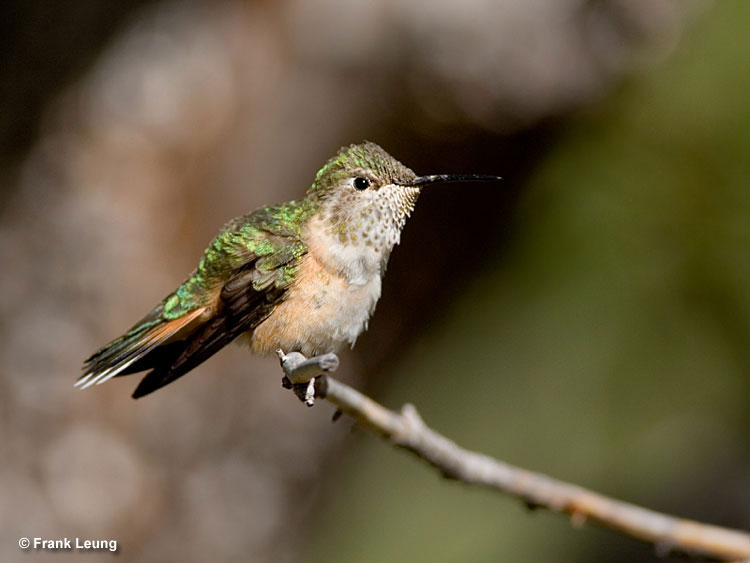
Spring in New Mexico brings an incredible variety of hummingbirds.
Ruby-throateds are seen here, but the real stars are species like the Broad-tailed, Black-chinned, and Rufous Hummingbirds. Calliope and even Anna’s sometimes make appearances, giving birdwatchers plenty of surprises.
Their cycle is one of constant movement. They arrive with the first blooms, nest during the warm months, and then head south toward Mexico and Central America.
Curious about when these tiny migrants leave New Mexico backyards? Let’s take a closer look.
Why Are Hummingbirds So Diverse in New Mexico?
Geography
New Mexico’s landscape is a patchwork of deserts, canyons, and mountain meadows. This variety of habitats makes it one of the best states for hummingbird diversity.
While the Broad-tailed and Black-chinned are the most common breeders, others migrate through or stop to refuel.
Migration Routes
New Mexico sits right on the Central Flyway. Birds moving north from Mexico each spring pass directly through the state.
In fall, these same routes funnel them back south, creating prime viewing opportunities at feeders and wildflower patches.
Desert valleys and towns welcome Black-chinned Hummingbirds
Climate & Habitat
High mountain meadows attract Broad-tailed Hummingbirds, while desert valleys and towns welcome Black-chinned Hummingbirds.
Gardens, riversides, and wildflower fields provide nectar all summer long. But once cold nights return in late fall, hummingbirds must continue south.
Vagrants
Though less common, Rufous, Calliope, and even Anna’s Hummingbirds can be seen.
Rufous are especially frequent during late-summer migration, while Anna’s occasionally linger in southern New Mexico in winter. These sightings keep local birders on their toes.
The Departure Window in New Mexico
Black-chinned and Broad-tailed Hummingbirds usually arrive in April.
By May, feeders are busy across much of the state.
Through summer, they raise young and take full advantage of blooming wildflowers and backyard nectar.
By mid-to-late July, the first departures begin—usually adult males. Rufous Hummingbirds arrive about this time, passing through on their way south. Females and juveniles follow in August and September.
By October, most hummingbirds have left, though a few stragglers or late migrants may linger.
What Triggers Their Departure?
Have you noticed the buzz around your feeders fading as evenings get cooler?
That’s not by accident.

High mountain meadows attract Broad-tailed Hummingbirds
Shorter daylight hours and cooling nights signal to hummingbirds that it’s time to go. Flowers begin to fade, and insects become scarce.
Even with feeders full, hummingbirds won’t stay beyond their natural window. Their internal clock is set for migration, ensuring they reach Mexico or Central America before winter weather arrives.
The Right Time to Take Feeders Down
It’s easy to wonder: when should feeders come down in New Mexico?
The best approach is to leave them up at least two weeks after your last sighting. This helps late travelers or southbound Rufous Hummingbirds refuel.
Leaving feeders out won’t stop them from migrating.

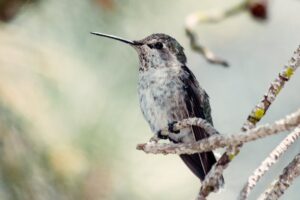
Anna’s Hummingbird can occasionally be seen in New Mexico, if you’re lucky.
Instinct tells them when to move on. By keeping nectar fresh, you’re giving them a better chance at surviving their long flight.
A Seasonal Guide for New Mexico Homes
Want a simple way to plan your hummingbird year? Here’s a seasonal breakdown for New Mexico!
| Season | What to Expect |
|---|---|
| Spring (April–May) | Black-chinned and Broad-tailed Hummingbirds arrive; feeders get busy. |
| Summer (June–July) | Nesting season; high activity at gardens, meadows, and feeders. |
| Late Summer (August) | Rufous Hummingbirds pass through in large numbers. |
| Fall (September–October) | Migration south; fewer visits until the last stragglers leave. |
| Winter (November–March) | Most species absent; Anna’s occasionally linger in southern areas. |
Have you ever seen an Anna’s at your feeder in January? Those rare moments make winter birdwatching in New Mexico extra rewarding.
Final Thoughts on When Hummingbirds Leave New Mexico
New Mexico is one of the best states to enjoy hummingbirds, from spring arrivals to fall departures.
By keeping feeders ready and watching closely, you can support their journey and enjoy their company until they return again next year.