

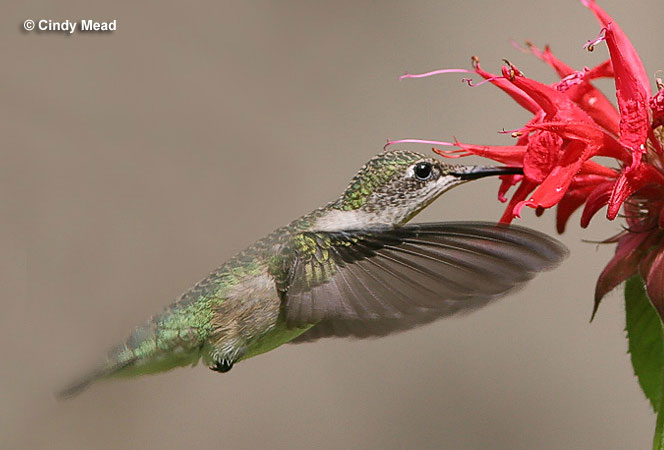
Step outside on a warm spring morning and you might see a flash of green darting near your flowers or feeder. That’s Michigan’s most loyal summer visitor—the Ruby-throated Hummingbird. These tiny birds are the only hummingbird species that regularly migrate to Michigan each year.
They arrive in spring, raise their families during the sunny months, and then take off on an impressive journey south when autumn arrives. Once in a while, birdwatchers get lucky and spot a rare vagrant like a Rufous Hummingbird, but for the most part, Ruby-throats steal the spotlight.
Curious about when they come, why they leave, and how you can support them along the way?
Let’s take a closer look.
Why Is the Ruby-Throated Hummingbird the Only Species in Michigan?
Geography
Think about Michigan’s spot on the map. Surrounded by the Great Lakes and tucked into the upper Midwest, the state is right in the path of Ruby-throated Hummingbirds traveling north each spring.
Their migration path connects Central America with the eastern half of the United States. Because of this, Ruby-throats thrive here, while other hummingbird species stick to different parts of the country.
Migration Routes
Ruby-throats take a very specific path. Each spring, many of them cross the Gulf of Mexico in one nonstop flight—a trip of up to 500 miles. From there, they head north through the southeastern states and continue all the way into Michigan by late April or early May.
Western species, such as Calliope or Broad-tailed Hummingbirds, have different routes that don’t overlap with Michigan’s skies. That’s why Ruby-throats dominate here year after year.

If you’re lucky, you can spot Rufous Hummingbird
Climate & Habitat
Michigan offers hummingbirds exactly what they need during the warmer months. Flowering plants bloom across yards, fields, and forests, providing nectar. Insects are plentiful, giving protein for growing chicks.
The mix of natural and human-planted habitats means they have plenty of places to feed and nest. But as soon as the temperatures begin to dip and flowers fade, hummingbirds must move south to survive. Michigan winters are simply too cold and too long for them.
Vagrants
Every so often, a sharp-eyed birder spots something unusual: a hummingbird that doesn’t belong in Michigan. These vagrants—such as Rufous or Anna’s Hummingbirds—usually wander off course. While extremely rare, these sightings add excitement to birdwatching.
Imagine looking out at your feeder one chilly October day and realizing you’re hosting a bird most often seen thousands of miles away.
The Departure Window in Michigan
Hummingbirds don’t leave Michigan in one big wave.
Instead, their departure is spread over weeks. The earliest Ruby-throats begin their journey south in late August.
By September, activity at feeders is at its busiest, as birds fuel up for the trip. Then, as the month continues, numbers drop steadily.
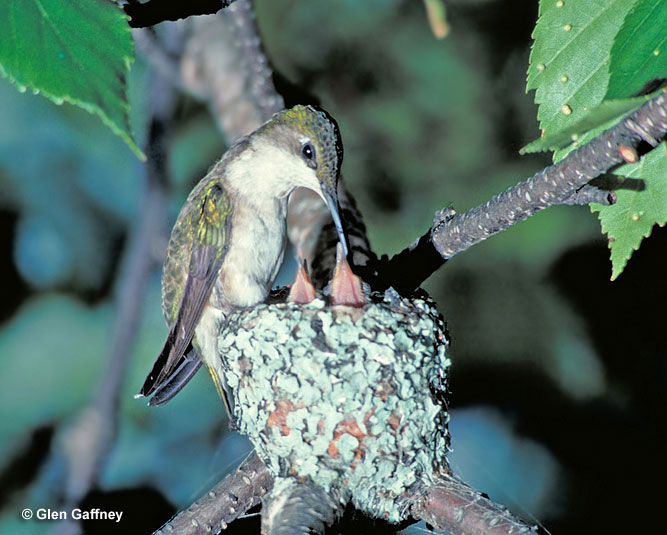
Ruby-throated Hummingbird in a Nest
By early October, most hummingbirds have already disappeared. If you’re paying close attention, you might notice that adult males leave first, followed by females and then the young birds of the year.
Each has its own timetable, but together they follow a cycle that repeats with remarkable precision.
What Triggers Their Departure?
The question many people ask is: what makes hummingbirds leave? Surprisingly, it isn’t just about chilly air or fewer flowers. The biggest trigger is daylight. As the days grow shorter, a hummingbird’s body responds by storing fat and preparing for migration.
This inner calendar is hardwired and keeps them on schedule. Of course, food supply still plays a role—fewer insects and blooming plants signal that it’s time to move on. Combined, these cues ensure that hummingbirds depart before Michigan’s frosts arrive, giving them the best chance to reach their winter homes safely.
The Right Time to Take Feeders Down
Here’s a common concern: “If I leave my feeders up too long, will the hummingbirds stay too late?”
The answer is no.
Hummingbirds leave because their instincts tell them to, not because of whether food is available.
In fact, keeping feeders out can help. At least 2 weeks after last ones are gone

Late migrants, including young birds making the journey for the first time, benefit from that extra sip of sugar water along the way.
The best practice is simple—leave your feeders up for about two weeks after you’ve seen the last hummingbird. If your feeder has been quiet for a while, then it’s safe to take it down, give it a good cleaning, and store it until spring.
A Seasonal Guide for Michigan Homes
Hummingbirds are creatures of routine. By following their yearly cycle, you can plan when to expect them, when to prepare your feeders, and when to watch for their departure. Here’s a handy guide to help Michigan homeowners keep track:
| Season | What’s Happening in Michigan |
|---|---|
| Early Spring | First Ruby-throats arrive (late April–early May). Gardeners often spot them near blooming fruit trees. |
| Late Spring | Females build tiny nests out of spider silk and plant fluff. Eggs are laid and incubated. |
| Summer | Young hummingbirds hatch, fledge, and begin feeding on their own. Feeders stay very active. |
| Late Summer | Birds feed heavily to build fat reserves. Feeder activity often peaks in August and September. |
| Fall | Adults and juveniles depart in waves, most gone by late September. A few linger into October. |
| Winter | No hummingbirds remain in Michigan. Feeders can be stored until spring. |
Have you ever noticed how suddenly they seem to vanish? One week, your feeder is buzzing with activity. The next, it’s quiet. That’s migration at work.
Final Thoughts on When Hummingbirds Leave Michigan
By the time Michigan’s trees blaze with fall color, most hummingbirds are already on their way south.
Keeping feeders up a bit longer helps stragglers, and then it’s just a matter of waiting until spring.
Soon enough, the cycle begins again with the first flash of wings at your feeder.