

As a bird enthusiast, you’ve likely noticed the remarkable diversity in bird beaks. Finches sport short, conical beaks, warblers have small, thin ones, and herons display long spear-like beaks.
Each species also uses its beak differently, reflecting a unique adaptation to its feeding habits and lifestyle. Want to learn more about what birds use them for and what types there are? Here’s a quick overview!
What do birds use their beaks for?
Birds’ beaks are versatile multi-tools, designed to aid with essential survival tasks. They are used for pecking, grasping, holding, and manipulating various items, including food and objects.
The shape and structure of a bird’s beak are thus closely related to its habits and diet.
For example, hawks have sharp, hooked beaks that are perfect for tearing meat, while hummingbirds have long, slender beaks that are ideal for sipping nectar from flowers.
Additionally, the beaks of some species are equipped with sensory receptors that help them detect prey or navigate their environment, much like how humans use their sense of touch.
In addition to their role in feeding, beaks are also crucial for communication, displays of courtship, territoriality, and self-defense. When threatened, birds can use them to protect themselves and their nests by pecking at intruders.
Many species also use their beaks to create sounds. We all know that woodpeckers drum on trees to attract mates or establish territory, storks clack their mandibles as a warning, and some birds snap their beaks when agitated.
Beaks also serve important functions related to health and overall maintenance. Preening, for example, is critical for birds as they use their beaks to remove dirt and parasites and to align each feather to optimize flight and insulation. Some species use their beaks to spread oil that waterproofs their feathers.
Additionally, certain birds, like toucans, use their beaks for thermoregulation, adjusting blood flow to their beaks to help regulate their body temperature and stay cool in hot climates.
Different kinds of beaks
Birds have beaks of different shapes and sizes, which are closely related to their feeding habits and ecological niche. We have decided to categorize beak types based on their function and have included some examples. Keep in mind that some bird beaks may fall under more than one category.
Generalist
Bird beaks can be broadly divided into two categories: generalist and specialized.
Unlike specialized beaks that are designed for specific feeding habits or functions, then generalist beaks enable the bird to handle a variety of tasks and foods, supporting the bird’s survival in various habitats and fluctuating conditions.

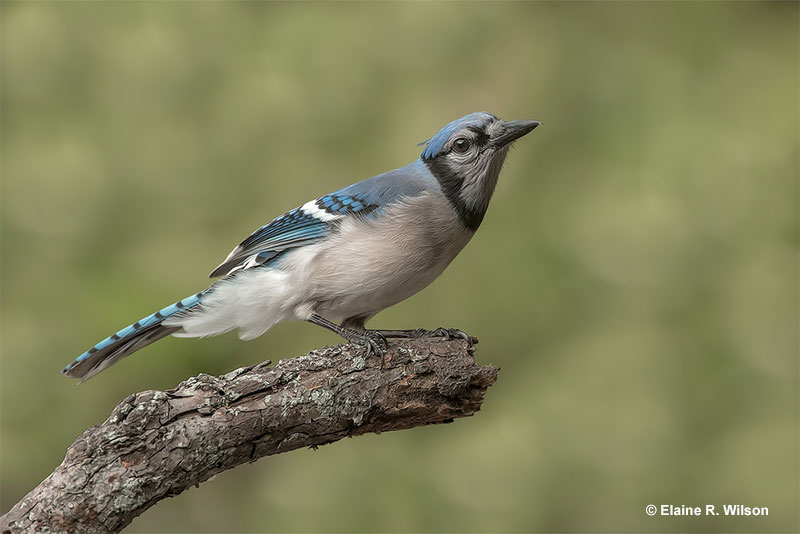
This beak is of uniform shape and length, typically stout with a slightly curved upper mandible and a smaller and flatter lower mandible. You can mostly see this kind of beak in omnivorous and opportunistic birds such as crows, magpies, and jays.
Seed-eating
Seed-eating birds are characterized by their conical, strong, and short beaks with similarly sized triangular mandibles.
The beak is wider at the base but tapers to a point, allowing it to generate maximum force for cracking open hard seeds to access the nutritious contents inside. There’s also a special groove that helps trap the kernel of food between the upper and lower mandibles.

While generally uniform in shape, then the beaks of different species may vary slightly in size and thickness to accommodate different types of seeds and grains. Among the most familiar seed-eaters are finches, cardinals, and grosbeaks. Parrots also belong under this category.
Conifer-seed-eating
Specialized conifer-seedeaters, although technically seed-eaters, deserve to stand on their own due to how unique their beak is. Although similar to the latter, their beaks are specially adapted – the tips of their mandibles are twisted so that when the beak is closed, they cross each other.
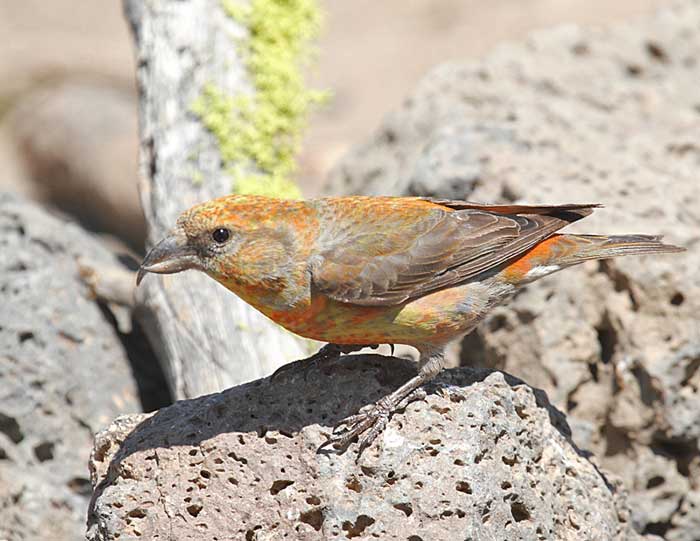
This unique adaptation is highly effective for extracting seeds from conifer cones. Take the Red Crossbill, for example. It inserts its partly open beak between two of the cone’s scales, then closes it to widen the gap between the scales and expose the seed. After that, it uses its tongue and bill to remove the seed.
Insect-catching
Beaks designed for catching insects are typically small and slim, with equally sized mandibles that taper to a fine point at the end. These beaks are adapted for snatching insects in mid-air or picking them off branches, leaves, or the ground. One of the most common examples is warblers.

Keep in mind that there are a few variations within this category: some, like creepers, have a curved beak to help them extract insects from the crevices of tree bark. Swallows, on the other hand, have a wider base, giving their beaks a flat appearance; the beak functions like a funnel while they are flying.
Nectar-feeding
Nectar-feeding birds, such as hummingbirds, sunbirds, and honeyeaters, have specialized beaks that are adapted to efficiently extract nectar from flowers.
Their beaks are typically long, slender, and cylindrical, often with a moderate downcurve and a pointed tip. This is accompanied by a long grooved or bristled tongue to help gather the nectar.

While most hummingbird species feed from many kinds of flowers, there are instances of specialized plant-hummingbird partnerships. Some have evolved together, resulting in the species having beaks that are perfectly suited in length or shape to fit particular flowers. For example, the South American Sword-billed Hummingbird’s four-inch beak is perfect for feeding on long passionflowers.
See Small Birds With Long Beaks
Chiseling
Chiseling beaks are strong, sturdy beaks with sharp, chisel-like tips. They are also described as long and tapered. These beaks are used for drilling holes in tree bark to access tree sap, searching for insects hiding inside trees and under bark, excavating cavities, and communicating by drumming on hard surfaces.
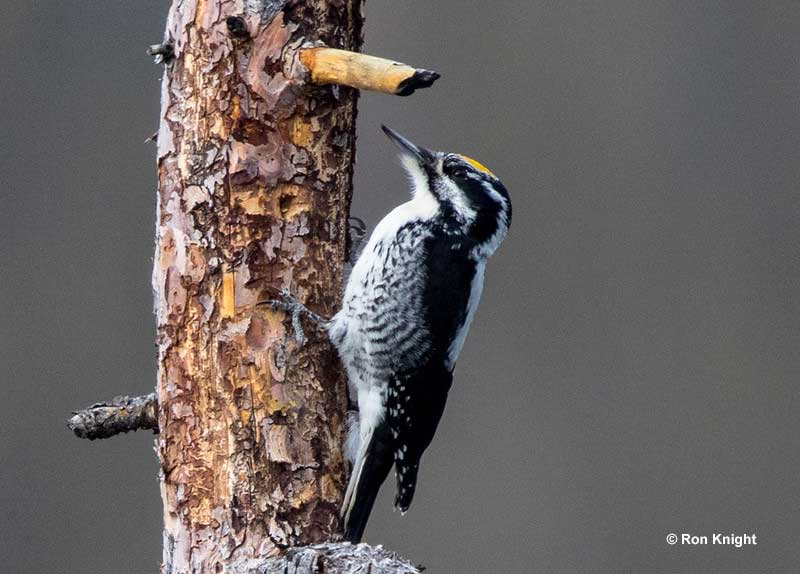
The most well-known examples are woodpeckers. For example, the Hairy Woodpecker can drum at least as fast as 25 knocks per second!
Surface-skimming
Surface-skimming birds, like skimmers, have distinctive beaks with a thickened and elongated lower mandible that is about a third longer than the shorter upper mandible. If you looked at the beak from the front, it would be like looking at a blade – it is very narrow.
This allows them to fly just above the water’s surface, dragging the lower mandible through the water. The lower mandible has parallel riblets at approximately 45° to water flow, helping reduce drag while skimming. Once it encounters prey, the resistance triggers the upper mandible to strike down, trapping the catch.
Filter-feeding
Filter-feeding beaks are typically flat and wider than high. They are equipped with specialized structures called lamellae (comb-like structures) along the edges of the beak that mesh together and act like strainers to filter out food from water.
The number of lamellae correlates with the degree of filter-feeding specialization. For example, Northern Shovelers are highly specialized and have roughly 400 lamellae, whereas ducks are more generalist feeders with 50-70 lamellae on their upper and lower mandibles.
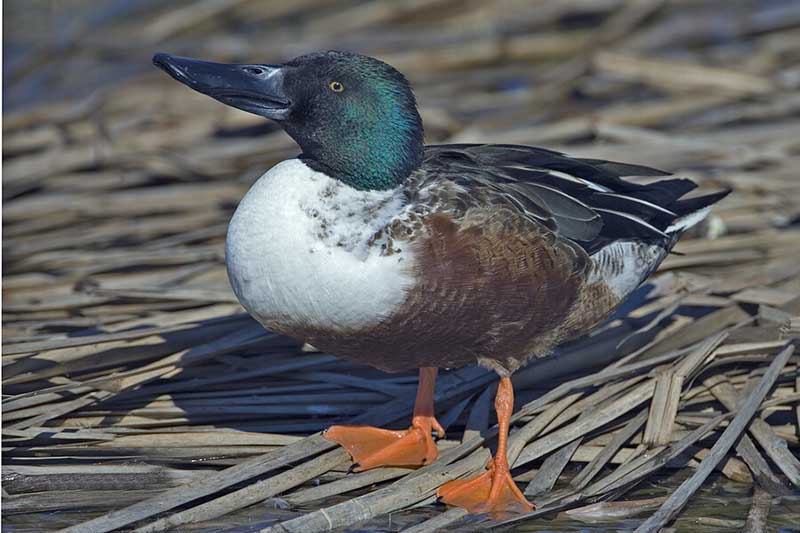
Male Northern Shoveler
Flamingos have a highly specialized beak in that regard. It is bent with the lower mandible being much larger and stronger than the upper mandible (which is the opposite in most birds). They feed by placing their beaks upside-down in the water and moving them to intake mouthfuls of water and food.
They then expel the water while retaining food particles. The tongue plays a crucial role in this process by moving back and forth rapidly, creating a pumping action that helps filter the water through the lamellae.
Dip-netting
Dip-netting birds, such as pelicans, have unique beaks characterized by a long, straight upper mandible with a small, hooked tip, and a lower mandible equipped with a large skin pouch (or gular pouch). This adaptation is specifically designed for trapping small prey, such as fish or crustaceans in a large gulp of water.
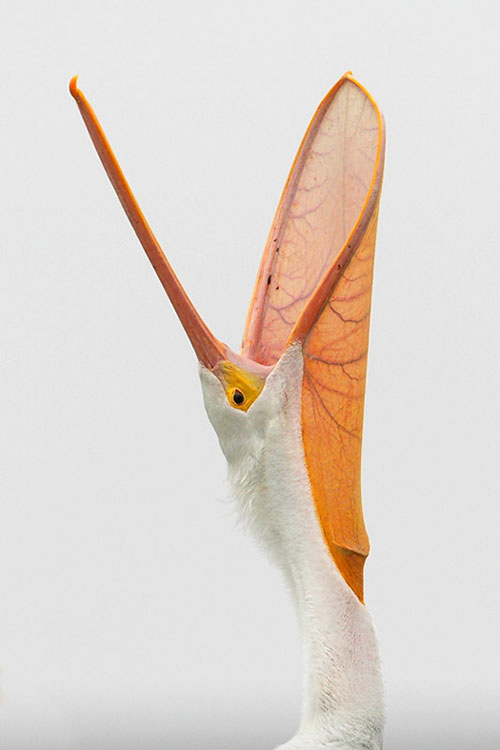
When hunting, pelicans plunge their beaks into the water, using the pouch to scoop up both prey and water. They then drain the water off by pressing the pouch against their chest, leaving the catch behind to be swallowed whole. However, contrary to popular belief, they do not store food there.
Scything
Scything beaks are typically long and flat. Birds with scything beaks are often found in wetland habitats. They submerge them, holding them slightly open, and sweep their heads from side to side like you would do with a scythe while wading through water or mud, relying on touch to detect their next meal.

This motion helps them cover a larger area and increases the chances of encountering small aquatic prey such as insects, crustaceans, and other invertebrates.
American Avocets and Roseate Spoonbills are prime examples of birds that use scything. The American Avocet has a long, slightly upturned, and slim beak, while the Roseate Spoonbill has a wide and straight beak with a spoon-like tip.
Probing
Probing beaks are long, slender, and often downcurved, sometimes with a sensitive tip. This makes them perfectly suited for probing the ground, especially soft soil, to find food. For example, curlews use their downcurved, slim beaks to feed on worms and other small invertebrates buried in soft mud.
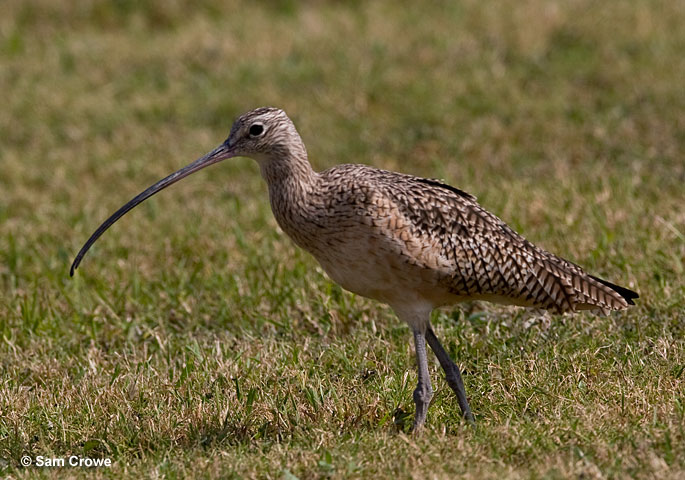
The sensitive tip of the beak helps detect prey hidden beneath the surface.
Spearing
Spearing beaks are spear-shaped; they are long, sharp, and pointed, allowing for quick, precise strikes. They are mostly used for catching fish and other aquatic prey.
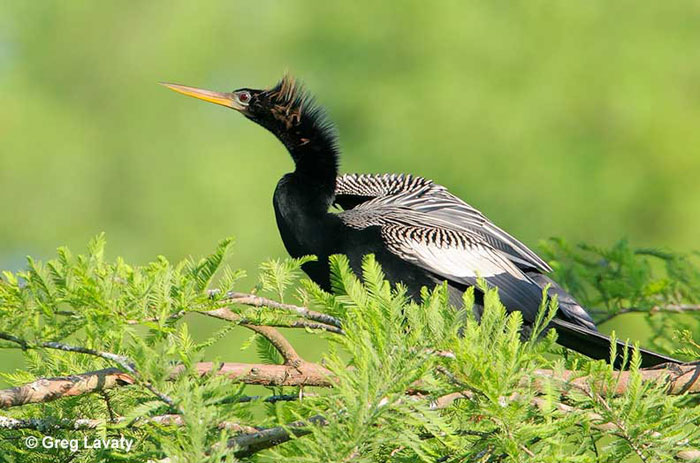
However, most birds with spearing beaks, like herons, don’t typically actually impale their prey but rather grasp fish between their mandibles. The same goes for kingfishers who dive on their prey from above.
Anhingas, on the other hand, do. They strike the prey with their beaks, which have backward grooves to prevent slippage. After spearing, the bird shakes the fish off, tosses it in the air, catches it, and swallows it headfirst.
Pursuit fishing
Aquatic birds that chase and catch fish mostly underwater have evolved to have specialized beaks called pursuit-fishing beaks. These beaks are relatively flat and slim with serrated edges and often have a slightly hooked tip. Mergansers are considered excellent examples of this.

They dive and chase their prey underwater. The flat, slim shape reduces water resistance during pursuit and the serrations on the beak help in gripping the catch.
Raptor bills
Raptorial beaks are typically found in birds of prey such as eagles, hawks, falcons, and owls. The beak is fairly short overall with a longer upper mandible that curves over the lower mandible, coming to a sharp point.
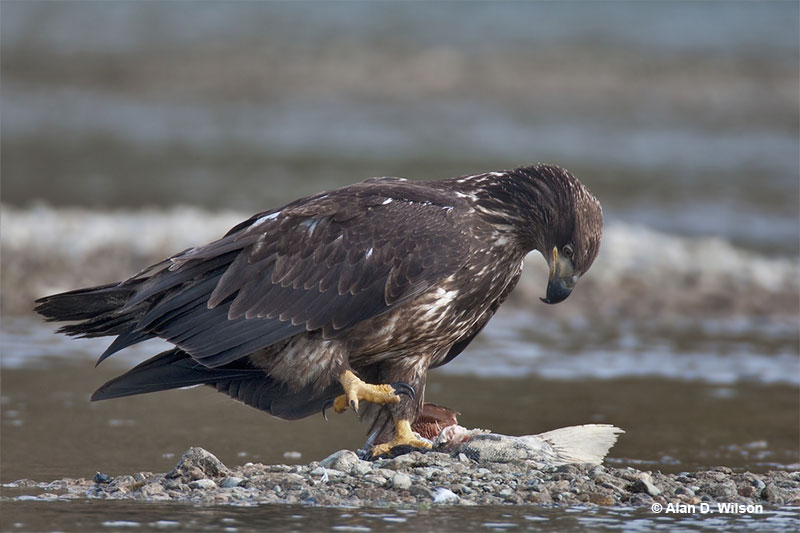
This sharp, curved tip is used to secure the prey, pierce the skin, and tear off its flesh. You can also see it in scavengers, although their beaks are generally longer with a less pronounced hook.
Gibbous beaks
Gibbous beaks are often large and have a noticeable bony hump or protrusion on the upper mandible. This characteristic is not related to the bird’s feeding habits but is rather a secondary sexual characteristic.

It is often more visible in males and is used in mating displays, as is the case for the Black Scoter. On the other hand, Rhinoceros Hornbills use their beaks as a resonating chamber to amplify their calls.
