


When we think about birds, their ability to soar through the skies with grace and agility often comes to mind. This, in turn, raises questions about how that’s possible. One key aspect is their bones, which are often described as lightweight and hollow. But are they really?
Are Bird Bones Really Hollow?
To answer your questions right off the bat, bird bones are not entirely hollow, but they do have unique characteristics that contribute to their lightweight structure. Rather than simply hollow, they are more accurately described as pneumatized.
This means that they contain air spaces or air sacs, which are connected to the respiratory system. These air spaces effectively extend the bird’s lungs throughout their bones, enhancing oxygen intake during flight and helping birds meet the high metabolic demands of flying.
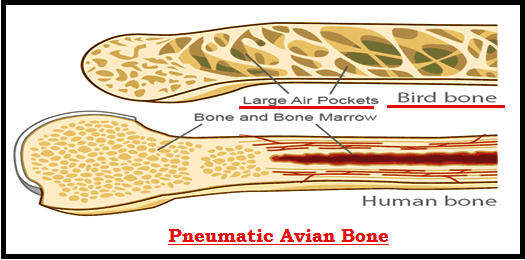
Inside these pneumatized bones, there is a network of bony struts called trabeculae. These struts provide critical structural support, allowing the bones to maintain their strength while minimizing weight.
This architecture ensures that the bones are both lightweight and robust, capable of withstanding the mechanical stresses of flight. Additionally, bird bones are denser compared to those of animals of similar size.
This increased density makes them stiffer and stronger, compensating for the reduction in bone mass due to the presence of air sacs.
In birds, some bones are also fused together. Fused bones create a stronger skeletal structure that can withstand the stresses and strains of flight, reduce the amount of connective tissue required, improve aerodynamics, reduce flexibility in parts where rigidity is required, and enhance balance and stability. Some examples include fused leg bones (tibiotarsus) and hand bones (carpometacarpus).
Do all birds have hollow bones?
Although all flying birds have hollow bones, then not all of them are. There isn’t a set of bones that are always hollow or always solid across all bird species. The pattern of bone pneumatization is highly variable and adapted to each species’ particular needs and lifestyle.
However, some generalizations can still be made. For example, major bones involved in flight tend to be pneumatized, whereas major weight-bearing bones when the bird lands or walks tend to be less or non-pneumatized.

The degree of pneumatization is also highly variable among different bird species and even among individuals. For example, large soaring birds that engage in sustained, high-altitude flight, such as albatrosses and eagles, tend to have more extensively pneumatized skeletons. In contrast, birds that rely more on walking or have less rigorous flight demands may have fewer pneumatized bones.
The extent of bone pneumatization also changes as birds mature. Younger birds have less pneumatization and as they mature, it follows a specific sequence, starting with certain bones and progressing to others as the bird grows.
What About Flightless Birds
Most flightless birds retain hollow bones, especially those that recently became flightless. They are characteristic to all modern birds and can be traced far back to their theropod dinosaur ancestors.
This indicates that they evolved for other reasons beyond flight, explaining why the loss of flight in some birds did not result in the loss of this trait. As mentioned before, one important aspect is that they are part of the bird’s respiratory system and allow for unidirectional airflow through the lungs and more oxygen intake.
However, some groups have lost or partially lost this trait for other reasons. For example, penguins have mostly solid bones to reduce buoyancy and aid in diving. Their dense bones help them stay submerged and maneuver effectively underwater. Other aquatic birds, like grebes and loons, which still fly, also have solid bones.
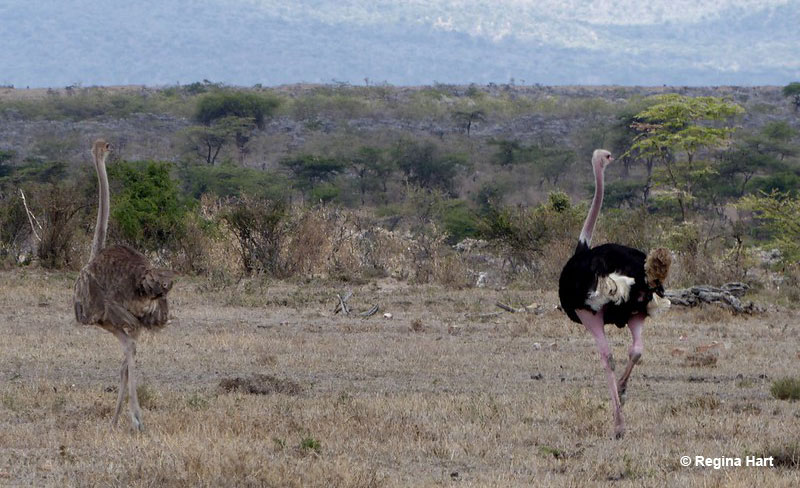
Ostriches and other ratites exhibit a mix of hollow and solid bones. While many of their bones remain hollow to maintain respiratory efficiency, several bones in their legs are solidified with a thick cortex to support their substantial weight. This structural adaptation allows these large, flightless birds to run at high speeds while still supporting their weight.
You Might Also Ask
Are bird bones empty?
Bird bones are not empty; they contain air sacs and structural supports, making them lightweight yet strong.
How fragile are bird bones?
Bird bones are often perceived as fragile due to their hollow or pneumatic nature, but this is a misconception. They contain structural supports and have a higher density than mammalian bones. On the other hand, when bird bones do break, they tend to shatter and splinter rather than break cleanly, which can make them seem more fragile.
Are bird bones easier to break?
Bird bones are not easier to break than mammal bones; in fact, they are denser, have structural supports, and are likely stronger pound-to-pound than mammal bones.
Can broken bird bones heal?
Broken bird bones heal much faster than mammals, in just about 3-4 weeks with proper veterinary care.
