

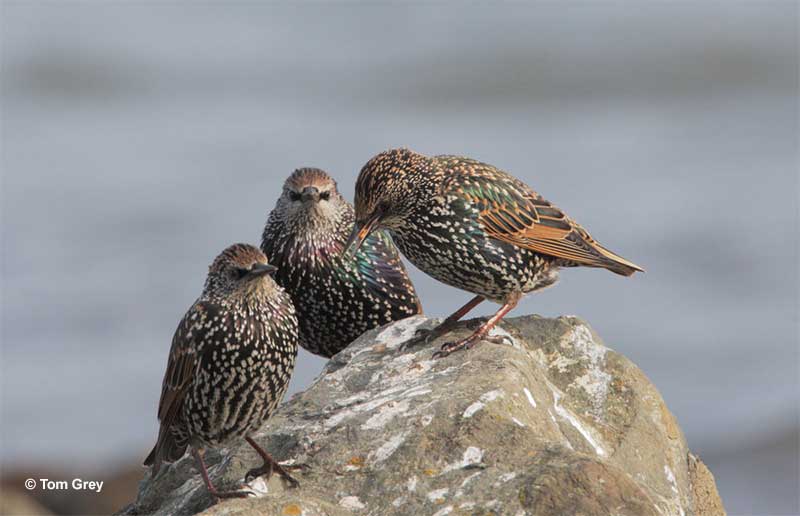
European Starlings are such common birds! These bold birds act like they own the place and yet, they aren’t even native to North America.
It’s true! Even though they seem right at home in the USA and Canada, European Starlings were brought to North America from Europe.
European Starlings are here to stay, but not everyone’s happy about it. Why do so many people view them as pests? Do these interesting birds provide any benefits?
The Road To Becoming An Invasive Species
If you could go birding in the USA before 1890, you wouldn’t see a single starling. Before that date, members of the starling family only lived in Europe, Asia, Africa, and Polynesia.
The European Starling’s road to North American success began in 1890 and 1891. During those years, major Shakespeare fan Eugene Schieffelin released 100 birds in New York’s famous Central Park.
Eugene had the bold yet misguided idea that North America deserved to host all the birds mentioned by Shakespeare.
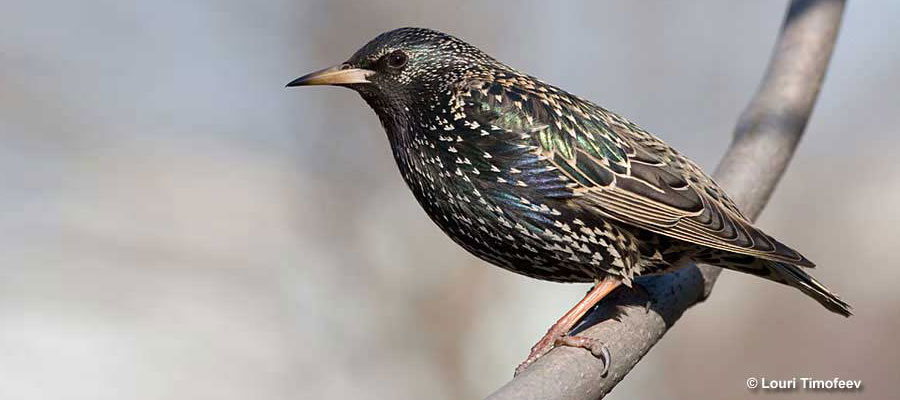
European Starling
Unlike most other species that were released, starlings did very well. Able to successfully compete with resident bird species, European Starlings quickly spread.
Although they aren’t pests in their native Eurasia, in North America, it’s a different story. These hardy birds can displace some native bird species, and their sizeable flocks can damage orchards and other crops.
Competing with native species
One of the things that people like least about European Starlings is their ability to compete with native species. By foraging for insects on the ground, starlings can technically compete with blackbirds and maybe even American Robins.
Although they don’t seem to be known for affecting native bird species in that manner, it wouldn’t be surprising if they did. After all, it seems reasonable to assume that 200 million starlings eating the same food as other birds might have an impact!
At times, they dominate the feeder and scare away most of the native species.
That being said, the bigger threat that European Starlings may pose is competition over nest sites. These hardy birds nest in tree cavities, a nesting situation also used by Tree Swallows, Red-headed Woodpeckers, Eastern Bluebirds, and other native species.
When it comes to nest sites, European Starlings can be especially aggressive. If there were just a few starlings around, that wouldn’t be an issue. However, since there are literally millions of them, those high numbers can take up a lot of tree cavity “real estate.”
Are Starlings Beneficial?
Although European Starlings are viewed as being pests in North America, they might not actually be as bad as we think. Yes, they do compete with native birds but Tree Swallows may have changed their nesting behavior to cope with starlings.
There may be similar situations with other native birds. After all, declines in native birds don’t seem to be connected to starlings, at least not as much as being explained by pesticides and habitat loss.
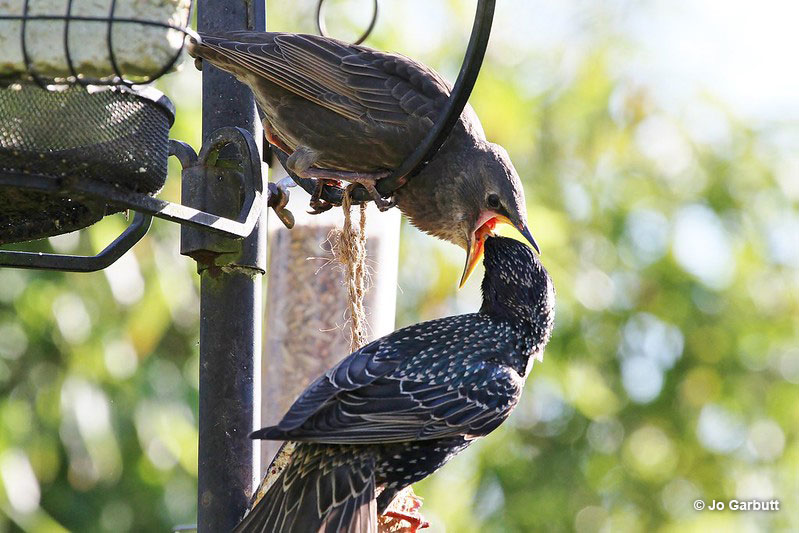
Speaking of declines, starlings have been suffering too. Yes, they are still common birds and do cause problems but their populations have also decreased. In all likelihood, fewer numbers of starlings are probably related to the same factor that affects so many other bird species.
Starlings need to feed on bugs, some of which are actually far worse agricultural pests than starlings are. If there’s one economic benefit these birds provide, it would be their removing larvae and other insects that damage crops.
In particular, they eat Gypsy Moths, weevils, leaf beetles, and other pests. Pest control aside, starlings also entertain with unique and complicated songs, shimmering colors, and large flocks or “murmurations” that paint evening skies with naturally artistic, synchronized flight.
Ways To Deter Starlings
Starlings can provide some benefits but they can still drive some native birds away. To up the odds in favor of native backyard birds, try these ideas.
Stop mowing
Have a big yard? To keep starlings away, just don’t mow it! Or, at least let grass and other plants grow tall in a quarter or more or the yard.
Starlings do not like fields with tall grass. In fact, they simply can’t use them! These birds are adapted to foraging on lawns and similar open habitats. Let the grass grow taller than the birds, and you will effectively eliminate their prime habitat.

Their dislike of tall grass might be related to not being able to see predators or making it tough to forage. Whatever the reason, we know that it works!
Starling-proof feeders
One of the easiest ways to deter starlings from your backyard birding space is using starling-proof feeders. These are feeders that let small birds access bird food but exclude starlings.
They usually accomplish this with a cage around the feeder that starlings can’t get through. That way, the larger birds can’t reach the food.
Another method that might work is using a feeder that denies access to food with a weight-triggered perch. Once again, although small birds have no problem feeding, bigger birds are heavy enough to close the feeding portal.
As a bonus, both of these types of feeders also exclude squirrels!

Starling-proof bird food
I admit, this might be tough to accomplish. After all, starlings are omnivores that have a pretty varied diet. In addition to insects, they also like fruit, some nuts, and cracked corn.
However, as much as those adaptive birds would love to try a sunflower seed, safflower seeds, and peanuts in the shell, those treats are off their menu.
Their pointed beaks are good for eating bugs and threatening smaller birds but they can’t crack open seeds! Once a starling realizes it can’t possible open safflower seeds and other good cardinal food, they’ll forage elsewhere.
Keep them off your roof
European Starlings often perch on roofs and like to nest there too! If they can find a vent or other crevice to build their nest, starlings will happily take up residence.
To keep them off your roof, try owl decoys with shining eyes, and ones that can move their heads. That should keep starlings away although they might also scare some other birds too.
Another idea is putting pieces of reflective tape on your roof, especially next to vents or other holes. Speaking of those holes, the best way to keep starlings out is by blocking them or installing wire mesh over the entrance.
Use starling-proof bird houses
A lot of birds love to nest in a birdhouse, starlings included! However, they can’t use any old nest box. Try as they might, starlings can’t fit through entrance holes with diameters smaller than 1.5 inches.

This nest box has a smaller opening, so it’s too little for starlings to nest in, giving the perfect chance to Eastern Bluebirds. © U.S. Fish and Wildlife Service Northeast Region
Make sure the entrance hole is 1.25 inches to 1.5 inches in diameter and you’ll have other, more welcome birds using them. However, you also have to make sure the hole is fringed with metal. Otherwise, starlings might be able to peck into the wood and enlarge the hole!
Finally, starlings and House Sparrows love perches. Remove those and they won’t use the nest box.