

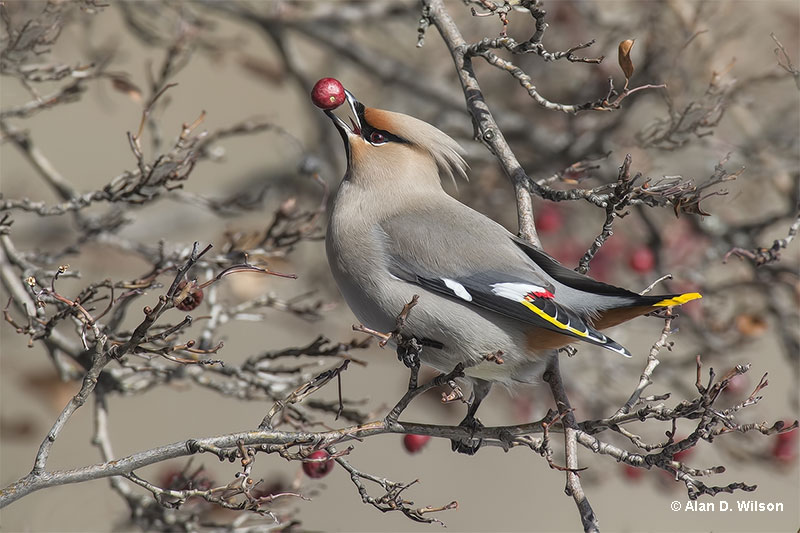
As fall is getting closer, berry-eating birds are starting to flock nearby.
Waxwings are notorious for eating fermented berries, and over the years, a certain reputation stuck to them – waxwings can supposedly get drunk.
Is it just a myth, or is there some truth to it? Let’s find out!
Getting Intoxicated From Fermented Berries
Unlike people, birds don’t usually get inebriated on purpose. While some species do love to socialize, they don’t like to do it under the influence. Of course, life is very different for birds; they aren’t aware that alcohol exists.
Birds can’t afford to get tipsy, either. In nature, animals that dim their senses are asking to be eaten by vigilant predators. They also become much more accident-prone, a situation that easily becomes a death sentence in the wild.
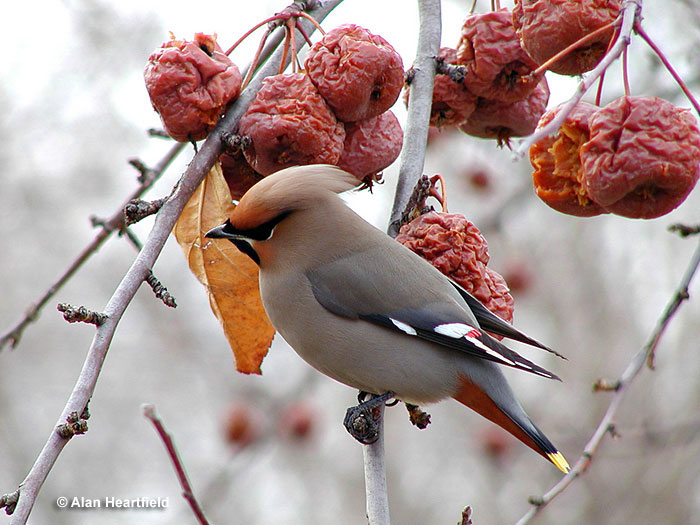
However, waxwings can and do get drunk on fermented berries! As far as we know, they don’t want to, but it can happen. It might also occur more with non-native fruits than native ones.
These birds are also apparently somewhat adapted to eating fermented fruits. Supposedly, Bohemian Waxwings are even said to have large livers that help them process ethanol much better than some other birds.
Adult waxwings might be less affected by berry intoxication, or they might just know how to recognize and avoid those fruits. Even so, every year, both Bohemian and Cedar Waxwings “get drunk” from fermented fruits. Part of the problem comes from the birds instinctively eating more berries than they need.
They do this because they don’t know where they might find their next meal.
Fatal cases
Many waxwings that become a bit drunk eventually sober up but eating too many fermented fruits can indeed have fatal consequences.
Between 2005 and 2007, in southern California, there were several instances of Cedar Waxwings dying after consuming too much fermented fruit. Mostly, the birds were too affected to fly well and ended up crashing into windows and buildings.
However, waxwings have also died after falling to the ground, and autopsies of some dead waxwings showed that they perished from alcohol poisoning. Those unfortunate birds had ruptured livers!
Do Waxwings Only Eat Berries?
Waxwings are some of the most frugivorous birds in North America. They might even eat more fruits than other birds, or at least just as much as the highly frugivorous Phainopepla.
Waxwings feed on a wide variety of native and introduced berries, and have diets that are 85% fruit and 25% insects.

Although waxwings depend on berries and other fruits, they also need to eat insects. For the most part, they take advantage of insect prey when other birds do; during spring and summer. At those warm times of year, waxwings still feed on some fruit but also catch lots of bugs.
Insects make up for the lack of fruit in early summer while also being vital food for their nestlings.
Similar to flycatchers or swallows, waxwings sally out from high perches to snatch insects out of the air. In June, I have often seen them flying out and fluttering through the air to catch bugs. At that time of year, you might also see waxwings flying over streams and other bodies of water.
They are taking advantage of mayflies, stoneflies, and other aquatic insects that take fly up from their wetland hatching grounds. Waxwings also pick bugs from foliage, including spruce budworms and other types of larvae.
Fun Facts About Waxwings
- Waxwings are named after small red “waxy” dots that some birds have on their wings.
- There are three waxwing species; Cedar, Bohemian, and Japanese Waxwings.
- Cedar Waxwings normally have yellow-tipped tails, but birds that feed on berries of the introduced Honeysuckle can show orange instead of yellow.
- Brown-headed Cowbirds raised in Cedar Waxwing nests usually die because they aren’t adapted to such a high-fruit diet!
- Unlike most perching birds, waxwings don’t have songs. Instead, they communicate with high-pitched lisping, whispering, and trilling calls.
- In early spring, Cedar Waxwings also eat frozen sap on the branches of maple trees.
- In winter, waxwings form that wander in search of fruiting trees. Such flocks often number in the hundreds, and at good food sources, can number in the thousands.
- Since their sugar-rich diet can be dehydrating, waxwings often drink water and even eat snow during the winter.