

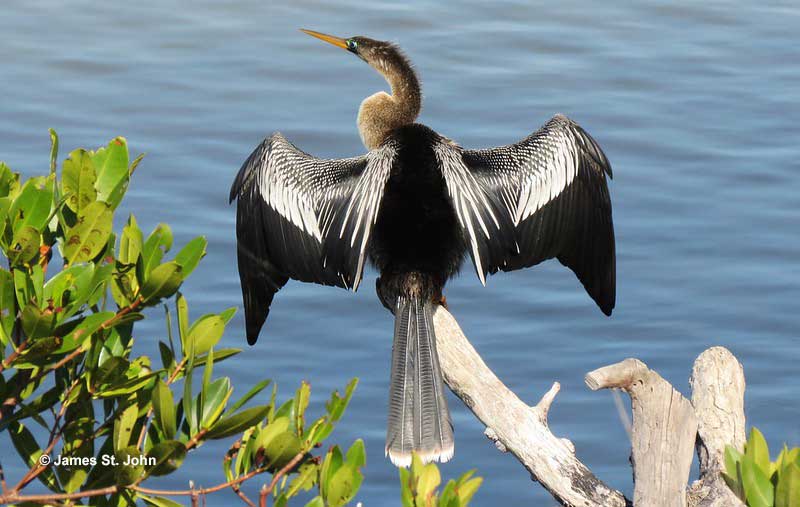
My generation grew up believing that dinosaurs were oversized but genuine reptiles.
Even the name “Dinosaur” actually means “Monstrous lizard.” You could say that the scientific community of the day judged the book by its covers and the dinos by their teeth, deciding that these immense rulers of prehistoric Earth were closely related to crocodiles and monitor lizards simply based on their fossil skeleton morphology.
After accepting the dino-reptile theory for more than a hundred years, the world was surprised when, at the turn of the 20th century, the forgotten idea about the bird-dinosaur evolutionary connection turned out to be right.
It took years for the general public to accept that the pet gecko named Dino or Littlefoot is only very distantly related to everyone’s favorite extinct giants. The fact is still not common knowledge.
How We Found Out That Birds Are Dinos
As long ago as 1869, the English biologist Thomas Henry Huxley – also the grandfather of the ‘Brave New World’ writer, Aldous Huxley – first suggested that birds could be closely related to dinosaurs. Huxley elaborated on similarities between the legs of ostriches and that of the Megalosaurus. Those Huxleys truly had a visionary streak.
Still, sometimes it takes ages for scientists to change their minds about a once-cemented topic. Paleontologists chose to pay very little attention to Huxley’s opinion until a whole century later.
In the 1970s, John Ostrom’s paper finally managed to convince (or, at least, begin to convince) the scientific community that there is indeed a deep link between dinosaurs and birds.
Archaeopteryx was the main point of the argument. This small feathered dinosaur lived around 150 million years ago and had all the trademarks of a typical theropod dinosaur (body shape, sharp teeth, and claws).
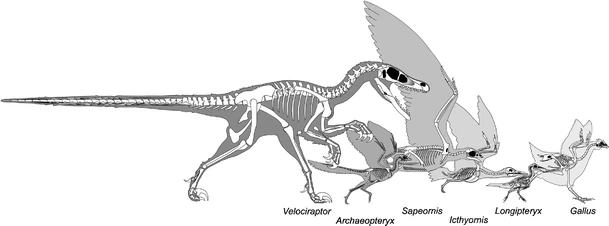
Over millions of years, the original dinosaurs have adapted to their surroundings and evolved into smaller species. Source
However, it also had wings of shape and size that could support active flight. Archaeopteryx was already somewhat accepted as the world’s oldest bird fossil, but Ostrom described unmistakable parallels between it and the carnivorous dinosaur Deinonychus.
By the mid-80s, his theory gained prominence, further supported by the discovery of fossilized Confuciusornis (1995), Caudipteryx, and Protarchaeopteryx (1998) in China.
All these avian dinosaurs had similar features – small bodies, long tails, theropod body plan – but with feathers and fully equipped wings as well. They had good flying skills and likely lived in the canopies.
Bird Ancestors
Theropod dinosaurs are definite bird ancestors. Small theropod dinosaurs went on their own evolutionary path in the Late Jurassic and, over millions of years, became the birds we know today. In taxononomy, birds as a group (Aves) belong to the dinosaur clade Theropoda.
Archaeopteryx lithographica has traditionally been considered the Urvogel – the first bird. However, this is only partially precise because missing links between Archaeopteryx and modern birds have been discovered in the meantime. Still, Archeopteryx continues to be an example species that helps define the class Aves.
According to everything we know so far, it’s not that birds “evolved from dinosaurs” – they are dinosaurs. In fact, avian dinosaurs are the only dinosaurs that survived the Cretaceous–Paleogene extinction event.
Four bird lineages that survived the mass extinction:
- Palaeognathae (Ratites – ostriches and others),
- Anseriformes (Waterfowl)
- Galliformes (ground-dwelling fowl)
- Neoaves (“modern birds”).
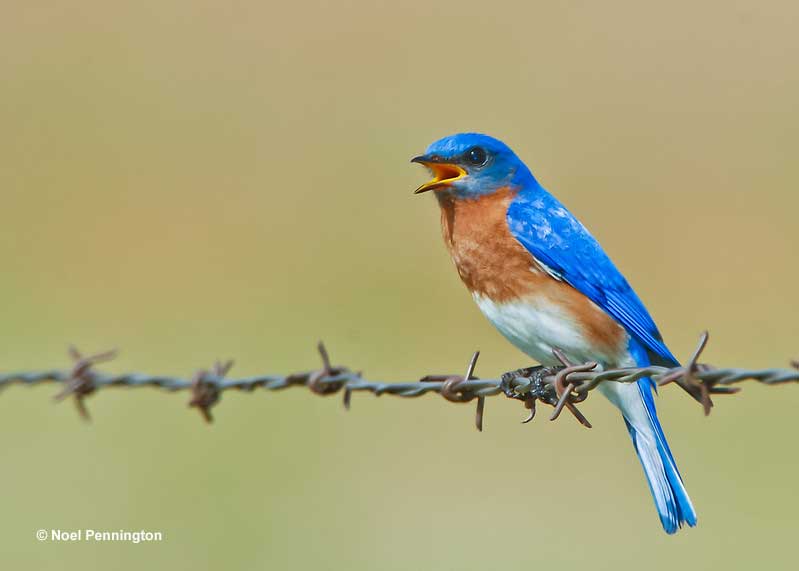
Did Dinosaurs Really Look Like Scaly Reptiles?
Unlike the “Terrible Lizard” vision shared by the previous generations of dinosaur scientists, today’s paleontologists deeply believe that dinosaurs looked much more like birds.
One of these experts, Robert T. Bakker, once picturesquely described the Tyrannosaurus rex as “the 10,000-pound Roadrunner from Hell.” The cutting-edge science backs him up – in line with that, you may have noticed that dinosaur imagery has been steadily changing over the past decades.
The game-changer was the discovery of a series of feathered dinosaur fossils in the late 1990s. From then on, the evidence has been stacking up.
In short, birds share a number of features with dinosaur theropods:
- Bipedal walk
- Forelimbs
- Feathers (both simple ones like those found in kiwi birds and complex ones found in most modern birds)
- Warm-bloodedness
- A highly efficient respiratory system with unique air sacs
One of the more interesting arguments is that the bipedalism of theropods influenced the way that they (and the birds) later evolved flight, using only their forelimbs. That is different from other flying strategies in the animal world – the pterosaurs and bats, for example, have (and had) their skin membranes (patagium in bats) connected to hind legs.
Still, the connection of birds and reptiles is not completely severed – birds and reptiles are more alike than you may think. They belong to the same animal clade, Sauria. Some evolutionists even say that birds are reptiles.
Frequently Asked Questions
How did birds survive, but dinosaurs didn’t?
Several factors helped birds survive the mass extinction that ended the reign of dinosaurs. The ancestors of modern birds were small and likely omnivorous, which helped them survive the difficult days (and years, centuries, and millennia) after the hit, with very little food available.
Although many bird-like dinosaurs could fly, scientists believe that today’s birds evolved from ground-dwelling species, for whom it was easier to take shelter during these dark days when then-version of trees faced a massive die-off. The proto-bird dinosaurs dependent on water habitats also
Which bird is closest to dinosaurs?
Ratites – the group of primitive birds we commonly call “flightless birds,” are the avian taxon closest to the original dinosaurs. These include Ostriches, Cassowary, Kiwis, Emus, and Rhea, as well as plenty of extinct species like the giant moa.
Of all the extant Ratites, Cassowary is likely the one closest to the original dinosaur lineage, and it’s not difficult to understand why.
They have large frames, extra strong legs for running and kicking equipped with nasty claws, and a helmet-like crest called casque – a feature that many dinosaurs shared with this extraordinary New Zealand ratite.
Why were dinosaurs so big?
Dinosaurs probably got so big because the Earth’s ecosystems were able to support the evolution of big bodies due to warmer, tropical temperatures and abundant food supplies.
Scientists are not yet completely sure why being colossal was an advantage many million years ago.
The large body size likely helped the giant dinosaurs fight off predators (although some followed their prey’s footsteps, size-wise). Also, it may have helped control the body temperature, plus allowed the herbivores to get to the hard-to-reach food sources (like giraffes do today).
Note that not all dinosaurs were giants – the lineage that evolved into modern birds was no bigger than chickens or crows.
Did birds evolve from velociraptors?
Birds evolved from theropod dinosaurs, which included velociraptors as well. These dinosaurs were carnivorous, walked on two legs, and fine-tuned senses (smell, sight, and hearing) and sharp teeth and claws.
Also, they were most likely feathered, with forelimbs resembling wings and hollow bones – just like birds. However, as far as we know, there are no direct bird descendants of velociraptors living today.
How old are the oldest bird fossils?
Officially, the oldest known fossil bird is Archaeopteryx, first discovered in the Solnhofen Limestone, Germany, around 1860. The fossil was around 152 million years old.
Confuciusornis was another bird-dinosaur of nearly the same age, discovered in northeastern China in 1995. Confuciusornis has wing claws like Archaeopteryx but lacks Archaeopteryx’s teeth – the same as modern birds.
