

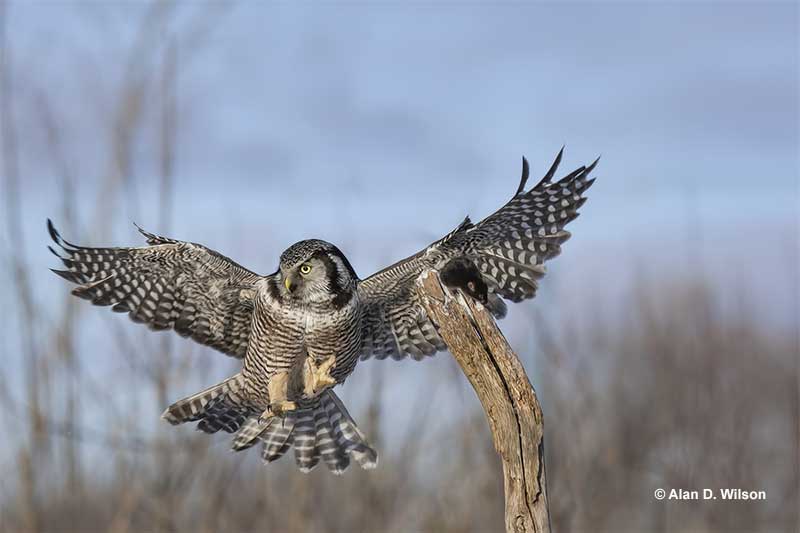
At some point, most of us have probably yearned to fly or dreamt of soaring across the sky, free from the constraints of gravity. Yet, as humans, we remain earthbound, our aspirations of flight relegated to our imaginations.
What, then, gives birds this remarkable ability to take to the skies with such ease and elegance? The answer lies in a fascinating array of adaptations.
The Mechanics Of Flight
Bird flight is a complex interplay of anatomy, physiology, and physics. Every part of their bodies has evolved to support this ability. They have lightweight skeletons to reduce weight, powerful muscles to move the wings, and streamlined bodies to minimize air resistance.
Four primary forces influence flight: lift, weight, thrust, and drag. Weight is the force of gravity pulling the bird downwards, and it must be counteracted by lift, which is generated by air moving at different speeds over and under the wings.
Birds create thrust by flapping their wings. During the downstroke, the wings push air backward and downward, propelling the bird forward and upward.
The wings are slightly folded during the upstroke to reduce air resistance. Drag is the resistance birds face as they move through the air, which, in addition to efficient wing movements, is minimized with their streamlined bodies.
A bird’s tail acts as a rudder and brake, aiding in maneuverability and control. By adjusting the position and spread of the tail feathers, birds can change direction, slow down, or rapidly stop.
Efficient flight also requires a highly developed respiratory and circulatory system. Birds have a unique respiratory system that includes air sacs and a unidirectional airflow through the lungs, providing a constant supply of oxygen. Their heart is proportionally larger and more powerful than that of most mammals, ensuring efficient oxygen delivery to muscles during flight.
So, what do different parts of the bird’s body specifically do to make flight possible?
Wings
Wings provide birds with both lift and thrust. The shape of the wings makes them function like an airfoil.
An airfoil is a shape that generates significantly more lift than drag; think of airplane wings or propeller blades. They have a curved upper surface and a flatter underside, allowing air to flow faster over the top, creating a difference in air pressure, which creates lift.
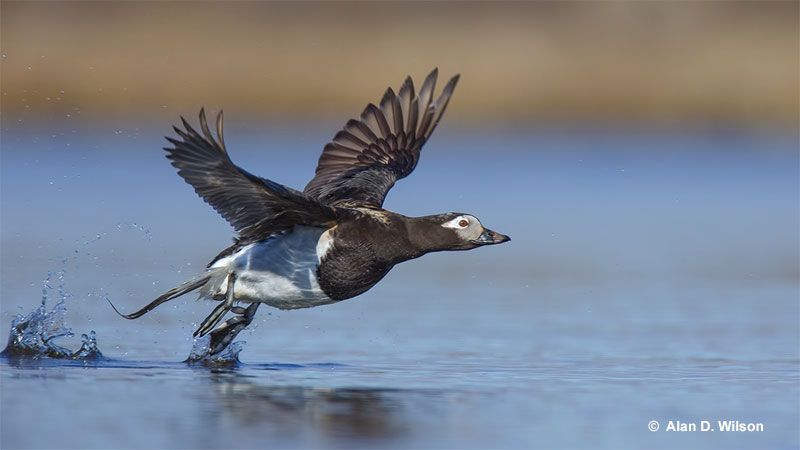
Flapping wings generate the necessary force (or thrust) for takeoff and sustained flight. Additionally. birds can adjust their wing shape and angle to control speed, direction, and altitude.
Feathers
Now, feathers also play a significant role. They provide aerodynamic advantages, insulation, and protection. The primary flight feathers on the wings help generate thrust and lift on the downstroke, while the secondary feathers maintain lift and stability.
Their lightweight yet strong structure minimizes drag and maximizes efficiency. Contour feathers streamline the bird’s shape, reducing air resistance. The arrangement and interlocking structure of feathers create smooth airflow over the wings, enhancing lift.
Additionally, feathers help with temperature regulation, keeping muscles warm for optimal performance. Tail feathers, or rectrices, aid in steering and braking, allowing precise maneuverability.
Aerodynamic body
Birds have further mastered the art of flight with a sleek, streamlined body that effortlessly slices through the air. This aerodynamic design, tapering from head to tail, helps minimize drag, making flight more energy-efficient.
Feathers also play a vital role in making the body more aerodynamic. They form a smooth, overlapping surface that cuts down on air turbulence, further reducing drag. The tail feathers are particularly versatile, acting like an onboard flight control system.
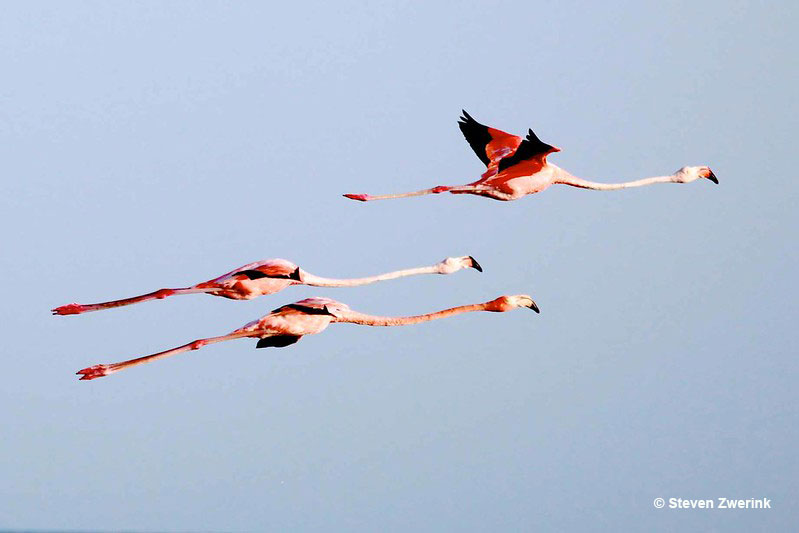
Birds can adjust their tails to gain extra lift, steer more effectively, and maintain balance during complex aerial maneuvers. For some birds, like raptors, the tail is also a tool for reducing drag while gliding effortlessly through the skies.
Center of gravity
Birds can adjust their center of gravity by changing their wing shape, posture, and by moving their head, neck, and tail. The ability to do so varies among bird species.
In most birds, it is generally located just behind and below the wings, typically ahead of the neutral point (the aerodynamic center). When the center of gravity is positioned ahead of the neutral point, creating a positive static margin, the bird achieves aerodynamic stability, perfect for soaring or gliding.
Conversely, when the neutral point is ahead of the center of gravity, resulting in a negative static margin, the bird becomes aerodynamically unstable but gains increased maneuverability.
Hollow bones
Hollow bones play a crucial role in birds’ ability to fly by significantly reducing their overall body weight. These bones, also known as pneumatic bones, contain little air sacs that make them lightweight.
Despite their lightness, hollow bones are structurally strong due to internal struts and cross-walls that provide support and rigidity.
The reduced weight from hollow bones decreases the energy required for takeoff, sustained flight, and maneuverability. This adaptation allows birds to be more efficient flyers, conserving energy during long migrations and rapid movements.
Flying Styles
Species have generally adapted their flight styles to fit their habitats. The flight style is influenced by several factors, including wing shape, body size, and muscle structure.
For example, long, narrow wings (as seen in albatrosses) are designed for gliding over the surface of the ocean for long distances, while long and broad wings support larger birds, like eagles, and enable them to soar on thermals to save energy. You will often notice that the latter type has finger-like feathers, which are important to minimize turbulence.
While large wings are best suited for soaring and gliding, then short wings are perfect for flapping. Short and rounded wings are often seen in woodland birds and most passerines. They are suited for quick take-offs, short bursts, and maneuverable flight.
Short, thin, and pointed wings, on the other hand, are adapted for fast flight over long periods and are often seen in birds that hunt in the air, such as swallows and falcons.
Flapping
Flapping flight in birds is the most common form of flight, characterized by the repeated up-and-down motion of the wings. This flight mode generates both lift and thrust, allowing the bird to stay airborne and propel forward.
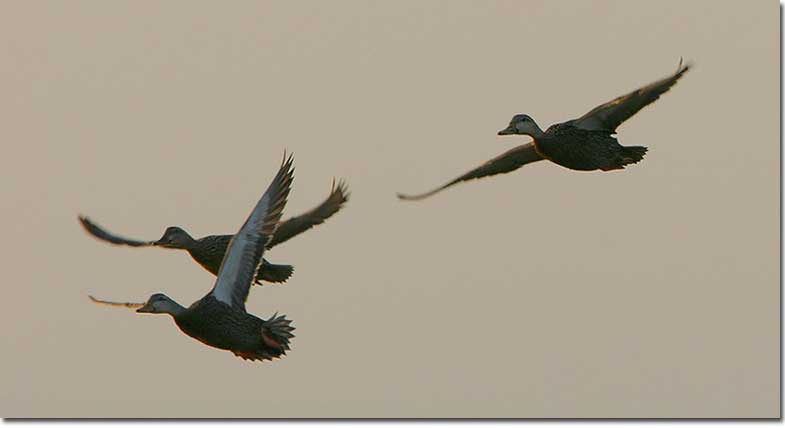
During the downstroke, the bird’s wings move downward and forward. The upstroke is the recovery phase, where the wings move upward and slightly backward. To reduce air resistance during this phase, birds partially fold their wings.
Bounding Flight
Bounding or flap-glide flight is a flight style where birds alternate between periods of active wing flapping and passive gliding.
This technique allows birds to conserve energy while maintaining forward momentum. During the flapping phase, the bird rapidly flaps its wings to move upward and forward. The phase is often intense but brief.
After a series of flaps, the bird folds its wings partially or completely against its body and enters a gliding phase. During gliding, the bird relies on the momentum gained from the flapping phase, using its body and tail to control direction and stability.
This phase allows the bird to coast through the air without expending much energy. The bird alternates between these two phases, creating a bounding flight pattern. The length and intensity of each phase can vary depending on the species and specific task at hand.
For instance, shorter, more frequent flaps might be used for maneuvering through dense vegetation, while longer glides might be utilized during long-distance travel. This kind of flight can be seen in woodpeckers and larks.
Hovering
True hovering flight, characterized by the ability to remain stationary in the air without any forward or backward movement through continuous wing flapping, is most perfectly exemplified by hummingbirds.
Hummingbirds achieve this by rapidly flapping their wings in a figure-eight pattern, generating lift on both the upstroke and downstroke. This allows them to hover with remarkable precision and stability, primarily to feed on nectar from flowers.
Other birds, like kestrels, exhibit a form of hovering, but their techniques differ significantly. Kestrels use a technique known as “wind hovering,” where they face into the wind and use the air currents to stay in place. They flap their wings and adjust their tail feathers to maintain their position relative to the ground while scanning for prey.
Terns hover over water by making rapid wing beats and using the wind to hold their position as they search for fish below. Their hovering is often brief and assisted by wind currents. Some kingfishers hover briefly above water to spot fish before diving. Their hovering is typically less stable than that of hummingbirds and is aided by wing beats and air currents.
Gliding
This is typically a transitional phase between periods of flapping or soaring. It involves birds descending gradually without flapping their wings, using gravity and forward momentum to move through the air.
During gliding, birds hold their wings outstretched in a fixed position, creating lift as air flows over and under the wings. Gliding conserves energy because it requires no flapping.
Birds use gliding to cover distance efficiently, often after gaining altitude through flapping or soaring. It generally involves a gradual descent, as there is no mechanism to gain altitude without additional lift from air currents or thermals.
Soaring
While also a form of non-flapping flight, then soaring is a bit different from gliding. It allows birds to maintain or gain altitude using external air currents without flapping their wings.
Birds utilize thermals, which are rising columns of warm air. As the bird enters a thermal, it circles within it, gaining altitude. Once they reach the top of the thermal, they can glide to another thermal and repeat the process. This type of soaring is commonly seen in large birds like hawks, eagles, and vultures.
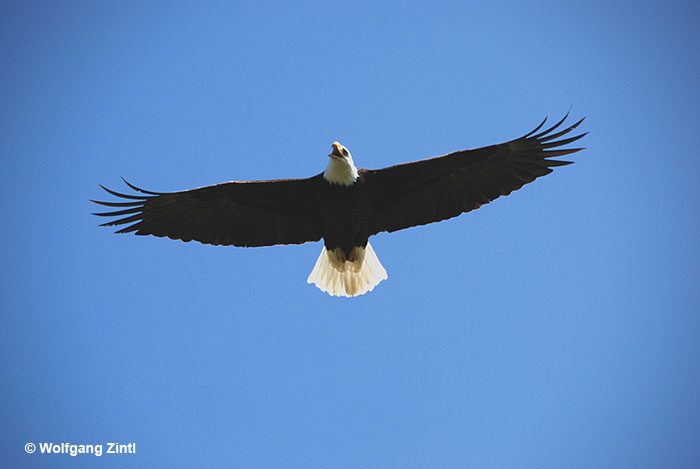
Another way is to utilize ridges. When wind hits a slope or ridge, it is forced upward, creating lift. Birds can soar along these ridges, utilizing the upward-moving air to maintain their height. Dynamic soaring exploits differences in wind speed between the surface and higher altitudes.
Frequently Asked Questions
How do birds take off and land?
Take-off and landing techniques between bird species vary but all of them include rapid flapping. Smaller birds can just jump in the air whereas larger birds must take a running start, face the wind, or drop off from a higher place. They land by spreading their wings to create drag, extend their legs forward, and use their tail for balance and control.
Why can’t flightless birds fly?
Flightless birds can’t fly because they lack the necessary wing structure, muscle strength, and sometimes have evolved heavier bodies that make sustained flight impossible.
Do birds feel tired of flying?
Birds can feel tired of flying, especially during long migrations, requiring them to rest and refuel periodically. After all, they are living beings.
Why are birds flying in V shape during migration?
Birds fly in a V shape during migration to reduce air resistance and conserve energy, as each bird benefits from the upwash created by the wings of the bird in front of it.
Why do birds fly in swirls?
Birds fly in swirls to protect themselves from predators, coordinate movement, and efficiently use air currents. The swirling, shape-shifting nature of murmurations is a result of individual birds trying to move towards the center of the group for safety (the “selfish herd effect”) while simultaneously responding to the movements of their neighbors.
