


Ostriches are the world’s largest flightless birds, yet they still face many predators, including lions, hyenas, and cheetahs, and have developed various ways to deal with them.
One common misconception, however, is that they bury their heads in the sand to avoid danger. This belief is so widespread that it even resulted in an idiom – “bury/hide your head in the sand”, which means to refuse to accept the truth about something unpleasant.
Where Does This Myth Come From?
The myth that ostriches bury their heads in the sand to avoid danger is one of the most persistent misconceptions in the animal kingdom. It stems from misunderstanding the bird’s natural behaviors. They have large bodies and relatively small, slender necks and heads, making it easy for distant observers to misinterpret their actions.
One key behavior that fuels this myth is the way these birds tend to their eggs. Ostrich nests are shallow scrapes in the ground. They frequently lower their heads to turn the eggs with their beaks throughout the day, ensuring even incubation. To a casual observer, this regular head-lowering motion can appear as though the ostrich is burying its head in the sand.
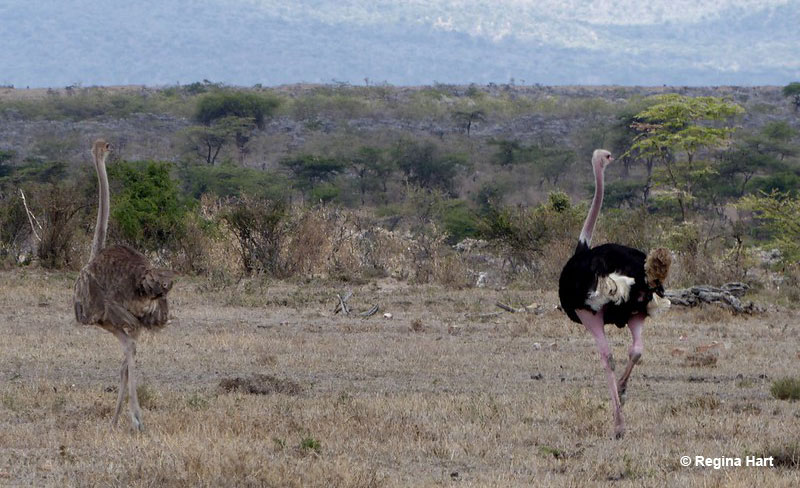
Another contributing factor is their foraging habits. Ostriches feed on plants, seeds, and small insects, which often requires them to lower their heads close to the ground. From a distance, it can seem as if their heads have vanished into the earth.
Additionally, when ostriches feel threatened, they may lie down flat on the ground, stretching their long necks out and keeping their bodies low. If only their bodies are visible, it might look as though their heads are buried. These behaviors have all contributed to the widespread myth, but the reality is that ostriches have other methods to escape danger.
What Really Happens
Despite their size, ostriches have many formidable predators such as lions, hyenas, and cheetahs with various other species going after their eggs and nestlings. They have developed many tactics to combat that.
Running
Ostriches rely on running as their main defense when they sense danger. They have excellent eyesight, which allows them to detect potential threats from a distance. You can often see them foraging in groups, either with other ostriches or alongside pack mammals like zebras, to increase their ability to spot danger.

When a threat is identified, they can outpace most predators. They can maintain a steady pace of around 34 miles per hour, and in moments of heightened danger, they are capable of short bursts of up to 40 miles per hour, making them one of the fastest runners in the animal kingdom.
Flopping to the ground
Flopping to the ground might seem counterintuitive, but it can be an effective defense mechanism when faced with imminent danger.
While ostriches are known for their incredible speed, there are situations where running is not the best option – such as when a predator is too close but hasn’t spotted the bird yet, or when escape routes are limited.
In such cases, an ostrich may suddenly drop to the ground, lying flat with its long neck and head outstretched. This posture helps them blend into the surrounding environment, making it appear as a low, unrecognizable shape rather than a large, conspicuous bird.
This strategy takes advantage of the ostrich’s natural camouflaging colors – black, grayish-brown, and white – especially in the open plains and savannas where they tend to reside. It is mostly effective against predators that rely on sight to detect movement.
Fighting back
If all else fails or if there are offspring evolved, ostriches will resort to fighting back. These birds may look funny, but they are very powerful fighters when necessary.
Using their strong legs, they can deliver a kick capable of inflicting serious injury or even killing a predator. Each leg is equipped with sharp claws that can pierce or slash through the skin of would-be attackers, including formidable predators like lions or even humans. In one instance, an ostrich managed to decapitate a coyote!
Ostriches are particularly aggressive when defending their nests or chicks, doing everything in their power to keep their little ones safe.
They may initially try to lead the predator away by pretending to be injured, but if that doesn’t work, they will try to use their size and strength to intimidate and fend off the predator. All in all, that has made them undesirable prey, and most predators avoid them.
Frequently Asked Questions
How many predators do ostriches have?
Grown ostriches have to fend off large carnivores such as lions, leopards, cheetahs, African wild dogs, and hyenas. Their eggs and nestlings are hunted by vultures, jackals, warthogs, and mongooses.
Are ostriches intelligent?
Ostriches exhibit a level of intelligence well-suited to their survival, displaying keen instincts, adaptability, and effective decision-making in the wild. However, they are not intelligent in the way that ravens are.
Are ostriches easily scared?
Ostriches typically try to avoid predators and other potential threats as fighting requires a significant amount of energy and carries a high risk of injury. While they may not be scared in the traditional sense, then they may choose to flee instead of confrontation.
Are ostriches any different from emus?
Ostriches and emus are often compared; after all, both are huge flightless birds. However, there are a number of differences between the two species, mainly their original range (emus originate from Australia, ostriches from Africa) and some physical differences as well.
