


Birds have always held a special place in mythology and folklore across different cultures and time periods. They appear in various roles, from simple fairy tales and fables that teach moral lessons to grand legends where they are revered as powerful forces of nature.
These mythical birds carry unique stories that reflect the beliefs, hopes, and fears of the cultures that created them. Here are some of the most fascinating and symbolic birds from myth and legend.
The Eagle Wounded by an Arrow
This story is one of Aesop’s Fables, a collection of stories attributed to Aesop, a storyteller believed to have lived in ancient Greece around the 6th century BCE. Aesop’s Fables are well-known for their moral lessons, often conveyed through tales of animals and inanimate objects that speak and act like humans.
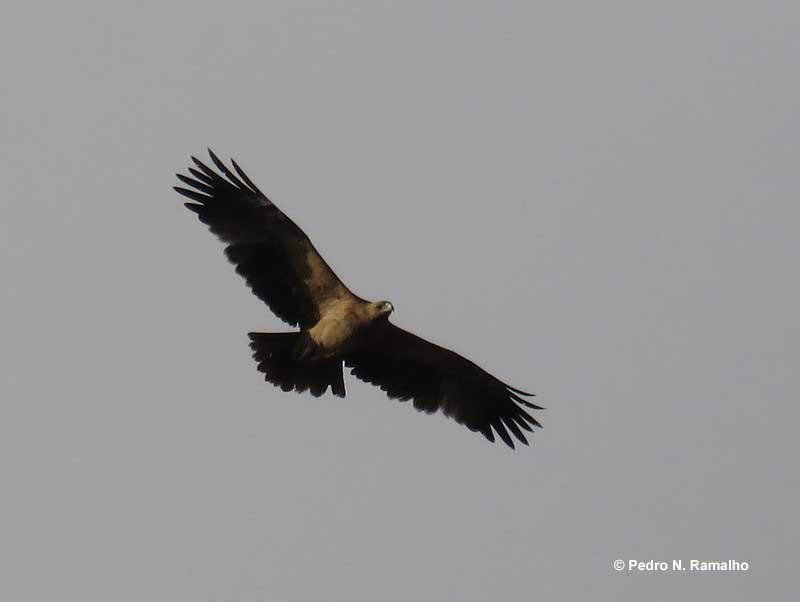
In the fable of “The Eagle Wounded by an Arrow,” an eagle soars high in the sky, powerful and free. Suddenly, a hunter’s arrow strikes it down. As the eagle lies dying, it notices that the arrow’s fletching is made from its own feathers and realizes that, in some way, it contributed to its own downfall.
The way this fable is told and interpreted varies slightly throughout ages and storytellers. Some versions focus on the idea that we often provide our enemies with the means to harm us while others emphasize the deeper pain that comes when we recognize our role in our own misfortune.
The Crane’s Gratitude
The Crane’s Gratitude is one of the most well-known Japanese folk stories with several variations.
In the heart of all versions is a man who saves a crane, which later returns in the guise of a woman to repay his kindness. She asks the man to promise not to watch her work and then weaves exquisite cloth from her feathers that takes days or even a week to complete but sells for a handsome profit.
However, this gradually weakens the woman. The turning point in each story comes when the man breaks the promise and uncovers the woman’s true identity as a crane. This discovery forces the crane to leave, abandoning the man to ponder the consequences of his actions.
While each variation of the story touches on universal themes like kindness, gratitude, sacrifice, and the dangers of curiosity, the specific focus varies by story.
In one version, the man checks on his crane wife because he becomes more and more worried as time goes by and the crane leaves because she believes the man can no longer love her once he has learned who she really is. In other versions, the focus is more on the importance of trust and privacy.
Thunderbird
The Thunderbird is a massive bird-like spirit originating from Native American folklore. It is said to be so large that it could carry a whale in its talons, and a single feather would need to be folded in half to fit in a quiver. The bird was believed to create thunder by flapping its wings and lightning by flashing its eyes.
Legends depict the Thunderbird as a powerful and fearsome being. In Ojibwe tradition, it is responsible for punishing humans who break moral rules, with its wrath being something to avoid at all costs.
It is also known for its nurturing and protective side, bringing life-giving rains and protecting people from evil spirits and creatures. However, it could also unleash destruction through winds, floods, droughts, and fires caused by lightning.
The origins of the Thunderbird legend are debated. Some suggest it could be a cryptid inspired by sightings of large prehistoric eagles like Teratornis merriami, or even pterodactyl fossils, while others believe it was a way to explain natural weather phenomena.
The Legend of the Kingfisher
In Greek mythology, Alcyone and Ceyx were a devoted couple who made the mistake of comparing their love to that of Zeus and Hera. This comparison angered Zeus, who, in his wrath, smote Ceyx during his sea voyage with a thunderbolt.
When Alcyone learned of her husband’s fate, she threw herself into the sea and drowned. The gods, moved by her sorrow and their enduring love, transformed them both into kingfishers. This story warns of the dangers of hubris but also shows that true love can transcend physical existence.
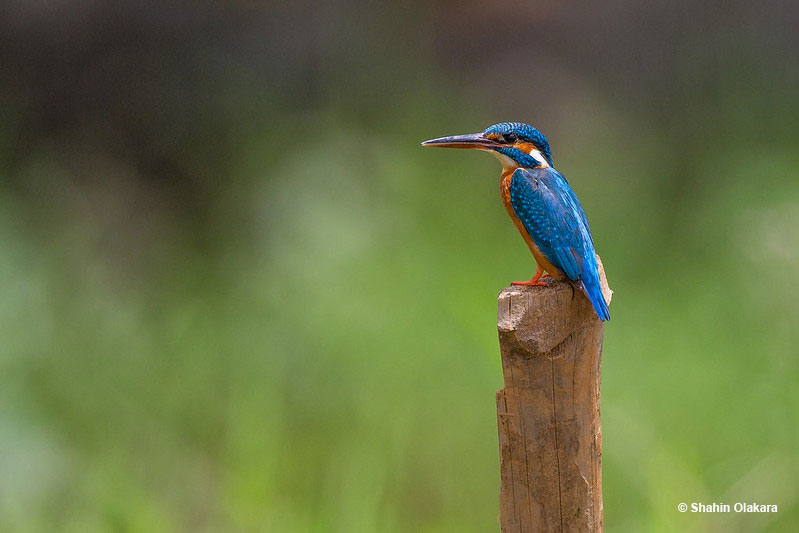
After Alcyone and Ceyx were transformed into kingfishers, the gods granted them a period of calm seas for seven days each winter, during which they could safely nest. These tranquil days became known as ‘halcyon days’.
Nowadays, the phrase ‘halcyon days’ is used to describe a period of peace and prosperity, particularly associated with a time of happiness and success in the past.
The Phoenix
The Phoenix is most commonly thought to originate from ancient Greek mythology, although some say it comes from ancient Egypt. It is described as a large, majestic bird with radiant red and gold feathers.
The Phoenix lived in Paradise, a land of perfection and beauty, akin to Heaven, and could never truly die. However, after a thousand years, it would grow tired and desire renewal.
To be reborn, the Phoenix would fly into the mortal world, gather the finest herbs and spices, and build a nest. The nest would go up in flames and the Phoenix along with it, leaving behind only a tiny worm.
After three days, a new Phoenix would rise from the ashes, beginning the cycle anew. Other versions of the story suggest the Phoenix flies into the sun or dies on the nest with the rising sun.
Throughout the ages, this creature has symbolized immortality, regeneration, and renewal. Spotting one was considered good luck and believed to symbolize the rise of a good leader or the dawn of a new era. Phoenix tears could supposedly heal, and being near the creature would make it impossible to lie.
Strix
The Strix is a creature from Roman and Greek mythology, often depicted as a bird of ill omen, closely associated with witchcraft and dark magic.
In early Roman mythology, the Strix was described as a large and grayish nocturnal bird, similar to an owl or bat, with its beak, wings, and feathers stained with blood. It was believed to be a harbinger of doom, capable of shape-shifting, and known for its gruesome habit of feeding on human flesh and blood, particularly that of infants.
In later folklore, the Strix evolved into more of a vampire-like creature, symbolizing fear, death, and the unknown, and was often used to explain unexplained deaths or nocturnal terrors.
Alectryon
In Greek mythology, Alectryon was a young soldier and a companion of the god Ares, the god of war. Ares, who had an illicit affair with Aphrodite, the goddess of love, needed Alectryon to stand guard and warn him if Helios, the sun god, approached while they were together. Ares knew that if Helios saw them, he would reveal their affair to Hephaestus, Aphrodite’s husband.
However, Alectryon failed in his duty and fell asleep while on guard. As a result, Helios discovered Ares and Aphrodite together and exposed their affair, leading to their humiliation.
Enraged by Alectryon’s negligence, Ares punished him by turning him into a rooster. In this new form, Alectryon was condemned to never forget his mistake. As a rooster, he was destined to crow every morning at the break of dawn, alerting the world to the rising sun—a constant reminder of the time when he failed to keep watch.
The Piasa
The Piasa is a legendary creature from the Native American folklore, its name is often interpreted to mean “the bird that devours men” or just “bird of prey”. It is typically depicted as a fearsome, dragon-like beast with a combination of various features.
According to legend, it had the wings of a bird, a scaly body, a very long tail, a man’s face with a tiger’s beard, and antlers like a deer. The creature was said to live in the cliffs along the Mississippi River, near present-day Alton, Illinois.
It was notorious for swooping down and attacking Native American villages, devouring warriors, and terrorizing the local tribes.
Legends about the Piasa vary, but many involve a heroic figure—often a great warrior or chief—who ultimately defeats the creature. In some versions, the warrior sets a trap and kills the Piasa with a volley of arrows, freeing the people from its terror.
Quetzal
This story talks about how the bird Quetzal came to be. In the lush forests of Guatemala, a chief’s son named Quetzal was born, and a mystical hummingbird appeared, signaling a special destiny.
The wise men foretold that Quetzal would become a beloved and immortal leader. As he grew, Quetzal became a strong and kind warrior, destined to lead his people.
However, his uncle Chiruma grew envious and plotted against him. After Quetzal became chief, Chiruma stole the protective charm, a hummingbird feather, believing it shielded Quetzal from harm.
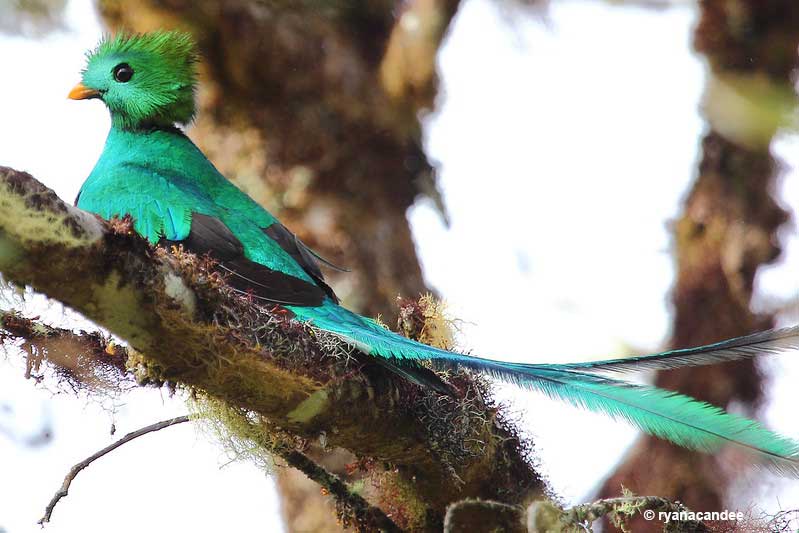
When Quetzal went hunting, Chiruma shot him with an arrow, thinking he had finally defeated his nephew. But as Quetzal lay dying, he miraculously transformed into a magnificent bird, the Quetzal, with vibrant red, green, and yellow feathers.
The gods fulfilled their promise, and Quetzal became immortal, living on as the holy bird of Guatemala. The people revere the Quetzal, believing their leader continues to live in the forests, his spirit embodied in the beautiful bird.
The Six Swans
“The Six Swans” is a fairy tale of perseverance, self-sacrifice, and familial love by the Brothers Grimm that tells the story of a king, his six sons, and his daughter. The tale begins with a king who becomes lost in a forest while hunting. He meets an old woman who offers to help him find his way out if he agrees to marry her daughter.
The new queen, driven by jealousy, uses dark magic to transform the six princes into swans. They are cursed to remain swans, only regaining human form briefly each evening. Before they fly away, they tell their sister that the curse can be broken if she sews six shirts made of star-flower for them, all without speaking or laughing for six years.
Determined to save her brothers, the sister isolates herself in a small hut in the forest, tirelessly working on the shirts. During this time, a king from a neighboring kingdom finds her, falls in love, and marries her, even though she cannot speak. The king’s mother, suspicious of the silent queen, accuses her of witchcraft.
As the six years near their end, the sister is sentenced to be burned at the stake. Just before her execution, she completes the final shirt as her brothers, still swans, arrive. She throws the shirts over them, breaking the curse.
However, the youngest brother is left with a swan’s wing because his shirt was unfinished. The sister is exonerated, the wicked mother-in-law is punished, and the sister, her brothers, and her husband live happily ever after.
Caladrius
The Caladrius is a mythical bird found in medieval European folklore, particularly in the bestiaries of the Middle Ages. It is often depicted as a pure white bird, resembling a dove, and is associated with healing and prophecy.
According to legend, the Caladrius has the ability to sense illness in a person. If it looks directly at the sick person, it is a sign that the person will recover, as the bird is said to absorb the illness into its own body before flying away, carrying the sickness with it.
However, if the Caladrius looks away or refuses to face the patient, it is believed that the person is doomed, as the bird senses that the illness is incurable.
The Caladrius symbolizes hope, purity, and the power of divine intervention in healing. In some interpretations, the bird is also seen as a Christ-like figure, taking on the sins or ailments of humanity to cleanse and heal them.
Zhenniao
Zhenniao, also known as Zhen or the poison-feather bird, is a mythical creature in Chinese folklore believed to inhabit the remote mountains of southern China. This bird is often described as both stunningly beautiful and incredibly deadly.
Its appearance varies across different accounts, but it is generally depicted with vibrant purple-green plumage, a scarlet bill, and an elegant, elongated body, sometimes compared to a goose.
The most intriguing aspect of the Zhenniao is its extreme toxicity, which it purportedly acquired by consuming the heads of venomous snakes.
Every part of its body, from flesh to feathers, was said to be so poisonous that just a piece of its meat passing through one’s throat would be enough to kill the person. Even the bird’s excrement was believed to be dangerous, capable of dissolving stone. The only known antidote was a rhinoceros horn, which led people to fashion it into hairpins for detecting poison in food and drink.
The last reported sighting of the Zhenniao was during the Song dynasty, after which it supposedly went extinct due to human hunting.
For centuries, the Zhenniao was dismissed as mere folklore. However, the recent discovery of the Hooded Pitohui, a bird with poisonous feathers due to its diet, has led some scientists to speculate that the Zhenniao might have been based on a real, now-extinct species.
Pamola
Pamola is a legendary spirit from the mythology of the Penobscot, Abenaki, and Micmac tribes, believed to inhabit Mount Katahdin, the tallest mountain in Maine. Described as a fearsome hybrid creature with the head of a moose, the body of a man, and the wings and talons of an eagle, Pamola was both a guardian of the mountain and a harbinger of danger when not respected.
In Penobscot legends, a hunter trapped by snow near Mount Katahdin called out to Pamola, who accepted his sacrifice of oil and fats and took him into the mountain, where the hunter married Pamola’s daughter. Upon remarrying after returning to his people, the hunter mysteriously disappeared, believed to have been taken back by Pamola.
Another story tells of a skeptical young woman who doubted Pamola’s existence until he appeared to her, took her to the mountain, and fathered her child, who had the power to kill by pointing. Despite Pamola’s warning not to remarry, the woman remarried, and both she and the child vanished, believed to have been taken back by Pamola.
Huitzilopochtli
Huitzilopochtli, one of the most significant deities in Aztec mythology, was revered as the god of war, the sun, and the patron of Tenochtitlán, the city that later became Mexico City.
His name means “Hummingbird of the South” or “Left-Handed Hummingbird,” and he was considered the supreme god of the Mexica people, who founded the Aztec Empire. He is either depicted as a hummingbird or as a fierce warrior decorated with hummingbird feathers, wielding a serpent-like weapon called Xiuhcoatl.
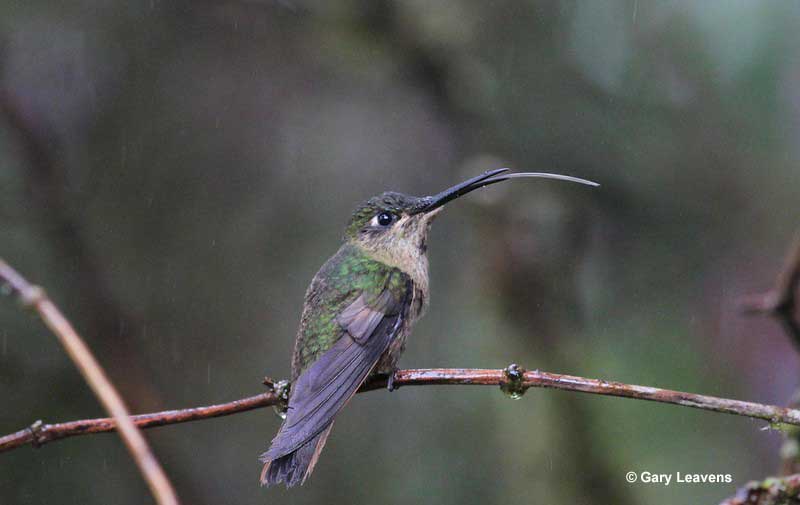
According to Aztec legend, Huitzilopochtli was born fully armed from his mother, Coatlicue, the earth goddess, after she miraculously conceived him by placing a ball of feathers near her bosom.
His birth ignited a fierce battle with his siblings, who believed their mother had dishonored them. In this battle, Huitzilopochtli killed his sister Coyolxauhqui and cast his 400 brothers, the Centzon Huitznahua, into the sky, where they became stars.
Huitzilopochtli’s influence was so profound that the Aztecs saw themselves as his chosen people, destined to conquer and expand their empire in his name. They believed that they needed to provide human sacrifices to ensure the sun’s survival and the continuation of life.
Alicanto
The Alicanto is a mythical bird from Chilean folklore, particularly known in the mining regions of the Atacama Desert. Nocturnal in nature, it feeds exclusively on metal ores, including gold, silver, and copper. Its feathers are said to shimmer with a metallic glow, radiating golden, silvery, or greenish light depending on the type of ore it consumes.
Alicantos are flightless, though their wings are fully functional. After gorging on metal, they often become so heavy that they cannot fly, with some barely able to drag themselves along the ground. Despite this, they are swift runners, especially when their wings are spread open.
The Alicanto’s association with precious metals makes it a sought-after creature for prospectors, miners, and looters, as it is believed to lead them to rich ore veins.
Legend has it that an Alicanto guided Juan Godoy to the silver-rich Chañarcillo outcrops in 1832, sparking the Chilean silver rush. They are also known for guiding lost travelers to safety in the desert at night, earning a reputation as bringers of good fortune.
However, if the bird senses danger or determines that the person following it doesn’t have a pure heart, it will lead the person astray, extinguish their glow, and disappear—or worse, lead them off a ledge.
