


Bluebirds are so beautiful. They look like a blend of deep blue sky and peach autumn foliage!
Seeing them in grassy fields is always a gift. It’s even better if you can watch bluebirds near your home!
- Three Bluebird Species
- The Bluest Bluebird
- Not Actually Blue
- One of the First Thrushes
- Cavity Nesters
- Special Bluebird Nest Boxes
- The Female Bluebird Builds the Nest
- Pest Control Experts
- Excellent Vision
- Brighter Blue in UV Light
- Occasional at Bird Feeders
- Formerly in Decline
- Bluebirds have Short Lifespans
- A Short Distance Migrant
- On the Bermudian $2 Bill
Want to learn more about these special birds? See these 15 interesting facts about bluebirds!
Three Bluebird Species
When people mention bluebirds, they are usually talking about the Eastern Bluebird. This is the species that “bluebird trails” were designed for. However, it’s not the only bluebird species in North America.

We also have two other equally beautiful birds; the Western Bluebird and the Mountain Bluebird. True to their names, Western Bluebirds mostly live in the western states and Mexico, while Mountain Bluebirds live in montane habitats of western North America.
The Bluest Bluebird
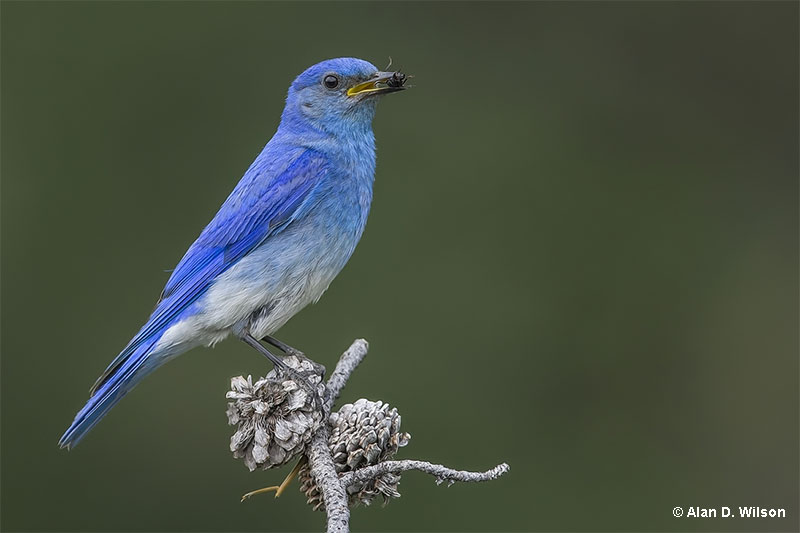
The bluebird with the “bluest” plumage is the Mountain Bluebird. All bluebirds have gorgeous sapphire or sky-blue colors, but the Mountain Bluebird is the bluest of them all. This beautiful light blue bird doesn’t have any of the brown or chestnut colors shown by the other two species.
Males show different shades of sky blue that fade into cloudy white on their bellies. The females look more like leaden gray clouds with patches of blue sky.
Not Actually Blue
Despite their name, one could argue that bluebirds aren’t really blue! They certainly look that way, but technically, their feathers aren’t blue.
That might seem impossible, but it’s just how blue colors in the avian realm work. Like other birds with blue colors, those gorgeous shades of sapphire and turquoise aren’t produced by pigments.
Instead, they are generated by the plume’s microscopic structures. When light hits these feathers, their structures reflect and amplify the blue wavelength.
One of the First Thrushes
Bluebirds are part of the thrush family, but they don’t look much like robins or thrushes! This is probably because bluebirds aren’t closely related to them.
They are some of the “oldest” members of this family. According to DNA studies, bluebirds evolved before most other thrushes did. The one exception is a bird from the Himalayan region called the “Grandala.”
Grandalas are a bit like bluebirds, except males have deeper, glowing blue plumage with black wings!
Cavity Nesters
Another thing that sets bluebirds apart is their nesting behavior. Unlike most other thrushes, they won’t nest on an open branch or in a bush.
Instead, bluebirds build cup nests inside tree cavities. Since their small beaks are too weak to excavate holes on their own, they have to use old woodpecker holes and other similar situations.
Fortunately, they can also use artificial nest cavities too.
Special Bluebird Nest Boxes
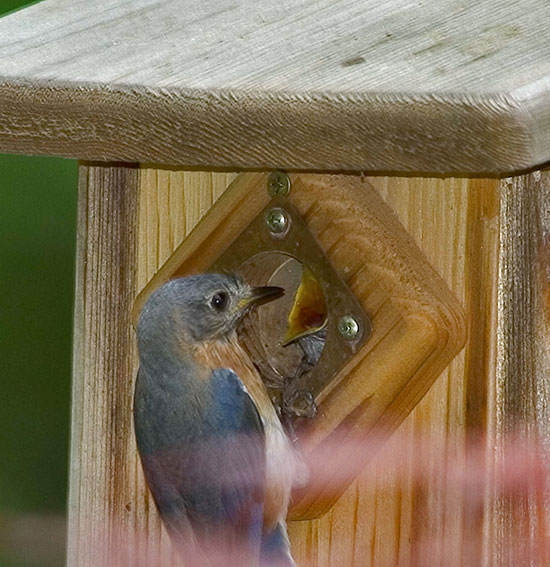
Speaking of artificial nest cavities, bluebirds are happy to use nest boxes. Even so, to keep starlings and sparrows away and bluebirds happy, the ideal nest box should be a certain size and should not have any pegs for birds to perch on.
It should also be 10 inches tall and 6 inches wide and have an entrance hole that is 1.5 inches in diameter and 5 to 8 inches above the nest box floor.
The Female Bluebird Builds the Nest
To attract a mate, male Eastern Bluebirds sing and show their beautiful breeding colors. They also pick a good nest site and show it off to potential mates. Although males can bring some nesting material, it’s more for show than to help build the nest.
After a female bluebird picks a male, she takes over from there. She gathers grass, pine needles, and even horsehair or feathers to make a loose cup nest.
Pest Control Experts
Bluebirds are natural at pest control. They can’t help themselves because they love to eat grasshoppers, crickets, and lots of other bugs!
Although they also feed on berries in winter, bluebirds are primarily insectivorous. Keep bluebirds near your garden or crops and they’ll do a great job eliminating all sorts of insects.
On the other side of the coin, this is also why bluebirds might be absent from lawns and fields sprayed with pesticides.

Excellent Vision
Bluebirds have excellent eyesight. They can see a grasshopper move up to 120 feet away!
These thrushes need very good vision to catch insects and other small creatures that hide in the grass. After watching from a post or other perch, the bluebird flies out and swoops down to snatch its prey.
Bluebirds can also catch bugs in flight but mostly fly down from a perch.
Brighter Blue in UV Light
As bright as male bluebirds look to us, they are even brighter for female bluebirds! Studies have shown that male bluebird feathers more strongly reflect UV rays than female feathers.
Although our vision can’t notice any difference, female bluebirds and other birds surely do. Since they can see UV rays, they might perceive male bluebirds as birds with fantastic, shining blue colors!
Occasional at Bird Feeders
Bluebirds will come to the right nest boxes, but they don’t usually visit feeders. They certainly won’t come to feeders with seeds that attract cardinals, juncos, Blue Jays, and other typical backyard feeder birds.
We can’t blame them; seeds just aren’t on the bluebird menu!
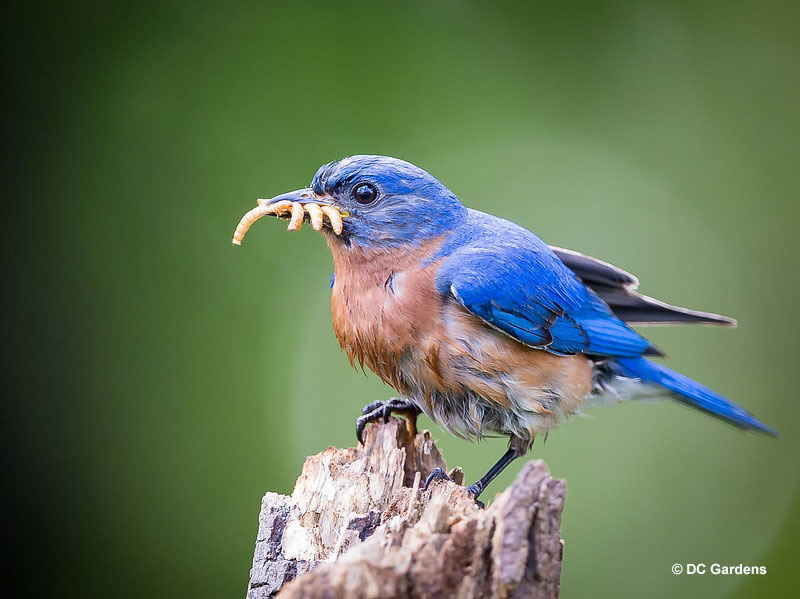
However, they may come to feeders with mealworms and sometimes visit feeders for suet. This sort of bluebird feeding mostly works in fall and winter.
Formerly in Decline
Bluebirds are doing well in present times. However, a century ago, it was another story. As invasive species and their populations increased, they took many nesting sites that bluebirds would have used. This competition, compounded with rampant pesticide use, eventually caused alarming declines in bluebird populations.
Fortunately, nest boxes on “bluebird trails” seem to have helped these beautiful birds increase their numbers.
Bluebirds have Short Lifespans
Like many small birds, bluebirds don’t live very long. Predators and other factors give them an average lifespan of just 3 to 5 years. However, during that time, they raise lots of broods, often, two per season.
As with any bird species, once in a while, some do live longer. The oldest known Eastern Bluebird was one that lived for at least ten years and six months!
A Short Distance Migrant
Bluebirds might be small, but they are hardy birds! Unlike orioles, most warblers, and other insectivores, they don’t migrate to Central or South America.
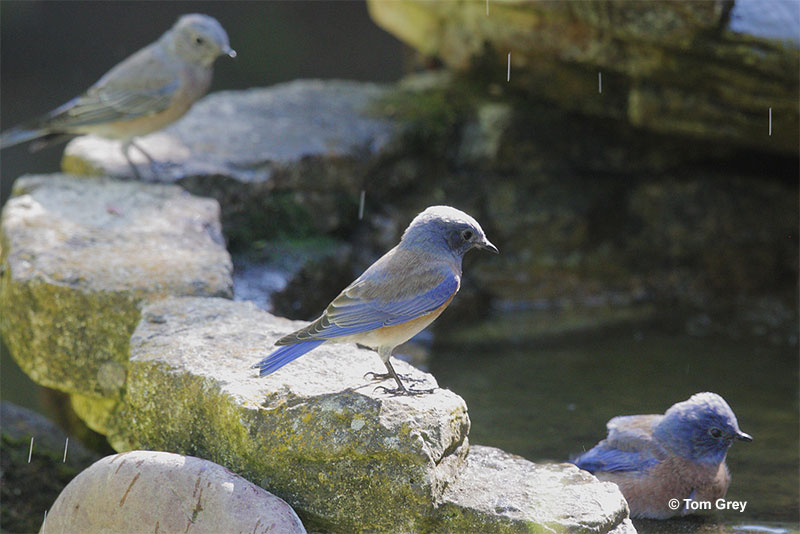
Instead, bluebirds are short distance migrants that winter in the southern states. Many bluebirds don’t migrate at all, either. The ones that migrate are mostly bluebirds that nest in southern Canada and the northern USA.
They survive winter weather by feeding on berries and other fruit.
On the Bermudian $2 Bill
Visit Bermuda, and you’ll see the Eastern Bluebird on the small nation’s two-dollar bill! A small population of bluebirds live in Bermuda.
These birds look a bit more blue than Eastern Bluebirds from Canada and the USA but act just like them. They are believed to have arrived in Bermuda in the 1600s, either as purposely introduced birds or ones that may have hitched rides on ships.