

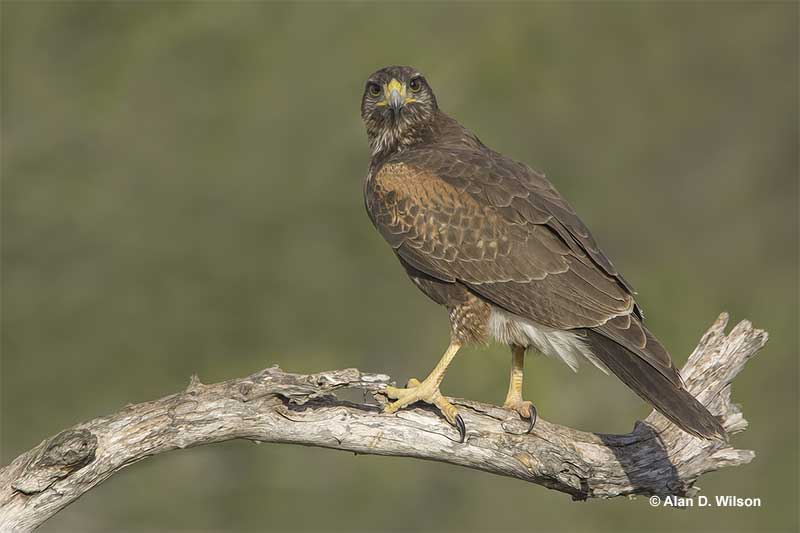
Hawks are such impressive birds! Whenever I go birding, I always see a hawk or two, and am surprised at how many big hawks live near people. I see them soaring high overhead, perched on pylons, or even hunting at backyard feeders.
What do hawks eat, and how do they hunt their prey? Do some migrate?
- Female hawks are bigger than male hawks
- Different types of hawks hunt different prey
- Most hawks hunt from perches or while soaring
- Hawks can hunt by hovering in place
- Some hawks mimic vultures
- Hawks that stalk backyard feeders
- Harris’s Hawks hunt in packs
- Hawks use sharp talons to kill their prey
- Some hawks migrate, one as far as Argentina!
- In winter, Swainson’s Hawks mostly eat insects
- Hawk vision is five to eight times better than human eyesight
- The most common hawks in North America is the Red-tailed Hawk
- One small hawk hunts hummingbirds
- Male and female hawks share parenting duties
- In Europe, hawks are called buzzards
Female hawks are bigger than male hawks
Females hawks are larger than males. Watch a pair of hawks at their nest and it won’t take long to figure out which bird is the female. Although they have similar plumage, the mother hawk will be obviously bigger.
Ornithologists believe that raptors show this size difference so pairs can catch different types of prey. If females catch larger prey than their mate, they might avoid competition and the pair could find more animals to feed their young.

Different types of hawks hunt different prey
A hawk’s shape hints at what it preys on. Sharp-shinned Hawks and other hawks that hunt birds have long tails and short wings to help them maneuver through vegetation.
Hawks with broad wings and broad tails can also catch birds but mostly prey on small mammals, snakes, frogs, and other small animals. The Gray Hawk and other hawks with longish tails and medium-length wings catch a blend of lizards, birds, and small animals.
Most hawks hunt from perches or while soaring
Hawks hunt in a few different ways. One of the most common strategies for hunting is to watch for prey from a perch. That way, a hawk can blend in with its surroundings, use its excellent vision to watch for prey, and quickly drop down on the animal.
Hawks also hunt during soaring flight. Like a drone, by flying high in the air, hawks have an excellent view of their hunting grounds.
Hawks can hunt by hovering in place
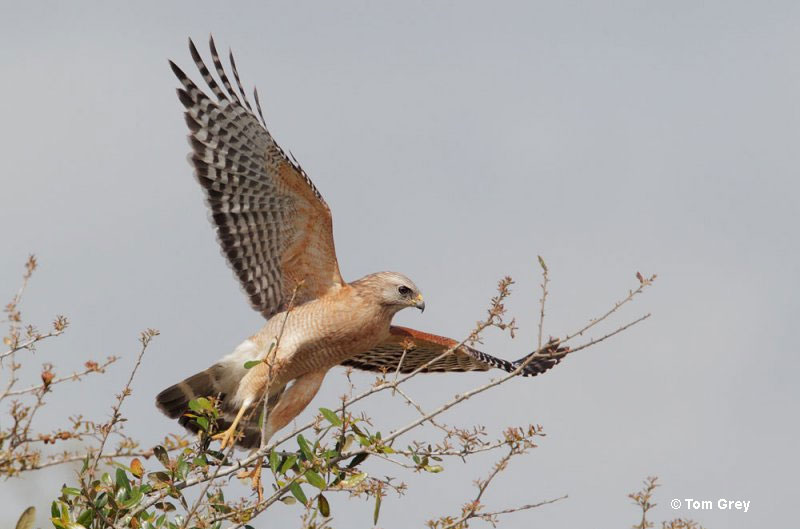
Some hawk species can also use hovering flight to hunt for prey. Instead of soaring, Red-tailed Hawks and some other species slowly flap their wings to hover high over a field. They might use this hunting strategy to wait for voles or other rodents to come into view.
Rough-legged Hawks also frequently hover when hunting. I have often seen these striking, northern hawks hovering over snowy fields in upstate New York.
Some hawks mimic vultures
Amazingly, to get closer to their prey, hawks can also imitate vultures! The Zone-tailed Hawk is the main species that uses this strategy. Small animals pass the bird off as just another vulture until its too late for them to escape.
In flight, its dark plumage and “V”-shaped wings make the hawk look a lot like a Turkey Vulture. However, with a close look, the white bands on the hawk’s tail and rounded head reveal its true identity.
Hawks that stalk backyard feeders
Bird feeders can bring in a bunch of birds. It’s a wonderful thing, but we aren’t the only ones watching all those Blue Jays, finches, and nuthatches.
Those fantastic concentrations of birds also attract the animals that catch them, most of all, hawks. Although a Red-tailed Hawk might occasionally check out a feeder, the two hawks that stalk feeders the most are Cooper’s Hawks and Sharp-shinned Hawks. Both species specialize on birds, especially Mourning Doves, woodpeckers, and small songbirds.
Harris’s Hawks hunt in packs
Hawks are naturally skilled for catching small animals. However, in some situations, even the best of hawks can use a little extra help. In the deserts of Arizona, family groups of Harris’s Hawks often work together to catch prey!
Like miniature wolf packs, these smart raptors catch jackrabbits by having one bird scare the animal into the open. One or two other hawks then fly in to block its escape and catch it with their talons.
Hawks use sharp talons to kill their prey
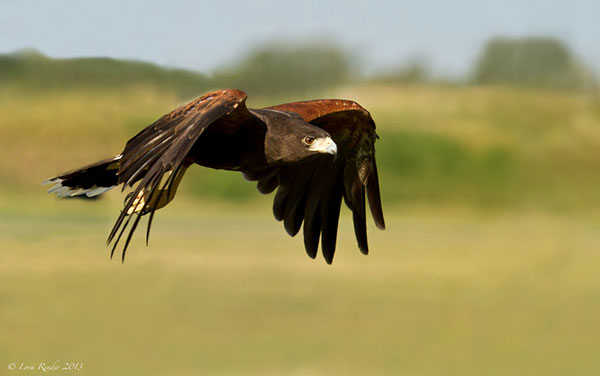
In general, hawks use their talons to kill their prey. Their talons are needle-sharp and pierce flesh like butter (that’s what more than one raptor bander has told me!).
Usually, once a hawk latches its talons into its prey, the small animal can’t escape. As the hawk squeezes its talons, they often pierce vital organs and the animal quickly dies.
Hawks also have sharp beaks but they use them to tear off and eat bits of flesh.
Some hawks migrate, one as far as Argentina!
In North America, we can see several hawks in winter. Even so, some species are migratory. Rough-legged Hawks migrate from the Arctic tundra to fields in southern Canada, the northern USA, and northern Eurasia.
Broad-winged Hawks go all the way to tropical forests from Mexico to the Andes. However, none travel as far as the Swainson’s Hawk. Each year, most Swainson’s Hawks spend the winter on the plains of Argentina!
In winter, Swainson’s Hawks mostly eat insects
When Swainson’s Hawks reach their wintering grounds, they change their diet. In summer, these big hawks hunt small mammals and birds in grassland habitats, usually on their own or in pairs.
That changes when they reach Argentina! On the pampas, flocks of Swainson’s Hawks gorge themselves on an abundance of grasshoppers, beetles, and dragonflies. It might seem odd that bugs can provide enough food for a large bird but they do provide a lot of protein.
Hawk vision is five to eight times better than human eyesight
Like all raptors, hawks have excellent vision. They need fantastic eyesight to notice prey at a distance and to stay locked onto it as it tries to flee.
Although we can’t see through a hawk’s eyes, we do know that they have far more “visual receptors” than human eyes.
That translates to eyes capable of seeing details at least five times better than a person and maybe even eight times better!
The most common hawks in North America is the Red-tailed Hawk
Go birding in the USA and Canada and it’s pretty easy to see hawks. Drive on country roads and we see perched hawks and one or two soaring overhead. You might even see them soaring over the streets of New York City!
Most of them are the most common hawk species in North America, the Red-tailed Hawk. This adaptable hawk lives in just about every possible habitat, and preys on everything from rabbits to mice and snakes.
One small hawk hunts hummingbirds
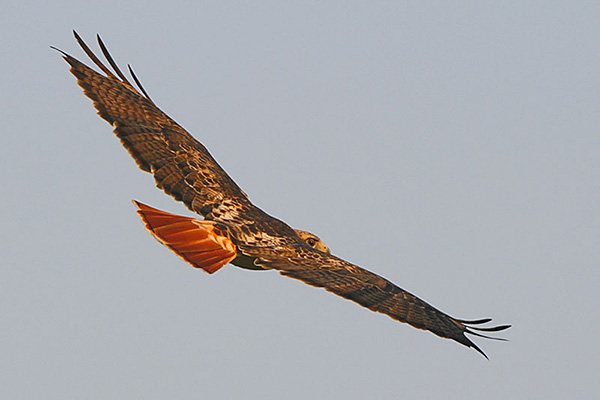
The smallest hawk in North America is the Sharp-shinned Hawk. Males are only around the same size as a robin. Even so, they can still catch birds as big as themselves!
One slightly smaller species also catches small birds, even hummingbirds. The Tiny Hawk of Central and South America hides near and dashes through rainforest with the hope of catching tanagers and hummingbirds by surprise.
Male and female hawks share parenting duties
Adult hawks help each other raise their young. Both sexes can choose a nesting site and then build their bulky stick nest together.
For most or all hawks, male and female birds also incubate the eggs. However, after hatching, the female stays with the nestlings while the male brings food to her and the babies. As the nestlings grow, both sexes eventually hunt and feed them.
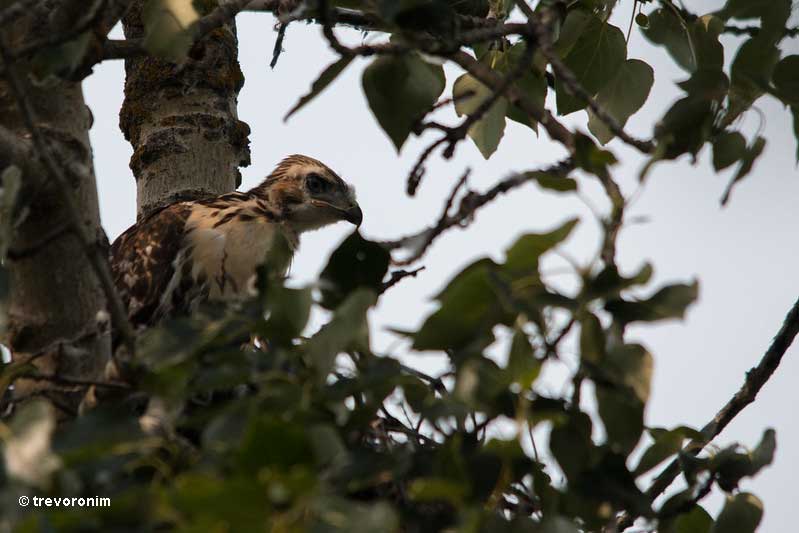
In Europe, hawks are called buzzards
One of the common terms used for raptors is “buzzard.” When people use the word in North America, they are often referring to vultures.
However, in Eurasia, “buzzards” are hawks, especially ones with broad wing and tails.
Most buzzards are in the Buteo genus, the same one that Broad-winged, Red-shouldered, and Red-tailed Hawks belong to. In Eurasia, the Common Buzzard is similar to the Red-tailed Hawk in a number of ways and also lives in very similar places.