


Bald Eagles are such majestic and impressive raptors! They are much bigger than any hawk, have a white head and tail, and make giant nests.
In other words, these huge raptors are impossible to miss! Watch for these special birds in wetland habitats and you’ll probably find them.
- A “sea-eagle”
- Bald Eagles aren’t really bald
- A conservation success story
- Bald Eagles can carry prey as large as 8 pounds
- Flocks of wintering Bald Eagles!
- The biggest nest of any bird in North America
- Ben Franklin was not a fan
- A strong grip
- The biggest Bald Eagles live in Alaska
- Bald Eagles can dive as fast as 99 mph!
- Bald Eagles have vision 4 to 5 times better than people
- Adulthood at four to five years of age
- A sacred bird for many Native American cultures
- Bald Eagles can wander far and wide
- Bald Eagles can go without food for several days
How do Bald Eagles survive? Are they still endangered?
To answer these and more questions about Bald Eagles, we found 15 interesting facts about these fantastic birds!
A “sea-eagle”
The Bald Eagle is related to other raptors known as “sea eagles” and “fish eagles.” Those birds get their name from their preference for coastal habitats. Bald Eagles thrive in coastal areas but can also live in other wetland habitats.
The Bald Eagle shares the Haliaeetus genus with three other big “sea-eagle” species. All feed on lots of fish, although they can also catch other animals, especially waterbirds.
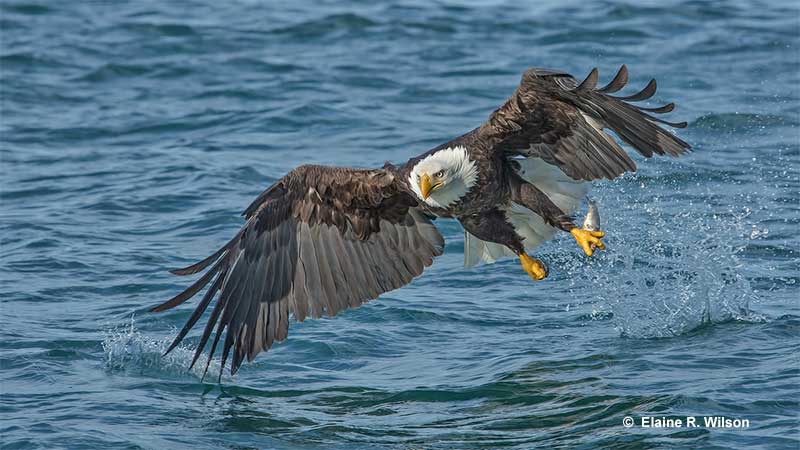
Bald Eagles aren’t really bald
It’s obvious that Bald Eagles aren’t actually bald but then how did they get that name? In the case of the Bald Eagle, the word “Bald” doesn’t actually refer to a head that lacks hair.
It’s a derivation of “Balde”, an older English word that means “white” and makes more sense than “bald”. The first English settlers in North America called this eagle “balde” in reference to its bright white head and tail.
A conservation success story
Historically, Bald Eagles were abundant birds of coastal and wetland habitats.
However, by the 1900s, the big birds were in serious trouble. The pesticide DDT caused widespread nest failures, eagles suffered from pollution, and were also persecuted.
Fortunately, after DDT was banned, education and conservation efforts helped Bald Eagles repopulate much of North America. In 2007, they became so common that they were finally removed from the list of threatened and endangered birds!
Bald Eagles can carry prey as large as 8 pounds
Bald Eagles are strong birds that tend to catch larger fish than Ospreys. They can carry away fish as big as 8 pounds but usually go for fish that weigh 4 to 5 pounds.
If a fish or other prey animal is too heavy for a Bald Eagle, the bird usually eats part of the animal where it killed it. The raptor carries away pieces of its prey or the rest of the animal up to a high perch.
Flocks of wintering Bald Eagles!
A pair of nesting Bald Eagles defend their territory from other eagles. However, non-breeding and wintering birds are much more social.
In winter, large numbers of Bald Eagles can gather at good feeding sites. I have joined crowds of people to witness dozens of Bald Eagles catching fish at a dam on the Mississippi River. However, hundreds of Bald Eagles can gather at salmon spawning rivers in Alaska and British Columbia!
The biggest nest of any bird in North America
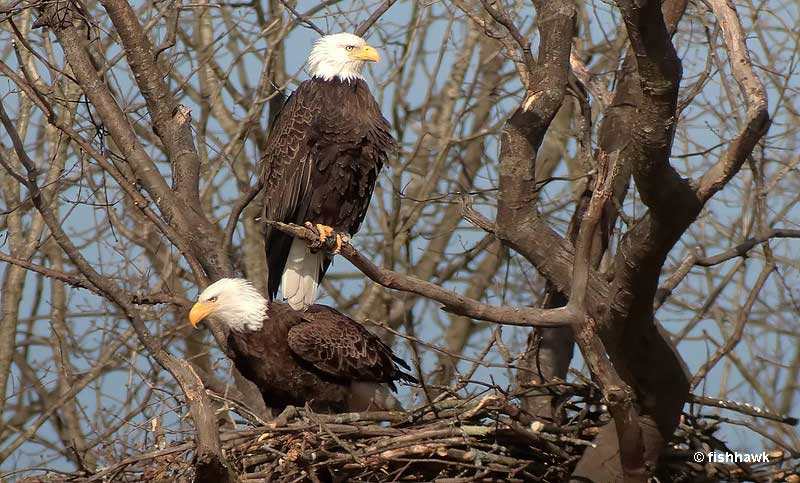
It’s not surprising to learn that Bald Eagles make large nests. After all, they are pretty big birds! However, as big as Bald Eagles are, their nests are simply huge; the biggest of any North American bird!
They routinely construct massive stick nests that average 4 to 5 feet in diameter and 2 to 4 feet deep. However, the largest was a nest in Saint Petersburg, Florida that measured 20 feet tall and 9.5 feet in diameter!
Ben Franklin was not a fan
Shortly after the United States of America declared independence from England, Americans were eager to pick a national bird.
The Bald Eagle was chosen, but at least one prominent American was not too pleased. Benjamin Franklin expressed his issues with the Bald Eagle in letters to his daughter. He believed the raptor was a poor choice to represent the nation because it frequently pirated fish from other birds!
A strong grip
Like other eagles and birds of prey, Bald Eagles have a very strong grip – as strong as 400 pounds per square inch!
This is around ten times stronger than the average grip of a person’s hand. Whether catching salmon, a rabbit, or a goose, their strong grip helps Bald Eagles quickly kill and hold onto their prey.
The biggest Bald Eagles live in Alaska
Bald Eagles are always big and impressive birds, but the ones that live in Alaska are the biggest! The largest female Bald Eagles in Alaska can weigh as much as 15 pounds and have an 8 foot wingspan.
This is quite a bit bigger than Bald Eagles from the lower 48 states. This difference follows a concept known as “Bergmann’s rule” whereby animals living in cold places are larger than ones from warm regions.
Bald Eagles can dive as fast as 99 mph!
The Bald Eagle looks like a big, bulky bird but it’s surprisingly agile. They can catch ducks and geese in flight by swooping up and grasping them with their talons from below!
Bald Eagles are also capable of diving down on waterbirds and nest intruders at high speeds. Although they typically flap along at 25 or 30 mph, when diving, they can reach speeds of 99 mph!
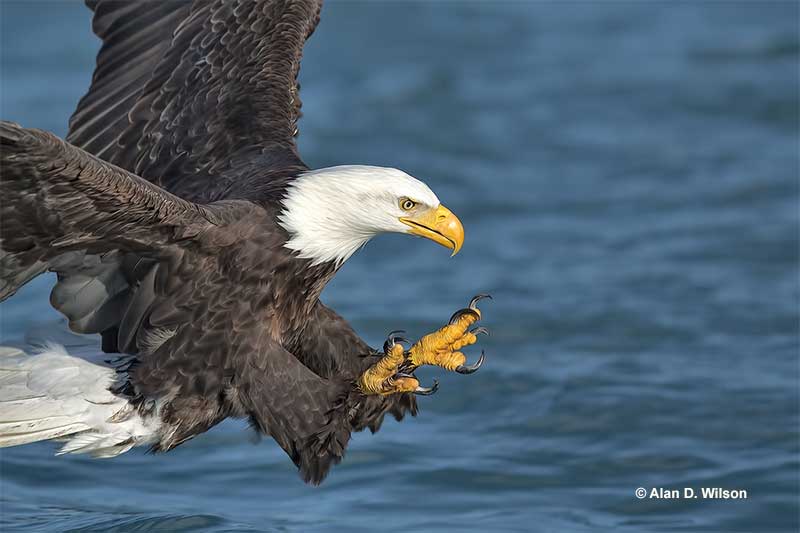
Bald Eagles have vision 4 to 5 times better than people
In general, birds see better than people. Bald Eagles are no exception and have vision at least 4 to 5 times better than the average person.
They can pick out a surfacing fish, swimming mallard, and other fine details from far away, and also have a much wider field of view. Bald Eagles can also see in the UV spectrum, and protect their eyes with a transparent eyelid known as a “nictating membrane”.
Adulthood at four to five years of age
Bald Eagles take a little while to grow up. That’s surely why we see so many juvenile eagles flying around. These dark-plumaged birds can be tricky to separate from similar Golden Eagles but always have more white feathers on their body and tail.
Bald Eagles have those juvenile and subadult plumages until they are four or five years old. By then, they finally show the white head and tail of adult birds.
A sacred bird for many Native American cultures
Bald Eagles (and Golden Eagles) have played important roles in Native American cultures for centuries. They are often viewed as messengers between the spiritual world and people.
Learn more: What do eagles symbolize?
For this reason, eagle feathers are often reserved for important ceremonies, and eagle bones are used to make ceremonial whistles. It is illegal to possess eagle feathers without a special permit. However, Native Americans can acquire them for ceremonies from the U.S. Fish and Wildlife Service National Eagle Repository.
Bald Eagles can wander far and wide
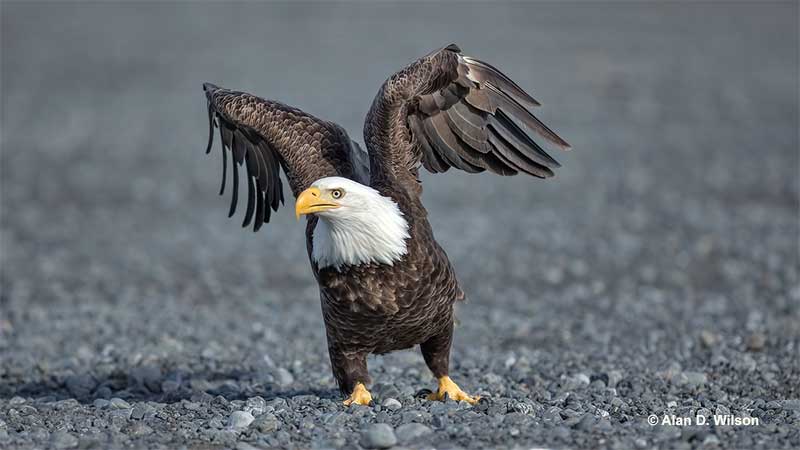
Some Bald Eagles are migratory, while others stay in the same area all year long. The birds that migrate tend to come from lakes and rivers in Canada and the northern USA. These birds can migrate many hundreds of miles to winter feeding grounds in coastal areas and ice-free rivers and lakes.
Juvenile birds also tend to wander more than adults. Some young birds from Florida have flown all the way to Canada for the summer months!
Bald Eagles can go without food for several days
Bald Eagles are hardy and adaptable birds. One of their natural survival tools is being capable of going without food for a week or more!
They can do this by storing uneaten food in their crop for several days. When a Bald Eagle finds a good food source, the bird often eats as much as possible. That way, it can store up to two pounds of extra food for later use!