


As winter recedes and the world begins to warm, the arrival of certain birds heralds the beginning of spring.
Their presence brings joy, hope, and a sense of wonder, marking the transition from the cold of winter to the warmth and vitality of spring, symbolizing rebirth, hope, and the cyclical nature of the seasons.
Let’s explore some of those symbols of spring!
Joyful Bluebirds
The association of bluebirds with the arrival of spring has its roots in various cultural, historical, and literary traditions that all stem from the bird’s behavioral patterns.
Many species of bluebirds, such as the Eastern Bluebird, migrate seasonally. They typically spend the winter in the southern parts of their range and return north in early spring as the weather warms up.
This migration coincides with the end of winter and the arrival of spring, making their appearance a natural indicator of the changing season.
This has been also noted in literature and poetry. Writers and poets have frequently used the bluebird as a metaphor for happiness, hope, and the beginning of a new cycle.

For example, the naturalist and writer Henry David Thoreau expressed in his journal that people from all walks of life learned to recognize the song of bluebirds since sighting one was regarded as a sign of the changing seasons.
However, it’s worth noting that climate change and altered landscaping practices have affected bluebird behavior in recent years. In some areas, bluebirds now overwinter or appear earlier in the year, potentially changing their traditional role as definitive spring indicators.
Despite these changes, the cultural and historical association between bluebirds and spring remains strong in many people’s minds.
Connections Between Spring And Birds In Other Cultures
Bluebirds are widely regarded as symbols of happiness, hope, and renewal – themes closely associated with the spring season. This is also reflected in various cultures, including some Native American tribes.
However, different tribes and cultures have their own harbingers of spring. In Japan, it is the Japanese Bush Warbler, known as the “bird that announces spring.” Its distinctive and beautiful song, heard as early as February, is celebrated in poetry and art. Another one would be the Japanese White-eye, which is frequently seen and also depicted among the blooming Sakura trees.
In many parts of Europe, the return of migratory birds like swallows, Northern Lapwings, and storks signifies the arrival of spring. The stork is often seen as a bringer of new life and fertility, with its return being eagerly anticipated each year. Similarly, swallows are considered symbols of hope and renewal.
Swallows are also symbolize spring in Chinese cultures. Their return is seen as a sign of the season’s renewal and the promise of a prosperous year.
In Ancient Egyptian culture, the ibis bird was associated with spring and protection. According to Herodotus, ibises would meet “winged serpents” flying from Arabia towards Egypt at the beginning of spring and kill them, protecting Egypt.
So in summary, different regions and cultures have their own spring-bringers, most often migratory birds that are the earliest to return from their wintering grounds.
Other Birds That Symbolize Spring
Robins
Robins are regarded as symbols of spring in North America and Europe (although European Robins are not related to ours). In many parts of North America, the American Robin is one of the first birds to reappear in the spring after winter migration.
Their return is a clear sign that winter is ending and warmer weather is on the way. They are often seen foraging for worms and other invertebrates on lawns and gardens, activities that increase as the ground thaws and become more hospitable.
There’s even an old Irish superstition about the first robin of spring. It’s believed that if you make a wish upon seeing the first robin of the new season, that wish will come true – but only if you complete the wish before the bird flies away.
Hummingbirds
In North America, particularly in the Pacific Northwest, the return of hummingbirds such as the Rufous Hummingbird is a sure sign that spring has arrived.
These tiny birds migrate from their wintering grounds in Central America to their breeding grounds in North America, arriving as early as March in southern regions and later in the northern parts.
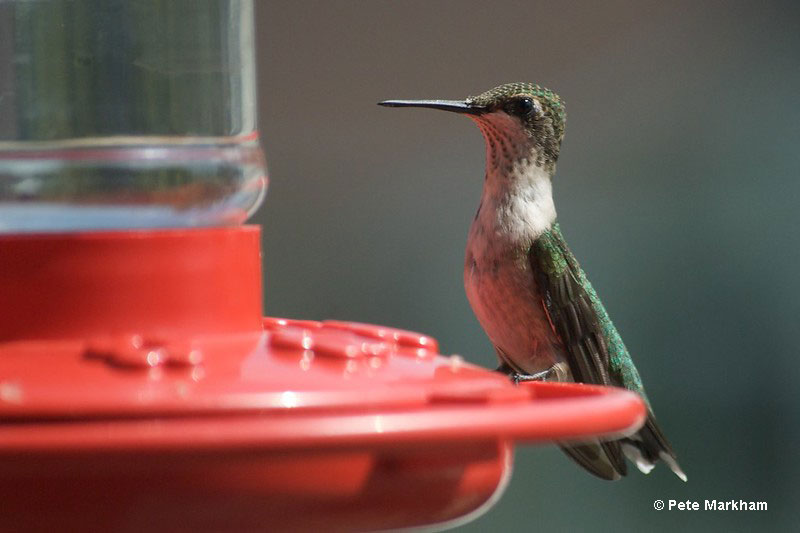
In tropical regions of Central and South America, hummingbirds can be seen year-round. However, in areas with distinct wet and dry seasons, their increased activity and the abundance of flowers during the wet season (often corresponding to spring) reinforce their symbolic connection to renewal and growth.
Cranes
Cranes are seen as harbingers of spring from North America to Europe to East Asia, mostly due to them returning from their wintering grounds. They are also seen as symbols of longevity, renewal, and fertility, aligning with the themes of spring.
In Japan, their arrival, specifically that of the Red-crowned Crane, is celebrated as a sign of renewal and the start of new beginnings.
Europeans eagerly anticipate the return of Common Cranes, as that is a natural sign of the changing seasons and the reawakening of nature. In North America, species like the Sandhill Crane and their loud and resonant calls are hallmark signs of spring’s arrival.
