


Birds are fascinating to observe for a myriad of reasons, from their captivating appearances to their intriguing behaviors.
Today, we’re focusing on one particular aspect of their appearance: the crests or “mohawks” that adorn the heads of certain bird species.
These crests, often raised in moments of excitement, alarm, or courtship, add an extra layer of personality and serve as identifying features. Let’s take a look at some punk birds from both near and afar!
Steller’s Jay
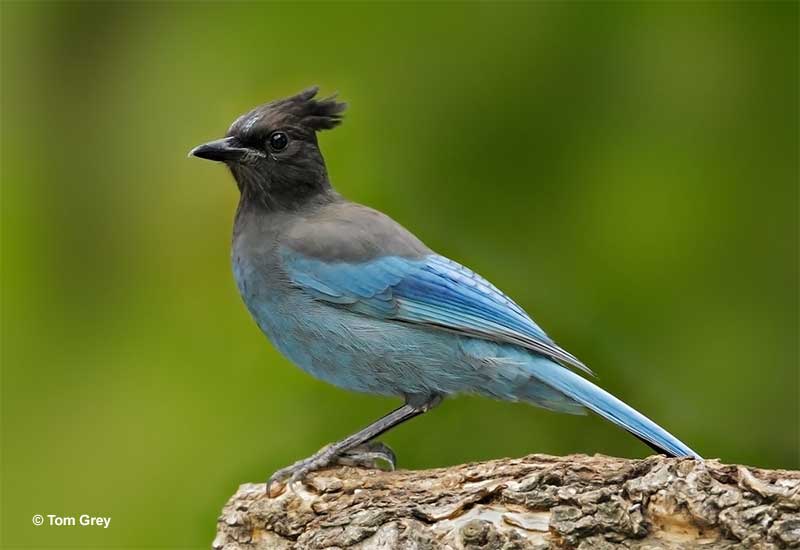
Steller’s Jays are stunning birds found in western North and Central America, ranging from Alaska to Nicaragua. They inhabit coniferous and mixed forests, often seen at higher elevations, and adapt well to suburban areas with suitable tree cover.
Their bodies are striking dark blue, while their heads, wings, and tails are black. Known as bold and inquisitive, these highly social birds are often seen in pairs or small groups, making loud, varied calls and mimicking other birds and sounds.
The crest, or mohawk, is raised when agitated, excited, or expressing dominance or alertness. According to Makah legend, their crest became ruffled from an arrow shot by the mink Kwahtie.
Eurasian Hoopoe
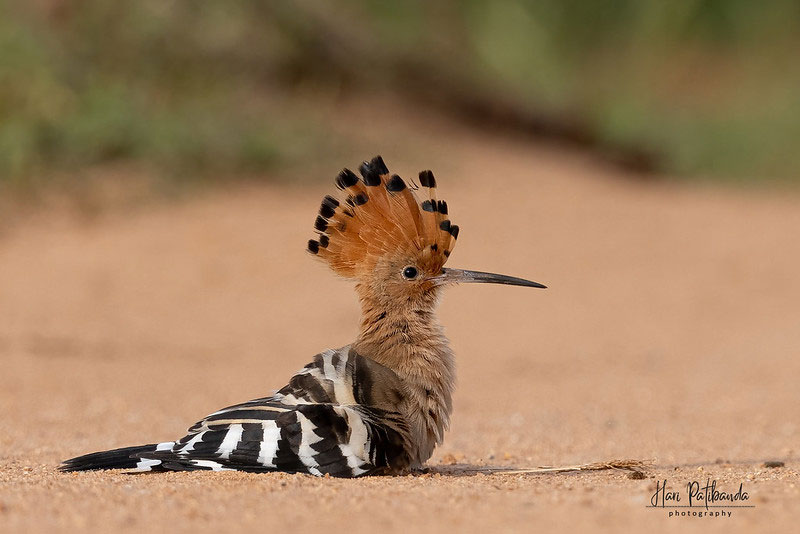
The Eurasian Hoopoe is widely distributed across Europe, Asia, and North Africa, thriving in a variety of habitats including open landscapes, grasslands, orchards, vineyards, and savannas. These birds prefer areas with short vegetation and scattered trees, avoiding dense forests and very arid regions.
Eurasian Hoopoes are very recognizable, exhibiting a striking combination of cinnamon bodies, black-and-white striped wings, and a long, slender, slightly downcurved bill. Their most distinctive feature is their prominent, fan-like crest with black spots at the tips of the crest feathers. It is generally kept folded but raised when the bird is excited, alarmed, or during courtship displays.
Hooded Merganser
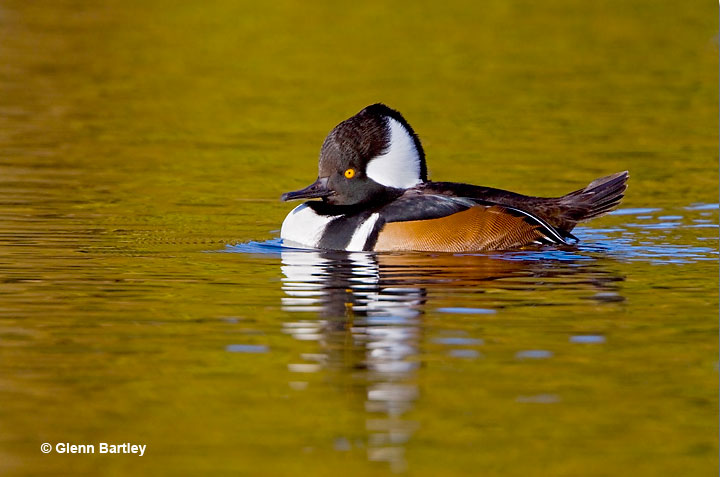
The Hooded Merganser is native to North America, found primarily in freshwater habitats such as ponds, rivers, and marshes across the United States and southern Canada. They prefer wooded areas near water and are often seen in smaller bodies of water during the breeding season and larger bodies of water in winter.
Males have a black head, a white chest with two black bars, and chestnut-colored flanks whereas females are brown overall. In males, the crest looks very similar to a hood both when it is collapsed and raised. It is white and bordered in black and can be raised or lowered at will, often used to communicate and shown off in courtship displays.
Females have a smaller, more subdued crest that is russet-brown in color and slants backward. Interestingly, the bird compresses its crest before diving, suggesting it may also have a functional purpose in streamlining the bird’s profile underwater.
Northern Cardinal
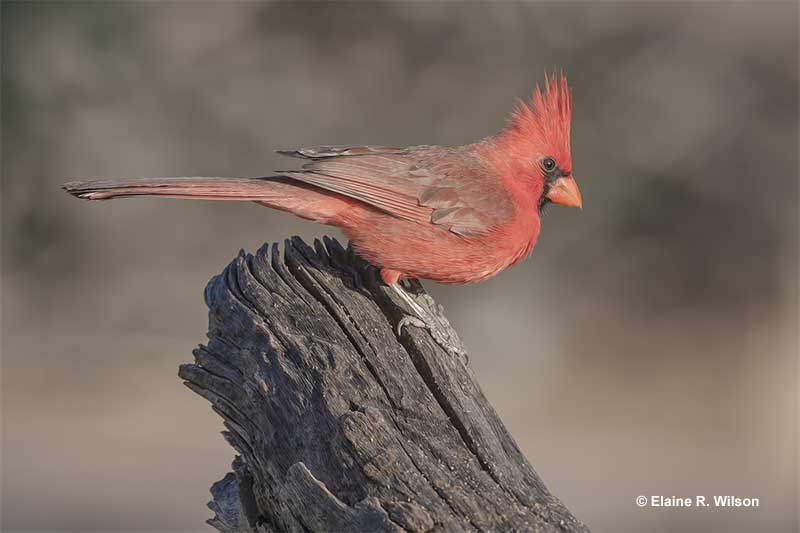
The Northern Cardinal is widely distributed across eastern and southern North America and most of Central America. They inhabit a variety of environments, including woodlands, gardens, shrublands, and wetlands, and are commonly found in suburban and urban areas.
These birds are known for their vibrant plumage and distinctive appearance. Males are bright red with a black mask around their face, while females are brownish with red tinges on their wings, tail, and crest.
Both sexes have a pronounced crest that they raise and lower depending on their mood. They are very territorial during the breeding season and often raise their crests to communicate agitation, excitement, dominance, or alertness in interactions with other birds.
Blue Jay
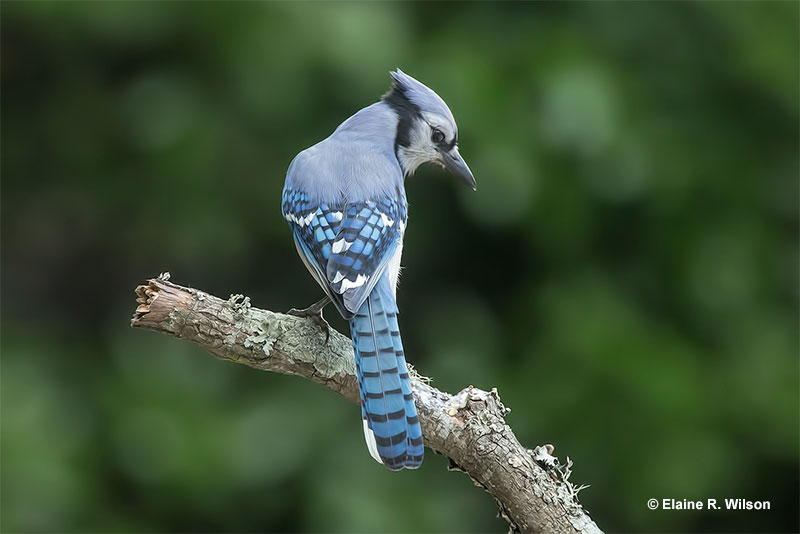
The Blue Jay is found in wooded areas throughout eastern and central North America, ranging from southern Canada to the Gulf of Mexico. They are easily recognizable by their bright blue and plumage with black markings.
These birds are intelligent and highly vocal birds known for their sometimes aggressive behavior and complex social structures, often traveling in family groups and mimicking the sounds of other birds.
One of their most prominent physical features is their blue crest. Unlike some artistic depictions, Blue Jays do not keep their crests raised all the time.
In fact, they raise their crests only rarely and for specific reasons, such as during courtship displays or to communicate different moods and states: fully raised when excited or aggressive or alarmed, bristled outwards when frightened, or flattened on the head when calm.
Pileated Woodpecker
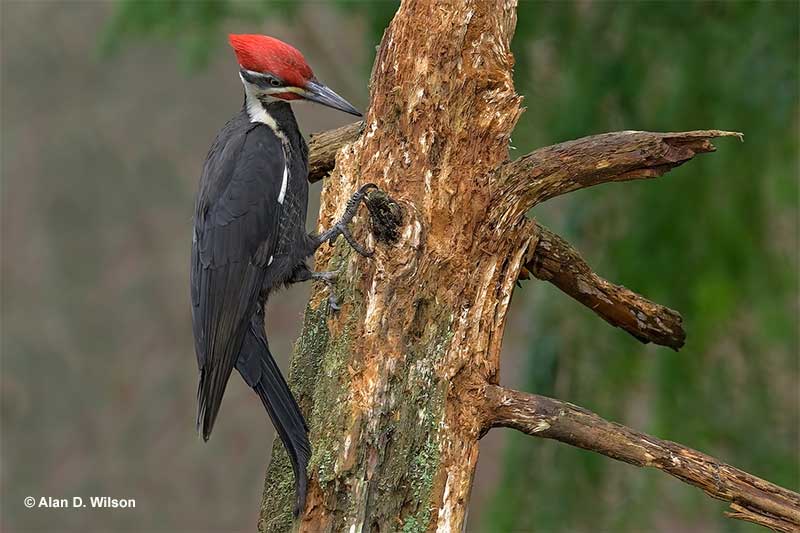
The Pileated Woodpecker is one of the largest woodpeckers and can be found throughout North America, primarily in the eastern United States, parts of Canada, and the Pacific Northwest. They inhabit mature forests with large, old trees, preferring deciduous or mixed woodlands.
Their appearance is striking, with a bright red crest that contrasts sharply with their mostly black body and white markings on the head and neck.
This crest isn’t always erect and can be raised or lowered at will. It plays a significant role in courtship and territorial behaviors, with specific crest positions conveying different messages depending on the context.
The term “pileated” in the bird’s name directly refers to the crest, derived from the Latin word “pileatus,” meaning “capped.” This characteristic makes the Pileated Woodpecker easily identifiable and adds to its imposing presence.
Tufted Titmouse

The Tufted Titmouse is commonly found throughout the deciduous and mixed forests of the eastern United States. These active and curious birds are often seen flitting through the canopy or hanging upside down in search of insects, seeds, and nuts. They are social creatures, frequently joining mixed-species foraging flocks, especially during winter.
Easily recognizable by their soft gray upperparts, pale underparts, and distinctive tufted crest, they stand out amongst other titmice and chickadees. The crest is generally erect, signaling alertness, confidence, and excitement. It becomes particularly noticeable when the bird is agitated, engaged in social interactions, or exploring its surroundings.
Sulphur-crested Cockatoo
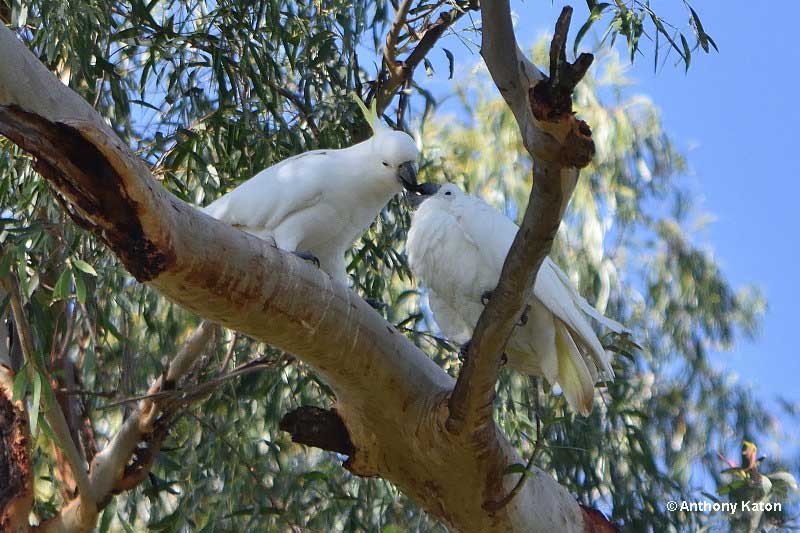
The Sulphur-crested Cockatoo is native to Australia, New Guinea, and some Indonesian islands. However, they are also kept as pets in other parts of the world, including North America. If you want to get one, keep in mind that they require significant attention and stimulation due to their intelligence and social nature and that they can be quite noisy.
These large, striking parrots are primarily white with a sulfur-yellow crest and yellow undersides on their wings and tail. The crest is long and forward-curving, raised and lowered at will.
It is not just a decorative feature but also serves as an important communication tool for the cockatoo. When raised, it can signal various states such as excitement, aggression, or alertness.
Phainopepla
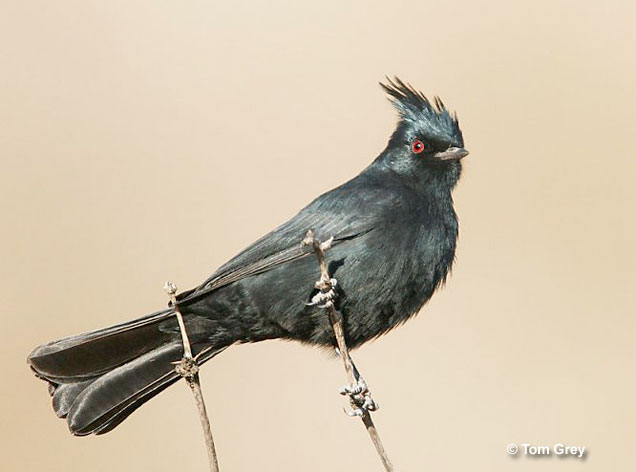
The Phainopepla is found in the southwestern United States and Mexico. They inhabit desert regions, mesquite thickets, and oak woodlands, often seen in areas with abundant mistletoe, their primary food source.
These birds are sleek and elegant, with males exhibiting shiny black plumage and females displaying a more subdued gray. Both sexes have distinctive red eyes and a prominent crest.
It’s often characterized as spiky or resembling the hairdo of a punk rocker. In some regions, it has earned them the nickname “goth cardinal”! The bird can raise or lower its crest, potentially using it for communication or displays.
Palm Cockatoo

The Palm Cockatoo is native to the dense tropical forests and woodlands of New Guinea, the Cape York Peninsula in Australia, and nearby islands, preferring to reside near rivers and coastal areas.
These large parrots are nearly black smoky gray with distinctive red cheek patches. Their most notable feature is the large, swept-back crest, which they can raise or lower depending on their mood.
They are also known for their intelligence and unique drumming behavior, where they use sticks or seed pods to create rhythmic sounds on hollow trees. This drumming is thought to be a way to attract mates and establish a territory.
Common Merganser

The Common Merganser is widely distributed across North America, Europe, and Asia, typically found in freshwater lakes, rivers, and reservoirs. They prefer clear, fast-moving water with abundant fish, often nesting in tree cavities near water bodies during the breeding season and migrating to larger, ice-free bodies of water in winter.
Males are mostly white with dark green heads, while females have gray bodies and reddish-brown heads. Both sexes have a crest, but it is more noticeable in females. The female’s crest is chestnut-colored and runs down the back of her head to the base of the neck.
It is usually quite visible, though the size can vary. In males, the crest isn’t generally visible and often lies smoothly rounded behind the head, rather than standing up prominently. The crest likely serves some purpose in communication and courtship displays.
Grey Go-away-bird
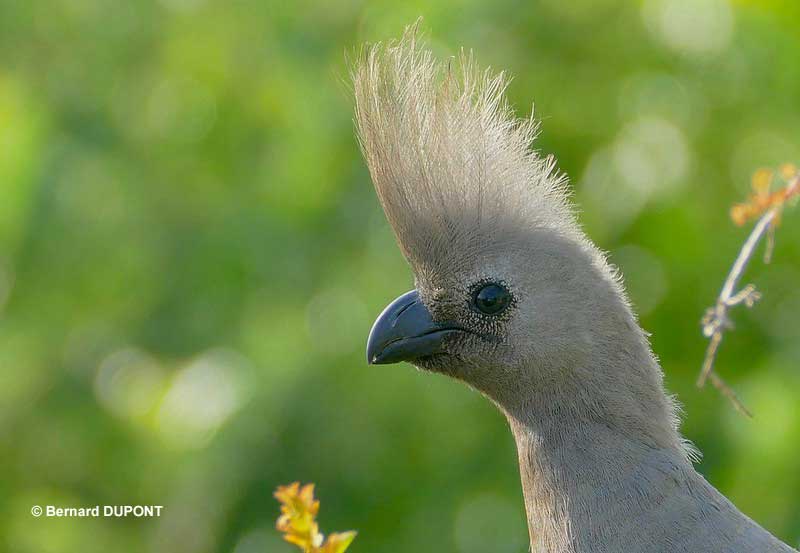
The Grey Go-away-bird is native to sub-Saharan Africa, predominantly found in countries such as Botswana, Namibia, Zimbabwe, and South Africa. They inhabit open woodlands, savannas, and scrublands, often seen in areas with acacia trees and near water sources. Their name comes from their loud alarm call that sounds like “go away”.
These birds are predominantly smoky gray, with a long tail and a distinctive, slightly shaggy wispy crest. The crest can be raised almost vertically when the bird is excited or alarmed, or flattened against the head at other times.
Great Blue Turaco

The Great Blue Turaco is native to the tropical rainforests and gallery forests of Central and West Africa, including countries like Uganda, the Democratic Republic of Congo, and Cameroon. They are social, often seen in small family groups, and primarily feed on fruits, leaves, and flowers.
These large, vibrant birds are striking with their greenish-blue plumage, yellow bellies, and a red patch near the vent. Their most notable feature is the prominent, curly blue crest that can be raised completely upright. It serves multiple purposes, including visual communication with other turacos and as a display during courtship or territorial behaviors.
Great Curassow

The Great Curassow is native to the rainforests of mainly Central America, ranging from southern Mexico to northwestern Ecuador. Their build resembles that of a pheasant. They are shy primarily ground-dwellers, foraging for fruits, seeds, and small vertebrates, quickly retreating into dense vegetation when disturbed.
Males are glossy black with a white belly and a distinctive yellow knob on their bills. Meanwhile, females have three morphs from black to barred to overall rusty brown. Both sexes have a crest, which is a fan-shaped arc of feathers that curl at the tip. It can be raised and lowered at will, presumably to indicate mood.
Victoria Crowned Pigeon

The Victoria Crowned Pigeon is native to the lowland and swamp forests of New Guinea, including some nearby islands. They inhabit dense rainforests and mangrove swamps, typically staying close to the forest floor where they forage.
These pigeons are large and striking, with blue-gray plumage, a maroon chest, and red eyes. Their most distinctive feature is the elegant, lacy crest of white-tipped feathers that, when erect, give them a regal appearance.
Males use the crest in courtship displays to impress the female by lowering their heads down, stretching forward, and then rhythmically swinging their heads up and down while flicking their fanned tails.
