

We made a compact version of all-you-need-to-know about hummingbird season.
This guide shows which species visit each U.S. state, when they arrive, when they head south, which ones stick around all year, and the best times to put feeders out or take them down.
It’s a simple, state-by-state reference so you’ll always know what to expect in your backyard.
This information is VERY IMPORTANT, because hummingbirds are deeply dependent on us.
Their populations are declining, and by understanding their migration timing and keeping feeders ready, we can give them the support they need to survive and thrive
Why is it Crucial to Know When Hummingbirds Arrive?
Hummingbirds follow precise seasonal patterns, and timing matters. Knowing when they arrive and leave in your state helps you put feeders out early enough to welcome the first arrivals and keep them up long enough to support late migrants.
With this knowledge, you can enjoy more hummingbird visits while also helping the birds stay strong during migration.
Why Should We Feed Hummingbirds
Hummingbirds burn enormous amounts of energy every day, sometimes visiting hundreds of flowers to fuel their tiny bodies. Feeders filled with fresh sugar water give them a safe, reliable food source — especially during migration, when natural flowers may be scarce.
By keeping feeders clean and available, you help these fragile birds survive their long journeys.
What Hummers Migrate?
What’s interesting is that, though they’re all tiny miracles, their migration habits are quite different.
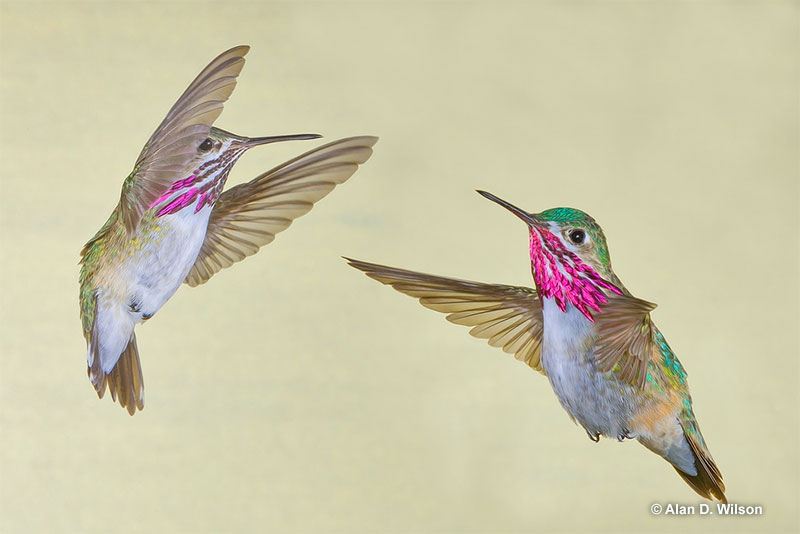
Common migrants are Ruby-throated, Rufous, Black-chinned, Broad-tailed and Calliope Hummingbird.
Rare or regional migrants are Allen’s, Lucifer, Broad-billed, and Magnificent (Rivoli’s) Hummingbird.
Mostly resident species are Anna’s and Costa’s Hummingbird.
Hummingbird nectar recipes & tips
Ruby-Throated Hummingbird Map

Migration Cycle by States
| State | What birds arrive | When they arrive | When they leave | Year-round species | Feeders (put out / take down) |
|---|---|---|---|---|---|
| Alabama | Ruby-throated | early March in the south; late March north | late September–early October | none (rare winterers along the coast) | late February / mid-October |
| Alaska | Rufous | late April–early May | late July–August | none | late April / late August |
| Arizona | Black-chinned, Broad-billed, Broad-tailed; Rufous & Calliope midsummer | lowlands mid–late March; higher elevations early April | most by late September–October | Anna’s and Costa’s (low deserts); a few Broad-billed in warm urban pockets | early March / late October (year-round in Phoenix–Tucson) |
| Arkansas | Ruby-throated | mid–late March | late September–early October | none | early March / mid-October |
| California | Rufous, Black-chinned, Allen’s (migrants); resident Anna’s | late February–March (migrants) | Rufous & Black-chinned by September | Anna’s widely (coast & valleys); some Allen’s local on Channel Islands | year-round on the coast; inland March / October |
| Colorado | Broad-tailed (breeder); Rufous & Calliope pass in midsummer | early April on the Front Range; mid-April mountains | late August–early September | none | late March / mid-September |
| Connecticut | Ruby-throated | early–mid May | mid–late September | none | late April / early October |
| Delaware | Ruby-throated | late April–early May | mid–late September | none | mid-April / early October |
| Florida | Ruby-throated (statewide); wintering Black-chinned & Rufous in small numbers | north Florida early March; Panhandle late February | peak southbound late August–September | Ruby-throated in South Florida (local) | year-round in South FL; north FL early March / October |
| Georgia | Ruby-throated | early–mid March | late September–early October | none (occasional coastal winterers) | early March / mid-October |
| Hawaii | — | — | — | no hummingbirds in Hawaii | – |
| Idaho | Calliope, Rufous, Broad-tailed; Black-chinned south/low | early–mid May | late August–early September (Rufous often by late July) | none | early May / mid-September |
| Illinois | Ruby-throated | late April–early May (south first) | mid–late September | none | mid-April / early October |
| Indiana | Ruby-throated | late April–early May | mid–late September | none | mid-April / early October |
| Iowa | Ruby-throated | early–mid May | mid–late September | none | late April / early October |
| Kansas | Ruby-throated (east), Black-chinned (west); Rufous migrants | mid–late April | late September–early October | none | mid-April / mid-October |
| Kentucky | Ruby-throated | early–mid April | late September | none | early April / early October |
| Louisiana | Ruby-throated (spring & fall); winter Rufous & Buff-bellied | first arrivals late February–early March | peak southbound September; winterers remain November–February | none statewide (Buff-bellied common in winter along the coast) | coast: keep one up year-round; elsewhere early March / October |
| Maine | Ruby-throated | early–mid May (later in far north) | late August–early September | none | early May / mid-September |
| Maryland | Ruby-throated | late April–early May | mid–late September | none | mid-April / early October |
| Massachusetts | Ruby-throated | early–mid May | mid–late September | none | late April / early October |
| Michigan | Ruby-throated | early May (south) to mid-May (UP) | early–mid September (north) to late September (south) | none | late April / early October |
| Minnesota | Ruby-throated | early–mid May | early–mid September (north) to late September (south) | none | early May / early October |
| Mississippi | Ruby-throated; winter Rufous & others on the coast | early–mid March | late September–early October (migrants); winterers November–February | none statewide (regular winterers on the coast) | coast: keep one up year-round; elsewhere early March / mid-October |
| Missouri | Ruby-throated | mid–late April | mid–late September | none | mid-April / early October |
| Montana | Calliope, Rufous, Broad-tailed, Black Chinned | early–mid May | late August (Rufous by late July at times) | none | early May / late August |
| Nebraska | Ruby-throated (east), some Rufous migrants | late April–early May | late August–September | none | mid-April / early October |
| Nevada | Black-chinned (widespread), Broad-tailed (montane), Rufous midsummer | late March–April | September–early October | Anna’s & Costa’s in far south/Las Vegas area (localized) | late March / mid-October (year-round in Las Vegas valley) |
| New Hampshire | Ruby-throated | early–mid May | early–mid September (north) to late September (south) | none | early May / late September |
| New Jersey | Ruby-throated | late April–early May | mid–late September | none | mid-April / early October |
| New Mexico | Black-chinned, Broad-tailed; Rufous & Calliope surge in July–August | late March–April (north a bit later) | late September–October | small numbers of Anna’s in warm urban spots | late March / late October |
| New York | Ruby-throated | early May (downstate late April) | mid–late September | none | late April / early October |
| North Carolina | Ruby-throated | mid–late March (coast) to early April (mountains) | late September–early October | none (coast sees occasional winterers) | mid-March / mid-October |
| North Dakota | Ruby-throated (east) with some Rufous migrants | early–mid May | late August–September | none | early May / late September |
| Ohio | Ruby-throated | late April–early May | mid–late September | none | mid-April / early October |
| Oklahoma | Ruby-throated (east), Black-chinned (west); Rufous midsummer | early–mid April | late September–early October | none | early April / mid-October |
| Oregon | Rufous (statewide migrants); Black-chinned local interior; resident Anna’s west | late February–March (Rufous) | Rufous by July–August | Anna’s along the coast & Willamette Valley | coast/valleys year-round; elsewhere March / August–September |
| Pennsylvania | Ruby-throated | late April–early May | mid–late September | none | mid-April / early October |
| Rhode Island | Ruby-throated | early–mid May | mid–late September | none | late April / early October |
| South Carolina | Ruby-throated | mid–late March | late September–early October | none (a few coastal winterers) | mid-March / mid-October |
| South Dakota | Ruby-throated (east); Rufous migrants statewide | early–mid May | late August–September | none | early May / late September |
| Tennessee | Ruby-throated | early–mid April | late September | none (rare winterers) | early April / early October |
| Texas | Ruby-throated (east), Black-chinned (central & west); Rufous migrants; Buff-bellied on the coast | first weeks of March (east & coast); mid-March elsewhere | most by early–mid October; Rufous peak late July–August | Buff-bellied on the lower Rio Grande; small winter Ruby-throated along Gulf | north/central March–October; keep year-round in South Texas/Gulf Coast |
| Utah | Broad-tailed & Black-chinned; Rufous & Calliope midsummer | late March–early April | September (Rufous often by late August) | none | late March / late September |
| Vermont | Ruby-throated | mid-May (early May in the south) | early–mid September (north) to late September (south) | none | early May / late September |
| Virginia | Ruby-throated | early–mid April (coast a bit earlier) | late September–early October | none (occasional coastal winterers) | early April / mid-October |
| Washington | Rufous (migrants); interior Black-chinned local; resident Anna’s west | late February–March (Rufous) | Rufous by July–August | Anna’s west of the Cascades | west side year-round; elsewhere March / August–September |
| West Virginia | Ruby-throated | late April–early May | mid–late September | none | mid-April / early October |
| Wisconsin | Ruby-throated | early–mid May (north slightly later) | mid–late September | none | early May / early October |
| Wyoming | Broad-tailed, Calliope, Rufous | early–mid May (valleys) to late May (high country) | late August–early September (Rufous may depart late July) | none | early May / early September |
Why Are Hummingbirds small miracles?
- Hummingbirds can beat their wings up to 80 times per second, and their hearts may race at more than 1,200 beats per minute. Despite their size, they have incredible memory and can recall every feeder they’ve ever visited.
- The Rufous hummingbird makes one of the longest migrations of any bird its size, traveling nearly 4,000 miles round-trip. It’s a reminder of how much energy these tiny birds burn just to survive.
- Sadly, hummingbird populations are facing declines due to habitat loss and climate change. By offering clean feeders and planting nectar-rich flowers, you give them a real chance to thrive during their long journeys.
Hummingbirds are tough little travelers, but they depend on us more than we realize. By knowing when they come and go, keeping feeders clean and ready, and planting flowers they love, we can enjoy their visits while helping them survive for generations to come.
Bottom Line
Hummingbirds are tough little travelers, but they depend on us more than we realize.
By knowing when they come and go, keeping feeders clean and ready, and planting flowers they love, we can enjoy their visits while helping them survive for generations to come. So, let’s help them together!
Please let us know your thoughts in the comments!
Rick Stanley
Monday 15th of September 2025
They were feeding hard Sunday the 14th , they seem to have left today Monday Sept 16th from Springvale Maine.in the Southern part of the state.
Jim
Thursday 11th of September 2025
Here in Cookeville, TE, they arrived later than usual this year. I kept checking the feeders and finally started seeing them show up, but definitely later compared to past seasons..
Laurie
Saturday 13th of September 2025
@Jim, same here in Eastern CO - they always show up in April but this year the first one showed up on May 20 and was alone until mid July......I so look forward to them every year.
Doro
Thursday 11th of September 2025
I'm in Ohio and this year I saw more Ruby's than in the past six year when I moved here. My friend in Louisiana told there are fewer. Not sure what's the difference. Are migration routes changing?