

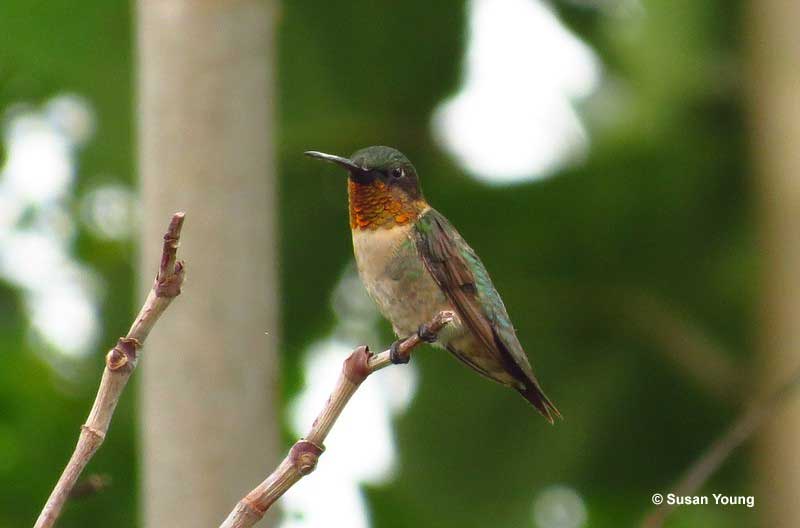
In Massachusetts, the Ruby-throated Hummingbird is the only species you’ll reliably see each year.
These tiny birds arrive in late April or May after migrating thousands of miles from Central America, filling gardens and woodlands with their dazzling flight all summer long. By late August and September, they begin their return journey south, leaving the state until the following spring.
Though a few rare western species occasionally appear (like the Rufous or Calliope Hummingbird), the Ruby-throated remains the true seasonal resident of New England.
The Departure Window
Most Ruby-throated Hummingbirds begin their fall migration by late August or early September.
Most hummingbirds leave Massachusetts by the end of August or early September. By mid-September, almost all birds are gone.
Mid-September marks the end of hummingbird season in Massachusetts, with males typically coming first while females and juveniles linger a bit longer to build energy for the long flight ahead.
Why the Timing?

Their departure is largely governed by natural cues—with diminishing daylight, falling insect populations, and reduced nectar availability signaling that it’s time to head south. What matters most isn’t whether feeders remain out—it’s about internal timing set by genetics.
Feeding Timing: When to Keep Feeders Up
Don’t rush to take down feeders too early! It’s best to continue offering sugar water until you’ve gone two weeks without a sighting. And experts echo this advice—Southern Living notes that you can leave feeders up as long as hummingbirds are present, extending into early winter if needed.
A Seasonal Guide for Massachusetts Homes
Ruby-throated Hummingbirds typically return to Massachusetts in late April through mid-May, occasionally arriving as early as early April Males often appear first, staking out territories and nectar sources, with females following a short while later.
Once settled, hummingbirds actively nest, feed, and defend their territories throughout summer. Backyards and gardens packed with nectar-rich flowers and feeders become buzzing hubs of acrobatic activity.
By late August and early September, hummingbirds are on the move. Migration generally begins late summer and continues through fall.
Though most birds depart by mid-September, occasional late visitors may appear, especially if gardens remain lush or feeders are still full.
Tips for Helping Hummingbirds in Massachusetts
- Set Up Feeders Early
Have nectar ready by early to mid-April—before the first arrivals—to become an early stop on their migratory path. - Use the Right Nectar Recipe
Mix 1 part refined white sugar to 4 parts water, and avoid red dyes, honey, or raw sugars. - Clean Feeders Regularly
Mold and harmful microbes can grow quickly, especially in warm months. Clean every few days to keep nectar fresh and safe. - Plant Nectar-Rich Flowers
Native, tubular blooms like bee balm, cardinal flower, trumpet vine, and salvia are excellent natural nectar sources and complement feeders well. - Keep Feeders Longer Than You Think
Continue serving feeders until you’ve gone two weeks without sightings—and possibly even longer, if late stragglers appear.
Sample Seasonal Timeline in Massachusetts
| Season | Key Dates | Guidelines |
|---|---|---|
| Arrival | Late April—Mid May | Set out feeders early; start planting flowers. |
| Summer | June—August | Feed and clean regularly; enjoy nesting activity |
| Departure | Late August—Mid Sept | Keep feeders up; monitor hummingbird presence |
| Late Stragglers | Mid—Late Sept–Oct | Remove after two weeks of no sightings |
Why Is the Ruby-throated Hummingbird the Only Species in Massachusetts?
-
Geography – Most hummingbird species live in Central and South America. In the U.S., diversity is highest in the Southwest (Arizona, Texas, New Mexico) where the climate and habitats are more similar to Mexico. New England is far from those areas, so only the hardiest and most wide-ranging species reach this far north.
-
Migration Routes – The Ruby-throated Hummingbird is uniquely adapted to migrate up the eastern half of North America. Every spring, millions of them fly across the Gulf of Mexico or follow the coast, spreading throughout the eastern U.S. and into Canada. Other species migrate along western flyways and don’t usually cross into the Northeast.
-
Climate & Habitat – Massachusetts has the right mix of forests, meadows, and gardens that suit the Ruby-throated’s nesting needs. Most other hummingbirds evolved in warmer or drier environments and don’t adapt well to New England’s seasonal climate.
-
Vagrants – On rare occasions, western hummingbirds like Rufous or Calliope show up in Massachusetts, usually blown off course during migration. But these are exceptional sightings, not regular events.

Final Thoughts
In Massachusetts, Ruby-throated Hummingbirds typically nest through the summer, with the majority migrating south by mid-September. However, maintaining feeders into late fall—and even early winter—helps support late-migrating individuals and even occasional overwintering visitors.
Pairing feeders with native, nectar-rich plants makes your yard a vital waypoint in the hummingbird migration.
Would you like help choosing the best nectar plants for your garden or recommendations on feeder types and care routines?