

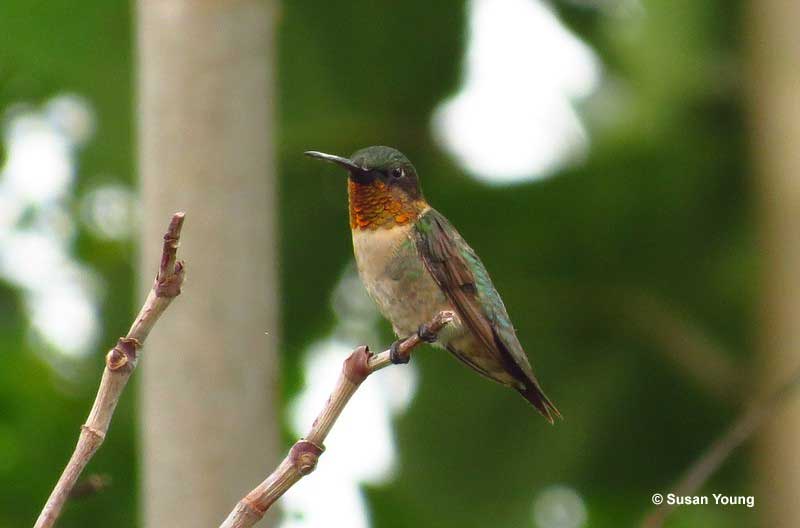
The Ruby-throated Hummingbird is the only species that regularly breeds in Ohio, making it the most common backyard visitor.
They arrive in the state in mid to late April, stay through the summer, and begin leaving by late September, with almost all gone by early October.
On rare occasions, a western stray such as the Rufous Hummingbird may turn up at feeders in Ohio. These sightings are unusual but exciting, giving birders a glimpse of species that normally stick to the western U.S.
Did you know that a Ruby-throated Hummingbird can fly nonstop across the Gulf of Mexico—over 500 miles in a single journey—powered only by the energy it stored in your backyard?
Why Is the Ruby-throated Hummingbird the Only Species in Ohio?
Geography
Ohio sits in the eastern United States, right in the center of Ruby-throated Hummingbird range. Western hummingbird species simply don’t extend this far east.
Migration Routes
Ruby-throated Hummingbirds migrate north from Central America and the Gulf Coast directly into the Midwest and eastern states. Other species, like Rufous and Black-chinned, follow mountain and western routes, so they rarely reach Ohio.
Climate & Habitat
Ohio’s climate, woodlands, and flower-rich gardens give Ruby-throated Hummingbirds plenty of food and nesting spots. The state lacks the deserts, mountain ranges, and coastal ecosystems preferred by other hummingbirds.
Vagrant Visitors
Occasionally, a wandering Rufous or another western species is spotted in Ohio. These are considered vagrants and are rare but memorable events for local birders.
The Departure Window in Ohio
Hummingbirds don’t all leave Ohio at once, but the pattern is fairly consistent each year. Ruby-throated Hummingbirds begin departing in late August, and their numbers decline steadily throughout September.
By the end of September to early October, almost all have left the state.

The Rufous Hummingbird is a rare vagrant in Ohio, sometimes appearing unexpectedly at feeders in late fall.
Adult males are usually the first to head south, often disappearing a week or two before the females and juveniles. The younger birds typically linger longer, building up energy at flowers and feeders before setting out.
Keeping feeders up into October helps support these late migrants.
For backyard birders, the departure window is a mix of excitement and sadness—knowing the birds are on their way to Central America, but also realizing the garden will feel quieter until spring.
What Triggers Their Departure?
The timing of hummingbird departure in Ohio is driven mostly by the shortening length of daylight.
As days grow shorter in late summer, hormonal changes signal to the birds that it’s time to migrate. Temperature swings and food availability may influence the exact timing, but the internal clock set by daylight is the key trigger.
That’s why leaving feeders up doesn’t delay migration—hummingbirds will leave when their bodies tell them to.
Feeders instead act as fuel stops, especially for juveniles making their first trip south. By keeping sugar-water feeders available until at least mid-October, you give late migrants a much-needed boost of energy to safely complete their long journey.
The Right Time to Take Feeders Down
In Ohio, most Ruby-throated Hummingbirds are gone by the end of September, with a few lingering into early October. To be safe, it’s best to keep feeders up until mid-October or about two weeks after your last sighting.
Many people worry that leaving feeders up too long will stop hummingbirds from migrating, but that’s a myth.
This way, any late migrants or young birds making their first trip south can refuel before crossing the Gulf of Mexico.

Leaving feeders up a little longer does no harm — the birds’ internal clocks push them to migrate regardless of food supply. By offering nectar into October, you provide life-saving energy for these tiny travelers at a critical moment.
Quick Seasonal Guide for Ohio Birders
Hummingbirds follow a clear seasonal rhythm in Ohio. In spring (mid–late April), Ruby-throated Hummingbirds return from Central America—be sure to have feeders clean and ready.
During summer (May–July), females build tiny nests and raise their young while flower-filled gardens keep yards buzzing with activity.
By late summer and early fall (August–September), hummingbirds enter a feeding frenzy, building fat reserves for their long migration south; extra feeders can help reduce competition.
By early October, nearly all have departed, though a few stragglers may linger for a week or two. Keep feeders out until mid-October, or two weeks after your last sighting, to support these late travelers.
| Time of Year | Hummingbird Activity in Ohio |
|---|---|
| Mid–Late April | First Ruby-throated Hummingbirds return; males usually arrive first. |
| May – July | Nesting season; females raise young, steady feeder and flower visits. |
| August | Heavy feeding as birds prepare for migration; extra feeders help. |
| Early–Mid September | Peak migration; most Ruby-throats leave Ohio. |
| Late Sept – Early Oct | A few late stragglers, often young birds, may still visit. |
| October – March | Hummingbirds absent; rare western vagrants like Rufous may appear. |
Final Thoughts on When Hummingbirds Leave Ohio
Hummingbirds leave Ohio between late August and the end of September, guided more by instinct and shortening daylight than by weather.
A handful may linger into early October, but by then most are already well on their way toward the Gulf Coast and Central America.
For homeowners, keeping feeders up into mid-October offers vital fuel for these late travelers. Their departure is both a farewell to summer and a reminder of the remarkable endurance packed into such tiny creatures.