


Brown birds with red heads are striking in their own way, blending earthy tones with flashes of fiery color.
This mix shows up in many species, from small backyard finches to woodpeckers, warblers, and even ducks on open water. Some of these birds are easy to spot at feeders, while others prefer quiet forests or wide marshes.
- 1. House Finch
- 2. Acorn Woodpecker
- 3. Red-breasted Sapsucker
- 4. Red-headed Woodpecker
- 5. Pileated Woodpecker
- 6. Red-bellied Woodpecker
- 7. Western Tanager
- 8. Cassin’s Finch
- 9. Red-crested Cardinal
- 10. Vermilion Flycatcher
- 11. Pyrrhuloxia
- 12. Red-faced Warbler
- 13. Common Redpoll
- 14. Downy Woodpecker
- 15. Redhead (Duck)
The combination of brown bodies and red heads makes them stand out in nearly any setting. In this guide, we’ll explore 15 brown birds with red heads and learn where you can find them, what they eat, and the traits that make each one unique.
1. House Finch
The House Finch is a common sight in towns and backyards across much of North America.
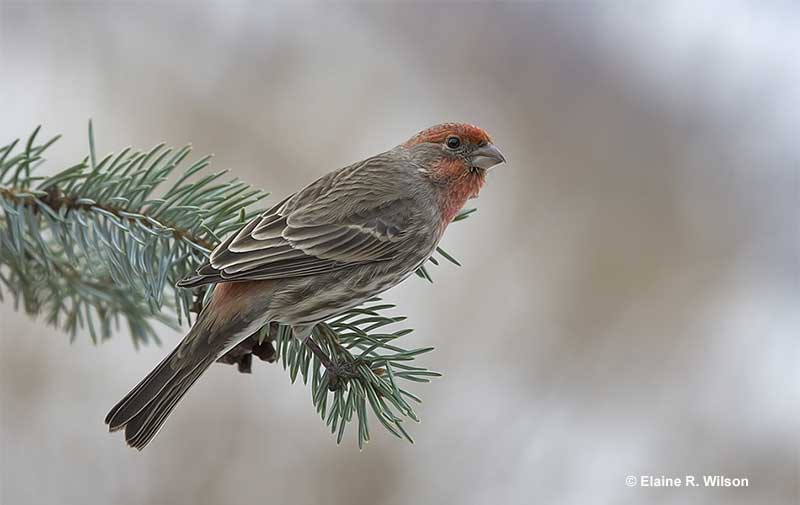
Males are recognized by their brown streaked bodies and red-washed heads, throats, and chests, though the intensity of red can vary depending on diet. Females are plain brown overall, blending in easily with sparrows and other small birds.
These finches often gather in groups and chatter noisily while feeding on seeds, buds, and fruits. They’re especially fond of sunflower seeds at feeders, which brings them close to homes. Their cheerful songs and approachable nature make them one of the most familiar red-headed brown birds you’re likely to see.
2. Acorn Woodpecker
The Acorn Woodpecker is an energetic bird with a striking look. While most of its body is dark, it often shows brown tones along the wings and back.
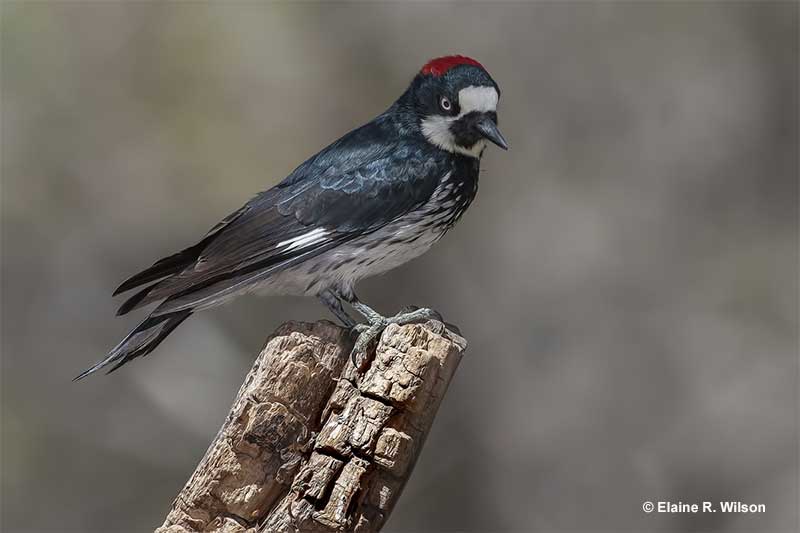
Its most noticeable feature is the bright red crown on its head, making it easy to recognize.
True to its name, this woodpecker collects and stores thousands of acorns by drilling holes into tree trunks or even wooden posts.
Family groups live and work together, guarding their stored food supply. Their loud, laughing calls often give them away before they’re seen. They are most common in oak woodlands where their favorite acorns are found.
3. Red-breasted Sapsucker
The Red-breasted Sapsucker stands out with its vivid red head and chest set against darker brownish and black body feathers.
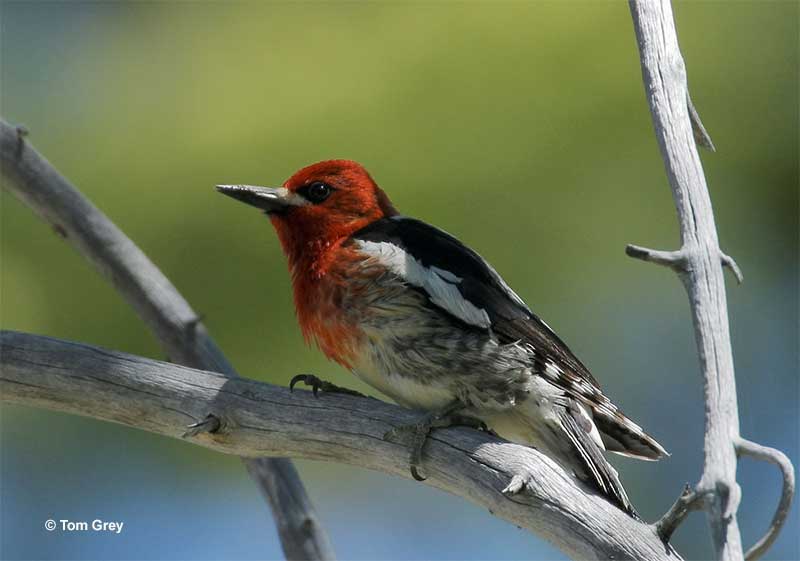
This woodpecker is famous for drilling neat rows of holes into trees, feeding on the sap that flows out, along with the insects attracted to it.
They are usually quiet, though their gentle tapping and occasional calls can reveal their presence.
Found along the Pacific Coast, they prefer forests with plenty of conifers and deciduous trees. Despite their bold color, they can be surprisingly hard to spot when still. Their striking red head is the easiest way to identify them.
4. Red-headed Woodpecker
Few birds are as unmistakable as the Red-headed Woodpecker.

Adults show a brilliant, solid red head that contrasts with their black-and-white bodies, while juveniles often have brownish plumage with just hints of red. They are versatile feeders, catching insects in flight, storing nuts, and even raiding nests for eggs.
Open woodlands, farmlands, and orchards are favorite spots for this species. Their bold behavior makes them easier to see than many woodpeckers, as they perch openly on tree trunks and fence posts. While populations have declined in some areas, spotting their bright head flashing in the sunlight is always a thrill.
5. Pileated Woodpecker
The Pileated Woodpecker is the largest woodpecker in North America and one of the most dramatic.
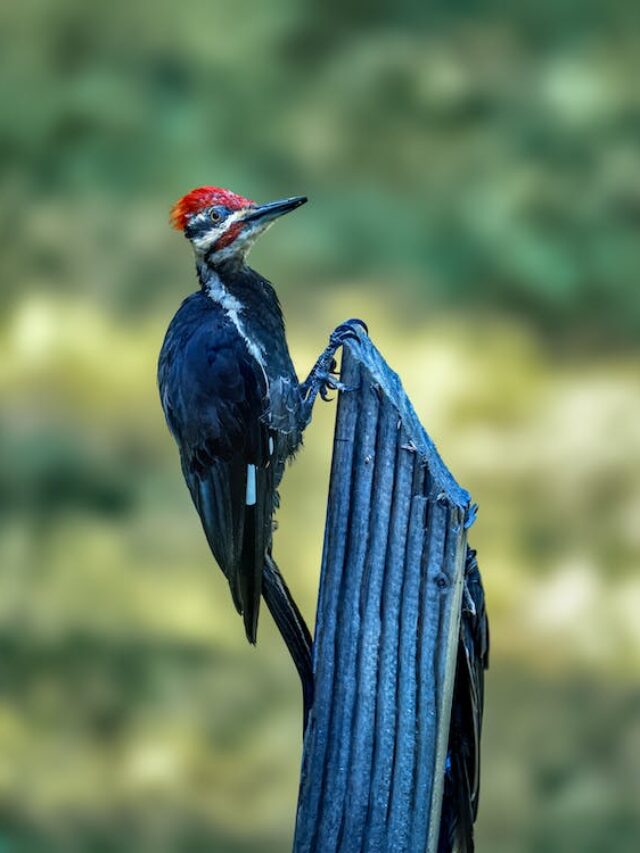
Its black body is accented with white wing patches, but the vivid red crest on its head is the feature that stands out most. These birds are famous for the large, rectangular holes they chisel into trees while searching for carpenter ants and beetle larvae.
Their loud, ringing calls echo through forests, and their powerful drumming can often be heard before they are seen. Living in mature forests, they play a vital role in creating nest cavities that are later used by other wildlife.
6. Red-bellied Woodpecker
Despite its name, the Red-bellied Woodpecker’s belly patch is faint and often hidden, while its red cap and nape are much more noticeable.
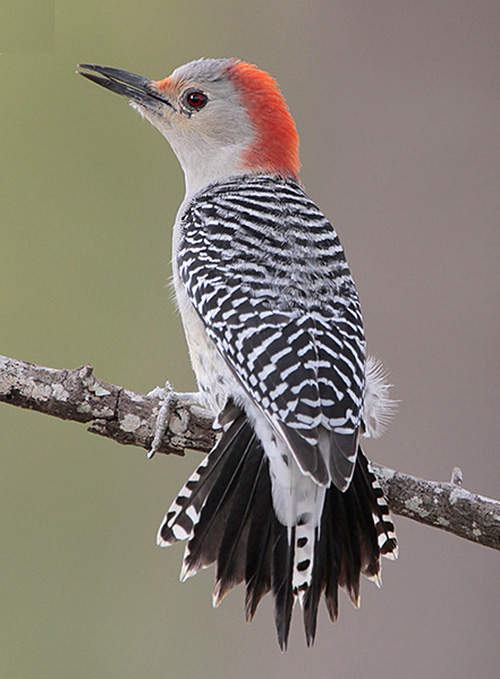
Female. Photograph © Greg Lavaty.
The rest of the body shows a mix of barred brown, black, and white feathers, giving it a patterned look. These woodpeckers are common in the eastern United States, where they visit feeders for suet, peanuts, and sunflower seeds. They also feed on insects, nuts, and fruits in woodlands and suburban yards.
Their rolling “churr” call is distinctive and often heard year-round. Though less bold than the Red-headed Woodpecker, their red crown makes them stand out beautifully.
7. Western Tanager
The Western Tanager is a bright bird of the western forests.

Western Tanager (Piranga ludoviciana) perched on a branch in Victoria, BC, Canada.
Males wear fiery red on the head, contrasting with yellow and brownish-black on the body and wings. Females and young birds are more subdued, often showing olive-brown with softer hints of red. These colorful birds forage in treetops for insects, berries, and fruits, and can sometimes be drawn to backyard feeders with dried fruit or oranges.
Their sweet, robin-like song carries through pine and mixed forests during spring and summer. Though their red head may look tropical, Western Tanagers breed widely across the western U.S. and Canada.
8. Cassin’s Finch
Cassin’s Finch is a mountain-dwelling finch of the western United States.
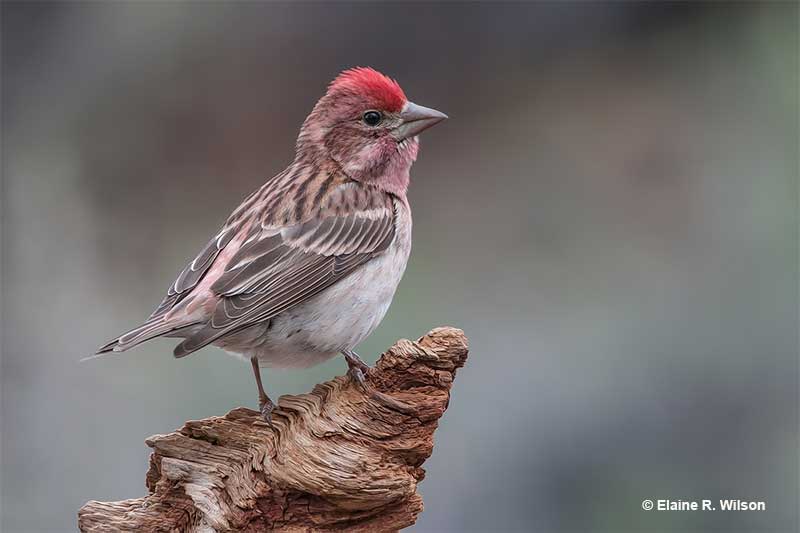
Males show a rosy-red cap and face, which blends down into a streaked brown body and wings. Females lack the red, appearing mostly brown with streaks, making them trickier to identify. These birds often form flocks, especially in winter, and are frequent visitors to feeders stocked with sunflower seeds.
Their musical songs and soft chatter add to their charm. Cassin’s Finches often move around in search of food, so their presence in an area may change from year to year. Their red crown is the key to spotting males.
9. Red-crested Cardinal
The Red-crested Cardinal is easily recognized by its bold red head and crest, which rise above a mostly grayish-brown body.
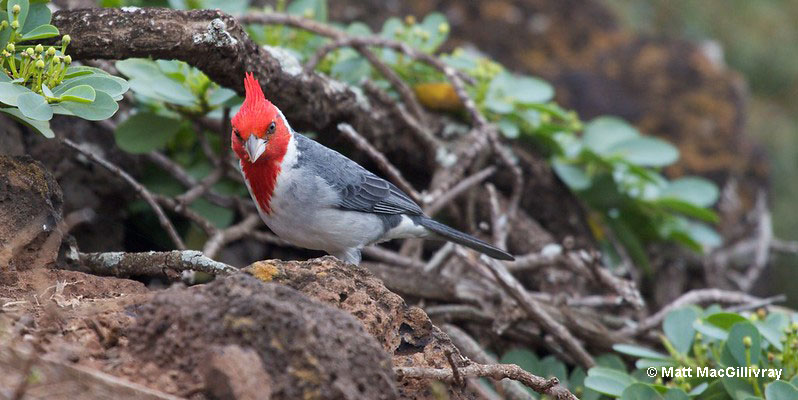
© Matt MacGillivray
Originally from South America, it has also become established in Hawaii and Puerto Rico. These cardinals are often found in open parks, gardens, and grasslands where they forage on seeds, fruits, and insects. Their call is clear and musical, adding to their popularity among birdwatchers.
Unlike the Northern Cardinal, which is entirely red, the Red-crested Cardinal’s contrast of red and brown makes it especially striking. They are often seen in pairs or small flocks, feeding quietly on the ground.
10. Vermilion Flycatcher
The Vermilion Flycatcher is a burst of color against a brown backdrop. Males are vivid red on the head and underparts, while the wings and back are dark brown.
Females and young are more subdued, with brown bodies and softer reddish tones. These small flycatchers perch on open branches, darting out to snatch flying insects in midair. They favor open country, riverbanks, and desert scrub in the southern United States and into Central and South America.
Their habit of returning to the same perch makes them easy to watch. A male in sunlight, with his glowing red head, is unforgettable.
11. Pyrrhuloxia
The Pyrrhuloxia, sometimes called the desert cardinal, is a close relative of the Northern Cardinal.

Males show flashes of red on the face, crest, and chest, while the rest of the body is grayish-brown. Females are duller but still display touches of red. These hardy birds are common in deserts and dry brushy habitats of the American Southwest and Mexico.
They feed on seeds, fruits, and insects, often cracking tough shells with their thick, curved bills. Their crest gives them a striking silhouette, even at a distance. Although less flashy than cardinals, their mix of red and brown is distinctive.
12. Red-faced Warbler
The Red-faced Warbler is a striking bird of mountain forests in the Southwest.
Its face and throat glow bright red, while the rest of its body is grayish-brown with contrasting white underparts. This colorful warbler spends much of its time flitting through branches in search of insects. It prefers high elevations with fir and pine trees, making it a special find for birdwatchers who seek it out in summer.
Its song is a sweet, whistling series of notes that can help locate it. The combination of a scarlet head and more muted brown body makes it instantly recognizable.
13. Common Redpoll
The Common Redpoll is a small finch found in northern regions and known for its bright red crown patch.
Its body is streaked brown and white, giving it a soft, blended look against snowy backdrops. Redpolls often travel in flocks, sometimes numbering in the hundreds, as they search for seeds in weedy fields or birch trees.
They are energetic, constantly in motion, and not shy about visiting feeders stocked with nyjer or sunflower seeds. During winter, they may even roost in snow burrows for warmth. Their red head patch is tiny but bright, standing out on their otherwise brown body.
14. Downy Woodpecker
The Downy Woodpecker is the smallest woodpecker in North America, yet one of the most widespread.
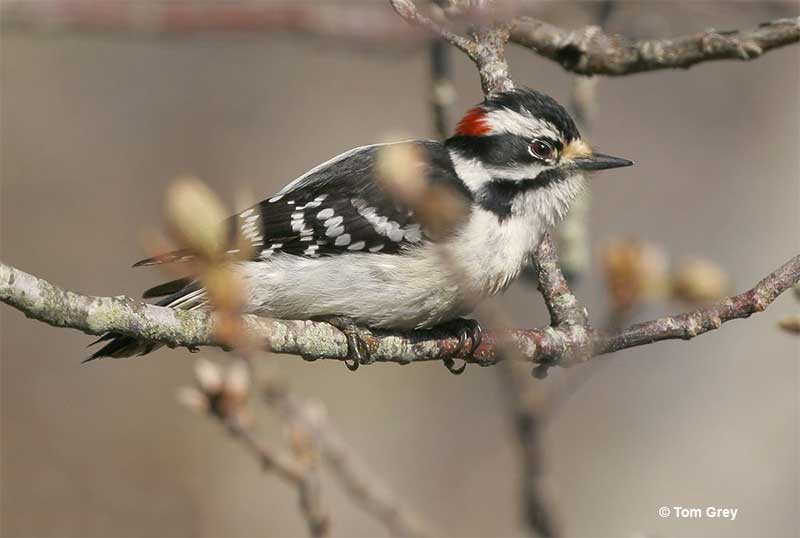
Males are marked by a tiny red patch at the back of the head, contrasting with a body that shows a mix of black, white, and brownish shading. Females lack the red but share the same pattern. These woodpeckers are frequent visitors to backyard feeders, especially when suet is available.
They drum lightly on trees and branches in search of insects hidden under bark. Their short, sharp calls are a familiar sound in woodlands, parks, and suburbs. Despite their size, they’re bold and active.
15. Redhead (Duck)
The Redhead duck is named for the male’s striking chestnut-red head, which stands out against its gray-brown body and black chest.

Females are more uniform brown with a slightly darker head. These diving ducks are common on lakes, marshes, and reservoirs across North America during migration and winter. They feed by diving beneath the surface to eat aquatic plants, insects, and mollusks.
Redheads often gather in large flocks, sometimes mixing with other diving ducks such as canvasbacks and scaup. Their smooth profile and colorful head make them easy to identify on the water. A flock of them is a beautiful sight.
Conclusion
Brown birds with red heads bring a touch of color and character to a wide variety of habitats.
Whether it’s the bold crest of a Pileated Woodpecker echoing through the forest, a Redhead duck gliding across a lake, or a House Finch singing cheerfully in your yard, these species remind us how diverse and beautiful bird life can be.
Spotting one often feels like a special reward, since their bright red heads are impossible to miss once you see them.
With so many to discover, it’s worth keeping your eyes open—you never know which red-crowned visitor might show up next.