


Cardinals might be the most beautiful of all backyard birds. They are the only birds with bright red plumage that visit feeders. As a bonus, Northern Cardinals lend even more cheer with beautiful whistled songs!
Have you ever wondered about these fantastic backyard birds? We gathered 15 facts about them to make you love them even more!
- There are three or four cardinal species
- Some cardinals aren’t really cardinals!
- Female cardinals sing, too!
- Cardinals are named after clergy
- One of the most common birds
- Some special cardinals are yellow
- Cardinals get their red colors from the foods they eat
- Cardinals have short lifespans
- Very popular birds
- Marching north since the 1800s
- Cardinals do not migrate
- A bird of many names
- Bald cardinals are normal
- Pairs in summer, flocks in winter
- Cardinals eat seeds, but they also need insects
There are three or four cardinal species
Northern Cardinals aren’t the only cardinal species. They share the “Cardinalis” genus with two or possibly three other similar species.
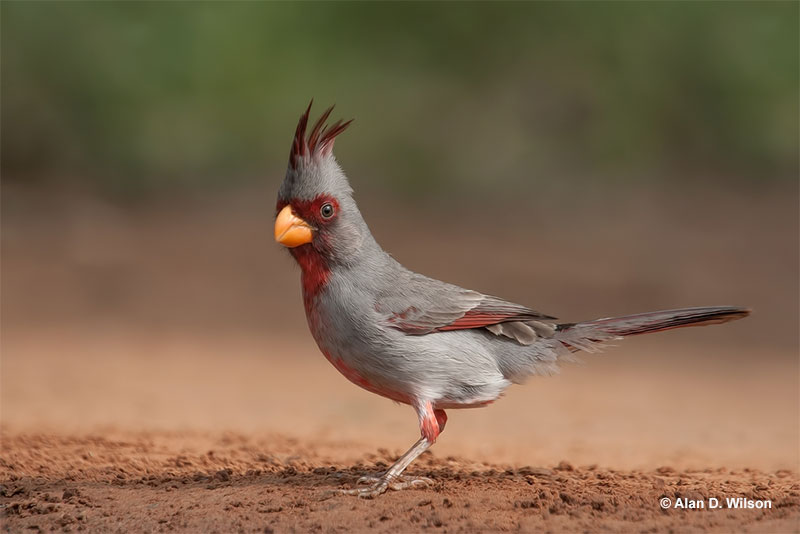
In southwestern deserts, Pyrrhuloxias, or “Desert Cardinals” entertain with svelte gray and red plumage. Watch birds in the deserts of northern Colombia and Venezuela and you might see the beautiful Vermillion Cardinal.
Some ornithologists also believe that the Northern Cardinals of southwestern Mexico should be a separate species, the Long-crested Cardinal.
Some cardinals aren’t really cardinals!
I realize that sounds odd but it’s true! Several bird species with “cardinal” in their name aren’t related to the Northern Cardinal.
There are Red-capped Cardinals, Red-crested Cardinals, Yellow-billed Cardinals, and a few other species. All live in South America and have some red on their heads.
The Red-crested Cardinal even has a crest like a Northern Cardinal but this and most other South American cardinal species are actually in the tanager family.
Female cardinals sing, too!
Male Northern Cardinals sing a lot. About the only time these beautiful birds don’t sing is during the winter months!
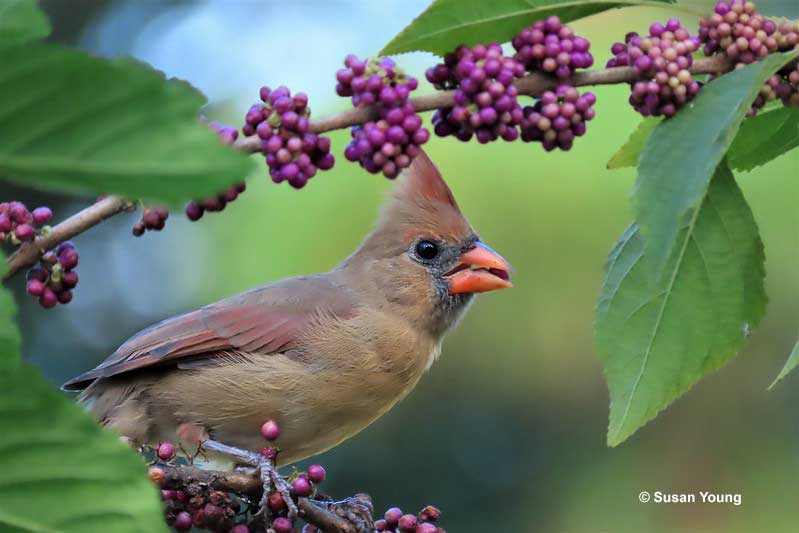
During the nesting season, they are joined by the voices of female Northern Cardinals. Females don’t sing as loud as males but make similar-sounding notes.
They often sing when they are on the nest to let their mates know if it’s safe for the male to visit the nest.
Cardinals are named after clergy
Cardinals are one of the few birds named after clergy. When the first Europeans arrived in North America, the Northern Cardinal’s bright red plumage reminded them of the cardinals of the Catholic church.
These high-ranking clergy are well known for their scarlet attire.
Other birds named after clergy and religious include “bishops”, “Apostlebirds”, “friarbirds”, and “monklets”. A couple of my favorites are “nunbirds and “nunlets”!
One of the most common birds
Another nice thing about Northern Cardinals is their abundance. In many places, these striking birds are one of the most common bird species!
They live in neighborhoods with plenty of bushes and other backyard vegetation, parks, and second growth. Although we see a pair or a few at our feeders, Northern Cardinals can be downright abundant in rural areas.
In eBird, they are often the most commonly recorded bird in much of their range.
Some special cardinals are yellow
We’ve all heard about Yellow Cardinals and some of us have been lucky to see one!
These striking birds make the news because they are so rare. The majority of male Northern Cardinals have characteristic red plumage but, every once in a while, one has mutations that prevent the bird from convert yellow pigment to red.
Cardinals get their red colors from the foods they eat
Cardinals aren’t born red. In fact, juvenile cardinals are mostly dingy gray. Eventually, they attain red feathers. However, those beautiful colors mostly come from the foods they eat.
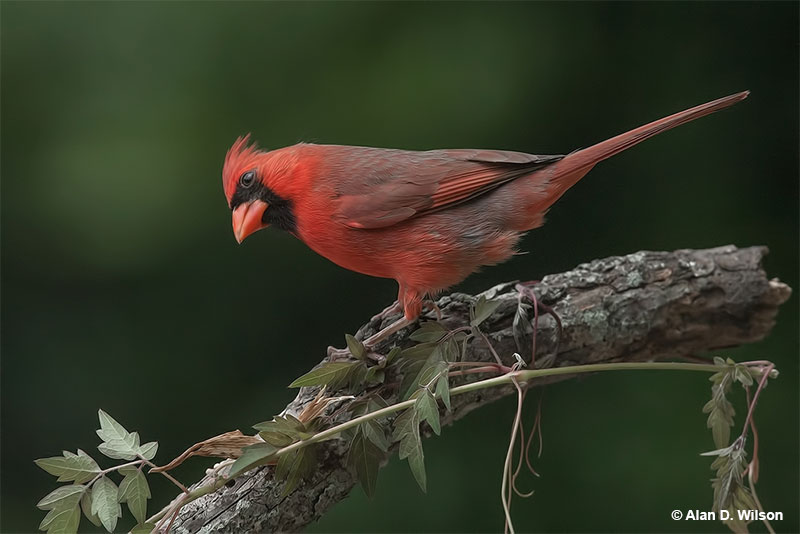
Northern Cardinals obtain pigments called “carotenoids” from eating dogwood berries, mulberries, and other small fruits. They might also get some carotenoids from eating various insects.
Cardinals have enzymes that then convert those carotenoids into beautiful red colors for their feathers and beak.
Cardinals have short lifespans
Sadly, most cardinals don’t live very long. On average, Northern Cardinals only live for around three years.
These beautiful birds have such short lifespans because they also have a lot of predators. Everything from cats to Cooper’s Hawks and other carnivores catch cardinals. To offset those losses, Northern Cardinals raise two or even three broods per year.
Although most live for 3 years, they can live longer. The oldest wild cardinal was 15 years old!
Very popular birds
Northern Cardinals are famous. This species is the official bird for 7 states; more than any other species!
It was the first state bird to be chosen when Kentucky selected the Northern Cardinal for the state’s official bird in 1926. The Northern Cardinal also became the state bird for Illinois, Indiana, North Carolina, Virginia, Ohio, and West Virginia.
In addition, the Northern Cardinal is the mascot for several schools and teams, including the Arizona Cardinals and Saint Louis Cardinals.
Marching north since the 1800s
Northern Cardinals didn’t always live so far north. More than a hundred years ago, folks couldn’t see these pretty birds in New York or southern Canada.
They only ranged as far north as the southern states but since then, this beautiful bird has expanded as far north as Quebec. Northern Cardinals began to move north as forests were cut and more second growth became available.
Bird feeders in winter have also helped them expand north!
Cardinals do not migrate
Unlike a lot of other small birds, Northern Cardinals don’t migrate. Blue Jays and even chickadees migrate from northern forests, but cardinals stay put.
Studies have shown that they rarely move much further than their home range, even during cold winters. Instead, Northern Cardinals survive cold weather by eating seeds at bird feeders and seeds and berries from wild plants.
However, they can’t live in places with extreme cold weather.
A bird of many names
Northern Cardinals have gone by a number of names. One of the names people use the most is “Common Cardinal” but they have also been known as “Cardinal Grosbeak”, “Crested Redbird”, and “Cardinal-bird”.
“Redbird” is another typical and good descriptive name for the Northern Cardinal.
Some of the older names for cardinals hint at their southern distribution. These include names like “Virginia Redbird”, and even “Virginia Nightingale”!
Bald cardinals are normal
In late summer, I sometimes see bald cardinals! These odd-looking birds can really throw you for a loop. They have red feathers and a deep reddish beak like other cardinals but don’t have a crest.
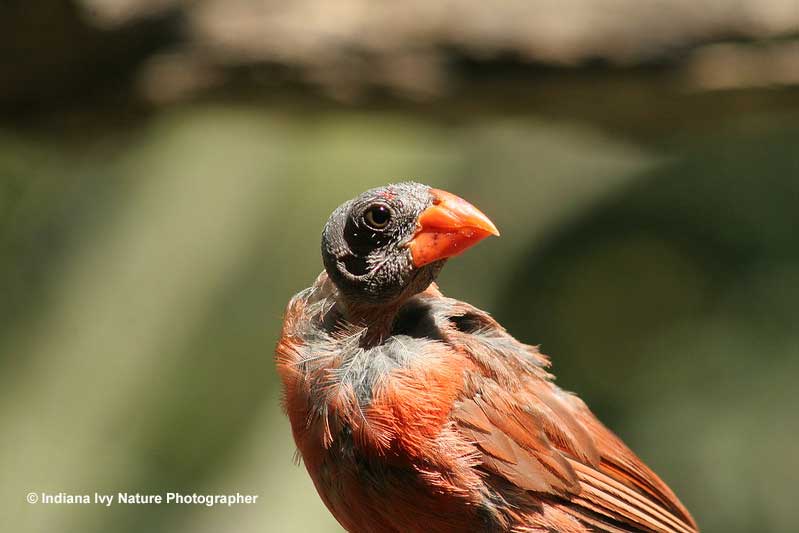
Instead, their heads are mostly bald and have dark skin! In late summer, this is actually a normal look for Northern Cardinals.
At that time of year, cardinals molt and some just lose most of their head feathers at the same time.
Pairs in summer, flocks in winter
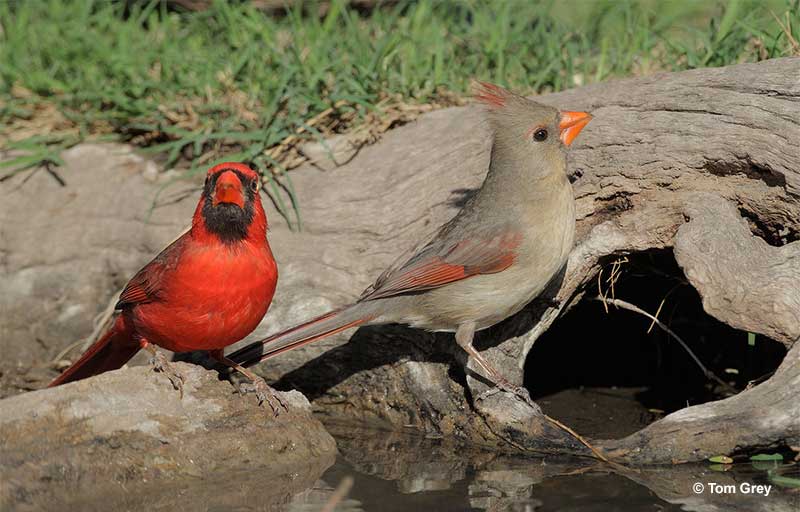
Anyone with Northern Cardinals nesting in their backyard knows how territorial these birds can be. They fight with other cardinals and even with their own reflection!
Pairs work hard to defend their territory, but that changes when the weather gets cold. Watch cardinals in late fall, and you might see several together. During the cold months, Northern Cardinals often form small flocks that roam woodlands and lend cheer to backyard feeders.
Cardinals eat seeds, but they also need insects
Northern Cardinals sure love sunflower seeds! Their strong conical beaks are adapted to cracking open these and many other seeds.
They do eat lots of seeds but Northern Cardinals also need some other types of food. In fall and winter, they eat a lot of berries, and in spring and summer, eat bugs too.
They catch beetles, grasshoppers, larvae, and other insects for themselves and their babies.