

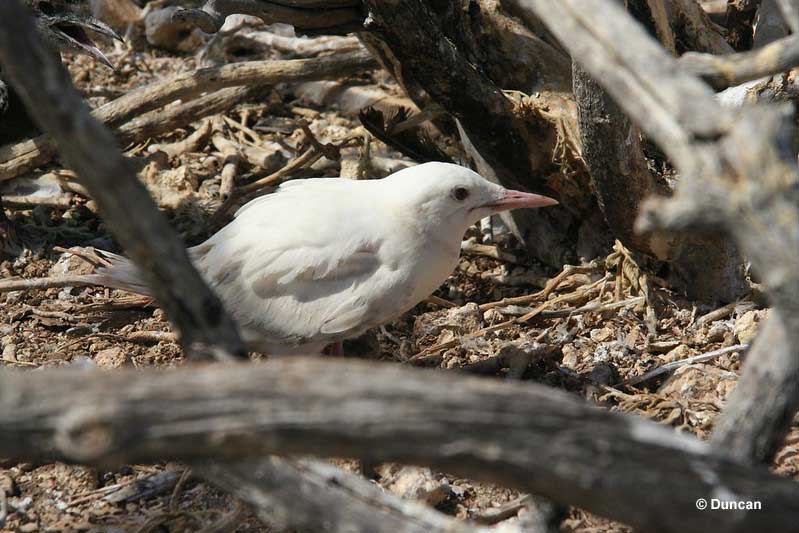
Birds don’t always have the plumages we expect to see. Watch birds enough, and you eventually see one that has odd, white markings. Although very rare, you might also see a bird with snow white feathers!
While watching flocks of American Robins in winter, I’ve seen such special birds on a couple of occasions. One robin was a striking bird with white on its wings. Another had white on its head and body!
Those leucistic birds really stood out from the other robins. Although I never saw an albino robin in those flocks, they must occur from time to time as well.
What’s the difference between leucistic and albino birds? How do they occur and why are they so rare?
The Difference Between Leucistic and Albino
Birds with white feathers aren’t always albino. In fact, the majority of those striking “white plumaged” birds we see in the wild are not albino! Most such birds (including the robins I saw) are “leucistic.”
Albino and leucistic birds both have genetic mutations that result in pale plumage but they also have a fundamental difference. Basically, albino birds can’t produce melanin pigment, while other birds (including leucistic ones) can.
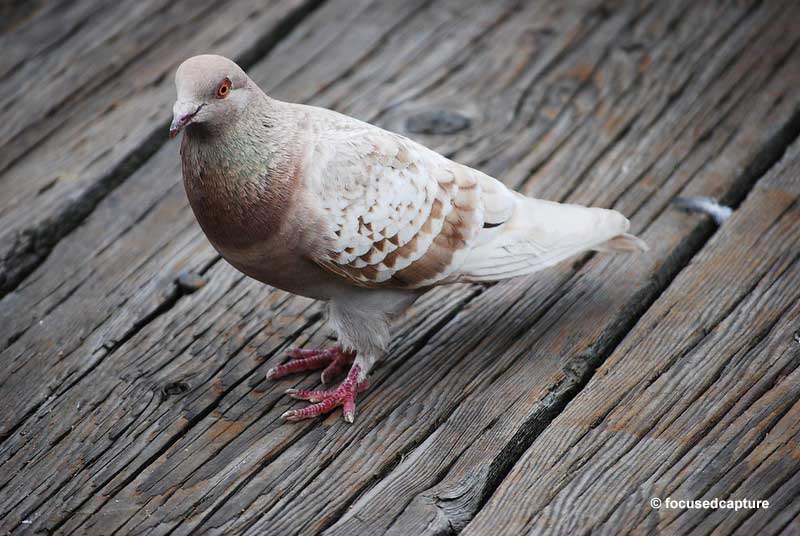
What do you think? Is this pigeon albino or leucistic?
That inability to make melanin is what makes such birds (and other animals) albinos. They simply can’t make melanin, so all of their feathers are white, their skin is pink, and their eyes are red.
See an entirely white bird with a pinkish beak and reddish eyes, and you’ve found a very rare albino! However, if you see a pale or white bird with dark eyes, nope, that bird’s not an albino. It’s a leucistic bird that produces melanin but has genetic mutations that don’t let it deposit the pigment in all of its feathers.
Degrees of leucism vary and explain why some birds have mostly pale or cream-colored plumage and others only have some white feathers in their tail or wings. That sort of partial leucism seems more common than leucism affecting all of a bird’s plumage.
Life Quality
Albino and leucistic birds stand out from the flock. It’s hard not to notice and admire their cream-colored feathers and white plumage. Unfortunately for those interesting birds, predators feel the same way!
Cooper’s Hawks, cats, and other animals that prey on birds automatically target the ones that are easiest to catch. That includes birds that are much easier to see than other, more camouflaged ones.
Essentially, albino and leucistic birds become automatic targets for every predator in their neighborhood.
In the case of albino birds, they also have a couple of other big strikes against them. Albino birds have vision problems, and their pale feathers aren’t as strong and sturdy as dark-colored feathers.

So, in addition to already being targeted by local hawks and other predators, they are easier to catch in general!
With that in mind, it’s no surprise that albino birds in the wild don’t usually live very long. Most die shortly after leaving their nests. If they do reach adulthood, they will also likely have trouble finding a mate.
Leucistic birds aren’t as disadvantaged but are probably still targeted more than other birds. However, some leucistic birds do learn to survive; these special birds can be seen for several years.
Other Possible Mutations
There are a few other mutations that also affect bird coloration.
Xanthochromism
This is a term to describe animals that have orange or yellow coloration instead of other, more natural colors. In birds, it typically occurs in species that have orange or yellow feathers instead of red ones. Xanthochromism is usually associated with certain genes but can also be related to diet.
Although these animals are rare in the wild, they are pretty common in the pet trade. It’s why we have yellow Canaries, yellow parakeets, yellow Ball Pythons and so on.
The best-known wild xanthochromatic birds are the famous “Yellow Cardinals.” These striking birds are bright yellow with black faces!
Melanism
Melanistic animals are more or less the opposite of their albino counterparts. Instead of having zero melanin to color their plumage, they have more than usual for their species.
Such melanistic wildlife include beautiful Leopards known as “black panthers”, dark versions of other feline species, and various other animals.
Although they are rare, we see melanistic birds too. They have much darker brown or sooty-colored feathers, often on their entire body. These birds are so dark, they are also pretty easy to recognize. If you notice a noticeably dark brown House Finch or sparrow at the feeder, you’re probably seeing a melanistic bird.
Erythrism
This term means “blood-colored” and is used for animals with reddish fur, feathers, and skin. In birds, we usually see erythrism in species that have reddish colored morphs.
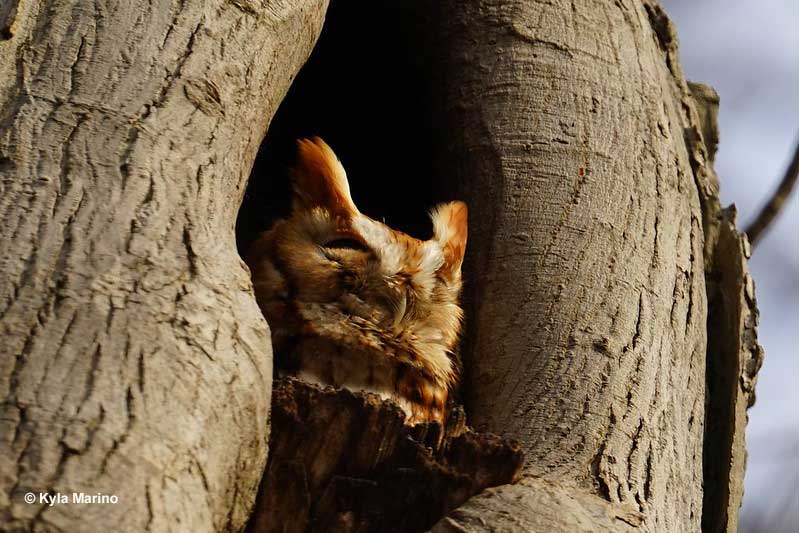
One of the best-known such birds is the Eastern Screech-Owl. This small owl can be brownish, grayish, or have striking fox-red plumage! Although studies are lacking, reddish plumage might work better for this species in warm, humid, and cloudy regions.
Several tropical owl species can also have beautiful reddish-morph plumages, for example, the Costa Rican Pygmy-Owl. Some reddish-plumaged birds I’ve seen almost look as if they have purplish highlights!
Frequently Asked Questions
What is more common, leucism or albinism?
Leucism is more common than albinism.
How long do albino birds live?
Albino birds don’t live long in the wild. They are usually caught by predators shortly after leaving the nest. With proper care, captive albino birds can live for several years.
Can albino birds have a normal life?
In the wild, albino birds can’t have a normal life. They are too susceptible to predation, perishing from cold weather, and not being able to find enough food.
Can leucistic birds survive as long as ‘normal’ birds?
Yes, leucistic birds can survive as long as ‘normal’ birds. Normally, plumaged birds live longer, but some leucistic birds manage to survive for several years.
Do leucistic birds have worse eyesight than normal birds?
No, the eyesight of leucistic birds isn’t any worse. They can see just as well, but albino birds do have vision problems.