

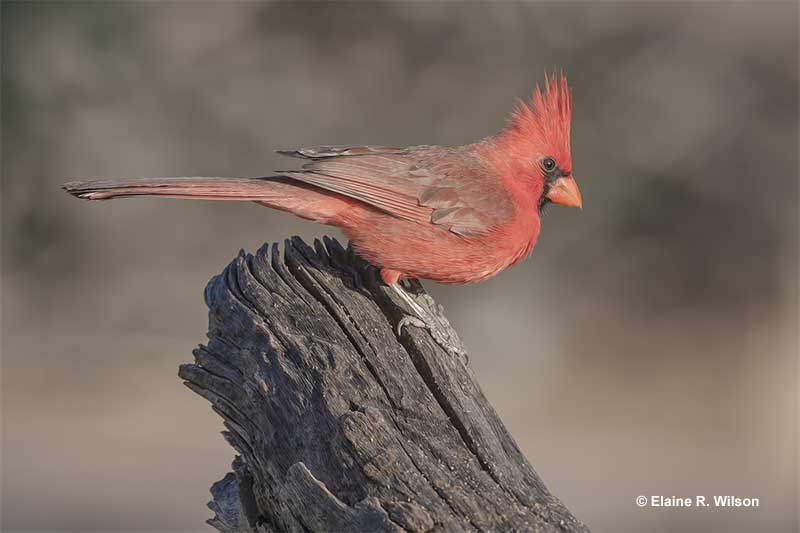
I’ve always loved cardinals. They may be common, but there’s something captivating to them!
In our quiet urban neighborhood, I watched many a cardinal sing from trees and even rooftops. I watched cardinal pairs visit feeders and fly between backyards. I also saw them make nests and raise young.
However, nature isn’t always pretty – there are hidden dangers everywhere around us, especially for birds.
How Long Do Cardinals Mostly Live?
In general, Northern Cardinals are not long-lived birds. These garden beauties tend to live brief yet active lives in our backyards and local parks.
Although the oldest known cardinals lived to be nearly 16 years old (!), the majority don’t make it past their third year of life. A lot of cardinals don’t even live longer than the egg or nestling stage.
With that in mind, the lifespan for most Northern Cardinals is just two to three years.
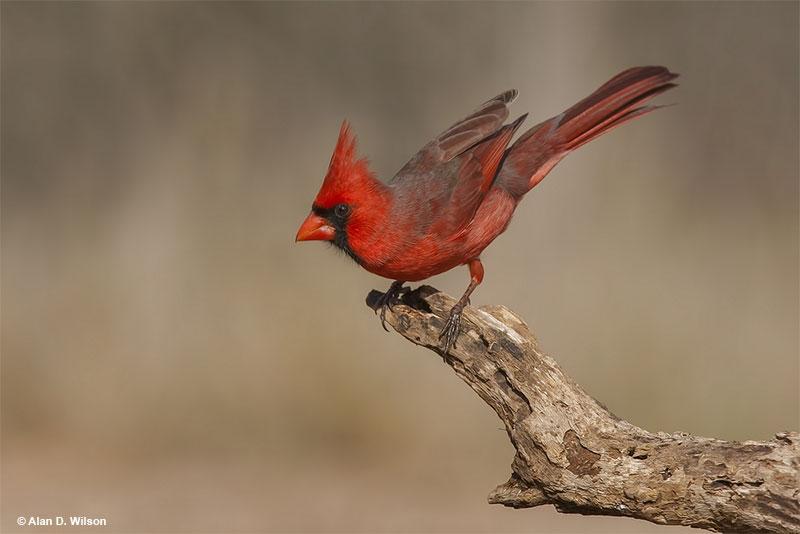
Most cardinals have such short lives because, as common as they are, these pretty birds are pursued by a wide variety of predators. Some also succumb to disease and window strikes. As with any bird species, habitat loss can also affect Northern Cardinals, but compared to other birds, they typically benefit from habitat alteration.
Unlike many vireos, warblers, and other songbirds, cardinals don’t require mature forest habitats. Instead, they thrive in second growth, hedges, and similar vegetation; habitats frequently created by housing developments, parks, and other human endeavors.
Abundant habitat for Northern Cardinals helps boost their populations even if a lot of animals do prey on them. Despite their short lifespans, raising more than one brood per nesting season also helps cardinals persist.
Biggest Dangers
Northern Cardinals don’t have it easy. One of the reasons I love feeding them is because I know how many dangers they face. Although cardinals are common and doing well throughout their range, it still feels good to help them as much as we can.
These beautiful birds are very susceptible to predators, especially because they nest in bushes and other low vegetation. As much as they hide their nests, a lot of predators find them and eat both the eggs and the nestlings.
Crows, jays, grackles, and some other birds are always watching for nesting cardinals. The same goes for squirrels and other small mammals, such as rat snakes and other snake species.
If a nestling survives long enough to leave the nest, the dangers get worse. As with most animals, predators often go after juvenile cardinals because they are easier to catch than adults.
They take the form of Cooper’s Hawks, Sharp-shinned Hawks, and other raptors. Since cardinals often live near people, it’s no surprise that cats and even dogs also catch a lot of juvenile (and adult) cardinals.
In places where Loggerhead Shrikes occur, these predatory songbirds can catch cardinals, too, and several owls prey on them at night.
The Life-cycle of Cardinals
Northern Cardinals start breeding in their first year of life and nest every year after. After they hatch, fledglings reach maturity in a matter of months and look for a mate at the end of their first winter. Males sing from a high perch to establish a territory and attract a female.
After the female cardinal picks her mate, she finds a good shrub or short tree for nesting and starts building her nest right away. Although the male can help, she usually does most of the work. The male doesn’t help with incubation either but does bring food to his mate.
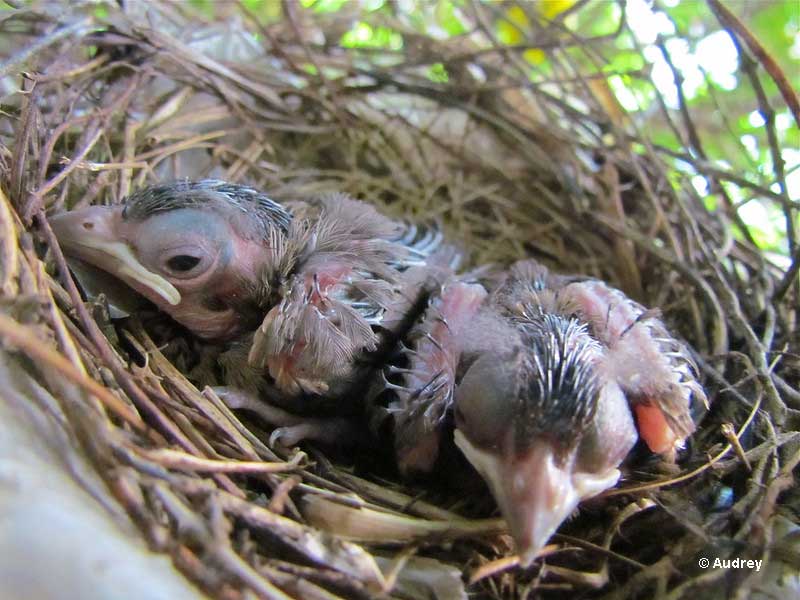
Cardinals can lay one to five eggs, but three to four eggs are the norm. They hatch after 7 to 13 days, and the baby cardinals leave the nest around 10 days later. To help them grow fast, both parents feed their babies lots of insects and keep feeding them for several few weeks after they fledge.
They fly fairly well just 8 days after leaving the nest. After fledging, young cardinals become independent and feed on their own anywhere from four to eight weeks later. The young birds sometimes flock with other juvenile cardinals and can stay near the nesting area for several months.
Fun Facts About Cardinals
- The oldest known Northern Cardinals were a 15 year old female and a 13 year old male.
- Northern Cardinals are often infected by mosquito-born diseases but also have high survival rates for those diseases.
- Bald cardinals may lack head feathers because of disease, injury, malnutrition, or for other, unknown reasons.
- The Northern Cardinal is one of the most common birds in North America. Results from breeding bird surveys between 2005 and 2014 estimated 110,000,000 birds!
- For the past 200 years, deforestation and a warming climate have helped Northern Cardinals expand north.
- Cardinals usually breed in their first year of life and often nest twice per nesting season.
- Female Northern Cardinals build their nests in just 3 to 9 days.
- A lot of Northern Cardinal nests fail. On average, out of eight eggs laid, just two to three baby cardinals survive to leave the nest.
See more: 15 facts about cardinals
Frequently Asked Questions
Do cardinals mate for life?
Most cardinals tend to mate for life, but there are rare exceptions.
How long do young cardinals stay in the nest?
Young cardinals stay in the nest for ten to 13 days.
Can cardinals attack other birds?
Yes, cardinals can attack other birds. They can be very territorial around their nests and drive off other cardinals and some other small birds.