


It’s not easy being a bird! Even though most birds can fly, a lot of animals catch and eat them.
They have to be careful about hawks at our feeders, neighborhood cats, and plenty of other predators!
Which animals eat birds? Do they eat some bird species more than others?
Animals That Prey On Birds
Nature is a wild and rough place, a lot more savage than we realize! Even in our own backyards, House Sparrows, squirrels, and other animals survive by eating other plants or animals. Although lots of animals eat mice and insects, birds are on the menu too, especially if a predator sees an opportunity for an easy meal.
Sparrows, warblers, and other small birds need to be especially careful. No matter where they forage and fly, small birds are stalked by a wide variety of predators. On their breeding grounds, Baltimore Orioles, Yellow Warblers, White-throated Sparrows, and other small birds have to be careful of snakes, Sharp-shinned Hawks, cats, and other small predators.
During migration, they might leave some of those predators behind but still have to be wary of Sharp-shinned Hawks and another suite of animals. The same goes for their tropical wintering grounds where they continue to be stalked by snakes, owls, and wild felines like Margays and Ocelots!
But what about bigger birds? Are they safe from predators? Not as many animals prey on birds like herons, geese, and hawks, but yes, they have predators too! Eagles and Great Horned Owls can catch large birds (even other raptors), and Coyotes hunt ducks, herons, and other big birds.
Biggest Predators
Cats
Cats are major bird predators.
The ancestors of the Domestic Cat developed skills to catch birds over thousands or even millions of years. They also had to become very good at it because there were limited feeding opportunities in the North African and Middle Eastern deserts they called home.
The end result was well-honed instincts and natural abilities for catching birds both on the ground and in vegetation.
To see those skills in action, just watch a cat on the hunt. After hiding and lying in wait, they carefully and patiently move closer to their prey. Once the cat is within striking range, it springs into action to snatch the animal with its sharp claws.
Those well-tested abilities are why cats pose such a big threat to birds. According to the Smithsonian Conservation Biology Institute, they kill anywhere from 1.3 billion to 4 billion birds every year!
Squirrels
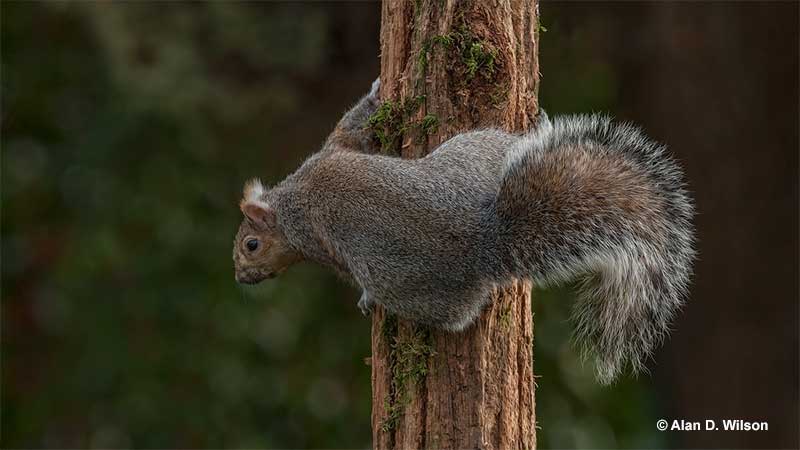
A squirrel jumps on a bird feeder, and most birds flee the scene. Although it might seem like squirrels don’t pose more of a threat than stealing a bird’s sunflower seeds, birds know otherwise!
Squirrels routinely raid bird nests to eat eggs and even nestlings. They can’t pass up an easy, good source of protein, especially when they have their own young to feed. Birds can drive the rodents away from their nests (especially larger species), but smaller species have to rely on camouflage and nesting in places where squirrels don’t usually roam.
It’s hard to say but this might be one of the reasons why several warblers and other songbirds nest on or close to the ground.
If they see an opportunity, squirrels can also attack and eat small birds. I’ll never forget the time I saw a Gray Squirrel with a dead Downy Woodpecker on a cold November day in upstate New York!
Foxes
Foxes are natural predators of birds and other small animals. Basically, these small, cat-like canines catch whatever small animal they can find, especially rodents.
Birds aren’t as easy to catch but they can still go after them. Foxes are more likely to catch birds like grouse, quails, and other terrestrial species. They can also raid nests of ducks and other species that nest on the ground.
To hunt birds, foxes look for easy opportunities and use their keen sense of smell to guide them to a bird’s nest, an injured bird, or other potential prey. They also catch their prey a lot like a cat does.
When a fox detects a bird it might be able to catch, it tries to quietly sneak in until it gets close enough to pounce. After an impressive leap, they try to catch the bird with their long mouth.
Raccoons
Raccoons are one of the most important nest predators. Although these medium-sized mammals rarely catch adult birds, they can take a big toll on the eggs and nestlings of many species.
Raccoons can be especially devastating for birds that nest in suburban areas. In such places, the lack of predators and abundant food can boost Raccoon populations to unnatural levels. The high number of Raccoons ends up having a bigger impact on nesting birds than wilder places.
These mammals also pose a threat to many nesting birds because they can look for nests on the ground as well as high in trees. They aren’t shy about attacking nests of big bird species either.
If a Raccoon thinks it can get away with it, it can even climb up to owl and eagle nests! However, since those nests are pretty well guarded, they usually go after nests of much smaller and less dangerous birds.
Snakes
Serpents are another major bird predator. Like Raccoons, most snakes go after bird eggs and nestlings. We can’t blame them, a bird nest is about as easy of a wild meal as you can get!
Several snake species attack nests, including Corn and Milk Snakes, Rat Snakes, and many other types of snakes. Most of those same snakes rarely, if ever, attack adult birds. Instead, they usually go after rodents and other small animals.

However, some snakes do attack adult birds, especially in tropical habitats. Rattlesnakes often lie in wait for quail or other small birds to venture too close. Several arboreal snake species are also major bird predators, as are many boas and pythons.
In the Amazon rainforest, the beautiful Emerald Tree Boa waits on branches for birds to come within biting range. Various vipers in tropical Asia have similar behaviors, while Boa Constrictors often catch chickens and any other bird they manage to bite.
Frogs
Although it sounds unbelievable, frogs can actually catch birds! While most frogs eat insects, bigger ones take advantage of other types of prey, birds included.
Of course, they can’t eat big birds, however, Bullfrogs can leap into the air to capture hummingbirds, and can also go after ducklings. Other similar large tropical frogs also occasionally prey on birds.
They ambush and catch them with their big mouths. The amphibians then crush the bird with their strong bite and swallow them whole. Yes, that sounds horrendous, but that’s nature for you! I once saw this happen when a big Marine Toad caught a Wood Thrush near a small water feature in Costa Rica.
While enjoying close views of various tropical birds, I heard a small bird screaming in distress. I looked and found myself focusing on a Wood Thrush held fast by the toad!
The amphibian quickly dragged the bird into its burrow, only leaving a few scattered feathers behind!
Coyotes
Coyotes are another primary predator of birds. Like foxes, they find birds by their sense of smell and go after nests and adult birds. While they also catch a lot more rodents and other small mammals than birds, when the opportunity presents itself, they won’t hesitate to prey on birds too.
These canines can be especially important predators of waterbirds. If water levels get low enough for Coyotes to reach them, they can attack duck and geese nests as well as roosting adult birds.
The same goes for roosting sandpipers, coots, and other waterbirds. If water levels stay low, Coyotes can keep coming back to prey on the birds again and again.
Coyotes also catch songbirds like meadowlarks, quails, and other bird species that nest and roost on the ground. If this wild canine can smell a bird, it will keep searching until it can find its prey.
Baboons
Baboons are primates that live in savannah and woodlands in Africa and parts of the Arabian Peninsula. They have big, intimidating teeth and look carnivorous! However, despite their fierce appearance, these omnivores mostly forage for fruits and seeds.
Even so, they eat other things too, including small animals they manage to catch. While they do eat the occasional bird, most healthy adult birds are too quick for Baboons to catch. The same can’t be said about bird nests and nestlings.
Like so many other animals, if a baboon finds a bird nest, it won’t hesitate to eat the eggs and nestlings. The main issue is finding the bird nest. Most nests are camouflaged and hard to find, and some are protected by spines and other sharp vegetation.
Baboons watch for nests as they move through their territory and can also search for a nest after a bird flies away at close range.
Badgers
Badgers belong to the same carnivorous family as Wolverines, Weasels, Martens, Ferrets, and other Mustelids. However, American Badgers specialize in catching voles, prairie dogs, and other ground-dwelling rodents in grassland habitats.
Once in a while, they also catch birds. However, since Badgers don’t climb trees or bushes, they only prey on birds that share their terrestrial habitat.

For example, Badgers occasionally catch Burrowing Owls, and can also prey on colonies of nesting Bank Swallows. They catch both of these types of birds by digging into the ground to access roosting birds and their nests.
Badgers also occasionally surprise and prey on quails, meadowlarks, and other birds that nest on the ground. If they can catch the adult bird on the nest, they will eat it. However, more often, the adult bird escapes and the Badger eats the eggs or nestlings.
Weasels
Weasels might be small, but they pack a serious predatory punch! Full of energy and taking on prey as big as or even bigger than themselves, weasels are some of the toughest little predators in woods, fields, and wetlands.
Like several other members of the Mustelid family, weasels mostly prey on rodents and rabbits. However, they will also eat any animal they manage to catch and kill, birds included.
Terrestrial species like Long-tailed and Least Weasels and American Ermine occasionally prey on small birds and their nests. They can also catch and kill birds as big as a grouse but usually stick to preying on rodents.
With that in mind, weasels probably attack juvenile birds and adult birds when the opportunity presents itself rather than specifically targeting them. These small carnivores kill birds and other prey by using their strong jaws to bite the animal in the head or neck.
Dogs
In general, dogs aren’t major predators of birds. Their wolf ancestors won’t pass up the occasional grouse and bird nest but usually work in packs to bring down deer and other large prey. If we let dogs go completely wild, they would probably start to act the same.
Domesticated dogs can definitely attack birds but that behavior depends just as much on their owners. For example, if someone is irresponsible enough to let a dog run wild on a beach full of shorebirds and gulls, of course, it’s going to chase and harass them. Let that dog catch a weak sandpiper or injured gull and it will probably kill and eat it.
On the other hand, people who control their dogs won’t allow them to affect birds and other local wildlife. As for feral dogs, they can certainly prey on any birds they manage to catch. In some places, such uncontrolled dogs kill endangered ground-dwelling birds.
Other Birds
Some of the main predators of birds are other birds! Hawks in the “Accipiter” genus are adapted to preying on other birds as are Merlins, Peregrine Falcons, and other falcon species.
Sharp-shinned Hawks, in particular, are some of the main predators of warblers, chickadees, and other songbirds. On more than one occasion, I have seen a Sharp-shinned Hawk burst out of woodlands in a flash of blue-gray and orange in pursuit of a small bird.
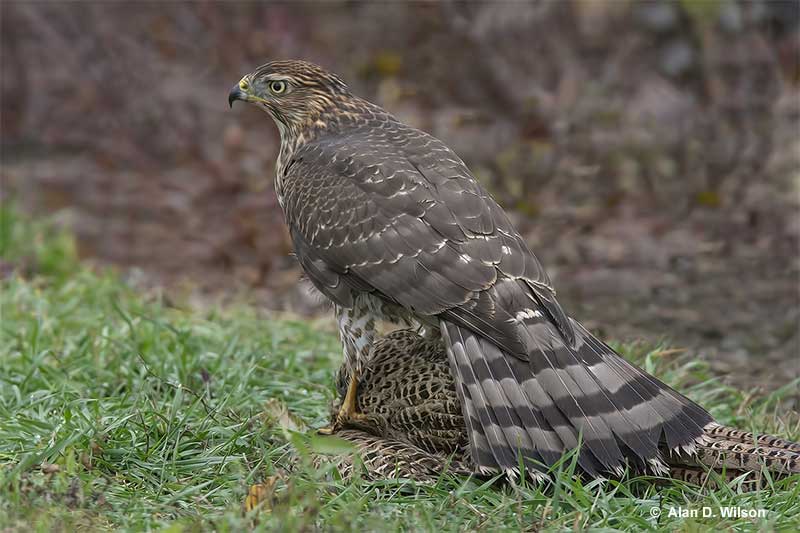
Cooper’s Hawks act similarly at feeders. While watching feeders, I have seen this hefty hawk go after Mourning Doves (as well as squirrels!).
On one memorable occasion at Whitefish Point in Michigan, I watched a Merlin harass a flock of Black-capped and Boreal Chickadees (mostly Black-capped). The small birds were gathering their courage to fly out over the water but each time they tried, a Merlin would dive at them.
Eventually, we saw the Merlin fly off with a chickadee in its talons!
See more: Birds that prey on other birds
Humans
People are also major bird predators. It’s true! Although most birds we prey on are domesticated turkeys, chickens, and ducks, we do eat them. I know I like to!
However, lots of people also kill wild birds. Hunting ducks, geese, doves, quail, Wild Turkeys, and pheasants is quite popular in the USA and Canada. A lot of those hunters also eat their quarry and pay license fees to help manage the bird species they hunt.
In Alaska and northern Canada, various local cultures also hunt birds for food, and in Iceland, people collect a certain number of Puffins and their eggs every year.
We see similar situations in other parts of the world where people hunt birds for food and their feathers. No matter where people hunt birds, serious problems arise when people kill too many birds too quickly. Sadly, this has happened in a number of places and has even driven some birds to extinction.
Frequently Asked Questions
Who are the biggest predators of birds?
The biggest predator of birds are other domestic cats and other birds, especially hawks in the Accipiter genus and falcons.
Do birds fight off predators?
Some birds fight off predators. However, that depends on which birds and predators are involved. For example, small birds might be able to drive small snakes away from their nest but they won’t have much luck against a big snake.
How many nest predators do birds have?
Birds have a large number of nest predators. Everything from squirrels to mice, snakes, Raccoons, bears, crows, and even woodpeckers can attack bird nests!
Do predators go for weaker birds?
Yes, predators often go for weaker birds. Most predators are quick to take advantage of prey that looks easy to catch.