


Birds eat a lot more than sunflower seeds and worms. There are birds that feast on fruit, others catch fish, and some even eat other birds!
It might seem strange but that’s just how nature works. Which birds catch and eat other birds? How often do they do it?
See this article to learn all about birds that eat other birds!
Are Birds An Easy Prey?
Birds don’t look like the easiest animals to catch. The vast majority fly, and most fly pretty fast!
Most birds also have adaptations to prevent predators from snatching them. Ducks, sandpipers, and many other birds form flocks so they can spot a predator before it can get close enough to pounce.
Nighthawks and other birds have excellent camouflage, and most are vigilant and ready to fly at a moment’s notice. When a predator is in the neighborhood, birds also warn each other!
When a warbler, chickadee, or other small bird sees a hawk, it makes distinctive, high-pitched alarm calls. Other birds hear those calls and they run for cover or freeze and hide in place.
Knowing what those alarm calls sound like also helps birders find predators! While walking through forest, I always hear their alarm calls before I see the raptor the birds are screeching about.
Songbirds are just much better at spotting owls and hawks than me. No surprise there, for small birds, being aware of a raptor ASAP is a matter of life and death.
Even so, despite bird’s natural anti-predator tools, many predators still manage to catch them. Birds that hunt other birds have evolved lethal tool kits of their own.
Birds That Hunt Others
Hawks
Hawks often prey on birds, especially the Sharp-shinned Hawk. This hawk’s entire diet is composed of warblers, sparrows, and other songbirds!
Around a foot long, “Sharpies” use their needle-sharp talons to catch prey by way of ambush. This small, feisty raptor watches from a good hiding spot and then bursts from cover to pursue small birds.
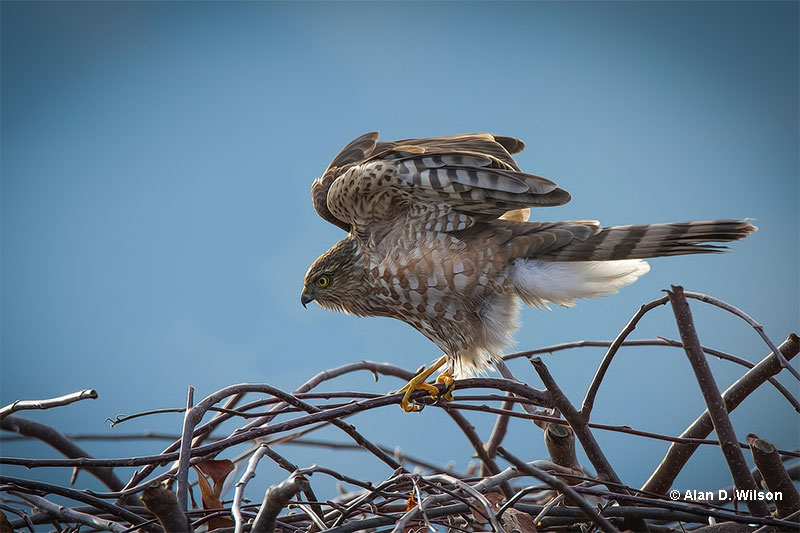
Other Accipiter genus hawks also catch lots of birds by ambushing them. If you have a backyard bird feeder, there’s a good chance you’ve seen hefty Cooper’s Hawks stalking birds. You may have even seen one catch a larger bird, as big as a jay, for example!
In montane and northern forests, powerful Goshawks attack grouse, jays, and woodpeckers.
Several other hawk species also catch birds on occasion. The Northern Harrier flies low over marshes and fields to hunt sparrows, meadowlarks, and other birds. High above, various soaring hawks also occasionally catch unwary birds.
Owls
Owls are bird predators, too, many of them. For the most part, common owl species like the Eastern Screech-Owl, Barred Owl, and Great Horned Owl only occasionally prey on birds.
If the opportunity presents itself, these and may other owls will catch songbirds like warblers and robins. Most of the time, though, they feed on rodents and other small animals.
Snowy Owls also catch birds, especially in migration and winter. They often hunt for ptarmigans, ducks, and other seabirds during the light of day. These big owls quickly fly low over the ground to take the bird by surprise.
Ironically, the owls that prey on birds the most are small owl species! Pygmy-owls hunt a variety of small birds, especially at dusk and dawn. Like so many other predators, they watch from a hidden perch and then quickly attack unwary birds that venture too close.
Eagles
Do eagles prey on birds? You bet they do! Eagles are so powerful that they more or less catch whatever animal they want. Of course, they can’t catch everything, but they do prey on birds as large as Sandhill Cranes and geese.
Regarding eagles and geese, years ago, we would move our arms up and down like a Bald Eagle to make flocks of geese fly. More often than not, the Canada Geese would notice that movement, become alarmed, and fly into the air!
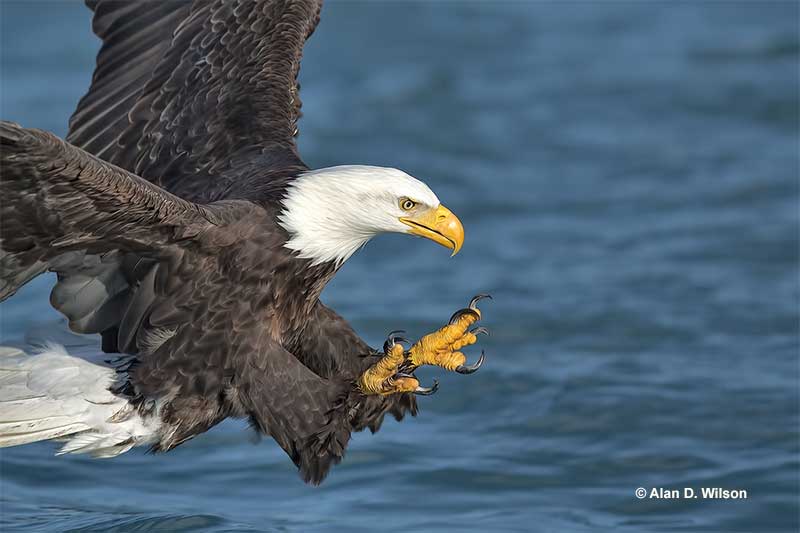
Bald Eagles often swoop down and grab unwary or injured ducks from ice or the surface of the water. They can also attack smaller raptors, especially at their nests.
Golden Eagles catch birds on occasion too, especially medium and large birds. In the Himalayas, pairs even work together to prey on migrating cranes!
Tropical eagles also catch lots of birds. Huge Martial Eagles hunt Guineafowl in Africa, and hawk-eagles catch parrots, toucans, and macaws in rainforest!
Falcons
Several birds prey on other birds but the ones that do it the most are falcons. Many of the Falco genus species are highly evolved, lethal avian predators.
Those would be species like the Peregrine Falcon, Merlin, Gyrfalcon, and other, similar falcon species. All have a tapered, aerodynamic shape perfect for fast flight, and all also catch birds with ease.
Most use a similar hunting strategy. They either watch for birds from a perch or in soaring flight, and then fly after their prey. The falcon might snatch the bird in the air, or dive down on it and rake it with its talons.
Prairie Falcons and some other falcon species also use this strategy to catch quail, ducks, grouse, and other birds on the ground. Up in the air, they hunt swallows, sandpipers, parakeets, pigeons, and other birds in flight.
Crows
Raptors aren’t the only birds that hunt other birds. Some non-raptorial birds catch birds, too, especially crows and other Corvids.
Although they don’t have the capacity to fly after and catch as many birds as hawks and falcons, if they could do it, these omnivores probably would!
Instead, crows catch birds when the opportunity presents itself. Crows are extremely observant and always watch for feeding opportunities. If they notice a bird that looks weak, they’ll check it out.
© Everglades National Park
If the crow figures it can get away with killing and preying on that thrush or sparrow, it might take that chance.
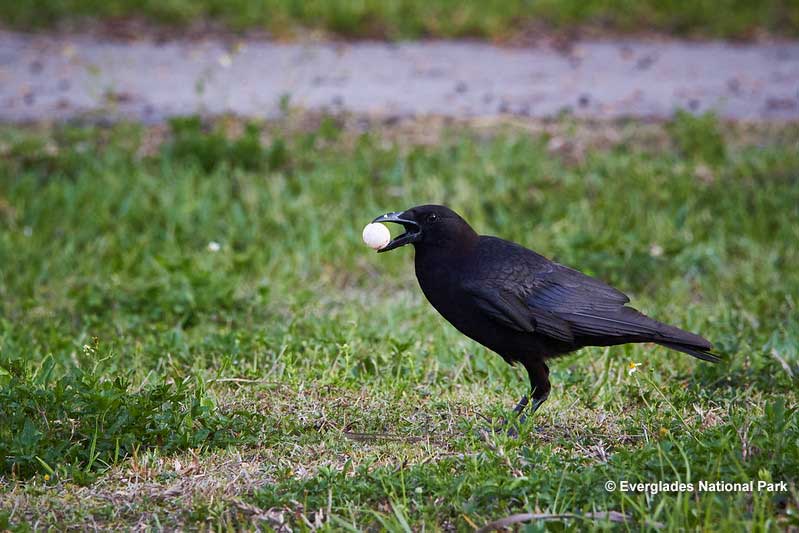
However, much more often, crows and their relatives prey on bird nests. I have seen crows carefully watch small birds come and go from their nests, and then fly in to see if they can find it.
You know they’ve found the nest when they fly away with an egg in their beak!
Shrikes
Shrikes are technically songbirds that are mini raptors! These bull-headed birds have strong, hooked beaks, and even have sharp claws to help them catch small animals.
Surprisingly, they can also catch birds nearly as big as themselves! Although Northern Shrikes usually go after goldfinches and other small birds, once in a while, they do catch larger species.
A shrike on the hunt perches on top of a bush, tree, or other perch with a good field of view. They can also quietly perch within sight of a feeder or near a fruiting tree (which is basically a natural feeder!). Either way, the shrike waits and watches until it sees an unwary bird, often one feeding on the ground.
When it sees its chance, the shrike quickly swoops down and pins the bird to the ground or a branch. After severing bird’s vertebrae with its bill, the shrike carries its prey away.
Toucans
Toucans are such exotic and amazing looking birds! They are fun to look at but don’t let their clownish appearance fool you. Toucans are also major predators!
Although they love to eat fruit, toucans are opportunists that also catch small animals. They’ll prey on small lizards, frogs, and other animals, birds included. Sometimes, they manage to catch a small bird but mostly attack bird nests.
These tropical birds are similar to crows and jays in a number of ways including watching nesting birds to figure out where their nests are. They often work in pairs or small groups and use their long beaks to reach into nesting holes, as well as snatch eggs and baby birds out of their nests.
During the nesting season in Costa Rica, I sometimes see a toucan with an egg or nestling in its beak. It’s not a pretty sight but that’s nature for you!
Gulls
Gulls eating birds? Really? Oh yes, more than you think! Like crows, gulls are opportunistic feeders always watching for a feeding opportunity.
They can eat carrion, catch fish, and even scavenge junk food and garbage in parking lots! Birds are also on the menu, especially small species. Large gull species like Herring and Greater Black-backed Gulls regularly prey on smaller birds. They also attack bird nests, especially colonies of nesting seabirds.
They mostly go after eggs and nestlings but can also prey on adult puffins and murres, storm-petrels, and even small shearwaters. This is probably why those pelagic birds and small Cassin’s Auklets fly back to their nesting burrows after dark.
If they come back in the day, big gulls can drive them down to the water to kill and prey on them!
During migration, gulls can also catch and eat small songbirds flying over water as well as weakened songbirds resting on the sand.
Herons
Great Egrets and Great Blue Herons are the definition of elegance. They are also serious predators that remind me of their dino ancestors.
Seriously! These birds are absolute predators willing to eat anything that ventures within reach, birds included. They might not go after big birds but woe be the rail, sparrow, or any small or medium-sized bird that gets within range of that sharp beak.
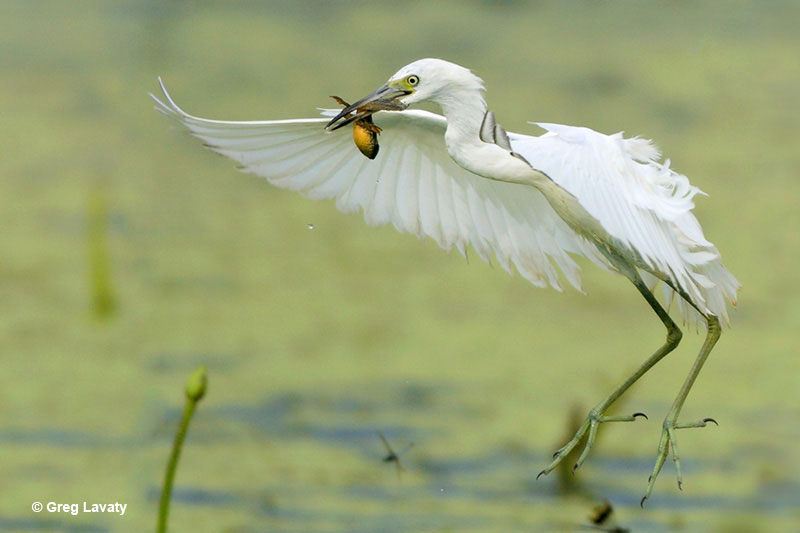
Although herons mostly kill fish and other animals, they won’t hesitate to eat birds too. Few birds get caught because most know to keep their distance. The birds that are especially vulnerable are ones that can’t fly very well; birds like rails, wrens, and marsh sparrows.
This is why we have to be careful to not drive sparrows and rails into the open. On more than one occasion, after taking flight, a rare Black Rail has been quickly caught by a waiting heron!
Frequently Asked Questions
Which bird is most likely a predator of other birds?
The Peregrine Falcon is likely to prey on other birds. Sharp-shinned Hawks, Cooper’s Hawks, and Merlins are also likely predators of birds.
Do all birds of prey prey on birds?
No, not all birds of prey do not prey on birds. Many do, but some catch fish, and others mostly prey on mammals.
What is the largest bird of prey?
The largest bird of prey is the Andean Condor. However, since it is a scavenger, that claim to fame sometimes goes to the Steller’s Sea-Eagle. This huge bird of prey can weigh as much as 21 pounds, measure slightly more than 3 feet, and have a seven foot plus wingspan!
Do big birds of prey have any enemies?
Yes, big birds of prey have some enemies. Raccoons and other mammals can attack their nests.