

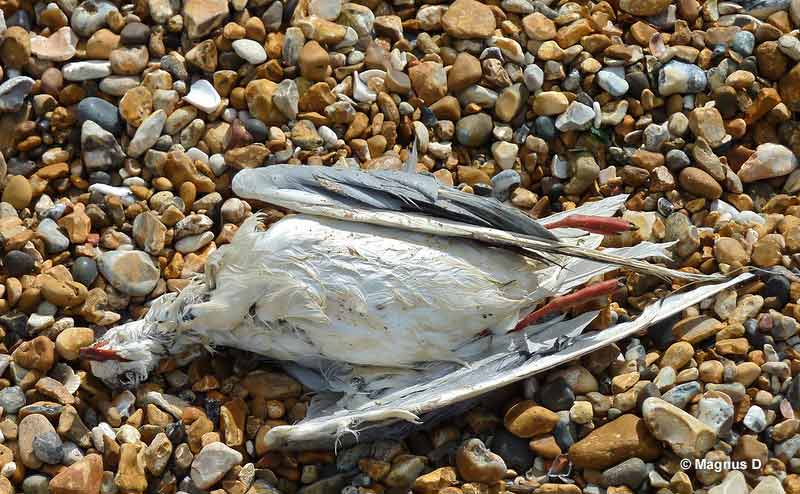
It is no news that humans are killing birds. Bird populations across the world are imperiled by our influence. The staggering losses of global and national bird populations are well-documented and sad to witness.
While birds naturally die of biological causes and these deaths present an important part of the food chain, it is excessive and unnecessary bird deaths that are the problem.
Let’s look at the main reasons behind unwanted bird deaths and the toll they take on our bird populations.
Most Prominent Causes
Most bird lives are directly lost to domestic cat predation – 2.5 billion birds in the U.S. alone, 377 million in Australia, and 55 million in the UK. The global numbers are sure to be much higher.
Next are window glass collisions (1 billion per year in the U.S.), vehicle collisions (up to 340 million in the U.S.), and collisions and electrocution from power lines (31 million in the U.S.).
If we look at the broader reasons behind both direct and indirect bird deaths, habitat loss and degradation are definitely the leading causes of global bird population declines. Climate change consequences also increasingly claim more and more bird lives each year.
Cats
While we love our cuddly feline companions and would do anything to make them purr, the numbers behind the damage they do to wildlife are shocking – and sobering.
In the U.S., free-roaming cats kill roughly 2.5 billion (range: 1.3–4.0 billion) wild birds annually. As for the UK, this number is around 55 million. Australian cats kill 377 million birds per year – roughly 1 million each day! An in-depth study of cat prey revealed that domestic cats consume 2,083 different species, 981 of them birds.
Over the centuries, cats have contributed to the extinction of 63 species of birds, mammals, and reptiles in the wild, mostly on islands with no mammalian predators.
Of course, there is nothing wrong with cats wanting to hunt birds. The problem is in the way we keep them.

But aren’t cats natural bird predators?
Let me paraphrase conservation biologist Tim Shields (who originally talked about raven predation of desert tortoises): cat predation is a ‘natural behavior at an unnatural density.’
This means that while it’s natural for cats to hunt, the problem arises when there are too many cats in an area, which is often the case in urban and suburban environments.
Domestic cats are by far the most numerous top predators in our environments, thanks to their artificially high, human-supported population densities. They outnumber natural bird predators like martens five-fold or more.
On top of it all, they are not natural predators at all. Domestic cats originate from the African wildcat. The domesticated version has spread globally, following humans (and the associated rodents) only in the last 9,000 years. It is an invasive species in the majority of the world, a fact that underscores our responsibility in managing their impact on bird populations.
One of the most effective ways to prevent bird deaths is to be a responsible cat owner who keeps their beloved felines indoors. This simple act not only saves countless bird lives but also ensures the safety and welfare of your cat, too.
Uncontrolled outdoor access increases the risk of cats catching a deadly disease and getting hurt or killed by cars, dogs, coyotes, poisons, and other dangerous factors.
Window collisions
As unusual as it sounds, birds can’t see glass. They perceive it not as an obstacle but as an empty space they will try to fly through. Unfortunately, that leads to a huge number of collisions, especially because our architecture increasingly features glass.
An estimated 1 billion birds die each year in the U.S. from window and glass collisions. The highest death counts are during migration, where hundreds of birds may be found around a single tall glass building. Nighttime and lit skyscrapers are especially deadly for migrating birds.
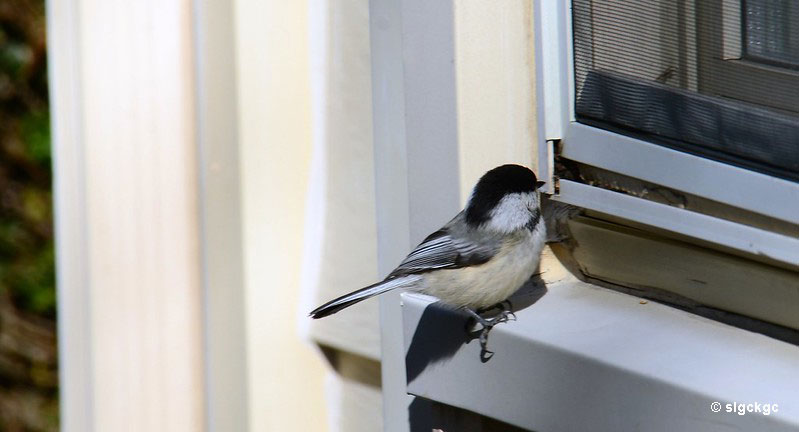
True, some birds survive the ordeal. Still, sadly, 54-76 percent of window collisions end up fatally, either immediately or in the days after, due to internal injuries.
Thus, there are national campaigns to turn off the lights during critical nights on migration routes. Also, modifying the surface of the glass with lines, dots, pictures, drawings, or lettering helps prevent colisions in any time of day and night.
Efforts to make glass visible to birds span from home actions, like drawing vertical lines with or putting up stickers on windows, to large-scale architectural sollutions.
Colliding with vehicles
Collisions with vehicles are among the top direct causes of bird deaths. The U.S. Fish and Wildlife Service estimates that between 89 million and 340 million birds die each year in road accidents.
Some bird groups are disproportionately affected by vehicle collisions. These include groud-dwellers and ground-nesters, scavengers attracted to roadkill (including raptors), birds attracted to live prey near roads (like owls), waterbirds, and fruit-eating birds (when fruiting shrubs and trees are planted along the roads).
Excessive bird deaths on the road can be at least partially prevented by the following measures.
- Installing diversion poles, especially on bridges, to keep waterbirds away from vehicles.
- Installing low fences, preventing birds from crossing, or making them fly above the dangerous vehicle level.
- Building wildlife crossings and underpasses.
- Removing attractants like roadkill or alluring vegetation.
- Warning signs about wildlife crossing.
- Monitoring to identify problem areas.
Electrical lines
Power lines take more than 30 million bird lives in the U.S. each year. Out of these, 25 million deaths are due to physical collisions with a power line, and 5.6 million happen due to electrocution.

Collisions with power lines happen because birds fail to see the cables in time. The less visible the power line, the greater the chance of collision and electrocution.
Electrocution without a collision happens when birds use power lines as perches or nesting sites and accidentally make direct contact with high-voltage electricity.
Large soaring birds like eagles, falcons, and hawks are at the greatest risk from, as well as large birds that fly over great distances in flocks, like swans, geese, and other waterfowl.
We can prevent power line bird deaths by installing structures that make lines more visible to birds in flight or prevent them from perching. There are numerous designs available.
Oil pits
Up to 1 million birds perish in oil pits and other toxic ponds used by extractive industries. These pools temporarily hold oil, salt solutions, and various toxic and corrosive chemicals before transporting them to treatment facilities.
Unfortunately, they look like regular lakes and wetlands for water birds looking for a place to rest. After landing, their feathers get coated with the sludge, robbing them of the ability to fly and sometimes drowning them. Also, oil pits trap insects, whose struggle then attracts songbirds and small raptors.
The annual death toll from oil pits provided by the U.S. Fish and Wildlife Service – 500,000 to 1 million birds – is likely an underestimation. Many trapped birds sink to the bottom of the pit, never to be found.
The solution is surprisingly simple and affordable. Installing a net over the pond has a double effect – it prevents birds from landing on water and disrupts the oil-sheen glimmer that attracts them in the first place.

Habitat loss
Habitat loss and degradation are undoubtedly the main indirect reason for excessive bird deaths and the biggest driver of global avian population decline.
Various ecosystems worldwide face a myriad of pressures from land conversion, urbanization, deforestation, and other forms of exploitation.
The numbers are disheartening, even if we look at important habitats randomly:
- The American prairies are now less than 1% of what they were before industrialized agriculture.
- The world has lost 50-87% of its wetlands – habitats well known for their bird diversity.
- Only a third of the world’s rainforests are relatively intact; 34 percent are destroyed, while another 30 percent are in various stages of degradation.
Poison
Millions of birds globally die each year from ingesting toxic substances. Positioning can happen intentionally or unintentionally.
Deliberate poisoning of birds occurs in environments riddled by human-animal conflict or simply a fear of certain birds. Individuals deliberately plant poisoned bait (usually rodenticides or other pesticides, often from the black market), affecting scavenging birds like raptors and corvids, although other birds can get affected.
Unimaginable in some parts of the world, deliberate poisoning is nearly an everyday occurrence in others.
Unintentional poisoning via pesticides, heavy metals, and medication may seem less drastic, but it takes an even heavier toll on bird populations, even pushing some species to the brink of extinction. Here are some examples.
- Lead. Lead ammunition used in hunting saturates the food chain with disturbing amounts of this neurotoxic heavy metal. All animals that feed on shot animal carcasses accumulate lead irreversibly in their bodies, leading to illness and, eventually, death. Around 16 million birds die from lead poisoning each year.
- Pesticides. Persistent pesticides accumulate in the food chain. Depending on the dose, they can kill immediately or slowly over time. Up to 67 million birds die yearly from pesticide poisoning.
- Veterinary diclofenac. Scientists believe that veterinary diclofenac, a common veterinary drug administered to livestock, is the cause behind the massive decline of African and other vultures. The vultures consume the medicine through animal carcasses.
Turbines
The American Bird Conservancy has calculated that around 681,000 birds are likely killed by wind turbines in the U.S. each year. In the UK, the estimated number of birds is 10,000 to 100,000 annually.
Note that the estimations vary because not all bird deaths at wind parks can be directly counted. That is why scientists and engineers must make estimations based on varying models with different calculations.

Wind turbines do not have an equal impact on all birds. Some bird species are more susceptible to turbine collisions, and some populations are less capable of sustaining losses than others due to their reproductive ecology.
Birds die through collisions with the wind turbine parts, predominantly the rotating blades. Related infrastructure like power lines also have their fair share in bird deaths.
However, the blades and the wires are not the key to bird deaths in wind power plants. The location and positioning of the turbines are crucial factors in increasing (or decreasing) bird deaths from this renewable power source. Avoiding placing wind power plants on or near migration routes and resting sites greatly reduces bird deaths from turbines.
Fortunately, many wind projects and companies now hire professionals to specifically tackle the issue of bird mortality, which should decrease the number of birds that die from wind power infrastructure in the future.
Open Pipes
Among the bizarre reasons for mass bird deaths are abandoned open pipes. We find these pipes, working or defunct, everywhere in our landscapes. They may be a part of irrigation systems, water supply, or sewer and wastewater networks. The problem is that these harmless-looking pipes act as death traps.
In the natural environment, there are few (or no) pipe-like structures or openings that are solid and lead nowhere. Rather, the narrow opening typically leads into a chamber, be it a hollow tree trunk, a cave, or a barn attic. However, if a bird crawls into a narrow PVC pipe while seeking shelter, it can’t turn around or spread its wings. Instead, it remains trapped, to die slowly from dehydration and starvation.
Removing or plugging unused pipes wherever possible would go a long way to prevent bird deaths.
Climate Change
Climate change kills birds in a myriad of ways. Prolonged heatwaves, droughts, cold snaps, floods, food shortages, and disrupted migration and nesting patterns take thousands, and likely millions, of avian lives each year.
Extreme weather is a significant factor in bird deaths. As the warming atmosphere holds more moisture, storms become more powerful and deadly. Those coming from the sea displace shorebirds and seabirds and prevent them from feeding.
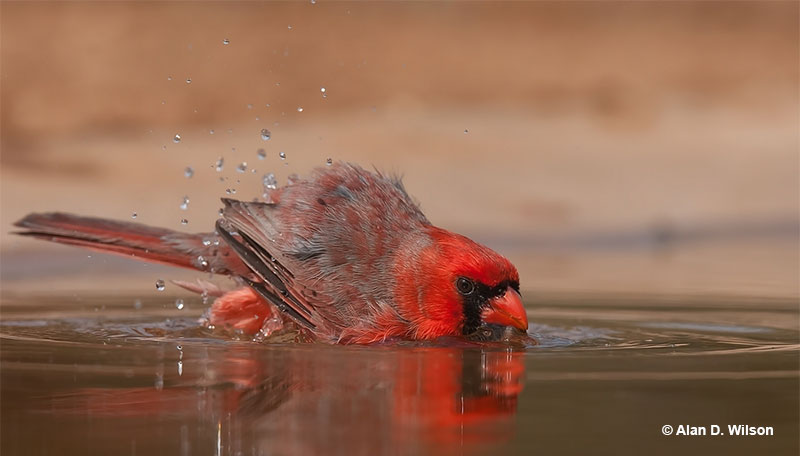
Supercell storms, downpours, and hail on land wreak havoc among nesting birds, with especially high death tolls among birds nesting on high, unsheltered spots, like storks.
Frequently Asked Questions
How many birds die every year in the U.S.?
It is difficult to estimate how many birds exactly die annually in the U.S., given there are so many reasons behind bird mortality. Remember that birds don’t die just from human-caused reasons, but also naturally due to predation and end of lifespan. What is certain is that unwanted, unnatural bird deaths in the United States are measured in billions.
Naturally, populations fluctuate from year to year. However, the long-term trend is worrying. Since 1970, the United States and Canada have lost almost 3 billion adult birds from the overall population. That means we’re now missing a quarter of North American birds.
Are there ways to prevent bird deaths?
Bird death prevention depends on the cause, but it is very possible to decrease deaths from each. I wrote extensively about the measures in this article. The two most efficient ways to battle the excessive bird death toll are to keep domestic cats indoors while reducing the feral population and to make glass on our buildings visible to birds. Only these actions could save up to 5 billion bird lives a year!
How many birds die in their first year of life?
The first year of life is the most deadly to birds across all species. Estimates of first year bird deaths vary from species to species – from 20 and 30 percent in waterfowl to 83 percent for songbirds.
What is the survival rate of baby birds?
An average baby bird’s survival is roughly 56 percent. The survival rate is highly dependent on the species. Small songbirds like House Sparrows have a survival rate of only 12%, while birds of prey have survival rates of up to 90%.
Still, the smaller prey birds have more numerous broods and mature quicker; on the other hand, young raptors take years to mature and reproduce themselves.
Read next: What to do if you find an injured bird?
