

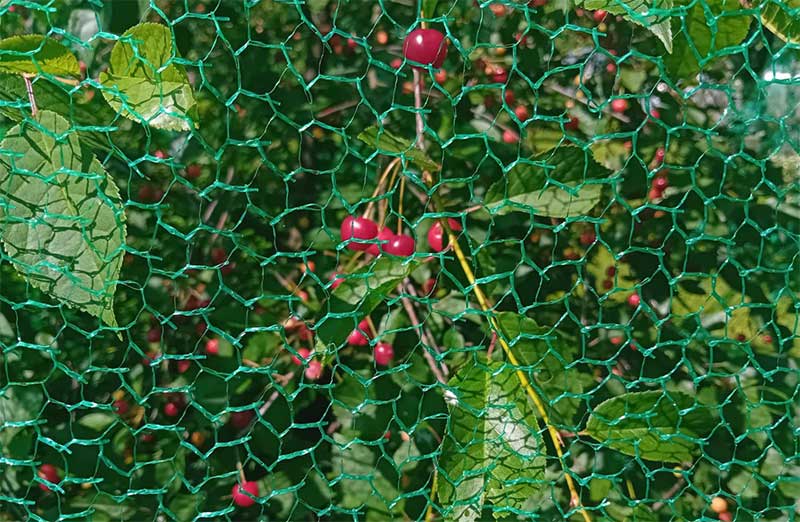
Summer is the prime time for all sorts of crops, this, in turn, means that fruit-loving birds are on the lookout for the sweetest treats. If you’re not careful, they can even empty out a cherry tree in a day!
Bird nets are used in other ways, too, for example, to protect your chickens from birds of prey or fish from herons.
However, is bird netting actually safe for birds?
The Dangers of Bird Netting
Bird netting can be an important means of keeping birds away from crops. It can also prevent egrets, herons, and even Ospreys from catching their lunch at fish farms.
To keep large flocks of roosting birds away, some municipalities also deploy bird netting on trees, statues, and other structures. The same goes for folks who don’t want pigeons, starlings, and other birds nesting on their roofs.
I can’t blame them and bird netting can work. However, there’s also a big problem with bird netting.
It can end up killing birds.

Bird nets end up killing birds in a couple different ways. If the netting isn’t installed correctly and has an opening, birds that find that entrance hole might not find their way back out.
That problem has resulted in the deaths of birds as large as gulls and as small as sparrows. After the bird gets caught under the net, it usually gets tangled, panics, and becomes more tangled. It’s a similar situation when birds become entangled after landing on top of the net.
In both cases, the birds die from a combination of stress, exposure to the elements, and injuries caused by the netting.
Can birds see bird netting?
Bird netting is usually black because black plastic can withstand UV rays longer than other colors. However, black netting is also more difficult to see than netting made of white, red, or green plastic.
That can be an issue for birds. Our avian friends have fantastic eyesight, and many or all can even see in the UV spectrum (!). Even so, certain lighting can make black netting virtually invisible to birds.
That usually happens in situations where mist nets are used. As long as mist nets are only legally used by certified ornithologists and bird banders, birds not seeing them is actually a good thing! They catch and carefully release birds to study them, often for conservation purposes. Mist netting has actually helped us learn about the lifespans of many birds, along with lots of other important scientific data.
The type of netting placed on crops and buildings is usually different from mist nets and birds can usually see them. In fact, the hope is that birds will see those nets so they can fly on them instead of trying to land on fruiting trees and buildings.
Even so, once in a while, it can be hard for birds to see this type of bird netting too.

Correct disposing
Bird netting doesn’t last forever. It eventually wears away, breaks, and becomes much more risky for birds than properly installed, intact netting.
You have to take the netting down and throw it away. Therein lies another problem because that netting can still be dangerous for birds and many other animals. It also goes without saying that just leaving a net to break down in a landfill creates more plastic pollution.
So, how can we safely get rid of bird netting? Burning it might seem like an easy option, but a plastic bonfire releases toxic gas and ash.
It is a good idea to carefully tie up the netting and then put it into a sealed bag. However, if it is just thrown into a landfill, it will eventually pollute our air, land, and water.
The best disposal option is recycling it. See which nearby recycling centers accept bird netting (which is usually made from common plastic) and then bring it there. Another consideration is not using plastic bird netting in the first place. After all, the harm it causes to birds and the environment (including us by way of plastic pollution) outweighs the benefits.
Ways To Protect Your Crops Without Bird Netting
Fortunately, to protect crops and other situations, you might not need bird netting. Here’s what you can try.
Long Lasting Bird Repellent
Bird repellent sprays can keep birds from eating crops, and also prevent them from nesting near them. Just make sure the spray is non-lethal, and is safe for pets and people too! If it wears off after a rain, spray it on the plants again. It might even work to keep insect and mammal pests away too.
Automated Green Lasers
Believe it or not, this is an actual solution and it works! Green Lasers are an excellent way to scare birds off, even geese and other birds far off in a crop field. Birds just don’t feel comfortable with that bright green light, especially when it gets close to them. They see it and leave in a hurry.
Windsocks and Other Visual Deterrents
Other things that can really make birds nervous are windsocks and shiny, reflective things. For whatever reason, birds don’t feel comfortable with the random movements made by windsocks, especially several installed in a field. They feel the same about reflective tape and other shiny objects, especially when hung above grape vines and from fruiting trees.

Distressed Bird Calls
Birds also respond to sound and can be very sensitive to loud distress calls. When a gull or other bird is injured or caught by a predator, it makes some horrible sounds. Broadcasting those same calls around crops will make most birds pause before venturing any further.
Bird Decoys
Decoys of predators can also work. Those classic owl and hawk decoys a lot of people use can have an impact. However, since crows and other birds eventually learn that decoys are fake, decoys with glowing eyes, and head and wing movements will work a lot better.
Frequently Asked Questions
Why are people against bird nets?
Bird netting can be dangerous to birds, so many people are against using them. In worst-case scenarios, they can even accidentally kill birds.
Does bird netting protect your crops?
Indeed, properly installed bird netting can protect your crops. However, there might be other, more bird-friendly solutions.
Can birds land on netting?
Yes, some birds can land on some types of netting. However, most can’t really land on netting nor perch in it for long.
Do bird nets stunt tree growth?
Yes, bird nets can stunt tree growth, especially if the tree is trimmed on top to accommodate the net.