

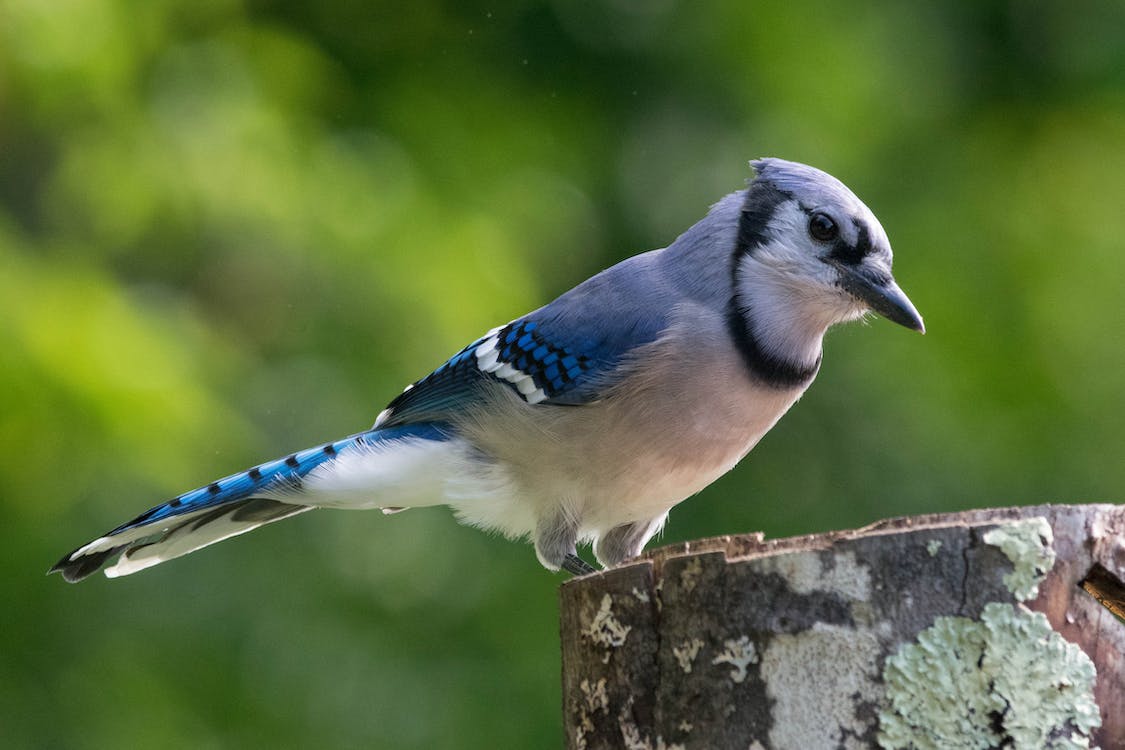
The blue jay (Cyanocitta cristata) is one of North America’s most recognizable and intelligent birds. Known for their striking blue feathers and loud calls, blue jays are fascinating creatures. While male and female blue jays look similar at first glance, there are subtle differences in appearance, behavior, and roles that distinguish females. Let’s explore the characteristics of female blue jays and their unique contributions to their species.
Telling Female from Male?
Distinguishing between male and female blue jays can be challenging, as they are not sexually dimorphic—meaning they do not exhibit obvious physical differences based on sex. However, with close observation, you might notice subtle differences. Female blue jays are often slightly smaller and less vibrant than males.
The difference in plumage color is minor, but males might appear slightly brighter blue, especially during the breeding season.

Behavior is another clue. During courtship, males are more likely to perform displays and bring food to females. Observing nesting behavior can also help; females are more often seen incubating eggs and staying close to the nest.
What Are The Characteristics of a Female Blue Jay?
Female blue jays share the same brilliant plumage as their male counterparts. They have bright blue feathers on their wings, back, and tail, accented with black and white markings. Their underparts are pale gray or white, and their crest is a noticeable feature on their head. This crest can be raised or flattened depending on their mood.
Though their plumage appears identical to males, female blue jays may have slightly duller blue hues, particularly outside the breeding season. The difference is subtle and often hard to detect without direct comparison.
Are Female Bigger?
No, female blue jays are not bigger than males. On average, males are slightly larger, with a more robust body and a slightly longer tail. The size difference is minor and often only noticeable when observing a mated pair side by side. Males may weigh around 100 grams, while females typically weigh a few grams less.
Despite this size difference, both males and females share similar wing spans, ranging from 13 to 17 inches. This makes them appear nearly identical in size to the casual observer.
Differences in Behavior
Behavioral differences between male and female blue jays become most apparent during the breeding season. Males are more active in courtship displays and territorial defense, while females focus on nesting and incubation. Male blue jays are also more likely to exhibit aggressive behaviors toward intruders, including other birds, squirrels, or even humans.
Does seeing a Blue Jay have any special meaning?
Females, on the other hand, are often more reserved. They spend significant time on the nest, conserving energy for egg-laying and incubation. Outside of the breeding season, males and females participate equally in foraging and flock activities.
Vocalizations and Calls
Both male and female blue jays are highly vocal birds, known for their wide variety of calls. However, there are slight differences in vocal behavior between the sexes. Males are generally louder and more frequent callers, especially during the mating season. They use their calls to establish territory, attract mates, and warn of potential predators.
Females are less vocal but still communicate with softer calls, particularly while on the nest. These calls are often directed at their mate or chicks. Interestingly, blue jays are also capable of mimicking other bird species and even human-made sounds, a skill exhibited by both sexes.
Nesting and Feeding Habits
Nesting is one of the most critical roles for female blue jays. After selecting a mate, the female takes the lead in building the nest, often with assistance from the male. Nests are typically constructed in the crooks of tree branches and made from twigs, grass, and other plant materials.

Once the nest is complete, the female lays 3 to 7 eggs and begins incubation. During this time, the male’s role is to provide food for the female and protect the nesting area. The incubation period lasts about 16 to 18 days, after which the chicks hatch.
Bluebird vs Blue Jay – Differences
After the chicks are born, both parents share the responsibility of feeding them. However, the female often remains closer to the nest, brooding the chicks and ensuring their safety, while the male forages for food. Blue jay chicks grow quickly and fledge about 17 to 21 days after hatching.
Courtship Behavior
Courtship among blue jays is a fascinating process, with males performing elaborate displays to attract females. These displays often involve fluffing their feathers, bobbing their heads, and offering food to the female. The male’s bright plumage and energetic displays are key factors in attracting a mate.
Once a pair forms, they establish a strong bond and often stay together for life. This monogamous relationship allows for efficient cooperation during nesting and raising young. Courtship feeding, where the male provides food to the female, continues even after pair formation and serves to strengthen their bond.
Is It Possible for Female Blue Jays to Raise Their Young Without Assistance?
While it is possible for a female blue jay to raise young alone, it is uncommon and challenging. In situations where the male is absent, the female must balance incubation, feeding, and nest defense by herself. This can lead to higher stress levels and reduced survival rates for the chicks.
The cooperative nature of blue jay parenting significantly enhances the chances of successfully raising a brood. Males play an essential role in providing food and protection, allowing the female to focus on brooding and nurturing the young. Without this partnership, the demands on the female can be overwhelming, and the likelihood of chick survival diminishes.
In conclusion, female blue jays play a pivotal role in their species’ survival, from nesting and incubation to feeding and raising their young. While they may appear nearly identical to males, their unique behaviors and responsibilities set them apart. The intricate balance of duties between male and female blue jays highlights the remarkable teamwork and adaptability of these intelligent and vibrant birds.