

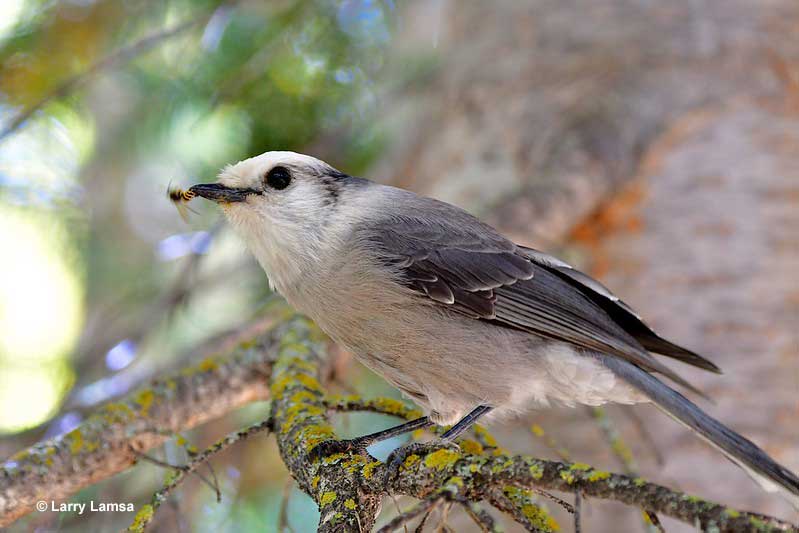
We all know the phrase “the birds and the bees.” But what about birds versus bees?
Most birds have a taste for invertebrates and insects, and it is no wonder. These tiny creatures are full of protein. Many bird species rely exclusively on insects to raise their young, as this highly nutritious diet allows fast chick development.
Birds aren’t particularly picky about the type of insect they get as long as they are digestible and non-poisonous. However, birds that target bees and wasps are less numerous because these insects are hard to catch, have tough outer shells, and may have stingers with venom sacks. Ouch.
Birds that target bees and wasps usually have mid-sized bodies, larger heads, long or strong bills, and are agile flyers. But who are they really?
The Role Of Bees
It may seem silly, but first, we have to clarify what we mean by “bees.”
Bees are a group of insects that include many more species than the famous Western Honey Bee and its few other honey-producing, hive-forming cousins. There are over 20,700 bee species worldwide, most of them solitary or living in small colonies (for example, bumble bees).
All bees are extremely important for our ecosystems and food supplies. They pollinate flowering plants, thereby allowing them to fruit and reproduce. They are also an important part of the food web because many animals – birds included – feed on them.
The honey bee commonly and unjustly gets all the credit for pollination, but it is due to the species’ artificially large numbers. In fact, honey bees may be superior as pollen collectors but are inferior as pollinators.
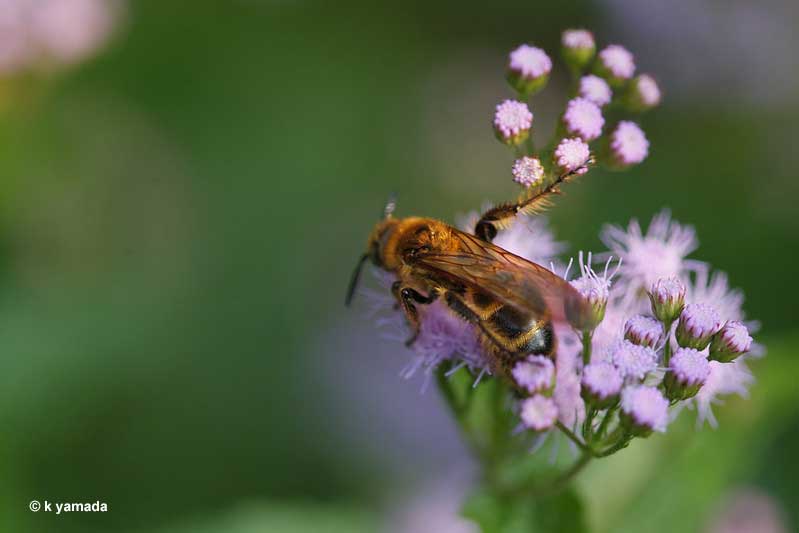
Other, fuzzier wild bees are often better at pollinating plants, and they are more endangered. Some plants cannot be pollinated by honey bees at all, but they require a specific species of wild bee to do the job.
Let’s get back to the birds and the bees. No insect-eating bird is a pure bee specialist. The bee-eating birds rarely target bees only, and their menus usually include all Hymenoptera – a class of insects that includes bees, wasps, ants, and velvet ants. That is why, in this article, you’ll often see Hymenopterans mentioned together as the prey of “bee-eating” birds.
Birds That Eat Bees
Let me introduce you to birds that include bees and other hymenopterans in their diets.
Note that many other insect-eating or omnivorous birds – from flycatchers to shrikes to crows – also opportunistically catch various bees and wasps, as well as many other insects.
The Notorious Bee-eaters
Bee-eaters are colorful social birds of the Meropidae family, counting 30 species. Native to the Old World and Australasia, they are some of the prettiest birds in existence.
However, their common name is somewhat misleading. While they do eat bees, bumblebees, and wasps and have special techniques to avoid getting stung, bees are not their only prey.
Certain species seem to prefer bees and wasps, but in general, Bee-eaters take on a range of flying insects; scientists have registered hundreds of species in their diets. They seem to favor tougher, “fast and furious” flying insects avoided by other insect-eaters. Besides Hymenoptera, these often include dragonflies and large flies.
The exact composition of their diet depends on prey availability and varies through the season.
Besides their elongated bills perfect for the job, the Bee-eaters have evolved special moves to overcome their prey’s defenses. Bee-eaters remove the stinger from bees and wasps by repeatedly hitting and rubbing the insect against a solid surface. The pressure also causes the insect to discharge the majority of its venom.
Summer Tanager
In early and mid-20th century, Summer Tanagers were labeled as bee and wasp specialists. Although they readily take on bees and have techniques to neutralize their defenses, the truth is that stingy insects are far from their only prey.
Summer Tanagers in the tropics seem to target stingless bees, paper wasps, and honey-producing bees more than in the North.
Some worried North American beekeepers have observed individual Summer Tanagers targeting their hives for days. However, this temporary situation usually occurs during migration, and one or a few birds cannot negatively impact the entire beehive.
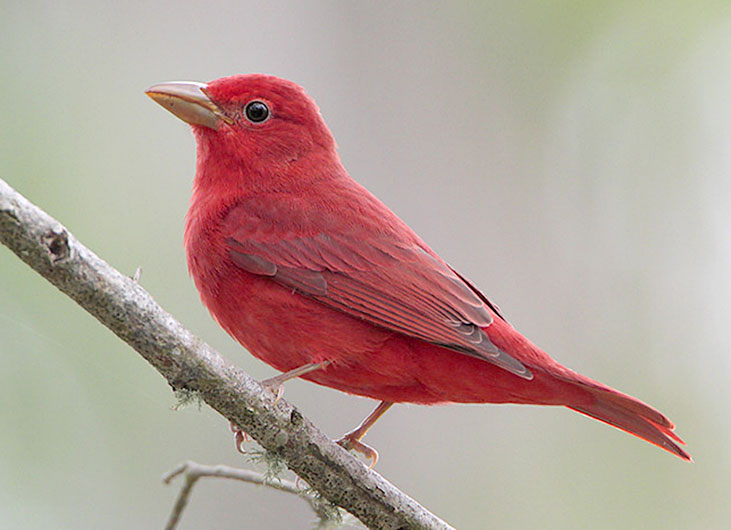
Besides bees, arthropods in the Summer Tanager diet recorded so far include cicadas, spiders, beetles, caterpillars, grasshoppers, ants, termites, and flies. Fruits become a notable diet component during the breeding season, migration, and in the winter.
Like Bee-eaters, Summer Tanagers have special hunting techniques to subdue prey insects. They most commonly hunt from a perch, capturing adult bees and wasps in flight using hawking.
Alternatively, they do hoovers – grab the insect from a surface (usually a plant) while hovering over them. They kill potentially dangerous prey by repeatedly hitting it against their perch. When the insect is dead, they remove the stinger by wiping it once more against a branch before they eat it.
Wasp and bee nests are also a tempting target for Summer Tanagers because of all the fatty grubs inside. This is especially true for the Paper Wasp nests, which are small and easy to dismantle. The Tanagers harass, capture, and kill adult wasps until they abandon the nest. Then, they tear down the nest and expose the juicy larvae.
Purple Martins
The most well-known American swallow uses its impeccable flying skills to capture flying insects. Amazingly, Purple Martin does so at heights that exceed the hunting range of other swallows – from 150 to 500 feet off the ground!
Seeing Purple Martins hunting is impressive. In flight, they will suddenly turn towards their prey, maximizing their speed, and then flare their tails at the moment of the catch.
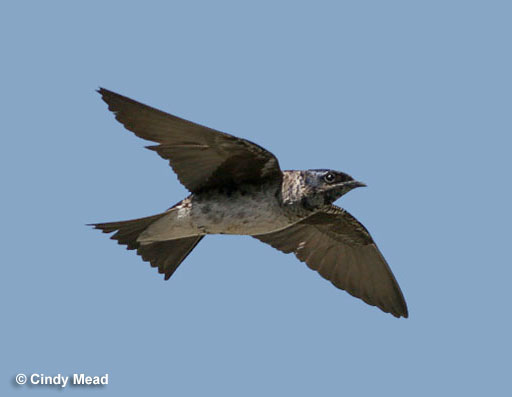
Like with other insectivorous birds, the exact composition of the Purple Martin’s diet depends on the current availability. We know they consume beetles, flies, dragonflies, damselflies, bees, wasps, winged ants, winged termites, butterflies, moths, leafhoppers, mayflies, caddisflies, cicadas, and spiders (in case you didn’t know, spiders can glide in the air).
So, are Purple Martins really into eating bees? It is more precise to say that Martins are flying insect specialists rather than bee and wasp specialists.
Early research on Swallow diets by Beal (1918) has established they eat predominantly Hymenopterans. However, the Swallow Hymenotperan diet includes large amounts of flying ants that become the most available food during swarming. Thus, Purple Martins and other swallows don’t seem to target bees particularly.
Lastly, Purple Martins lack any de-stinging techniques I described in the aforementioned bird species. Instead, they pick up and swallow (no pun intended) tiny bits of gravel to help digest the rigid insect outer shells.
Kingbirds
Kingbirds, both the Eastern and the Western kind, are known for their ferocity when hunting and defending their nests and territories. The aggressiveness certainly allows them to target bees and wasps and make them a part of their menus.

For years, it was thought that the Kingbirds were not particularly selective about their prey. However, the 2023 research by the famous late entomologist Justin O. Schmidt and his associate Stephen A. Klotz determined that Western Kingbirds targeted only drones (male honeybees). They determined this by analyzing the regurgitated pellets that contained only drone outer shells.
The drones possess no sting or venom, making them a more tasty meal for Kingbirds than the bitter, venom-filled workers (judging by this article, Schmidt tasted both the workers and the drones himself to confirm the hypothesis – kudos for dedication!). The fact that the kingbird could instantly tell the difference between a drone and a worker bee in a split second is truly fascinating.
Scarlet Tanager
Scarlet Tanagers are harbingers of Spring in North America, with striking red-and-black males being among the continent’s most beautiful birds. And they sing well, too.
These beauties are largely insectivorous, although they supplement with about 20% of fruit and likely a bit of nectar.
Scarlet Tanagers prefer to get their food in the trees or near them. They target flying insects by prey hawking, hoovering, and gleaning. Opportunistically, they also feed on ground-dwelling invertebrates – beetles, ants, grubs, and earthworms.
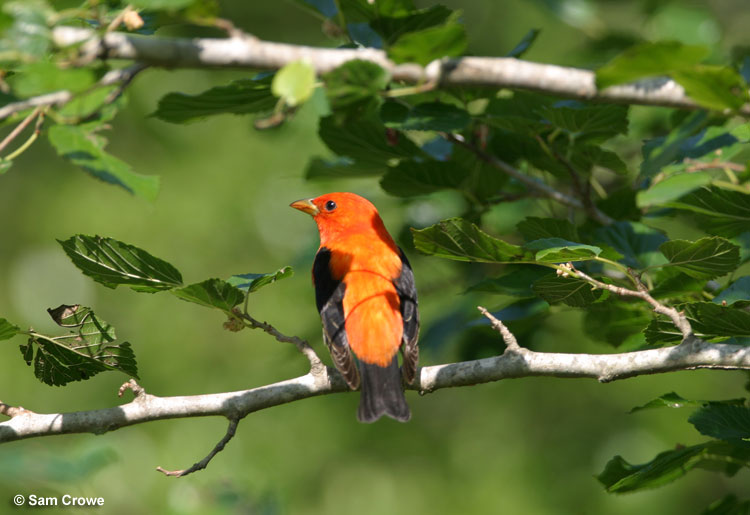
The preferred prey shifts over the year, depending on abundance. Predominantly, they feed on caterpillars early in the summer and shift to beetles and crickets later in the summer.
And where do bees come into the picture? Since these birds like to tag their prey in the canopies, we can assume that they consume more bees and other pollinators when trees are in the flowering season. However, there are no indications that Scarlet Tanagers are specialized in eating bees or other Hymenopterans.
Mockingbirds
Mockingbirds are highly intelligent omnivores that feed on many arthropods, and bees are no exception.
While we have yet to learn about the diets of many rarer mockingbird species, the common Northern Mockingbird diet has been fairly studied. It consists of beetles, ants, bees, wasps, and grasshoppers on the side of the animal protein and various fruits on the side of plants. Occasionally, they include a small lizard and flowers.
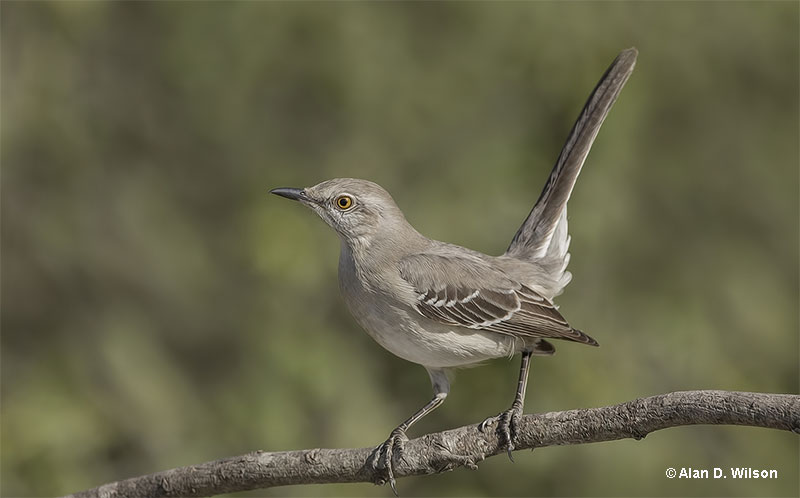
The average plant-to-animal food ratio is roughly 50-50. In the breeding season, the arthropod prey makes up for 85% of the food they eat, while in the winter, the percentage drops to less than 15 percent. Wintertime turns mockingbirds into fruit eaters.
Since Mockingbirds are highly intelligent, they will easily see that beehives are packed with tens of thousands of potential insect snacks. That is why beekeepers might sometimes notice a mockingbird lurking and catching their bees. However, bird predation won’t do any long-term harm to beehives.
Woodpeckers
Woodpeckers occasionally feed on certain bees and their larvae. As they feed on insects living in the tree trunks, woodpeckers, most commonly larvae of bees and other hymenopterans that lay their eggs in the wood.
They will happily gulp down on these grubs or pupae, but they don’t care much about adults. For the same reason, they can target bee hotels, a behavior recorded in Eurasian species, namely Great Spotted Woodpeckers.
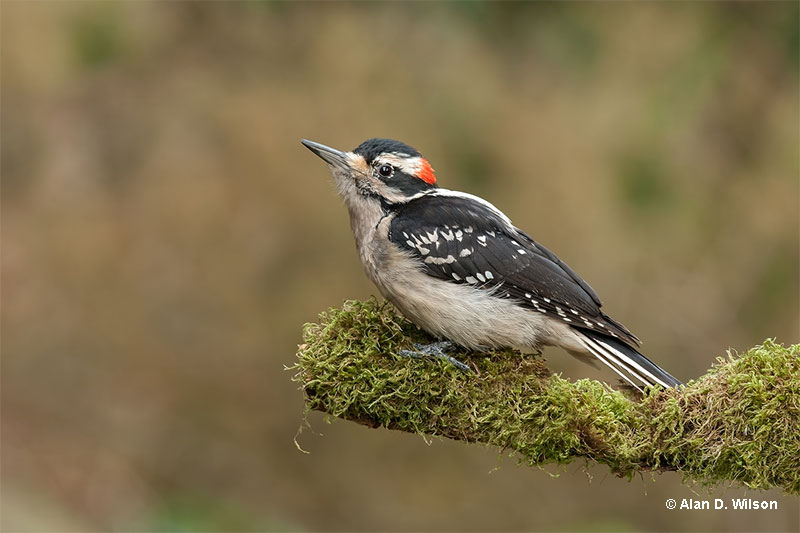
The exceptions are cases when solitary bees emerge from their nests and breed. Generally non-dangerous, these bees make an easy meal for many birds while they’re preoccupied with breeding.
Contrary to popular belief, woodpeckers do not only feed by pecking at wood but also by picking up food from various surfaces. The Gila Woodpeckers of the Sonoran Desert feast on Cactus bees, whose emergence conveniently matches the woodpecker’s nesting period. However, the feasts last only for a few days.
Woodpeckers can also peck at beehives. This happens when woodpeckers run out of food in the area (especially in the winter), so they desperately attack a bee colony to reach the grubs. Events like this underscore the importance of leaving some of the old, rotting trees in place, as they are natural woodpecker feeding stations.
If you have bees, you can try and distract them by having some woodpecker-friendly suet feeders and adding some sorts of physical deterrents to your beehives (like old CDs).
More Birds That Eat Bees
- Honey Buzzards are Old World raptors whose specialty is to take on wasps, hornets, bumblebees, and other large insects in the air. Occasionally, Honey Buzzards attack bee hives and feed on the larvae.
- Honeyguides do not eat bees, but they are worthy of mention because they are the only birds specializing in eating beeswax. The wax is the primary component of their diet, but additional food includes honeycomb parasites, scale insects, and some honey and fruit.
- Great Tits often rob bee hotels to feast on the helpless mason bee larvae (what did you expect of a bird with a robber mask?). Researchers have also observed them lurking at ground bumblebee nests to get the workers.
What about the opposite? Can bees kill birds?
Social, gregarious bees such as honeybees may be small, but their strength is in their numbers – and venom. As they naturally nest in tree cavities (which happens after they swarm and escape the apiary), their interests overlap with those of cavity-nesting birds.
If a bee swarm finds a cavity nest occupied by chicks, they may proceed to sting them to death or suffocate them in order to colonize the cavity. In their native ranges, these events seem to be somewhat of freak accidents or are under-reported. In any case, they are rarely documented.
However, in Australia, the non-native European honey bee has become invasive, increasingly swarming and taking to the wild. What is worse, many native Australian endangered birds nest in cavities that the honeybees target, killing the chicks in the occupation process.
For more than a decade, Australian biologists and ecologists have been trying to put this problem under the spotlight. Unfortunately, it is not easy to solve and will require effort from multiple parties to get under control.
Frequently Asked Questions
Do bees sting birds?
Bees will sting birds in defense, and the birds hurt from bee stings just like us. In fact, bees can even kill birds, especially baby chicks in the nest, if the escaped honey bee colony swarms in the tree hollow where the nest is. Also, honey bees defending their hives can kill an adult Honeyguide going for the beeswax.
We do not know if the birds that target bees and wasps are more resilient to their venom. Very few birds have known physical defenses against stings. For example, Honey Buzzards have modified feathers, especially on the head and the face.
Their barbs are smaller and grow closer together, with small “scale feathers ” on the face featuring deep barbules with armor-like appearance under a microscope. Lastly, honey buzzards have unique filamentous substances around the eyes, which may be a chemical defense against bees and wasps.
Whatever the case, the reward for the birds who eat bees and wasps seems to outweigh the risks.
Do birds often go for bees?
When birds go for the bees, it’s because the bees are currently abundant prey and not because of the specific taste of the bees. Even birds that we consider specialized in eating bees (such as the Bee-eater or Summer Tanagers) readily eat other flying insects whenever they get a chance.
However, not all birds can handle bees and wasps as prey. An elongated or strong beak, sufficient body size and speed, and aggressiveness in pursuing prey are requirements for any bird aiming to tackle a bee or a wasp.
Are bees easy prey for birds?
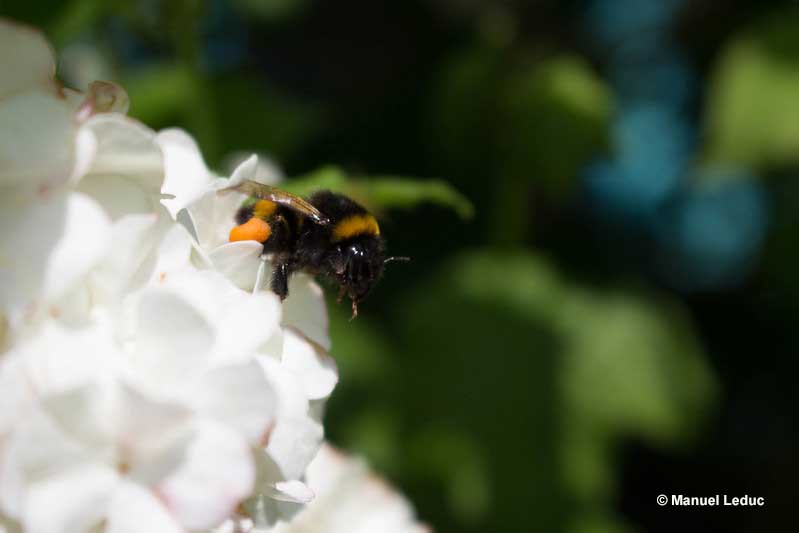
It depends on the bee! There are over 20.000 bee species, and many of them lack effective stings. The lack of defense mechanisms makes them relatively easy prey for birds. However, bees are often good flyers that aren’t easy to catch, plus they are usually “in season” only for a short while. For these reasons, they usually make up only a smaller part of a bird’s yearly diet.
As for bees and wasps that sting, they are much tougher prey. Birds that target them have evolved unique hunting and subduing methods that help remove the stinger and squeeze the venom out of the insect. This commonly involves banging the bee against a hard surface with much force.
Do birds attack beehives?
A beehive is a force to be reckoned with, so beeives are not targeted by birds regularly. However, there are occasions when various birds strong enough to do so will opportunistically try to feed on honey bee larvae.
Scientists and citizens have recorded Woodpeckers and Honey Buzzards taking on beehives to get bee larvae. Honey Buzzards usually attack feral bee colonies, while woodpeckers may resort to attacking apiaries when they run out of food in the winter. Also, bee-eating birds like Tanagers and Mockingbirds can be observed perching near beehives and getting some of the bees.
Are Bees Threatened by Birds?
Bees make a minuscule amount of overall bird prey and are not threatened or endangered by bird predation. Mammalian bee predators – from mice to bears – can be much more damaging to honey beehives than any bee-eating bird.
All insectivorous birds target abundant insects. The more numerous the insect species, the more likely it is to get caught. For the same reason, beehives may periodically attract individual insectivorous birds.
No beekeeper wants to see his bees eaten by a bird. However, a small bird eating a few dozen or even a few hundred bees won’t endanger the colony or honey production. We lose bees for many other reasons, from pesticide sprays to traffic, much more than small predatory birds. Thus, the most threatening “animal” for the bees seems to be the human one.
Because no bird targets only bees, it will surely eat many other annoying or pest insects besides bees. Birds help in maintaining the natural balance between insect species. Killing the bee-eating bird is illegal in many places, and it is plainly wrong everywhere.
