

Mockingbirds are fun birds to watch! These bold, gray and white birds flash their wing patches as they hop on lawns and chase other birds.
They are also fun birds to listen to, especially when they sing and mimic other bird species.
To fuel all that vocal and active behavior, mockingbirds need to eat a lot. What do they eat and can they visit feeders? What can you do to attract mockingbirds to your yard?
Key takeaways:
- Mockingbirds are omnivores, which means their diet consists of different insects and fruits.
- Although mockingbirds are not usually attracted to feeders, you can attract them by offering them other suitable feeding options.
- In nature, mockingbirds are not too picky; they eat just about every insect.
The Diets of Mockingbirds
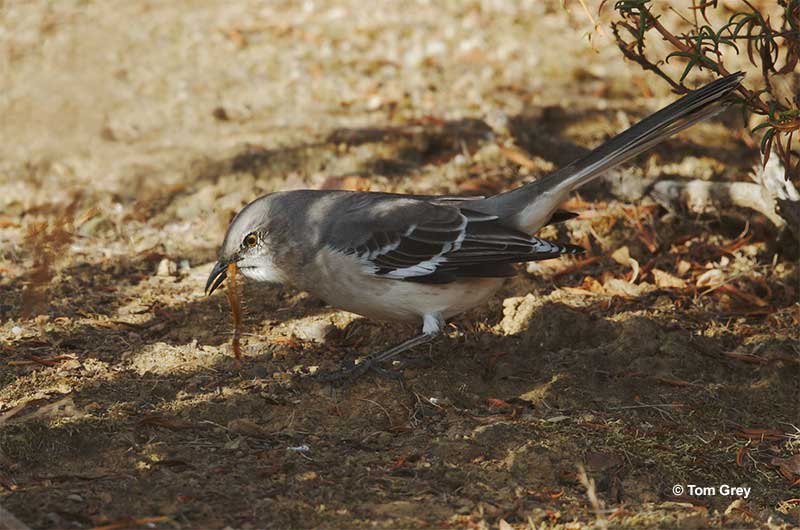
Mockingbirds are adaptable birds that eat a wide variety of arthropods and fruit. They do a lot of their foraging on open lawns to catch earthworms and many insects. Mockingbirds often stand in open areas with short grass and then quickly run and snatch a bug with their beaks.
To catch grasshoppers and other insects, they can also fly down from a perch or even sally into the air. They eat just about any insect they can catch, even bees, wasps, and butterflies. These bold birds also like to eat cicadas, ants, and beetles. In some areas, they also eat the occasional small lizard.
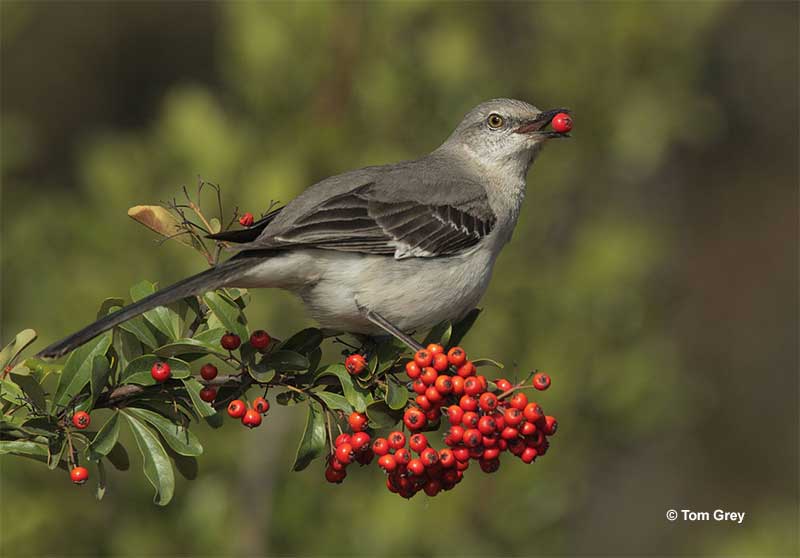
Although Northern Mockingbirds eat lots of insects in spring and summer, when the weather gets cold, they switch to fruit. They are happy to eat fruit from native and introduced plants including mulberries, blackberries, hawthorns, and Multiflora Rose.
They can also take fruit from Strangler Figs and many other plants that produce fruit and berries.
No matter where they live, it seems that Northern Mockingbirds always manage to find something to eat. People have seen them drinking sap from trees, eating flowers, and even taking French fries and other bits of food from garbage!
What do baby mockingbirds eat?
Baby mockingbirds have a diet pretty similar to that of their parents. After hatching, both parents start bringing them lots of insects including beetles, crickets, grasshoppers, dragonflies, and other insects that live on lawns and other grassy areas.
They also feed their babies spiders, and, in southern Florida, can give them tiny Brown Anoles. As the young birds grow, their parents also bring them berries and other fruit. Eventually, fruit can make up 25% to 30% of their diet.
The parent mockingbirds typically feed their nestlings three to five times per hour and bring one food item on each visit.
Like many other songbirds, they may feed them by regurgitation at first. As the baby birds grow, they switch to placing insects and other whole food items directly into their mouths.
After the young birds fledge, both parent mockingbirds continue to feed them for two or three weeks more. They give them the same types of food; around 80% insects and other arthropods, and 20% berries.
Once the young mockingbirds become independent, they mostly forage for arthropods on the ground in spots situated between adult mockingbird territories. Eventually, the juvenile mockingbirds also learn how to fly up and catch insects in flight.
Is It Possible To Attract Mockingbirds With Food?
Mockingbirds don’t typically visit feeders. You won’t see them eating seeds next to Blue Jays or American Goldfinches. However, we can do certain things to attract them to our backyards, and even occasionally bring them to feeders.
The best way to feed mockingbirds is by providing them with lots of natural food. In other words, use a lawn free of pesticides and planted with some trees and bushes.
Elderberry, Pokeweed, and other bushes that produce berries are good choices. If mockingbirds live in your area, those plants should bring them into the backyard!
Convincing mockingbirds to come to feeders can be tricky and it doesn’t always work. Nevertheless, it’s still worth a try! Considering that mockingbirds like to eat insects, including earthworms, they might come to a feeder with mealworms.
Another feeder food that can work is suet. Even if mockingbirds don’t try suet at first, it’s worth it to keep offering it to them. At some point, a mockingbird might give it a try. If they like it, you can bet they’ll be back for more!
Another feeder food that has worked for Northern Mockingbirds is crushed, unsalted peanuts. It might work best if you put that food on a stump or other raised object.
Scaring Tactics And Other Fun Facts
- Multiflora Rose, a non-native plant introduced in the 1700s, has helped Northern Mockingbirds increase their range north. The birds eat its fruits and love to nest in its tangled branches.
- In the winter, mockingbirds switch to eating fruit. They love to eat berries.
- Mockingbirds can be aggressive with other birds but they don’t eat them. They just try to drive them away from their territory.
- Northern Mockingbirds don’t typically eat seeds and won’t visit feeders to feed on them.
- Mockingbirds can visit feeders to eat suet and mealworms.
- While foraging on the ground, Northern Mockingbirds often open and close their wings. They may do this to scare insects out of hiding.
- Northern Mockingbirds often live near people and can benefit from open, pesticide-free lawns, and bushes with berries.
Frequently Asked Questions
Do mockingbirds only eat insects and fruit?
For the most part, mockingbirds only eat insects and fruit. However, they also eat other arthropods, some eat small lizards, and they can even feed on garbage.
Do mockingbirds visit feeders?
No, mockingbirds don’t usually visit feeders. However, they occasionally come to suet, and can also visits a feeder to eat mealworms and crushed unsalted peanuts.
Do mockingbirds eat suet?
On occasion, mockingbirds do eat suet.
How to befriend a mockingbird?
To befriend a mockingbird, create a safe habitat. That would be a pesticide-free yard with some open lawn, and bushes with berries.