

Ducks are such beautiful and fun birds! They live on just about any wetland, are easy to watch, and are a great addition to every farm.
It’s also easy to take care of ducks and they are pretty common in the wild. However, ducks do have lots of predators, and they are popular gamebirds.
Have you ever wondered how long ducks live? Can they live many years or do they have naturally short lifespans?
See this article to learn all about the lifespans of ducks!
Key takeaways:
- Like most other birds, ducks have many predators, which is part of the reason why ducks have bigger broods.
- A duck’s lifespan depends on several factors – surviving as a duckling, dodging different dangers, some of which can be blamed on us.
- In perfect conditions, ducks can live for years and years; domesticated species usually live longer.
How Long Do Ducks Usually Live?
Ducks in the wild don’t have long lifespans. A fair percentage of ducks perish as ducklings or in the first couple years of their lives. Duck nests are well hidden, but predators like raccoons, skunks, and crows occasionally find them.
However, predators take their biggest toll on baby ducks. Although that can be a tough, sad pill to swallow, it’s a fact of nature. It’s also why most ducks have large numbers of offspring. After hatching, mother ducks do their best to keep their babies safe from pike and other big fish, herons, small and medium-sized mammals, owls, and other predators.
Related: How long do birds live?
Luckily, ducklings grow quickly and can fly 50 to 70 days after hatching. However, although they can escape mammals by flying, the young ducks are still hunted by Peregrine Falcons, eagles, and other raptors.

They will have to be careful of raptors and other predators for the rest of their lives. Even so, if they are fast enough, and learn how to avoid predators, ducks can live for several years in the wild.
Hunters take a number of ducks, and most ducks probably don’t live longer than 5 or 7 years. However, some live to be 12, and the oldest known Mallard was nearly 30 years old!
The Life Cycle of Ducks
Ducks incubate their eggs for 28 days. You’ll know when baby ducks are about to hatch because they make chirping sounds before breaking out of their shells. After they come out, it takes several hours for the ducklings to dry off. They leave the nest the following morning and follow their mother to the water.
The baby ducks stay with their mother and grow quickly as they feed on small bugs and other bits of food. They have a big growth spurt 2.5 weeks after hatching but can’t fly for another five to eight weeks.
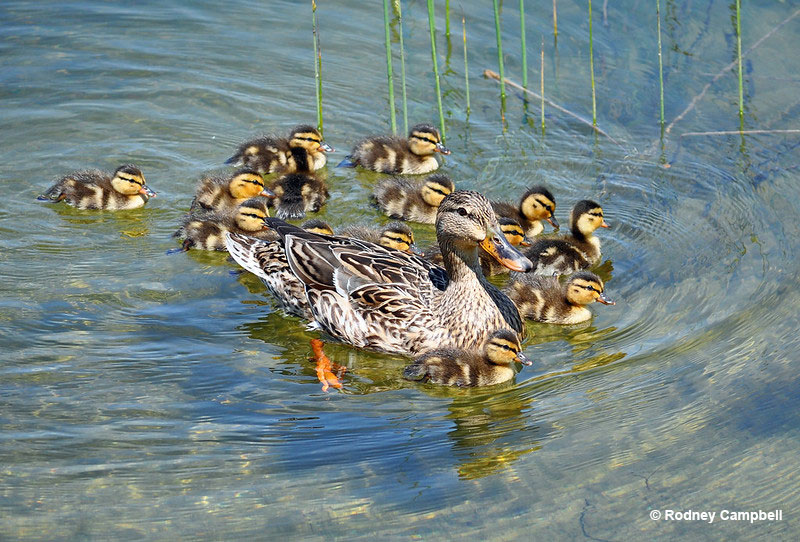
During that time, the mother duck leads the ducklings to various wetlands but leaves them after they can fly. The young ducks usually stay in the same marsh where they hatched until they join flocks of other ducks in the fall.
If eggs fail to hatch or are eaten by predators, mother ducks might nest again. They don’t usually renest after raising their young, but in some urban parks, mother ducks can have several nests in the same season.
Young ducks are capable of having young by the time they are four or five months old, and usually breed in their first year of life.
Is it possible to tell how old a duck is?
For the most part, we can only know a duck’s age in the first few months of their lives. Small, fuzzy ducks are anywhere from a few days to two weeks old. Between three and six weeks of age, they are bigger and have more feathers, but still aren’t as large as adult ducks.
In late summer and fall, most juvenile ducks molt into adult plumage, although some species still have a type of juvenile plumage for their first winter. After that time, it’s impossible to tell how old a duck is just by looking at them.
Ducks that live more than 15 or 20 years probably show some effects of their age. They might not walk as well as younger birds, or may have fewer feathers. However, it would be much easier to see those changes in domesticated birds than wild ones.
Escaping Predators And Other Fun Facts
- Female Mallards can lay as many as 12 eggs in one nest. They lay a lot of eggs to make up for nestlings caught by predators.
- Wild ducks don’t usually live for more than 10 years, but domesticated ducks can live to be 20 years old or more.
- Ducks can get caught by many predators and are also susceptible to disease and bad weather.
- To escape mammals and other predators, mother ducks bring their babies to the water the morning after they hatch.
- Many ducks are hunted, but hunting license fees are used to help increase duck habitat and boost their populations.
- The oldest known ducks were a pair of domesticated ducks that lived to be 49 years old!
- Many nestling Common Eiders are caught by predators, but if they can reach adulthood, these Arctic sea ducks can live to be 20, and even more than 30 years old.
- The biggest threats that ducks face are the draining of wetlands and other habitats they need for survival and water pollution.
Frequently Asked Questions
What is the longest-living duck?
The longest-living duck is the Common Eider. The oldest known wild Common Eider was more than 35 years old, and they can probably live even longer!
How long do Mallards live?
Mallards live as long as 29 years but most adult Mallards only live for five to ten years at most.
Do ducks have natural predators?
Ducks have many natural predators – a wide variety of animals eat young ducks, while adults are preyed on by falcons, eagles, foxes, and other carnivores.
Do domesticated ducks live longer?
Yes, domesticated ducks live longer. They don’t have to deal with the many predators and diseases faced by wild ducks.