

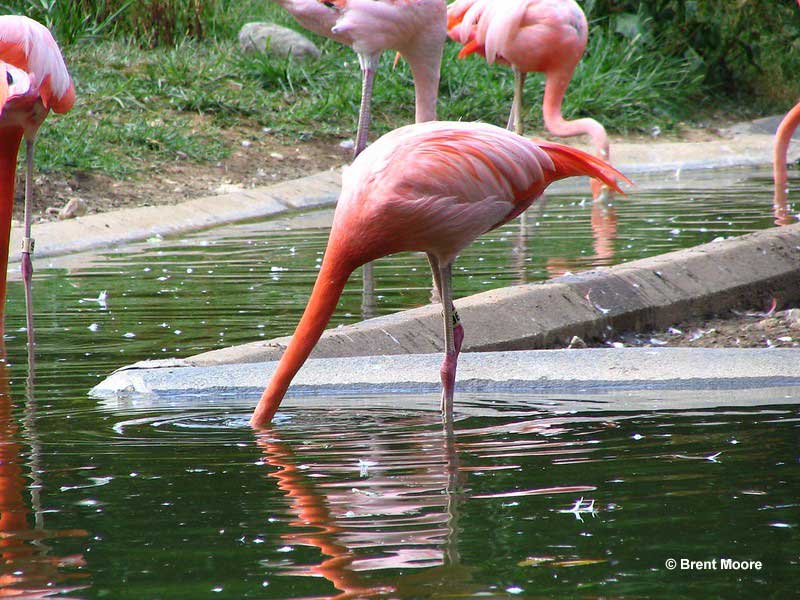
Flamingos are some of the best-known birds on the planet. Ask just about anyone what a flamingo is, and you’ll get an answer. Some folks might say flamingos are a type of lawn décor, but they’ll still be able to recognize these odd, elegant waders!
However, even though flamingos are familiar and popular birds, few people know what they actually feed on.
What do flamingos eat? Do they eat fish? And is it true that their bright pink color comes from their diet?
What Do Flamingos Actually Eat?
Similar to herons and sandpipers, flamingos wade in shallow water, but they don’t feed like them. They don’t have sharp beaks suited for catching fish nor slender bills that pick tiny insects from sand, mud, and water.
Instead, flamingos use their unique beaks to filter food from mud and water. Almost like avian, terrestrial whales, flamingos have structures in their beaks that capture plankton and other tiny food items.
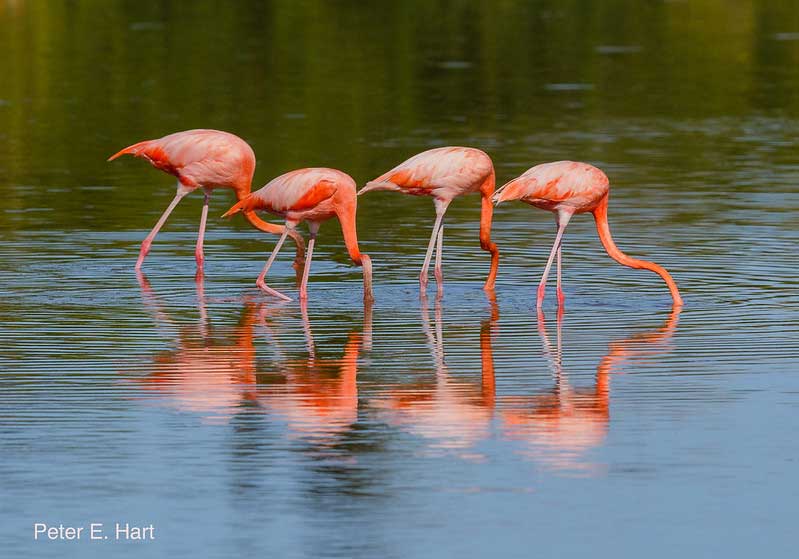
As they suction water and mud into their beaks, flamingos filter out brine shrimp and other crustaceans, mini mollusks, tiny bugs, algae, diatoms, and bacteria. Shrimp and some of those other food items also have reddish beta-carotene that gives flamingos their pink coloration.
Two of the more common species, the American Flamingo and the Greater Flamingo of Eurasia and Africa, eat nearly anything they filter out of the water. The Chilean Flamingo of South America has a similar broad diet.
It’s a different situation for the other three species of flamingos. Lesser Flamingos almost only feed on blue-green algae and diatoms, along with some other microscopic invertebrates. The Andean Flamingo forages for tiny insect larvae, crustaceans, and diatoms in saline high-elevation lakes, and the rare Jame’s Flamingo uses its short beak to filter small diatoms out of bacteria-rich mud!
What Do Baby Flamingos Eat?
Baby flamingos look quite different from their pink and white parents. They are gray, don’t have any pink, and their bills are straighter. Those differences are reflected in their diet. While adult flamingos are busy filtering diatoms, brine shrimp, and other tiny creatures out of water and mud, baby flamingos wait for their parents to feed them.
Similar to pigeons, baby flamingos eat a liquid substance produced in the digestive tracts of their parents. This “crop milk” is rich in proteins, fat, glucose, and other nutritious substances that baby flamingos need for growth.
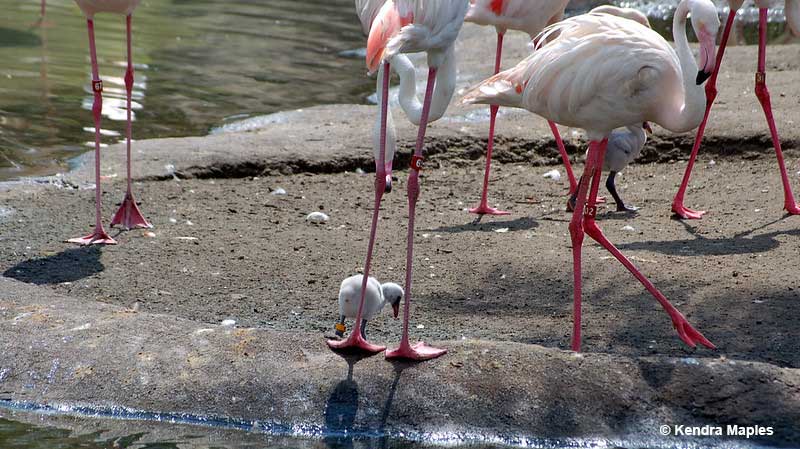
Adult flamingos feed them by placing the tip of their beak against the tip of the baby bird’s beak and then regurgitating their crop milk directly into their mouth. They eat this special substance for the first four to six weeks of their lives.
After that time, young flamingos start to filter feed on their own although their parents can still feed them crop milk until they are 10 to 12 weeks old. During this early stage of their lives, baby flamingos also leave their mud nests when they are around two weeks old.
Even though their parents continue to feed them, they gather with other juvenile flamingos in big, tight groups known as a “crèche.”
Would It Be Possible To Attract Flamingos With Food?
It would be wonderful if we could feed flamingos! Imagine having these fantastic, beautiful birds coming right to your backyard! Unfortunately, that’s not really possible because flamingos have unique diets and foraging behaviors.
You would need some key conditions that are very difficult to duplicate. First off, we would have to create shallow, hyper-saline habitats to which flamingos are adapted.
These wading birds are some of the only birds and animals that specialize on aquatic habitats with concentrated, salty water and can’t survive anywhere else.
This extreme habitat is also perfect for the tiny animals that flamingos feed on.
If we could make a big, shallow salt pond that also housed brine shrimp and other food that flamingos eat, that might actually work. However, to attract these special birds, it would still need to be close enough to places where flamingos naturally occur.
In the USA, the only places where flamingos are regular are some wetland sites in The Everglades of southern Florida. With that in mind, it would be far easier to just watch them in the places where they live instead of trying to recreate their unique habitat requirements.
Stomping For Food & Other Fun Facts
- To avoid competition with the other two flamingo species that live on high Andean lakes, the rare Jame’s Flamingo forages more in mud at the edge of the lake.
- Most flamingos are naturally nomadic birds that migrate to better feeding opportunities when shallow lakes dry out.
- If they can’t find enough food, Greater and American Flamingos occasionally eat mud and feed on the organic matter it contains!
- Chilean Flamingos sometimes swim, so they filter plankton from the surface of the water.
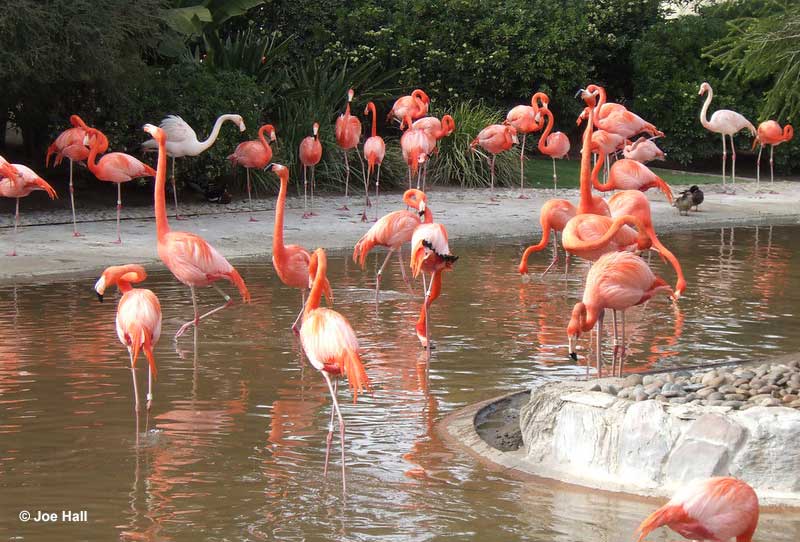
- Flamingos stomp their feet up and down or “dance” to stir up tiny creatures from the mud. They filter that water with their beaks to extract brine shrimp and other bits of food.
- American Flamingos are the classic “Pink Flamingos”. Although all flamingos have some pink in their plumage, this species shows the deepest shades of pink because its food has the highest levels of beta-carotene.
- Once in a while, a flamingo will grab a small fish or other food item and eat it whole.
- Flamingos actually feed with their heads upside down! This position works better for using their beak to filter food from mud and water.
See more: 15 facts about flamingos
Frequently Asked Questions
Do flamingos eat fish?
Flamingos don’t usually eat fish. They might eat small fish now and then but mostly eat brine shrimp, tiny bugs, plankton, and algae.
Do flamingos get their bright color from their diet?
Yes, flamingos get their bright color from their diet. The crustaceans and other food they eat have beta-carotene that gives them their red-pink colors.
Can flamingos lose their color?
It is possible for flamingos to lose their color. If they eat food that lacks beta-carotene and other pigments, their feathers become mostly white.
Do flamingos eat upside down?
Flamingos do eat upside down. To better filter mud and water with their beaks, they have to hold their heads upside down!
Can flamingos eat bread?
Just like other birds, flamingos cannot eat bread. They require tiny crustaceans, plankton, algae, and other microscopic food items.