

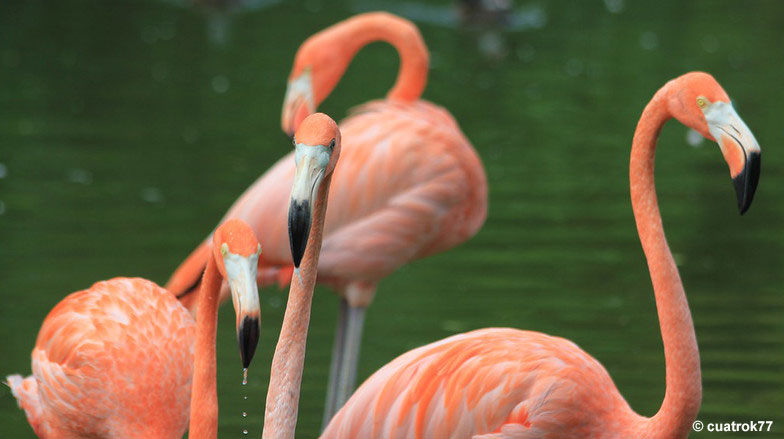
Flamingos are such eye-catching and unique birds! Tall, improbably long legs and necks, and with oddly-shaped beaks, no other birds even remotely resemble flamingos. Not to mention, flamingos are also pink!
Few birds have pink plumage, but flamingos are the exception. Why are they pink? Do they get their colors from their diet?
Key takeaways:
- Flamingos do indeed get their pink from their food. This happens after eating brine shrimp, which in turn have eaten blue-green algae.
- Carotenoids, which help color the birds’ plumages are pigments, and play a part in why pumpkins are orange or why salmon have their signature pink pigments.
- In some cases, flamingos might look duller or even lose their vibrant colors altogether.
Peculiarity Of Their Diets
Bird feathers come in a variety of gorgeous colors, many of which are produced by a combination of genes and foods rich in carotenoids. It’s a similar situation for flamingos. The diets of these elegant waterbirds play vital roles in generating beautiful plink plumage.
However, flamingos don’t just eat brine shrimp and automatically get pink feathers. If that were the case, other birds that also feed on shrimp would be pink, too. As with all birds, the colors that flamingos show are a product of biological processes that isolate and highlight certain aspects of their diets.
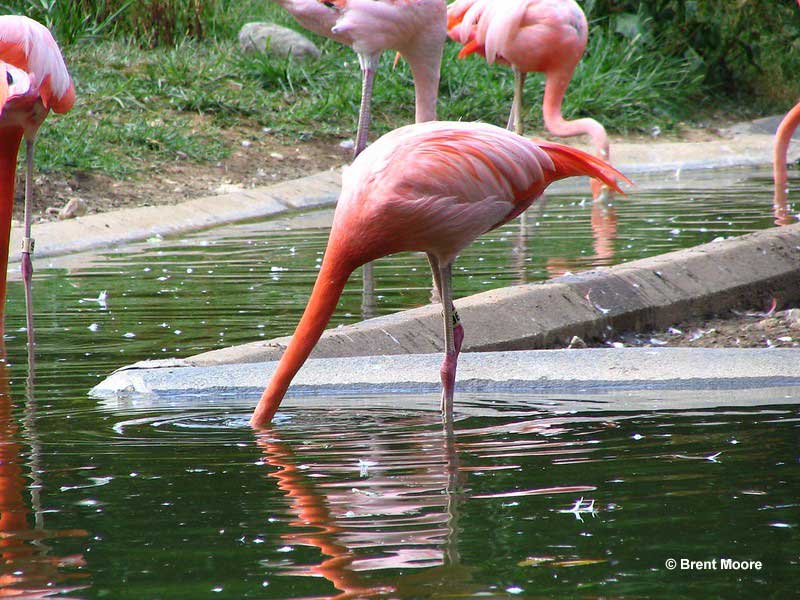
Those pink colors do partly come from brine shrimp but they actually get their start in blue-green algae.
Spirulina blue-green algae, in particular, is very rich in beta-carotene and is abundant in waters frequented by flamingos. Brine shrimp eat this and other blue-green algae and are, in turn, eaten by flamingos. In addition, the birds get another boost of reddish carotenoids by eating blue-green algae too.
After flamingos ingest those carotenoid-rich food items, fats in their liver end up absorbing the pigments. The color compounds eventually end up in their feathers to give them their famous pink colors.
Are Baby Flamingos Pink Too?
If you saw a baby flamingo and thought it might have been an odd heron, don’t feel bad. These young birds don’t look anything like their parents! They look more like a strange, fuzzy goose with tiny wings and swollen legs. Their beaks also have a straighter shape than the unique, bent bills of adult flamingos. Most of all, the baby birds aren’t pink!
Related: What do flamingos symbolize?
For the first ten days, they also have reddish beaks, can’t move around that much, and have pale gray, fuzzy down feathers.
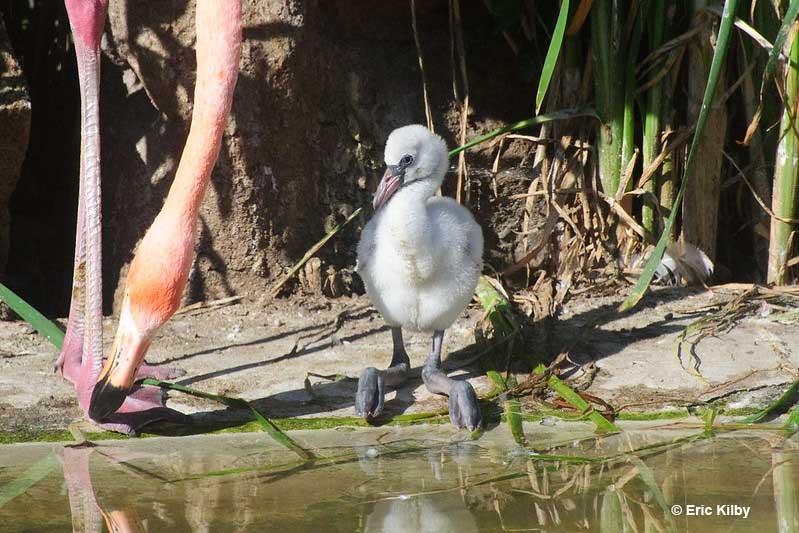
The young birds eventually move around on their own and their beaks begin to look a lot more like their parents. However, they are still gray for several months more.
Young birds can show some pale pink feathers, but most are grayish. It takes a long time for the young birds to have bright pink plumage! By their second year, flamingos are as big as adults and shaped like them but are still mostly white with a few scattered pink feathers.
Between the second and third year, they show a lot more pink but still not as much as a fully grown adult bird. After three years of age, flamingos finally have adult plumage with lots of pink feathers.
Can There Be Other Colored Flamingos?
As lovely as flamingos are, they don’t come in a wide variety of colors. All six species have varying degrees of white and pink, and most are actually white with some pink patches. The only primarily dark pink species is the American Flamingo of the Caribbean, Galapagos islands, and Florida.
A couple of South American species, the Andean Flamingo and the James Flamingo, also show some yellow, but only on their beaks and legs.
Flamingos that appear dull gray or white are typically young birds that haven’t attained full adult plumage. Juveniles are smaller than adults and have grayish plumage, while second and third-year birds are mostly white.
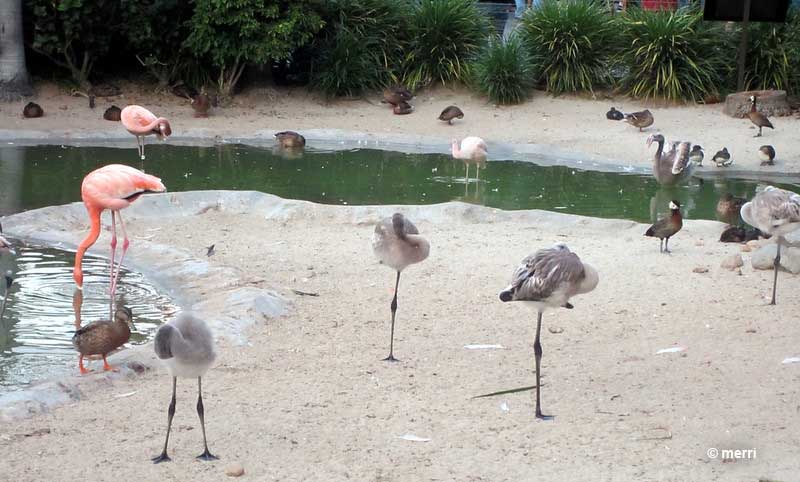
It can be hard to tell those young birds from albino and leucistic flamingos. While such birds can occur, they are pretty rare and look a lot like immature flamingos. However, if an adult flamingo is all white with pink legs and pink eyes, you may have found an albino.
Like other bird species, leucistic flamingos also have patches of pale feathers.
The most interesting plumage variation are melanistic flamingos. They have dark, sooty plumage and look mostly black! However, you would have to be very lucky to see one; this plumage only happens with an extremely rare genetic mutation.
Courtship And Other Fun Facts
- Female flamingos prefer males with dark pink feathers.
- If flamingos are fed a diet that lacks brine shrimp and blue-green algae, they can lose most of their pink coloration and become much paler.
- Other than flamingos, very few bird species have pink feathers.
- In general, the pinker a flamingo is, the healthier the bird is. If a flamingo is losing its colors while still being fed a diet rich in beta-carotene, the poor bird is probably ill.
- Flamingos with the richest pink colors are more competitive and aggressive than other flamingos.
- The pink coloration on adult flamingos fades when they are nesting. They probably lose a lot of their color because they are using more of their energy to feed their babies.
- Greater Flamingos also color their feathers pink by preening them with pigments taken directly from their oil glands.
- The word “flamingo” stems from Latin-based words that mean “flame” or “flame-colored”. It refers to the bright pink-red highlights in the Greater Flamingo’s plumage.
See more: 15 facts about flamingos
Frequently Asked Questions
What causes flamingos to be pink?
Beta-carotene in their blue-green algae and brine shrimp diet causes flamingos to be pink.
What is the real color of flamingos?
The real color of flamingoes is white with some black.
Do flamingos lose their pink when raising babies?
Yes, flamingos lose their pink when raising babies. They become much paler and some look mostly white.
Do blue flamingos exist?
No, blue flamingos don’t exist. Pictures of blue flamingos have been edited, are AI-generated images, or show birds that have been dyed blue.
Do flamingos lose their pink?
Flamingos can lose their pink. This happens if they eat diets that lack beta-carotene, or when they become ill. Flamingos also lose a lot of pink when feeding their nestlings.
Why do black flamingos exist?
Black flamingos exist when a bird is born with a rare genetic mutation that gives it dark or “melanistic” plumage.
Read more: Albinism, leucism, and other genetic mutations
What is the rarest flamingo color?
The rarest flamingo color is black. This happens with rare, melanistic birds.
Vimal Thapa
Tuesday 11th of June 2024
Great to know lot about this amazing birds, thanks