


Nature should be accessible to all human beings. Everyone, regardless of their ethnic background or gender, should have an opportunity and a right to enjoy bird watching and bird science – and I believe we can all agree on that.
In recent years, many common bird names given after historical figures become a divisive issue. Similar to many debated statutes across the U.S., animal species names are a memory of important people of early American colonization – and many of them held problematic, unethical views and did awful things.
- Why Have Bird Names Become a Problem?
- Why are birds named after humans?
- The Need For A Change – “Bird Names for Birds”
- Why Are Human Names For Birds Bad In General
- Which Names Are Changing?
- The Audubon Society Name Change
- American Ornithological Society Bird Species Renaming
- Opposition to Changing Bird Names
- Frequently Asked Questions
- Final Thoughts
Should we change these bird names, and why? Why are animals, including birds, named after people at all? I’ll explore these controversial topics for you. In a true scientific manner, let’s deal with facts only.
Why Have Bird Names Become a Problem?
Today, science includes people of all genders, skin colors, and religious views. However, ornithology started out as an exclusively white, male, and aristocratic hobby. This was true for most branches of natural sciences – and that is where the dark side of ornithology’s history lies.
Europeans ventured out into the New World in the 18th and 19th centuries, wanting to develop natural sciences and catalog all the novel living things they encountered, following practices already established in Europe. However, many also wanted to be remembered by history – in simple terms, they were hungry for fame.
As a consequence, plenty of birds first discovered or described in that great exploration era bear the names of scientists and other influential historical figures. This is disproportionately true for the Americas, where most species were new to Europeans and their science and, logically, had no English folk names.
However, by today’s ethical standards, many of these prominent figures said, wrote, and did things that would be considered unethical, even criminal. Unfortunately, those were also the norms of their culture back in the day.
Why are birds named after humans?
There are a couple of versions of “human” species names.
Eponyms are names given to a species after its discoverer. It is common for a species to bear the name of a person who has first discovered and/or scientifically described it.
Honorific names are given as a tribute to an important person, be it a scientist or another historical figure. A species discoverer or his team can name their finding after a mentor, colleague, or anyone else they admire.
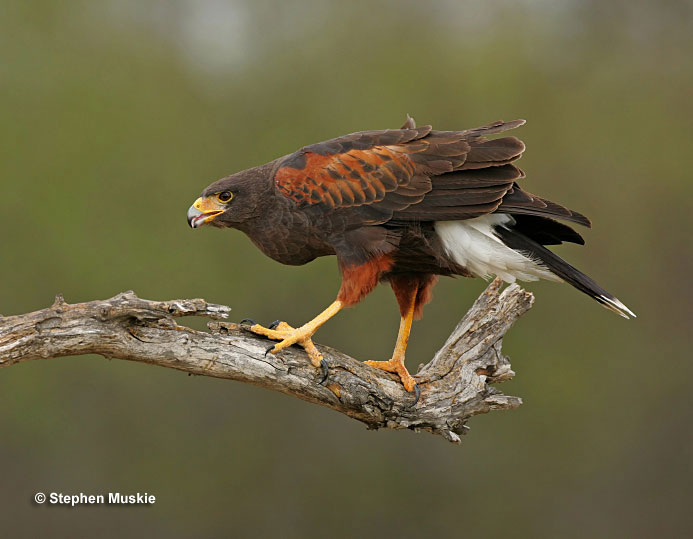
Let’s just look at hawks – there are the Harris’ Hawk, Swainson’s Hawk, and Cooper’s Hawk, just in the U.S.
While honoring people by species naming sounds like a nice idea, we must note the significant drawbacks of this practice.
There are also other types of bird names. For example, imaginative names, as their name suggests, help you imagine a species by describing its distinct features.
The Need For A Change – “Bird Names for Birds”
A new generation of scientists, ornithologists, and birders are more sensitized to social issues like racism, sexism, and other forms of oppression than previous generations. They have shed new and uneasy light on important figures from the early American scientific community, including the early ornithologists.
It is important to note that most of these new conclusions are based on actual research and historical documents and not on prejudice about “privileged white males.”
The year 2020 brought the horrific murder of George Floyd and civil uprise during the resulting Black Lives Matter protests. What also happened is a Central Park incident when a woman faked a threat in a 911 call because Christian Cooper, a black NYC birder, asked her to leash her dog in a protected area.
The woman’s apparent try to frame Cooper based on him being African American sparked public outrage and raised some questions about the perception of Black people in outdoor activities. As you might have guessed, birding is one of them.
The incident started a conversation about the public perception of black birders and scientists, their status within the community, and racism in ornithology. Consequently, bird species named after people who we now know were racist, enslavers, and/or committed crimes against Native Americans became a topic of heated debate.
That is how the initiative Bird Names For Birds came into existence. Many felt that both the descendants of people harmed by these acts and the birds deserved better – a switch to names that describe the bird itself rather than honor a divisive historical figure.
Those opposed to changes, however, claim that the initiative was another attempt at “erasing history.”
Why Are Human Names For Birds Bad In General
Besides the social and political issue of honoring the problematic figures from the nation’s past, pro-change birders and ornithologists have other arguments for name changes.
- Imaginative names are telling and easier to memorize. Beyond simple memory perks, naming a species for its physical traits, specific range, or habitat makes it easier to understand that species.
- It is more respectful to name a species for what they are than for people. Naming the bird after a person gives a false sense that this figure somehow “owns” the species or that he (yes, it is always a “he”) has contributed to its discovery or well-being. In reality, that is rarely the case.
- Ethical standards evolve and change over time, so the moral character of historical figures will forever be a debate topic. As nomenclature aims for stability, it is more practical to replace all honorary names with ethically neutral imaginative English names or the original Native names.
- The current name-change initiative promises a transparent, democratic process. The American Ornithological Society stated that the interested public would get to decide on new bird names based on several suggestions. This is starkly different than giving common names at the whim of one individual. As Nicholas Lund puts it, “Our new bird names won’t be ideal—none of them are—but, for the first time, they will belong to us.“
Which Names Are Changing?
Let’s explore some examples of problematic bird names and their backstories.
McCown’s Longspur
McCown’s Longspur – now known as the Thick-billed Longspur – is a small, shortgrass prairie longspur found in the central U.S. It got its original name after John P. McCown, an American soldier and, later, a Confederate Army general. He participated in the American-Mexican War, the Seminole Wars, the expedition against Mormons in Utah, and finally, the Civil War on the side of the Confederacy.
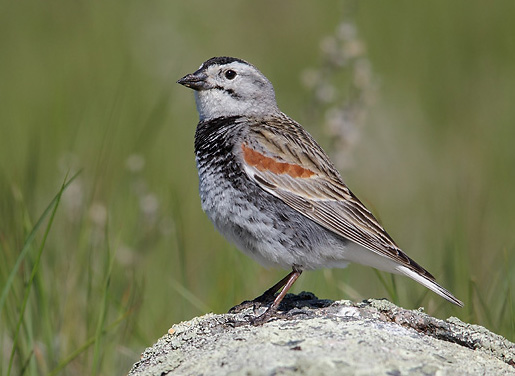
Photograph © Glenn Bartley.
In 1851, After the American-Mexican War and the occupation of Texas, Captain McCown served on frontier duty along the Rio Grande. During that time, he started collecting birds and sending them to ornithologist George Lawrence. Three species he collected turned out to be new to science, and one of them – the Longspur – was named in his honor.
In 2018, then-college student Robert Driver proposed renaming the McCown’s Longspur because of his ties to the Confederate Army, but the American Ornithological Society rejected the proposal. After the 2020 civil uprise, the AOS finally reconsidered and accepted his proposition, giving the bird its new name.
Scott’s Oriole
The beautiful Scott’s Oriole bears the name of General Winfield Scott. The name was given by Darius N. Couch, an American soldier and naturalist, to commemorate his commander of the Mexican-American War.
Although Scott fought on the side of the Union Army, his legacy in dealing with Native Americans is grim. He was responsible for the ethnic cleansing of the peaceful Cherokee tribe during the Trail of Tears, and he handled the Seminole Wars, marked by many atrocities against the tribe.
Also, it is worth mentioning that Winfield Scott himself had no ties to ornithology.
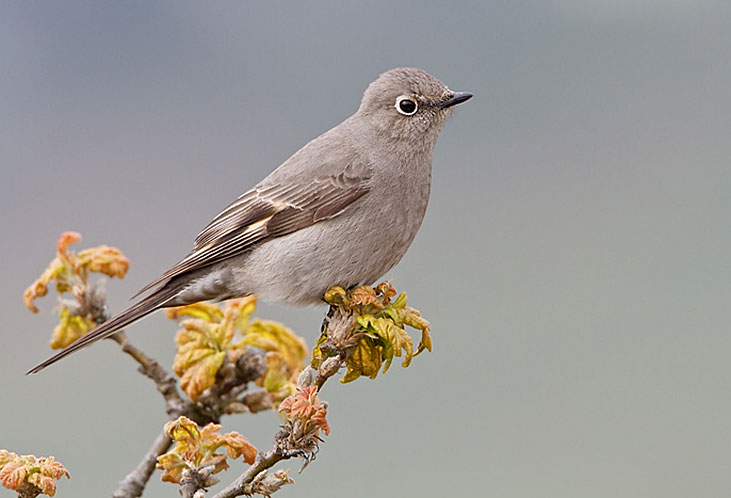
Townsend’s Warbler and Townsend’s Solitaire
James Kirk Townsend was a celebrated American naturalist and ornithologist who discovered dozens of new animal species on his expeditions. You could also say that he died for ornithology – the reason behind his premature end was arsenic poisoning from a taxidermy preservation powder he developed.
However, to say that Townsend was a racist towards Native Americans is an understatement. Besides collecting animals, he frequently gathered Indian skulls obtained by robbing their graves – men, women, children, and even chiefs.
In his letters, Townsend addresses them as “poor creatures” and “savages little better than brute beasts” and describes how the deadly disease epidemics that resulted in numerous unguarded graves would be good for his work. According to the same letters, he seemed to have a warm relationship with Samuel George Morton, one of the pioneers of (pseudo)scientific racism, for whom he collected the skulls.
The Audubon Society Name Change
The National Audubon Society is one of the largest bird conservation organizations in the U.S. and the world. The society got its name after John James Audubon, an early American ornithologist, and a renowned bird painter.
Who Was John James Audubon?
Audubon discovered 25 bird species, has tirelessly worked on collecting bird specimens (which, unfortunately, included shooting them back in those days), and vividly depicted them in his paintings published in his capital work, The Birds of America. He has done an amazing job in making the young nation aware of its ornithological and natural treasures.
That created not only the foundation for American ornithology but for the entire conservation movement.
Those contributions remain undeniable. However, John James Audubon also held problematic social views that were common in his social class. He was born into a Haiti-based French aristocratic family and was a periodic slaveholder throughout his life.
While he never openly propagated racist rhetorics, his white supremacist views of black and Native American people as subhuman flow throughout his writings. Audubon and James Kirk Townsend also robbed Native American graves together to steal skulls for the collection of Samuel George Morton.
The fact that he was a “man of his time” is not enough to justify Audubon’s stances and acts. At the time he was doing his life work, the abolitionist movement was gaining traction, and slavery was banned in Britain. Still, according to historical resources, Audubon was dismissive of it, which aligns with his other documented ideas on race.
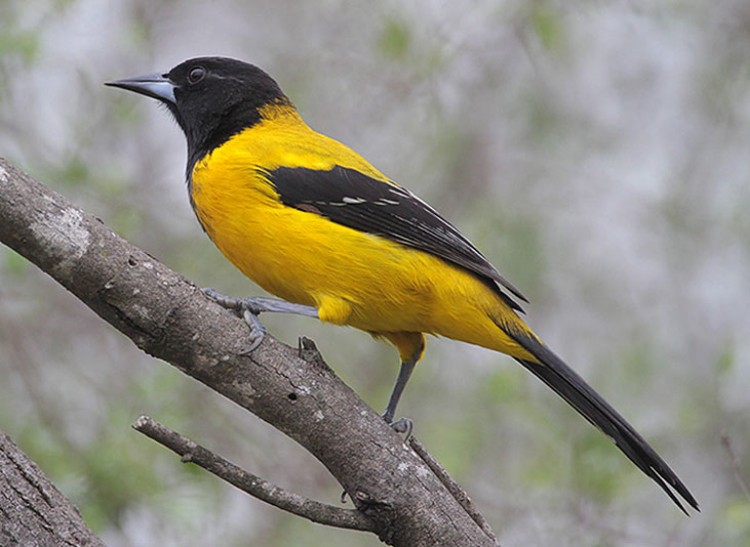
Audubon’s Oriole is perhaps the most well-known carrier of Audubon’s name.
Did Audubon’s Society Change Its Name?
Because of Audubon’s social legacy, there was a loud initiative for the Audubon Society to change its name. After a lengthy consideration of Audubon’s personal history, the National Audubon Society’s Board of Directors has decided to keep the name. They claim they took into account the complexity of Audubon’s legacy and how the name change would impact the Society’s mission to protect birds and their habitats in the long term.
They underline continuing their non-partisan commitment to habitat conservation and climate action, policy work, and community-building efforts. As part of re-examining Audubon’s legacy, the Society committed an additional $25 million to expand Equity, Diversity, Inclusion, and Belonging work. This may be their way of making challenging aspects of the namesake’s legacy right.
Despite the allocated funds and the Society’s willingness to discuss Audubon’s legacy, a significant part of the birding community didn’t take kindly to their name-preserving decisions. The consequences ripped through the organization itself. Three board members resigned after the decision (including the vice-chair), and many local Audubon chapters decided to drop the name regardless of the central decision.
American Ornithological Society Bird Species Renaming
In November 2023, the American Ornithological Society (AOS) announced that dozens of birds in North America will get “imaginative new names that reflect their traits and habitats rather than the names of people.” We can expect that between 70 and 80 bird species in the U.S. and Canada will gain new names in the following years, “using a public process.”
Rather than examining each case of each bird name individually, AOS opted for a radical method – remove all human names for birds, both honorific and eponymous.
With this decision, the AOS has catered to a growing number of voices demanding the change of controversial bird names. However, individuals after whom species were named and did no social harm will end up being sort of collateral damage.
For example, Peter Simon Pallas and Georg Wilhelm Steller made terrific contributions to exploration and science and had spotless biographies (even tragic, in the case of Steller). Don’t they deserve at least that we honor and remember them through bird names?
Opposition to Changing Bird Names
As you may have expected, the decision to change the bird names faced a lot of criticism and accusations of sacrificing them for political correctness. They hold that “trying to hide ornithological history will not remedy this history.”
Here are some of the arguments from the opponents of the name-change initiative
- Birds were described and named in another era where today’s ethical standards did not apply; thus, it is one-sided and unjust to judge it harshly, taken out of context.
- The change will “destabilize” communication and knowledge in the worldwide birding community.
- Individuals who were morally unproblematic will also have their names erased from history.
- Name changes will have little or no practical impact in removing the social barriers minorities face in birding and ornithology.
Frequently Asked Questions
When will the bird renaming process begin?
The American Ornithological Society first officially announced its species renaming plans at the end of 2023. However, you can consider that the process is already underway – in 2020, the AOS accepted the 2018 proposition to change the name of McCown’s Longspur. We now call it the Thick-billed Longspur. The tempo of the upcoming changes is still unclear.
How many bird names are affected?
According to their current plans, the American Ornithological Society plans to change 70 to 80 names under its jurisdiction in the coming years. On the other hand, the Bird Names For Birds initiative lists over 155 problematic bird names.
You can find the complete list of bird names proposed for renaming by Bird Names For Birds here.
Why were so many birds named after ornithologists and explorers?
Honorific bird naming is (or was) the way for scientists and explorers to honor their peers or people they admire and their achievements. However, the Americas have a disproportionate amount of these antropocentric, “human” species names.
The European colonizers of the New World didn’t only have a thirst for new discoveries but also for fame. That is why naming birds for people in North America was so popular. By crediting each other through naming new species, scientists and researchers established or strengthened their social status.
While many view these names as a piece of history, in reality, there are many historical errors in attribution and naming birds because of the social trends or peer pressure of the time.
For example, because of his early death, there was a trend of naming bird species after Alexander Wilson, one of the first American ornithologists. That fed the historical misconception that he was the discoverer of these species when, in fact, most of them were first cataloged by his mentor, Charles Willson Peale.
Who has the most birds named after them?
Peter Simon Pallas has 8 species of birds named after him. It is a close contest with Alexander Willson, who has at least 7 species bearing his last name.
Final Thoughts
The question of changing bird names to sever ties with racist figures of the past is surely to remain a controversial and divisive topic.
On the one hand, continuously pronouncing some names after learning about their true past undoubtedly leaves a bitter taste. Tying those names and their legacies to innocent creatures we love and protect – the birds – seems deeply unfair.
On the other hand, it is debatable if we should really ditch all the “human” bird names. It’s hard not to get sentimental about name changes when the namesakes were simply esteemed naturalists who invested their lives into uncovering the natural world for us – for example, the Steller’s Sea Eagle (although the change may be worth considering because of the “Steller’s curse.” Yikes).
Whatever the future of bird naming may be, we shouldn’t allow ourselves to forget the history of American ornithology along with the redundant names. Because those who do not learn history are doomed to repeat it.
