

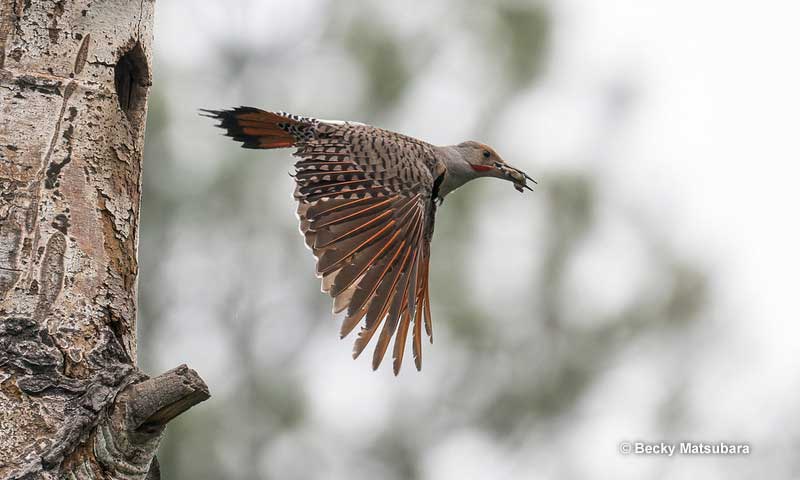
Birds can eat their babies’ poop! It’s true; I’ve seen it happen, and it’s gross.
Of course, birds don’t follow the same rules as people, but I can’t help but wonder why or how they can eat poop. Wouldn’t it be bad for them? How could eating poop be advantageous in any way?
At the same time, birds don’t do most of their behaviors for nothing. Birds might get some important benefits from eating their babies’ poop. Let’s take a closer look!
What Are Fecal Sacs?
Watch a bird nest, and it won’t be long before you see the parents arrive. If nestlings are present, they’ll probably have insects in their beak. After feeding their young, you’ll also see the adult birds fly away.
They might fly off with nothing in their beak, or you might notice them carrying a small white, sac-like object. That white thing is known as a “fecal sac,” and if you are reminded of a miniature diaper, that’s pretty close to the truth!

Fecal sacs are basically natural diapers produced by nestling songbirds. Some other birds have them too, but a lot of larger birds don’t. They are made of a white or clear membrane, are often covered in mucous, and contain baby bird poop.
Nestling birds usually produce fecal sacs right after being fed. If not, their parents often stimulate them to eject one. The adult bird immediately grabs the fecal sac in its beak and might fly off with it, or, it might gobble it down!
Common Grackles and some other birds can drop the fecal sac in water or get rid of it far from the nest. The birds that eat them might benefit from undigested food and healthy gut bacteria.
Why Do Parents Get Rid Of the Poop?
Protecting the nest
There are several good reasons for birds to rid their nest of poop. One of the most important is the predator factor.
Birds are most vulnerable when they are nesting. It’s why they are so careful around their nests and why they work hard to fledge their young as quick as possible.
Predators know about those vulnerabilities too. For a predator, there’s nothing easier to eat than a nest with eggs or helpless nestlings.
Nest predators are many and include everything from snakes to Raccoons, squirrels, rodents, and Blue Jays and other birds. To avoid so many predators in search of an easy lunch, birds have to use every trick in the book.
See more: Birds that prey on other birds
They do their best to hide a nest, but if a predator can smell it, they’ll find it. Fecal sacs reduce those chances by hiding scents associated with bird poop. When birds remove fecal sacs entirely, they lower those chances even more.
Extra nutrition
To protect their nest, birds need to get rid of poop, but they don’t have to carry it away. The quickest way to get rid of baby bird poop is by eating it. A lot of birds do exactly that and likely get nutrition benefits at the same time!
Laying eggs and raising young takes a lot of energy – eating the fecal sac is one way to potentially regain some of that.
However, it’s very likely that they get much-needed protein from ingesting the fecal sac. Since baby songbirds produce a fecal sac right after eating, there’s a good chance they also poop out a fair amount of undigested food. When their parents eat the fecal sac, they are probably also eating undigested bits of insects.
That’s a pretty good strategy when every bit of food counts, especially during the nesting season!
Clean environments
Most folks would agree it would be a bad idea for any animal to live in its own waste, especially babies. Although this could be one of the reasons why birds remove or eat fecal sacs from their nests, no one really knows if they also do it to keep their nest clean.
Small birds certainly remove baby bird poop to avoid predators and benefit from eating them, but is it also worth it to keep the nest clean?
Remove bird poop, and it removes bacteria that could be harmful. Most of all, it also diminishes chances for disease-causing bacteria and viruses to grow in the nest, and to attract parasites that target baby birds.

Larger birds aren’t always so tidy! Herons, cormorants, and raptors often spray “whitewash poop” just outside the nest, and eagle nests can have remains of their prey.
How Do Babies Produce Fecal Sacs?
Baby birds only produce fecal sacs for a short time. Not all birds have them either, only songbirds and some related bird families. Nestling birds make them for the first week or ten days of their lives.
Once they grow in most of their feathers and become big enough to leave the nest, the baby birds stop producing fecal sacs. They fledge and begin to poop like adult birds. At that time, their parents also stop touching their feces.
Frequently Asked Questions
Why do baby birds poop after eating?
Baby birds poop after eating because they have fast digestive process so they can quickly metabolize food and grow.
What happens when baby birds poop in the nest?
When baby birds poop in the nest, one of their parents quickly picks up the fecal sac and eats it or carries it away.
Why is baby bird poop white?
Baby bird poop is white because it is composed of white uric acid and held in a membranous fecal sac.
Do mother birds clean their babies?
No, mother birds do not clean their babies. However, they do remove their poop in the form of “fecal sacs” and most birds keep the nest clean.