

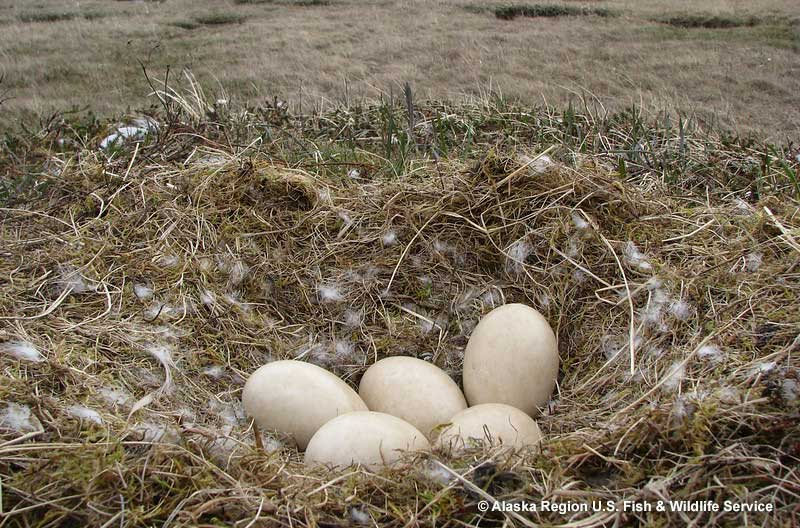
While wandering through nature, you might stumble upon eggshells or whole eggs and wonder which bird laid them. Identifying the species involves examining both the egg’s characteristics and the environment where you found them.
Here is a quick guide on what to consider, along with additional information about bird egg formation and adaptations.
Birds And Their Eggs
During mating, male birds transfer sperm to the female through the “cloacal kiss,” where the cloacas of both birds come into contact briefly. The sperm travels up the female’s oviduct to fertilize an egg cell, otherwise known as the ovum.
Once fertilized, the ovum, now called a zygote, is released from the ovary and moves into the oviduct. The zygote moves through the magnum region of the oviduct, where layers of albumen (egg white) are added. As the zygote continues to travel, it reaches the isthmus, where the inner and outer shell membranes are formed around it.
The zygote, now encased in membranes and albumen, moves into the uterus or shell gland. Here, calcium carbonate is deposited to form the hard shell. Pigments are also added at this stage for species that lay colored or patterned eggs. Finally, the egg passes through the vagina, where the cuticle, a thin, protective layer, is added.
Once the egg is fully formed, it is laid through the cloaca. The laying process can take anywhere from a few minutes to an hour. Females can then continue laying one egg about every 24-48 hours during her breeding cycle, with the rate varying by species.
Related: How rare are double-yolked eggs?
After laying, the female (and sometimes the male, depending on the species) incubates the eggs to keep them at a constant, warm temperature. During incubation, the embryo develops inside the egg.
The process involves the formation of various structures and organs, eventually resulting in a fully formed chick. Once development is complete, the chick to breaks through the shell.
How To Identify Bird Eggs?
Even with the help of online resources and field guides, identifying bird eggs may be difficult, especially if you only have the egg to go by. However, you should also consider other factors, such as the environment you found the egg in and the nest’s location and characteristics, not just the egg itself.
The type of habitat where the nest is found—such as forest, grassland, wetland, or urban area—can provide clues to the species. For instance, a nest found in a marshy area might belong to a waterfowl or a wading bird.
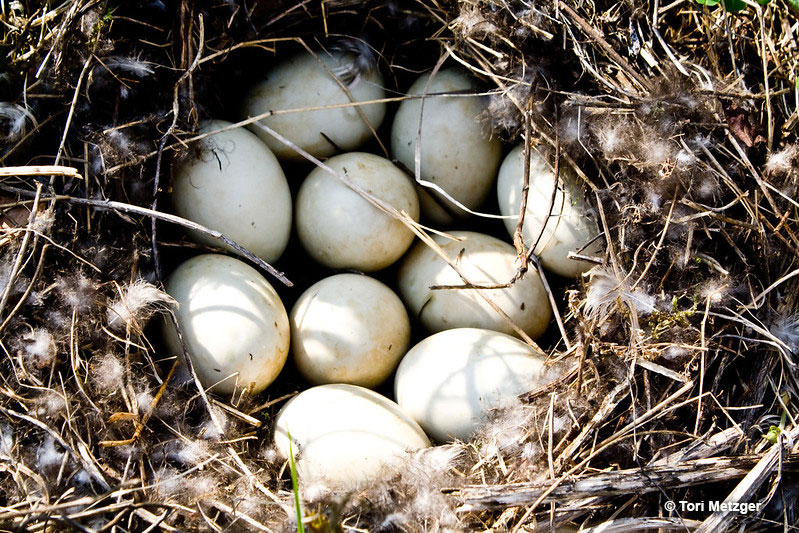
The placement and style of the nest can be a significant clue. Some birds build their nests in trees, shrubs, or on the ground, while others use cavities in trees or buildings. For example, woodpeckers typically nest in tree cavities, while ducks often nest on the ground near water.
You should also consider the nest itself. Nests can be cups, domes, platforms, burrows, or even just scrapes on the ground. The construction and materials of the nest also vary by species.
Some birds, like hummingbirds, use fine plant fibers and spider silk to build tiny, tightly woven nests. Others, like the Bald Eagle, create large, sturdy nests from sticks. The size of the nest can also indicate the size of the bird and help with identification.
Next, take a look at the eggs themselves. Eggs come in different shapes and sizes, such as spherical, oval, or pointed. They also vary in color and can include white, blue, green, brown and have specks or blotches on them. The surface texture can be smooth, glossy, or rough.
When Do Birds Lay Eggs?
Different bird species have different breeding habits influenced by various factors such as climate, weather, food availability, and how many broods they produce.
For many bird species, spring is the most common breeding season. This timing ensures that chicks hatch when food is abundant and conditions are favorable, which is crucial for their growth and survival. Some birds, especially species that produce multiple broods per season, may also lay eggs later in the summer.
While less common, some birds in tropical or subtropical regions, where temperatures remain relatively warm year-round, may breed almost at any time of the year. However, they still follow some patterns and only reproduce when the weather is suitable and there is enough food available.
Related: What came first, the egg or the chicken?
There are even some almost year-round breeders also in North America. For example, Red Crossbills may breed at any time of the year, given that there is enough food.
Sexual maturity
The age at which birds reach sexual maturity and begin breeding varies widely among species and is influenced by several factors.
Many small songbirds, such as sparrows, robins, and warblers, typically reach sexual maturity within their first year of life and begin breeding during their first breeding season. This rapid maturity is often due to their relatively short lifespans and the need to reproduce early and often to ensure the survival of their genes.
Larger birds, such as eagles, owls, and albatrosses, often take several years to reach sexual maturity. For example, Bald Eagles and larger owls usually reach sexual maturity at around 2-5 years of age. These birds often have longer lifespans and invest more in each reproductive attempt, with longer intervals between breeding seasons.
Clutch Sizes
Clutch size, or the number of eggs laid in a single nesting attempt, varies widely among bird species and is influenced by their specific ecological niches and environmental factors such as climate and food availability.
Abundant food resources can support larger clutches, as parents can gather enough food to feed more offspring. Conversely, in areas where food is scarce, smaller clutches are more sustainable.
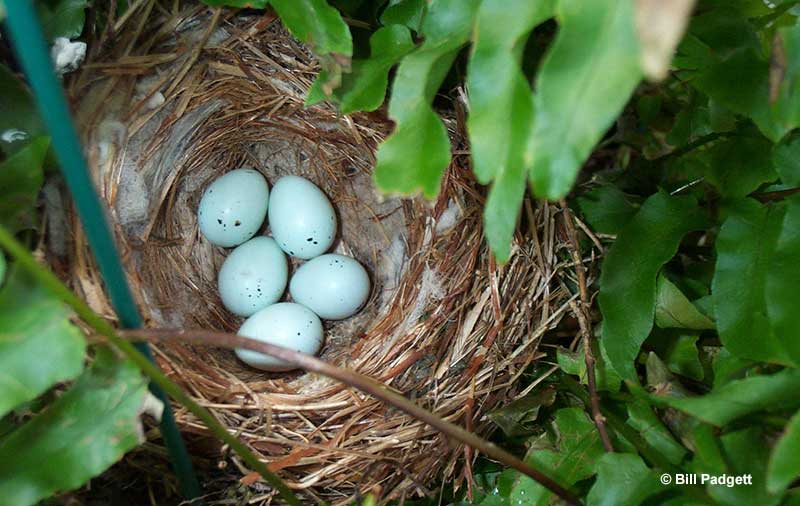
House Finch’s eggs
Clutch size is also tied to the species’ lifespan and survivability. Species that have a relatively low life expectancy, are often preyed upon, or whose offspring have low survival rates tend to have moderate to large clutch sizes. For example, many small songbirds often lay 2-6 eggs per clutch.
Game birds and waterfowl, like ducks, also tend to have larger clutches. Many duck species often lay around 8-13 eggs to factor in the inevitable loss of a few ducklings.
On the other hand, species that have a high life expectancy are larger, and whose offspring have higher survival rates have smaller clutches. They often spread their reproductive efforts over many years and invest heavily in each offspring, providing extensive care and food. For example, many large birds of prey fall under this category and typically only lay 1-3 eggs.
Color & Shape
The color and shape of bird eggs are further adaptations for the species’ survival, influenced by various factors. Egg color can provide camouflage and aid in thermoregulation. For instance, species nesting in dark cavities or burrows, such as owls and woodpeckers, often lay white eggs since camouflage is less crucial.
In contrast, open nesters like American Robins lay greenish-blue eggs, potentially offering UV protection and microbial resistance. Ground-nesting birds, such as quails and plovers, typically lay brown and speckled eggs that blend with their environment to avoid predation. Additionally, darker eggs in cooler climates may absorb more heat for better thermoregulation.
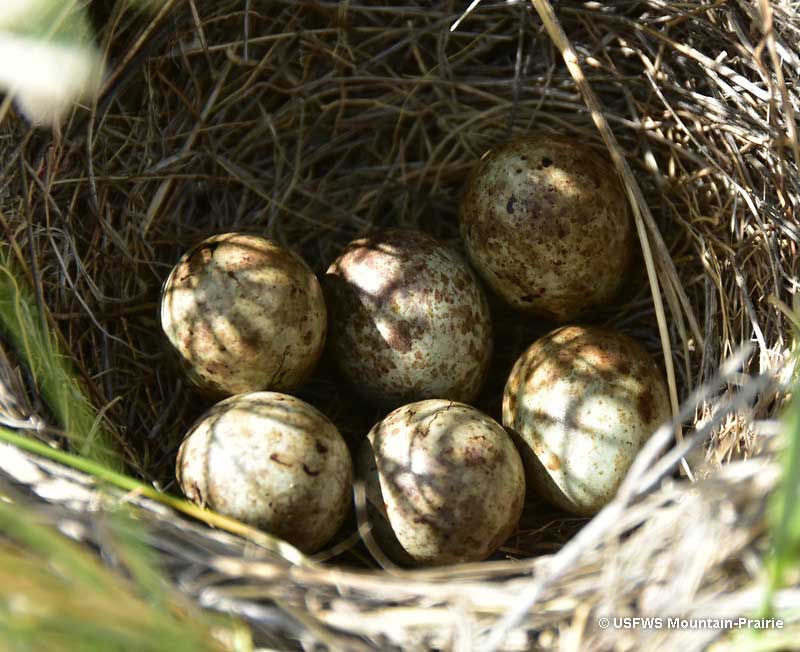
There is also some variation in the shapes of bird eggs across different species. They range from nearly spherical in owls to elliptical in hummingbirds to conical in shorebirds and additional intermediate forms.
Rounder eggs may be more beneficial in hot, arid environments by reducing the surface area exposed to radiation, retaining heat better, and having lower shell conductance. Elongated eggs may allow faster warming/cooling and be better suited for enclosed nests in cooler, wetter environments.
The asymmetric, pointed shape of some eggs may be an evolutionary adaptation related to flight ability and the egg’s journey through the oviduct during formation. Some also suggest cliff-nesting birds lay conical eggs so that they would roll in a tighter circle and have less of a chance to fall.
Frequently Asked Questions
Do all birds lay eggs?
All bird species lay eggs.
Can birds lay eggs without fertilization?
Birds can lay eggs without fertilization from a male, although they will not develop and hatch into chicks. This is especially common in captive birds, especially chickens.
Do birds lay unfertilized eggs?
Birds lay unfertilized eggs, but these eggs do not hatch into chicks.
How long do bird eggs take to hatch?
The time it takes to hatch a bird egg depends on the species, ranging from 10-80 days.
What color can bird eggs be?
Bird eggs can be white, blue, blue-green, brown, reddish-brown, cream, pale gray, green, and even pinkish.
Why do birds kick some eggs out of the nest?
Birds sometimes kick some eggs out of the nest to manage nest space and available resources or to remove non-viable eggs, and can also be triggered by territorial disputes or stressful environmental conditions.
