

Delaware is perfect for ducks – there are plenty of coastal wetlands, lakes, rivers, and other aquatic habitats. This, in turn, made us wonder – which duck species are the most common?
To get a clearer view, we leaned on eBird data and, from there, chose ten common ducks you are most likely to see in Delaware.
Let’s get into it!
10 Most Popular Ducks You Can See
Mallard
Scientific name: Anas platyrhynchos
Length: 23 inches
Wingspan: 35 inches
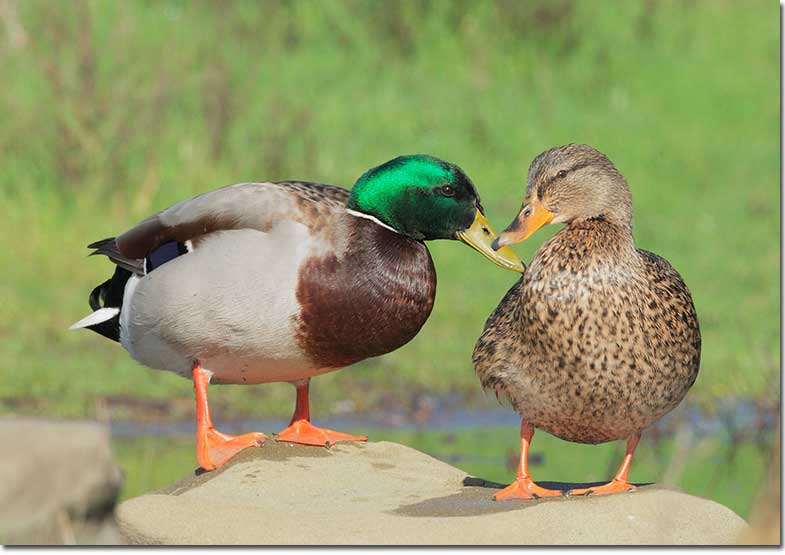
Mallards are the most familiar duck species. For lots of folks, this is “the duck”. They have been domesticated for centuries and lots of them are fed at urban ponds and lakes.
However, make no doubt about it, Mallards are wild birds that also live in lots of wild and remote areas in most of North America. The males have a dark green head, narrow white collar, yellowish beak, and dark brown chest.
Female Mallards, though, can be trickier to identify. They are brown with some paler brown and dark markings, and have a gray-brown neck and head with a dark cap, and a dark line through their eyes.
Key identifications:
- Big duck with a glossy green head and yellowish beak.
- The female has a dark center mark on her orange beak.
- Short, pale, or white tail.
American Black Duck
Scientific name: Anas rubripes
Length: 23 inches
Wingspan: 35 inches
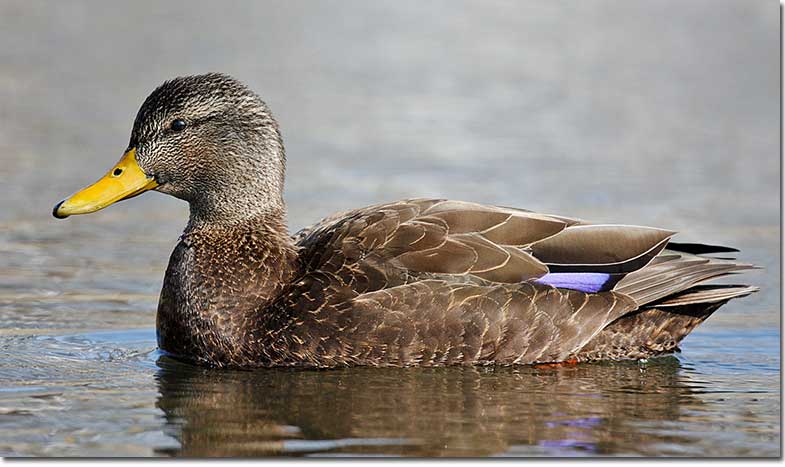
American Black Ducks are big and hefty ducks with dark brown bodies. In certain lighting conditions, true to their name, they can look blackish.
They also have a pale, brown-grayish neck and head with a small dark cap and a dark line through their eyes. Males are more uniformly dark than females while hen American Black Ducks show some buff edging on their feathers.
In flight, their white underwings contrast with their dark upperwings. You might also notice the dark blue patch on the base of their upperwing.
Key identifications:
- Dark body with a pale head.
- Dingy greenish yellow beak.
- Mostly dark upperwings and white underwings.
Bufflehead
Scientific name: Bucephala albeola
Length: 13.5 inches
Wingspan: 21 inches
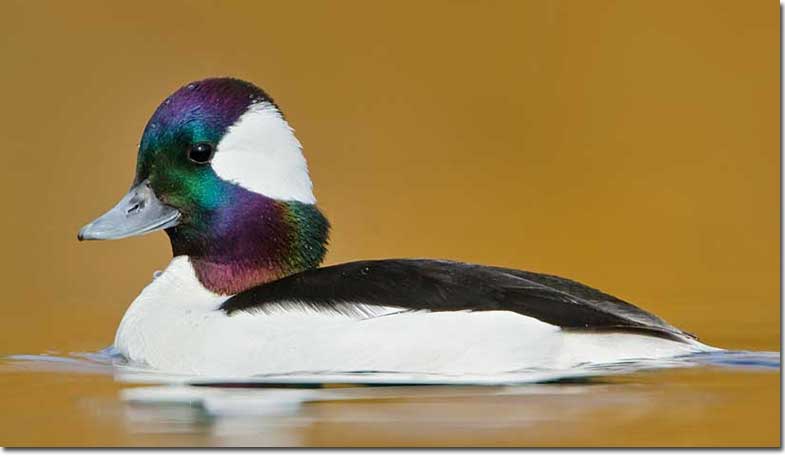
Buffleheads are small, cute ducks with rounded heads and stout little beaks. Males are bold, black and white birds with a big white patch on their head. In good light, their head also has green and purple iridescence.
Female Buffleheads are more gray-brown with a white belly, and have a smaller white head patch. During their fast flight, Buffleheads show a white patch in their wings, although the female’s white patch is smaller.
Key identifications:
- Small chunky duck with stout gray beak.
- Rounded head with a bold white patch.
- Mostly black and white or grayish with a white belly and small white wing patch.
Green-winged Teal
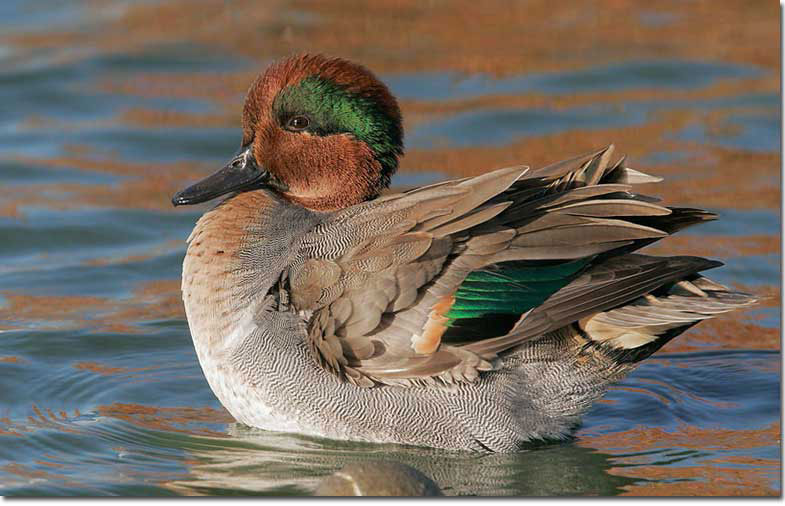
Scientific name: Anas crecca
Length: 14 inches
Wingspan: 23 inches
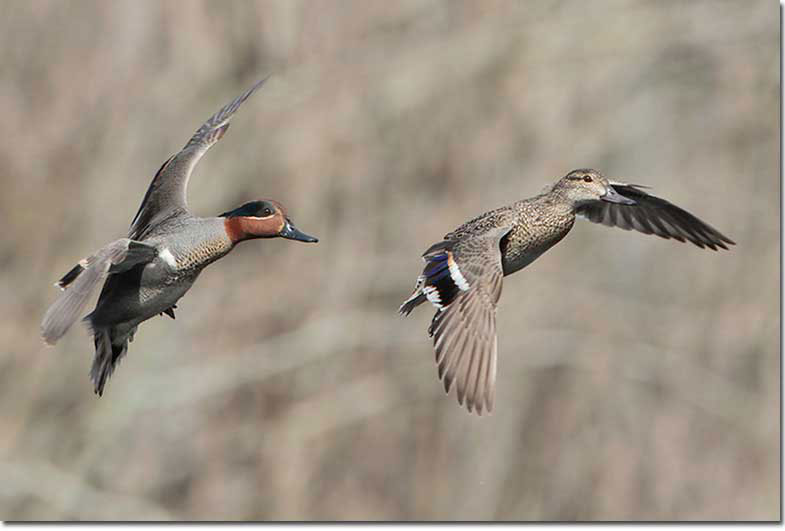
Green-winged Teals are small waterfowl with a smallish, dark beak, and a dark green patch at the base of each wing. Males of these cute little ducks are mostly gray and have a chestnut head with a dark green patch, speckled, buff chest, and narrow white bar near their chest.
Females are mostly mottled brown with a dark line through each eye. Both sexes have a buff mark on the edge of their tail, and show a white belly in flight. Green-winged Teal like to forage for plants and small creatures in the shallow water of marshes and other wetland habitats.
Key identifications:
- Very small duck.
- Buffy mark along the edge of each side of its tail.
- Small dark beak and dark green patch edged with buff on its wings.
Northern Shoveler
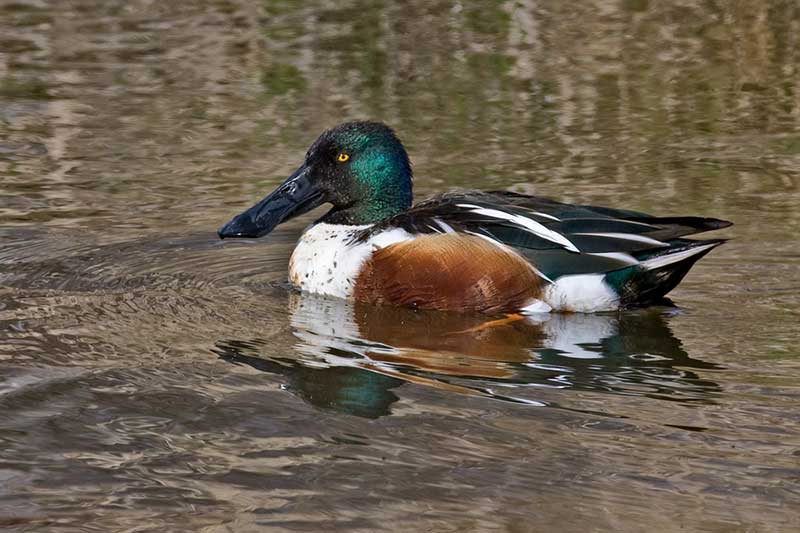
Scientific name: Spatula clypeata
Length: 19 inches
Wingspan: 30 inches
Northern Shovelers are a distinctive duck species with a big, prominent beak. Males have striking plumage with a dark green head, and white and chestnut underparts. They are also white and gray on their back, have orange legs, and show blue shoulders in flight.
Female Northern Shovelers are tawny-brown ducks with lots of buff markings, and an orange and gray beak. Both sexes also have a pale tail.
These pretty ducks like to float in marshes and other shallow wetland habitats. They often form flocks and we can see them foraging with Blue-winged Teals and other dabbling ducks.
Key identifications:
- Over-sized, flat beak.
- Male has a white breast, red-brown sides and belly, and dark green head.
- Female has a pale tail and orange and gray beak.
Northern Pintail
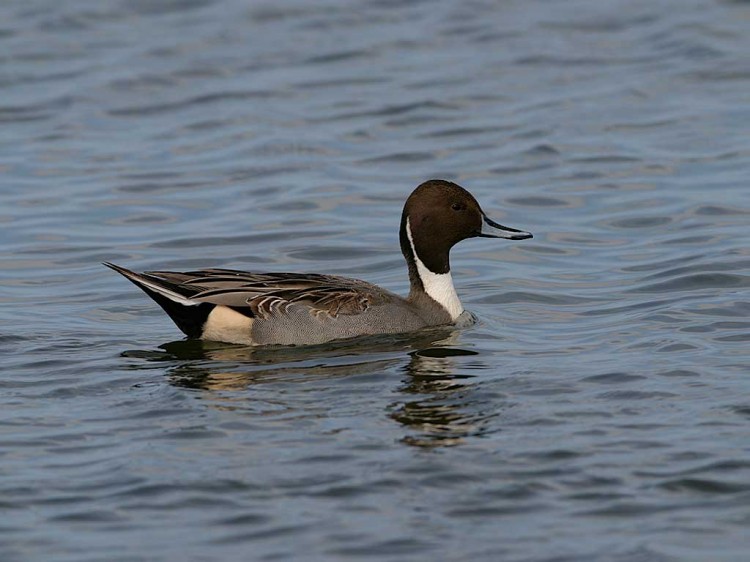
Photograph © Sam Crowe.
Scientific name: Anas acuta
Length: 21 inches
Wingspan: 34 inches
Northern Pintails are fairly large and slender, gray and creamy white ducks with long necks, and long tails. Breeding males are handsome birds with dark, chocolate-brown on their head and neck, a black undertail, and a long pointed tail feather.
Females and nonbreeding males are gray and tawny birds with a plain, pale tawny head and neck, and a gray beak. In flight, Northern Pintails also show long, pale gray wings, and the males have a dark green patch on the base of each wing.
Key identifications:
- Fairly large duck with a long, slender neck.
- Pointed tail.
- Dark brown or tawny head and a gray beak.
Wood Duck
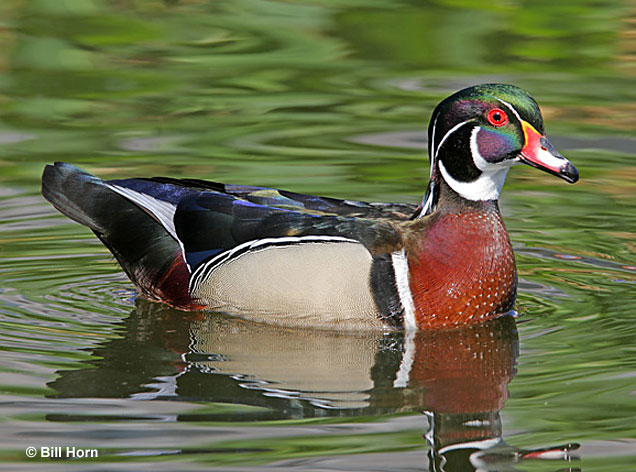
Scientific name: Aix sponsa
Length: 18.5 inches
Wingspan: 30 inches
Wood Ducks are seriously ornamental birds. The males can seem so exotic, it might be hard to believe they are a wild, native species! However, Wood Ducks are indeed native and fairly common in many parts of southern Canada and the USA.
These cute, slender, long-tailed ducks prefer wooded swamps and other wetlands in forested habitats. The males have a rounded head with a dark green crest, black and white face, short red beak, and jade green back. They also have bright buff flanks and a chestnut chest and undertail.
Female Wood Ducks grayish-brown birds that aren’t nearly as fancy but can still be recognized by their blocky head, white spectacles, slender shape, and mostly dark wings.
Key identifications:
- Slender duck with a longish tail and a blocky head.
- Ornate plumage a short, reddish beak.
- Dark wings with a narrow white line on the base of the trailing edge.
Ruddy Duck
Scientific name: Oxyura jamaicensis
Length: 15 inches
Wingspan: 18.5 inches
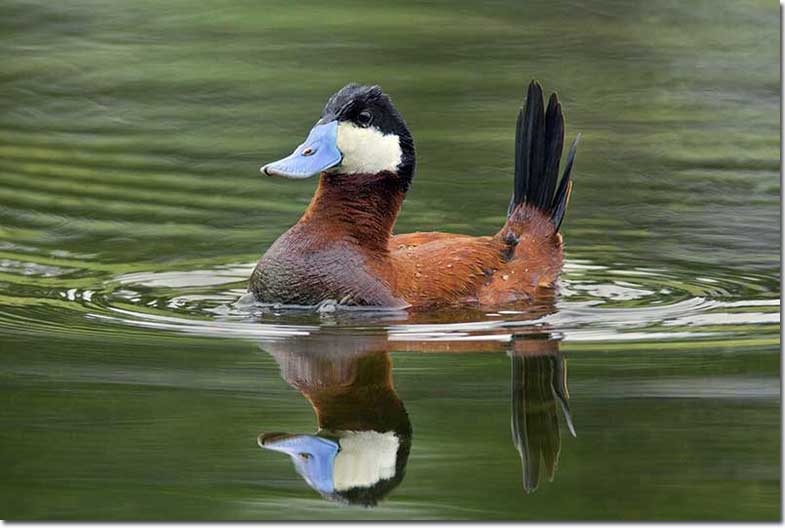
Ruddy Ducks are small diving ducks with a unique, big-headed look, and a stiff tail that they often hold upright. Breeding males are a beautiful chestnut bird with a black cap, and a white throat and cheeks. They also have a big and pretty, blue beak that contrasts with the other colors on their head.
Female Ruddy Ducks are grayish birds with darker, more uniform upperparts, and a thick black line on their pale face. They have a duller, darker, more grayish beak than the male. In flight, Ruddy Ducks have mostly dark, rather short and narrow wings.
Key identifications:
- Small duck with big bluish beak and a dark cap.
- White cheeks or a dark line on pale cheeks.
- Longish, stiff tail often held upright.
Hooded Merganser
Scientific name: Lophodytes cucullatus
Length: 18 inches
Wingspan: 24 inches
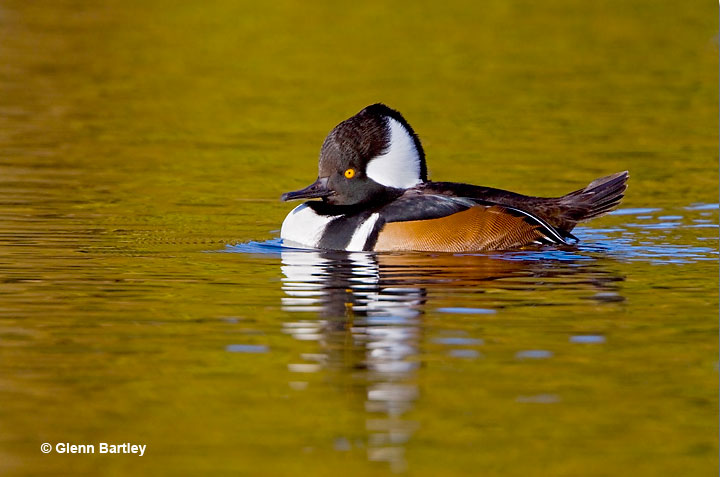
The Hooded Merganser is one of the prettiest little ducks in North America. Breeding males are handsome ducks with a rounded black and white head, and black neck and back. Their jet black upperparts combine nicely with two black marks on a white chest, and rich, pumpkin-colored flanks.
Females aren’t as colorful but are still pretty in their own way. These brown-gray birds have a slender, yellowish beak, and a deep, caramel-colored, rounded crest.
Both sexes also have a longish, somewhat pointed tail, and small white markings on the base of their slender dark wings.
Key identifications:
- Small duck with a small, slender beak.
- Blocky or rounded head.
- White belly and a bit of white on the base of narrow wings.
Gadwall
Scientific name: Mareca strepera
Length: 20 inches
Wingspan: 33 inches
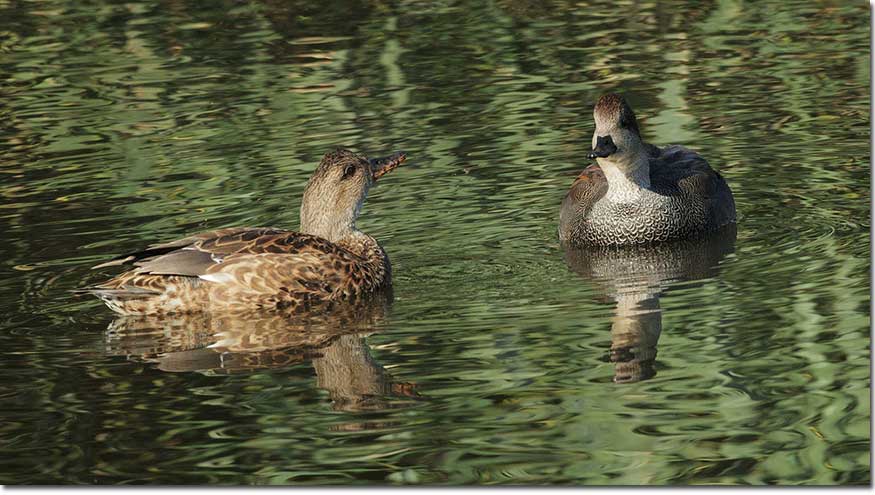
Gadwalls are medium-sized ducks with a small white patch on the base of each wing. Males are gray ducks with a paler grayish head, some brown feathers on their wings, and a black rump, tail, and undertail.
Female Gadwalls look a lot like female Mallards and have gray-brown plumage with buff markings, and a paler grayish head. Like hen Mallards, they also have an orange and black beak but it is mostly gray on the upper part of the bill.
In flight, both sexes show white bellies, the small white mark on their wing, and much white on their underwings.
Key identifications:
- Male is mostly gray with black rear end.
- Female has grayish head and gray and orange beak.
- Small white patch on base of wing.
Frequently Asked Questions
What kind of ducks are in Delaware?
The kind of ducks in Delaware include Mallards and other dabbling ducks, and some diving ducks in coastal waters.
Are ducks hunted in Delaware?
Yes, ducks are hunted in Delaware. Like all states, Delaware has a regulated, duck hunting season.
How many species stay in Delaware for winter?
At least 23 species of ducks stay in Delaware for winter.
More in Delaware: Most common birds | State bird