

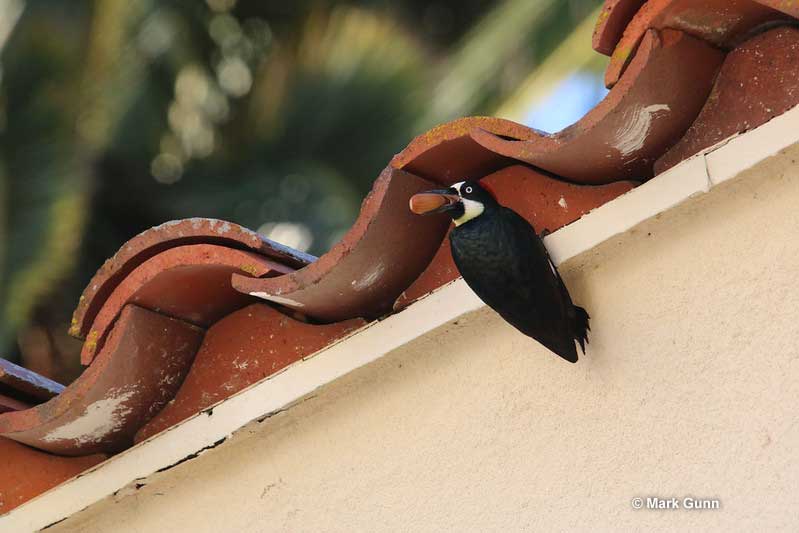
Woodpeckers are such unique and beautiful birds! Their bold plumage and clownish attitudes are perfect for the camera, and many are regular at backyard feeders. Woodpeckers also entertain with laughing calls, but sometimes, the joke goes a bit too far.
As we know, woodpeckers love to peck, and once in a while, they hammer their beaks in the wrong places.
Why do woodpeckers peck into houses? How can we keep woodpeckers from damaging a home?
Wood-Loving Creatures
Woodpeckers can’t help pecking into wood. It’s what they do, and it’s part of what makes these beautiful birds unique. In general, they peck into wood to excavate nesting sites and find insects to eat.
They also peck on wood to attract mates and keep unwanted woodpeckers away. Woodpeckers accomplish this with a special type of “song” known as drumming. Essentially, the woodpecker finds a nice dead snag, metal roof, or other suitable acoustic surface and pecks on it as fast as it can!
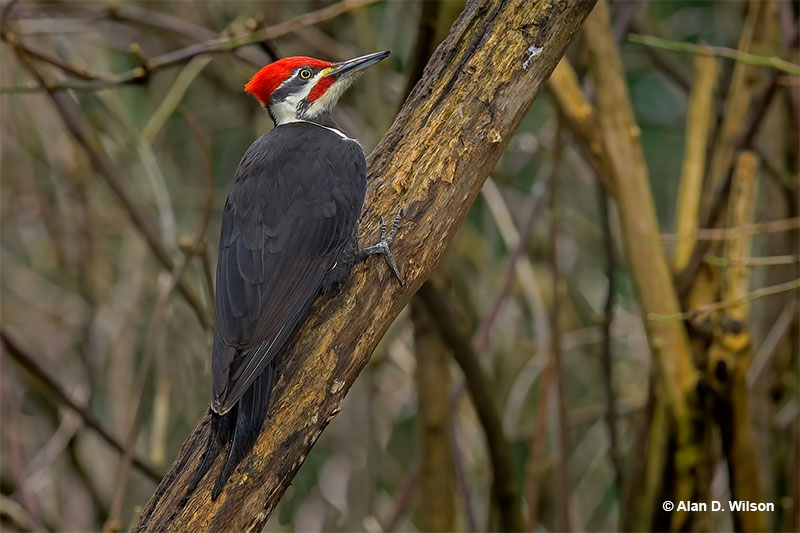
If your house is near a forest and is made of wood, uses wood shingles, or has a good drumming spot, woodpeckers will probably pay unwanted visits.
As long as you don’t live in a wood cabin constructed with big, dead trunks, they won’t excavate holes. However, they’ll probably check out those wooden shingles or other wooden parts of the house.
Related: Can woodpeckers kill trees?
Just as they do in the wild, woodpeckers are searching for insects that might be living there. Old and rotten shingles surely have bugs and would be good to change anyways. New shake and wooden shingles are likely not infested with insects, but woodpeckers might still peck into them.
More commonly, woodpeckers peck on houses to make nice, loud drumming sounds.
Humane Ways To Deter Woodpeckers
Fake Owls and Falcons
The last thing a woodpecker wants to do is fly near a predator. Quite a few animals prey on woodpeckers, including rat snakes and other tree-climbing snakes that go after nesting birds and their young. Cats and other small predators also catch woodpeckers on and near the ground.
However, the predators that woodpeckers fear the most are raptors. Falcons and Cooper’s Hawks probably catch woodpeckers more than any other predator. When they get the chance, owls catch them too. A good owl, falcon, or hawk decoy right on top of the house will safely keep woodpeckers away, at least for a little while.

They’ll eventually learn that the decoy is false and will ignore it. To prolong the woodpecker deterrent effect, try decoys that move, or use one that moves as soon as woodpeckers come back. Moving the decoy to different parts of the roof might also have a longer-lasting effect.
Provide them With Good Habitat and Alternative Feeding Options
Another safe woodpecker deterrent that helps both you and the birds is simply providing them with a better habitat. When a woodpecker is hammering into the side of your house, it might seem like they’ve found the avian promised land. However, they would much rather be pecking into natural and better habitats.
Those habitats come in the form of mature trees and snags. Although you can’t really plant a big, old tree, you can maintain them, snags, and other dead trees (as long as they won’t fall onto the house).

Woodpeckers would rather forage on those big trees, especially dead ones. They also like to eat fruit on Dogwood, Wild Cherry, and other fruiting trees, and will be happy to forage at suet feeders.
Keep woodpeckers busy with those options and they probably won’t visit your house as much.
Replace Rotten Wood and Old Wooden Shake Shingles
While we provide woodpeckers with better habitat and food, we can also remove feeding opportunities from the wrong places. Those unwelcome foraging spots would be any rotten wood in your house.
A house can have rotten wood on door and window frames as well as in old wooden shingles and shakes. Cedar shakes last a long time, but given the right conditions, even that type of wood can rot. In addition to looking awful and reducing the integrity of your home, rotten wood also attracts insects.
Just as various bugs feed on dead and decaying trees, they’ll also feed on the rotten wood in your home. Woodpeckers will be happy to help you with pest control, but they’ll peck into and destroy that rotten wood in the process!
It’s worth it to replace any rotten or old, cracked wood before it becomes infested with insects. Once woodpeckers get to it, you’ll have to replace it anyways.
Put Up Some Shiny Objects
We can also safely deter woodpeckers by decorating parts of the house with things they really dislike. For some reason, woodpeckers have a big problem with shiny objects. Actually, several birds do but they seem to be especially annoying for woodpeckers.
It might be related to the sudden bright flashes or just random bright spots. Whatever the reason, woodpeckers don’t usually feel comfortable being close to shiny, reflective things.
There are also some easy, DIY ways to implement this deterrent. If you have a bunch of old CDs lying around, use a fishing line or string to hang them at spots woodpeckers are using. Is a woodpecker drumming on the edge of the roof? If possible, hang a couple of CDs right at that spot.
Are woodpeckers attaching siding? See about hanging several CDs in the same area. You can also hang reflective mylar strips and balloons, aluminum foil, and even put up small mirrors.
Bird Netting
If the woodpecker situation is really out of control, you might want to consider bird netting. To me, this seems extreme, but it might be the only solution that works.
It’s also one of the only surefire, safe deterrents for woodpeckers. Bird netting keeps woodpeckers from damaging your home by making it very difficult for them to peck your house. They will have trouble perching on it, especially for pecking.

You have to use bird netting with holes one inch wide or smaller, and hung at least three inches from the edge of the home. The typical way to use bird netting is to install it in outer eaves, and then let it hang down over the side of the house. For it to work, you also have to make the netting stays taught.
Pick the right colors, and bird netting can also be nearly invisible!
Sudden Noises
Woodpeckers might be loud and bold but they are actually very careful birds. That careful attitude might be why they stay away from sudden, bright flashes, and reflective objects.
In keeping with that careful behavior, woodpeckers are also deterred by loud and sudden noises. It’s a good way to make them fly as well as keep them from pecking into a house.
Loud noises essentially tell woodpeckers that they aren’t welcome, and they are quick to take the hint! If a woodpecker starts drumming on your house, don’t hesitate to go outside to loudly clap your hands and give a few shouts.
It might seem like applause, but the woodpecker should get startled and fly off. It will probably return, but you can keep scaring the bird away. If the woodpecker is just drumming, at least that behavior is usually restricted to a short time in spring.
Frequently Asked Questions
Are woodpeckers good to have around?
Yes, woodpeckers are good to have around. They eat lots of harmful insects and play important ecosystem roles. Not to mention, they are also beautiful birds!
When to think about fending off woodpeckers?
The right time to think about fending off woodpeckers is as soon as they peck parts of your house.
Do woodpeckers hate strong smells?
Yes, woodpeckers hate some strong smells like garlic, onion, peppermint, and cinnamon.
Can you lead woodpeckers to other areas in your garden?
Yes, you can lead woodpeckers to other areas in your garden by installing bird feeders, especially ones with suet.