

It’s easy to see ducks in most parts of the USA, including Arizona! In Arizona, we can see a variety of duck species at marshes, ponds, and other kinds of wetlands.
In order to see who the most common ones are, we turned to eBird data and picked out 10 of the most common ones.
Mallard
Scientific name: Anas platyrhynchos
Length: 23 inches
Wingspan: 35 inches
Mallards are the most familiar duck species. For lots of folks, this is “the duck”. They have been domesticated for centuries and lots of them are fed at urban ponds and lakes.
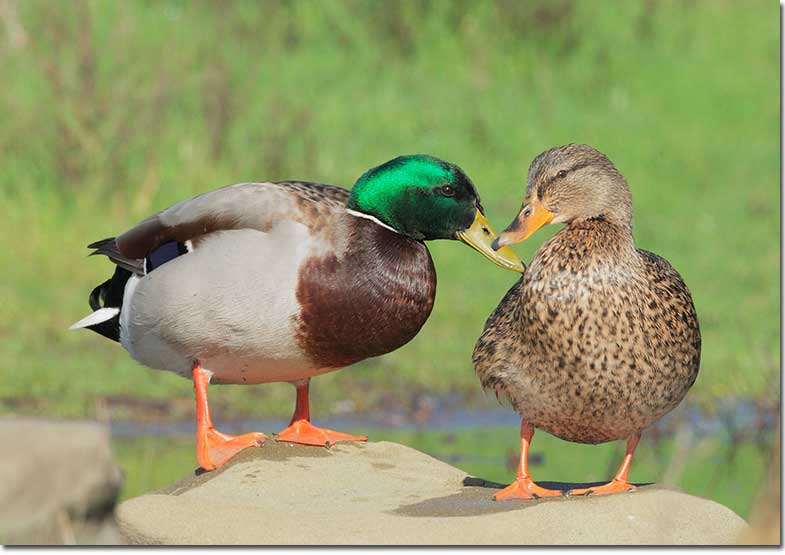
However, make no doubt about it, Mallards are wild birds that also live in lots of wild and remote areas in most of North America. The males have a dark green head, narrow white collar, yellowish beak, and dark brown chest.
Female Mallards, though, can be trickier to identify. They are brown with some paler brown and dark markings, and have a gray-brown neck and head with a dark cap, and a dark line through their eyes.
In flight, we can also recognize female Mallards by their pale tail, and two white wing bards bordering a green-blue wing patch.
In addition to eating bird food and vegetables, Mallards dabble in shallow water for plant matter and small creatures.
Key identifications:
- Big duck with a glossy green head and yellowish beak.
- The female has a dark center mark on her orange beak.
- Short, pale, or white tail.
American Wigeon
Scientific name: Mareca americana
Length: 20 inches
Wingspan: 32 inches
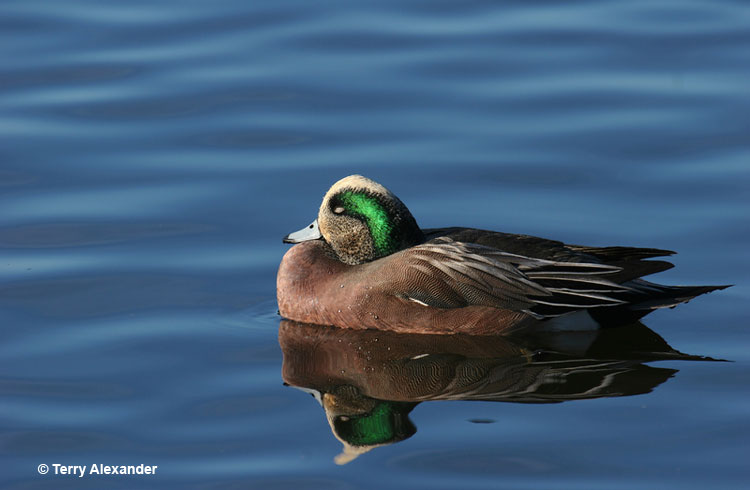
American Wigeons are medium-sized ducks with a smallish gray beak. Males are gray with a white crown, some dark green near their eyes, and peach-brown colors on their chest and sides.
They also have a black undertail and show white shoulders in flights. Females look like males but lack white and green on their heads and are a bit duller in general. Both sexes have pointed tails and a white belly especially visible in flight.
American Wigeons like to graze grass and eat grain while walking at the edge of wetlands and in wet fields. They can also pick plant matter and small creatures from the surface of the water and even steal food from other ducks!
This waterfowl species breeds in cold, shallow marshes in Alaska, Canada, and parts of the northern USA. They migrate through much of the USA and winter in coastal waters, and on lakes and other wetlands in southern states.
Key identifications:
- Rather small pale gray beak.
- Peach or gray-orange chest and flanks.
- Male has a white crown and white shoulders, female has grayish head with a dark area around her eyes.
Ruddy Duck
Scientific name: Oxyura jamaicensis
Length: 15 inches
Wingspan: 18.5 inches
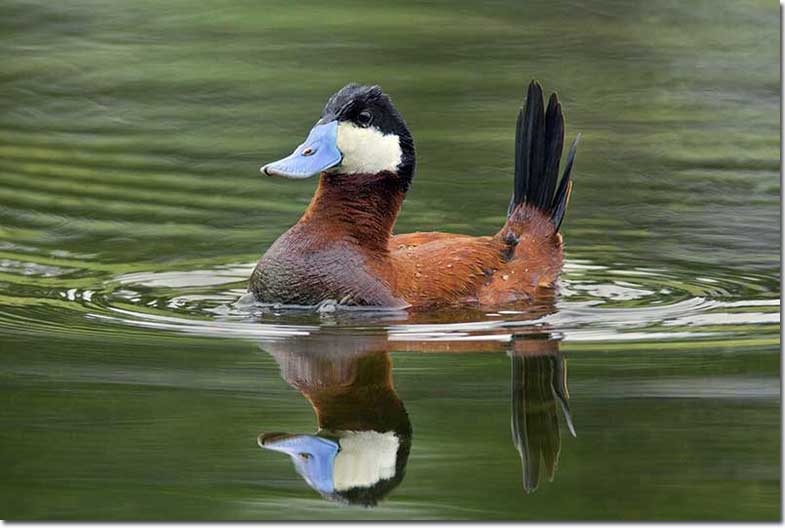
Ruddy Ducks are small diving ducks with a unique, big-headed look, and a stiff tail that they often hold upright. Breeding males are a beautiful chestnut bird with a black cap, and a white throat and cheeks. They also have a big and pretty, blue beak that contrasts with the other colors on their head.
Female Ruddy Ducks are grayish birds with darker, more uniform upperparts, and a thick black line on their pale face. They have a duller, darker, more grayish beak than the male. In flight, Ruddy Ducks have mostly dark, rather short and narrow wings.
Ruddy Ducks dive underwater to forage for small aquatic creatures.
This small duck species breeds in shallow marshes and lakes in many parts of central and western North America. They migrate to eastern Canada and the USA and winter on lakes, in coastal waters, and other wetlands in the western and southern USA.
Key identifications:
- Small duck with big bluish beak and a dark cap.
- White cheeks or a dark line on pale cheeks.
- Longish, stiff tail often held upright.
Northern Shoveler
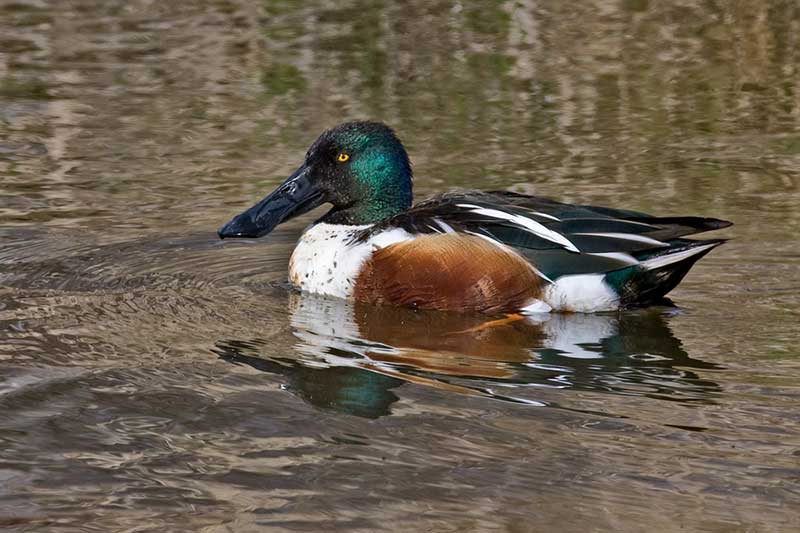
Scientific name: Spatula clypeata
Length: 19 inches
Wingspan: 30 inches
Northern Shovelers are a distinctive duck species with a big, prominent beak. Males have striking plumage with a dark green head, and white and chestnut underparts. They are also white and gray on their back, have orange legs, and show blue shoulders in flight.
Female Northern Shovelers are tawny-brown ducks with lots of buff markings, and an orange and gray beak. Both sexes also have a pale tail.
These pretty ducks like to float in marshes and other shallow wetland habitats. They often form flocks and we can see them foraging with Blue-winged Teals and other dabbling ducks. Like many other duck species, Northern Shovelers feed on a combination of plant matter and small aquatic creatures.
This species breeds in shallow wetlands in Alaska, western and central Canada, and in parts of the northern and western USA. They migrate to coastal marshes and much of the southern USA for the winter.
Key identifications:
- Over-sized, flat beak.
- Male has a white breast, red-brown sides and belly, and dark green head.
- Female has a pale tail and orange and gray beak.
Ring-necked Duck
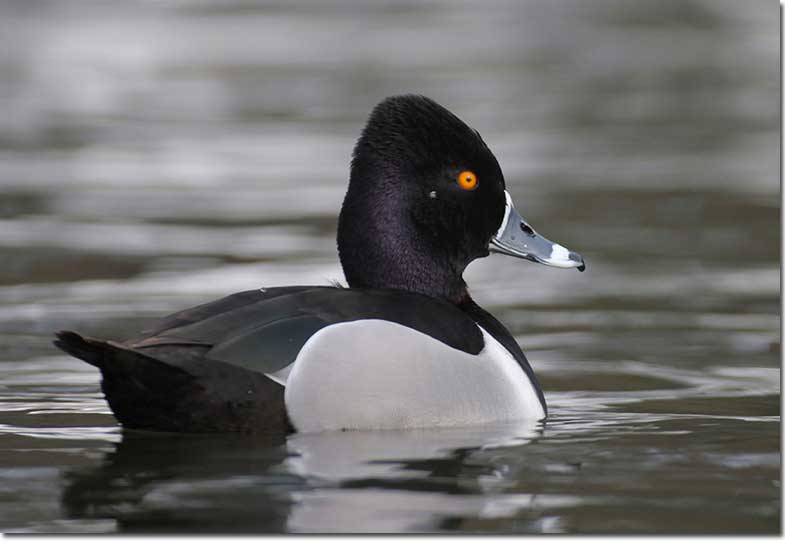
Scientific name: Aythya collaris
Length: 17 inches
Wingspan: 25 inches
Ring-necked Ducks are one of those birds that don’t have the best of names. While males do have a brown ring on their necks, it blends in with their black neck and can be really hard to see.
Ring-necked Ducks should really be called, “Ring-billed Ducks”! The males are best recognized by the white ring near the black tip of their dark gray beak, and their combination of a black back, head, neck, and chest. They also have gray sides and a white mark near their black chest.
Female Ring-necked Ducks are plain, brownish birds with pale bellies and narrow white spectacles on a grayish face. They also show a bit of white on their face, near the base of their bill.
Ring-necked Ducks dabble and make shallow dives for a variety of food items. They like to eat plant matter, insects, and other small aquatic creatures. We find them in a variety of shallow wetlands in much of North America.
Key identifications:
- Male has black back, head, and chest.
- Gray sides with white near the black chest.
- Female has narrow white spectacles on gray face.
Green-winged Teal
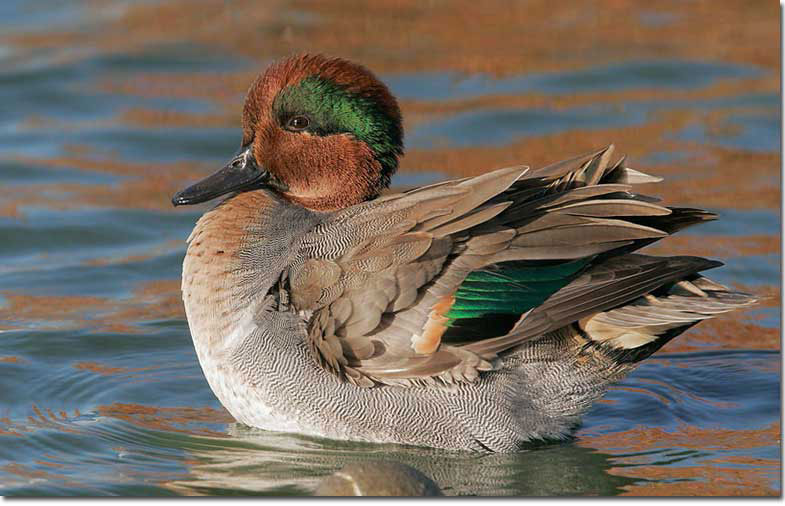
Scientific name: Anas crecca
Length: 14 inches
Wingspan: 23 inches
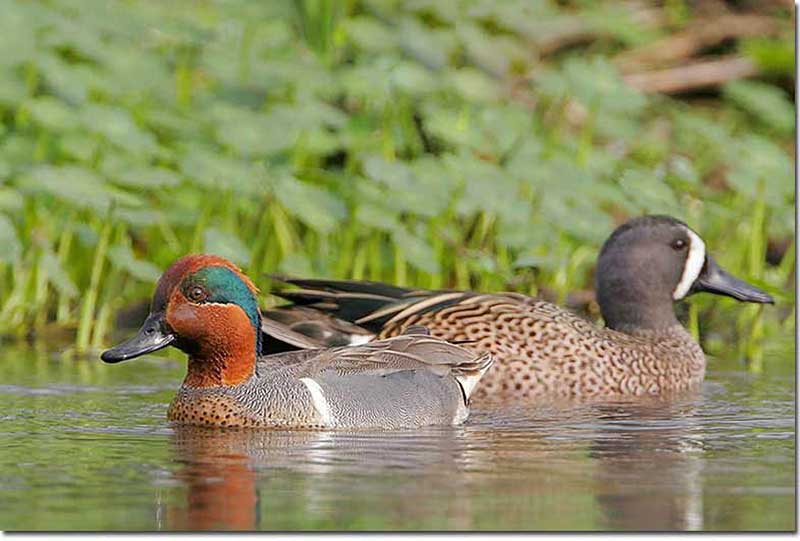
Green-winged Teals are small waterfowl with a smallish, dark beak, and a dark green patch at the base of each wing. Males of these cute little ducks are mostly gray and have a chestnut head with a dark green patch, speckled, buff chest, and narrow white bar near their chest.
Females are mostly mottled brown with a dark line through each eye. Both sexes have a buff mark on the edge of their tail, and show a white belly in flight. Green-winged Teal like to forage for plants and small creatures in the shallow water of marshes and other wetland habitats.
They breed in Alaska, Canada, and the northern USA, and winter in a variety of wetland habitats in some parts of southern Canada, and most of the USA.
Although this small duck species can form flocks, we often see them in pairs or only in small groups. They also migrate north later than other duck species.
Key identifications:
- Very small duck.
- Buffy mark along the edge of each side of its tail.
- Small dark beak and dark green patch edged with buff on its wings.
Cinnamon Teal
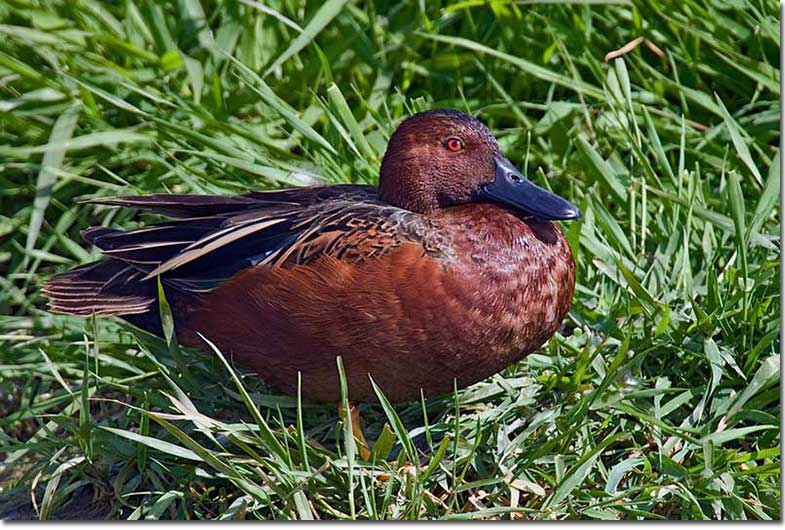
Scientific name: Spatula cyanoptera
Length: 16 inches
Wingspan: 22 inches
Cinnamon Teals are small ducks with reddish eyes and a fairly large, dark beak. Breeding males are one of the most handsome ducks in North America. When competing with species like the Hooded Merganser, Redhead, and Northern Shoveler, that’s saying something. However, I stand by my word!
Male Cinnamon Teals are a beautiful, reddish-chestnut highlighted by caramel-colored plumes on their back. They also have a black rump and undertail, and show pale blue shoulders in flight.
Females and non-breeding males are duller, brown birds with mottled buff markings. They also have a plain pale brown face that lacks a dark line through their eye but still show a pale blue shoulder in flight.
Cinnamon Teals dabble for plant matter and small creatures in shallow marshes and at the edges of shallow lakes. They breed in parts of western Canada and much of the western USA, and mostly winter in California, southern Arizona, and southern Texas.
Key identifications:
- Rich, red-brown plumage.
- Female has a reddish eye and a plain face.
- Blue or blue-gray shoulders on its wings.
Gadwall
Scientific name: Mareca strepera
Length: 20 inches
Wingspan: 33 inches
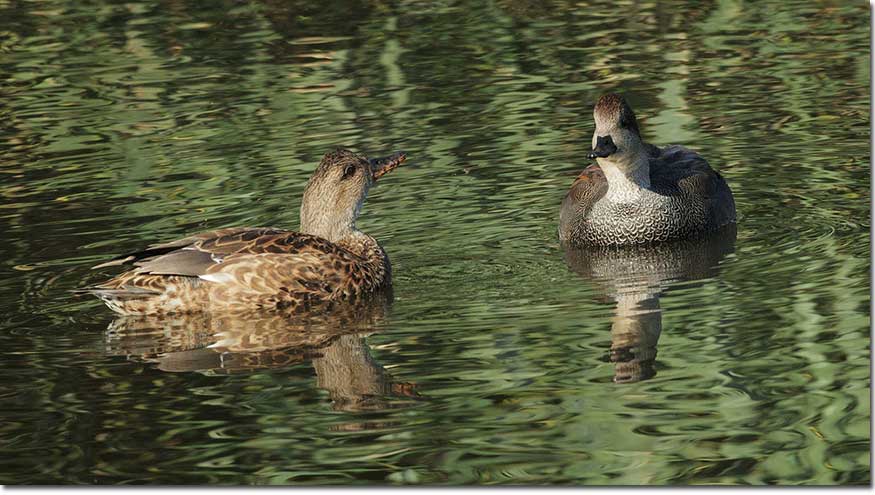
Gadwalls are medium-sized ducks with a small white patch on the base of each wing. Males are gray ducks with a paler grayish head, some brown feathers on their wings, and a black rump, tail, and undertail.
Female Gadwalls look a lot like female Mallards and have gray-brown plumage with buff markings, and a paler grayish head. Like hen Mallards, they also have an orange and black beak but it is mostly gray on the upper part of the bill.
In flight, both sexes show white bellies, the small white mark on their wing, and much white on their underwings.
Gadwalls forage for seeds and other plant matter in and near shallow water.
These ducks breed in shallow wetlands in central and western Canada, and in various parts of the northern and western USA. They migrate through much of the USA and winter in coastal areas from Alaska to California, and in many western and southern states.
Key identifications:
- Male is mostly gray with black rear end.
- Female has grayish head and gray and orange beak.
- Small white patch on base of wing.
Mexican Duck
Scientific name: Anas diazi
Length: 23 inches
Wingspan: 35 inches
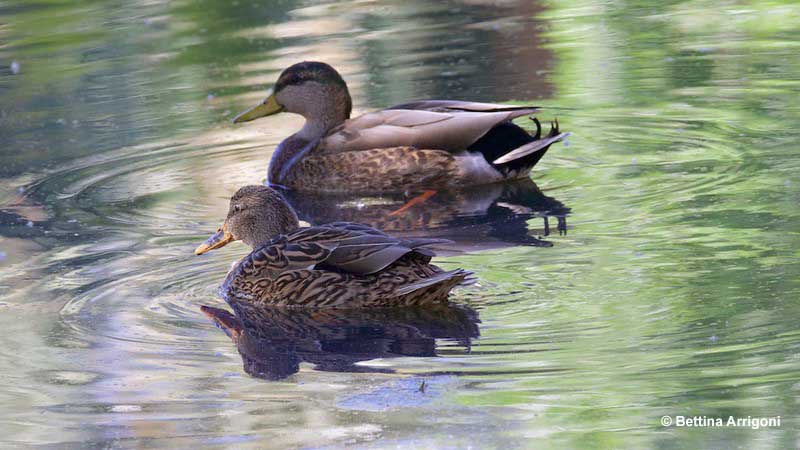
Mexican Ducks are big dabbling ducks around the same size as a Mallard. Although they used to be lumped with the Mallard, DNA studies have shown than Mexican Ducks are a valid species more closely related to the Mottled Duck.
Mexican Ducks have dark brown plumage with red-brown edging on most of their body feathers. They have fine streaking on their pale neck and head, a dark cap, and a dark line through their eye. These hefty ducks also have orange legs, a yellowish beak, and white underwings.
Both sexes look the same although hen Mexican Ducks have a more olive-yellow beak than their male counterpart.
True to its name, this dabbling duck species mostly lives in Mexico. Small numbers also range north to Arizona, New Mexico, and western Texas where they live in irrigated farm fields, and other wetlands.
As an area dries out, and wetlands become smaller, Mexican Ducks flock together.
Key identifications:
- Large dark brown duck with a pale neck and head.
- Yellowish beak.
- Dark cap and line through its eyes.
Northern Pintail
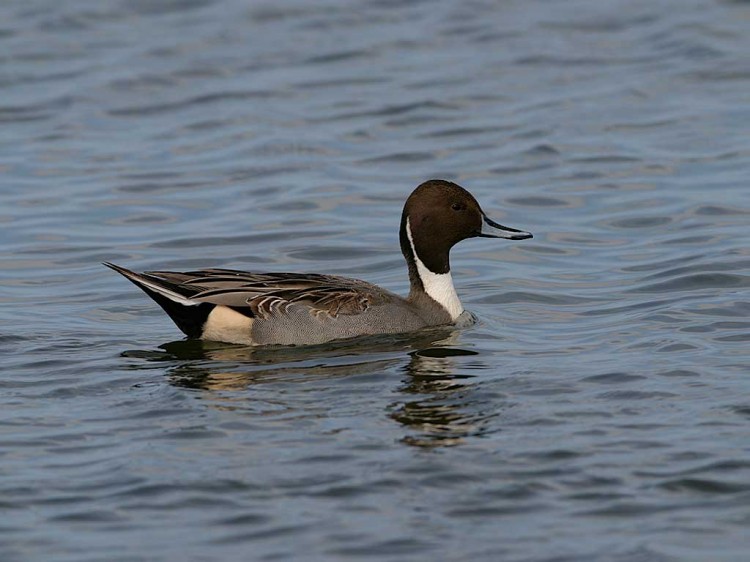
Photograph © Sam Crowe.
Scientific name: Anas acuta
Length: 21 inches
Wingspan: 34 inches
Northern Pintails are fairly large and slender, gray and creamy white ducks with long necks, and long tails. Breeding males are handsome birds with dark, chocolate-brown on their head and neck, a black undertail, and a long pointed tail feather.
Females and nonbreeding males are gray and tawny birds with a plain, pale tawny head and neck, and a gray beak. In flight, Northern Pintails also show long, pale gray wings, and the males have a dark green patch on the base of each wing.
We see these neat ducks in shallow marshes, and on lakes and other wetlands. They often form small groups that can flock with other waterfowl species.
They forage for grains and small aquatic creatures by dabbling in very shallow water and picking food from the wet ground while walking at the edge of the water, and in wet fields.
We see these pretty ducks in shallow wetland habitats in most of North America.
Key identifications:
- Fairly large duck with a long, slender neck.
- Pointed tail.
- Dark brown or tawny head and a gray beak.
Frequently Asked Questions
Does Arizona have many duck species?
Yes, Arizona has many duck species. In Arizona, 34 species have been identified in the state. However, 7 of those duck species are rare visitors.
Which duck species live in AZ during summer?
Cinnamon Teals, Black-bellied Whistling-Ducks, and four other duck species live in AZ during the summer.
Does Arizona have duck hunting?
Yes, Arizona has duck hunting. The main waterfowl hunting seasons in Arizona are in late fall and winter.
Are there ducks in Phoenix?
Yes, there are ducks in Phoenix. You can see ducks at the Riparian Preserve at Water Ranch, and other wetlands in the Phoenix area.
Is it illegal to feed ducks in Arizona?
Yes, it is illegal to feed ducks in Scottsdale, Arizona and may also be illegal to feed ducks in some other parts of the state.
More in Arizona: Most common birds | Hawks | Owls | Hummingbirds | State Bird