


Birds come in many shapes and sizes, exhibiting a wide array of behaviors, adaptations, and traits that can be described from strange to extraordinary.
From the ghostly calls of the potoo to the toxic Hooded Pitohuis, the gift of birds and their quirks just keeps on giving. Here are a few of the most interesting ones!
- Jacanas carrying their babies
- Potoos and their weird screams
- Smallest hitchhikers
- Grebes running on water
- Attacking their own reflection
- Bathing in ants
- Owls cough up their pellets
- Nest parasites
- Mating in air
- Some birds are poisonous
- Baby Hoatzins clinging onto trees
- Impaling their prey
- Dancing queens
- Messy nesters
- Aggressive matings
Jacanas carrying their babies
Jacanas, often referred to as “Jesus birds” or “lily trotters,” are wading birds notable for their elongated toes and claws, which allow them to walk on floating vegetation in shallow lakes, their preferred habitat. But this is not the weirdest thing about them.
Unlike many bird species, Jacanas exhibit a role reversal in parenting. Females are more dominant and polyandrous, meaning they mate with multiple males, whereas males construct the nest and incubate the eggs. Once the chicks hatch, the male continues his caregiving role. This is where jacanas become particularly unique.
The male uses his wings to shelter and carry the chicks. The young birds cling onto the feathers and skin beneath the wings, allowing the male to transport them safely, making the adult look like some creature out of your nightmares with multiple appendages.
However, this behavior helps protect the chicks from predators and environmental elements, such as heavy rain or strong sunlight, especially in the first few weeks of their lives.
Potoos and their weird screams
Potoos are a group of nocturnal birds found in Central and South America. They have excellent camouflage, resembling broken branches or tree stumps when they perch motionless during the day. At night, they become active hunters, using their excellent night vision and wide mouths to capture flying insects.
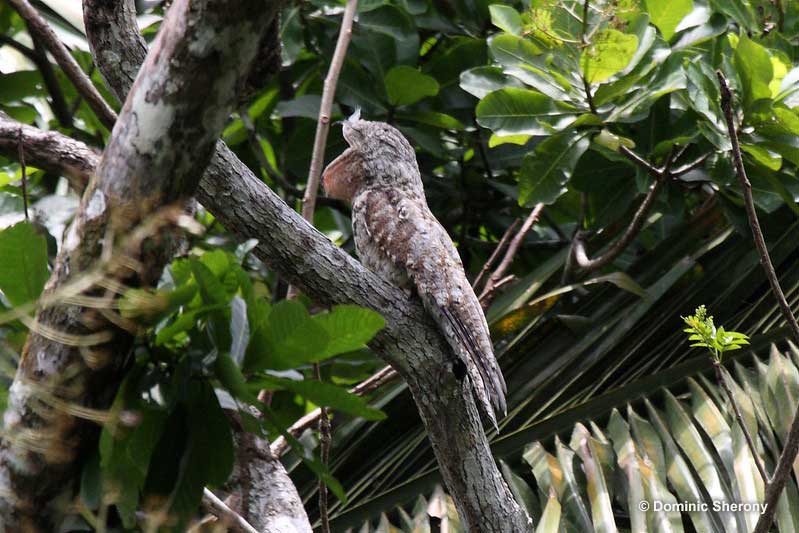
If you were to see them with their mouth and eyes wide open during the day, however, then it could be quite freaky. They have been described as “little more than a flying mouth and eyes.”
However, the reason they are called ghost birds is not only because of their nocturnal lifestyle and arguably freaky appearance but rather due to their haunting calls.
In folklore and superstitions, their wails and moans are often thought to be the voices of spirits or lost souls wandering the night. Some local traditions consider the call of a potoo to be an omen of death or bad luck. Conversely, some cultures view potoos as protectors against evil spirits. Their calls are thought to ward off malevolent entities, keeping the night safe for those who respect the forest.
Smallest hitchhikers
Several waterbird species are known to carry their chicks on their backs, particularly after hatching and during the early stages of development. This behavior is most famously associated with grebes, but it is also seen in some other waterbird species, like swans.
It provides protection, helps keep the chicks warm and dry, makes for an easier commute, and helps the chicks conserve energy. Chicks may ride on their parent’s backs for several weeks, gradually spending less time there as they grow and develop. In some species, parents may even feed the chicks while they’re on their backs.
Grebes running on water
Grebes, particularly the Western Grebe and Clark’s Grebe, are known for their fascinating ability to “run” on water. This behavior, often referred to as “rushing” or “water dancing,” is a synchronized display where two grebes dash across the water’s surface, appearing to walk or run on the water.
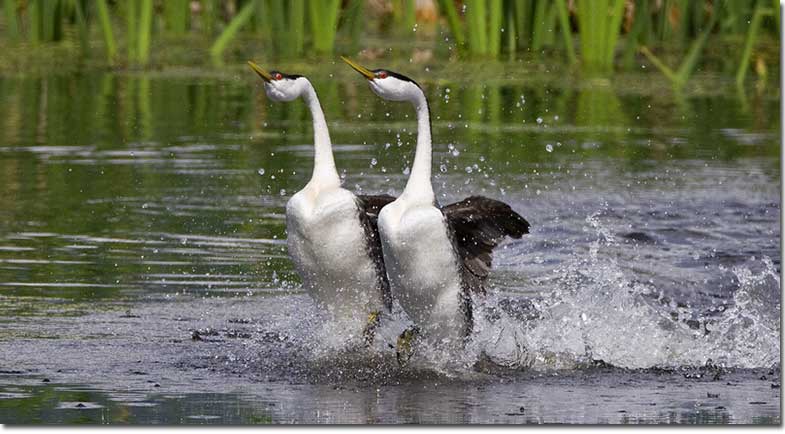
It is extremely energy-extensive and can only be sustained for short periods. Their feet slap against the surface of the water up to 20 times per second and they can cover a distance of 21 yards at a speed of up to 15.5 mph.
The primary purpose of this behavior is to attract a mate. It is a way for the birds to demonstrate their strength, agility, and synchronization to potential partners. For paired grebes, this display helps to reinforce their bond and ensure mutual cooperation in raising their offspring. They also use this maneuver to evade predators.
Attacking their own reflection
During springtime, you may have heard several smacks and upon closer inspection found a bird repeatedly flying into the window. But why do they do this? Well, many bird species become highly territorial during the breeding season and aggressively defend their nesting area. Male birds, in particular, are driven to protect their mates, nests, and food sources from perceived threats.
Unfortunately, birds do not recognize themselves in reflections. Instead, they see their reflection as another bird that doesn’t respond normally to their behaviors and perceive it as them competing for their territory or a mate. This leads to repeated attacks on windows, mirrors, car side mirrors, and other reflective surfaces where the bird perceives an intruder.
Some bird species are more prone to this behavior than others. Common culprits include ardinals, obins, bluebirds, towhees, sparrows, and mockingbirds.
While most attacks don’t cause serious injury, it can still cause some harm, stress, and disruption to the bird’s normal feeding, mating, and nesting habits. They can become obsessed with their reflection, spending hours attacking it in an attempt to drive away the perceived intruder. Consider taking measures to make your windows and other similar surfaces less reflective.
Bathing in ants
Anting is a fascinating and somewhat mysterious activity observed in over 200 bird species, especially jays, crows, and starlings.
There are two types of anting: active, where the bird picks up ants with its beak and rubs them on its feathers, and passive, where the bird spreads its wings and lies down on an anthill or near a swarm of ants, allowing the ants to crawl all over it.
Some birds show preferences for certain ant species, possibly due to the varying amounts of formic acid produced, but some might even use wasps or beetles!
The exact reasons for anting are not entirely understood, but several hypotheses have been proposed. Some think that it is a form of pest control since ants secrete formic acid, which can help to repel or kill parasites such as lice and mites that live on the birds’ feathers.
Others propose that it helps with feather maintenance, as ants might help in removing debris and dead skin. Anting might also aid in molting by loosening old feathers and stimulating the growth of new ones. Lastly, birds may do it just because they like how it feels.
Owls cough up their pellets
Owls, along with other raptors such as hawks and eagles, produce pellets as part of their digestive process. These pellets are compact, usually 1-4-inch-long oval masses of undigested material. They swallow their prey whole or in large chunks.
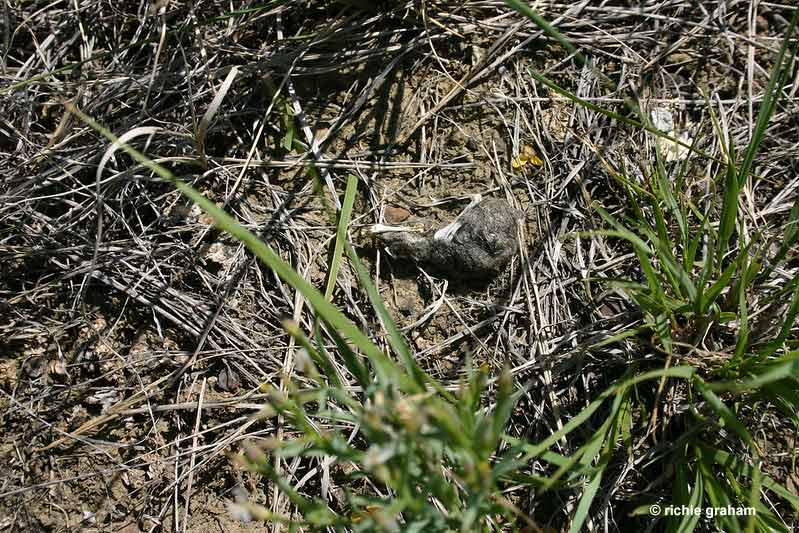
The prey first enters the proventriculus, or glandular stomach, where enzymes and acids begin to break down the soft tissues. Then it moves to the gizzard, a muscular part of the stomach, which further grinds down the soft tissues. Indigestible parts like bones, fur, and feathers are separated out.
These indigestible parts are compacted into a pellet within the gizzard that the bird then regurgitates by coughing it up through its mouth. This usually occurs several hours after eating, typically once or twice a day.
Nest parasites
Nest parasitism is a reproductive strategy where a bird, known as the parasite, lays its eggs in the nest of another bird species, called the host.
The host bird then incubates the eggs and raises the chicks, often at the expense of its own offspring.
Parasitic birds lay their eggs in the host nest shortly before or after the host has laid its own eggs, and the eggs often closely resemble the host’s eggs in size and color to reduce the likelihood of rejection.
Some parasitic birds may remove one or more of the host’s eggs before laying their own. The chicks of parasitic birds also tend to hatch earlier and may push the host’s eggs or chicks out of the nest to eliminate competition for food.
One of the most common nest parasites in North America is the Brown-headed Cowbird, which lays its eggs in the nests of over 200 different bird species.
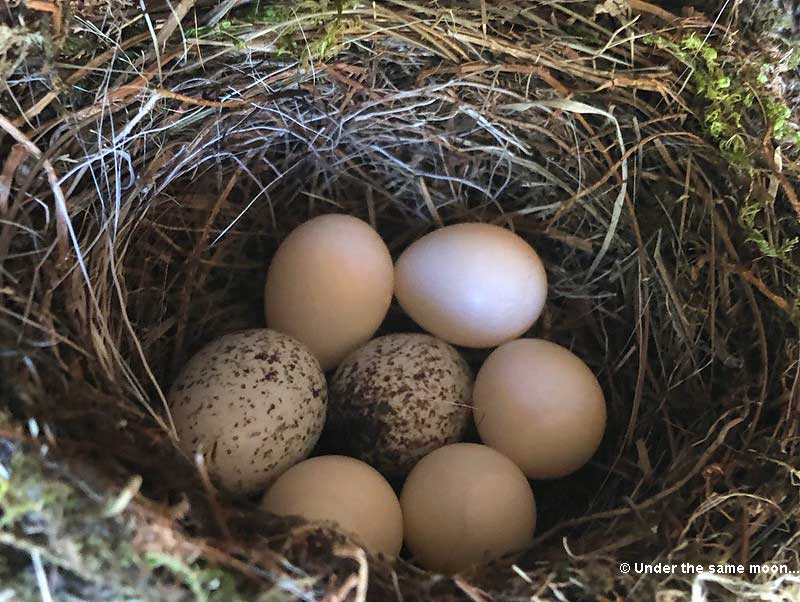
Cowbird’s eggs in an Eastern Phoebe’s nest.
Mating in air
Some bird species, most notably swifts, spend a significant portion of their lives in the air. This is how they perform almost all of their activities, including feeding and sleeping while flying. They are highly adapted for that aerial lifestyle along with long, slender wings and a streamlined body. The Common Swift, for example, spends up to 10 months of the year airborne!
Swifts are also capable of mating while flying, a behavior that is quite rare among birds.
It is often a quick interaction and is thought to occur between individuals who are already paired with others, potentially as a way to increase genetic diversity. Despite their ability to mate in the air, swifts typically mate at their nest sites. This is the more common method of mating for these birds.
Some birds are poisonous
The most well-documented examples of poisonous birds are found in New Guinea and include species like the Hooded Pitohui and the Blue-capped Ifrita. These birds contain potent neurotoxins, specifically batrachotoxins, in their skin and feathers.
The toxic nature of these birds was discovered when researchers and locals experienced numbness and tingling after handling them. In fact, the native people of Papua New Guinea call it the “rubbish bird” because it’s not suitable for eating.
However, the birds don’t produce the toxin themselves. It supposedly comes from the birds’ diet, specifically beetles from the genus Choresine, which contain these batrachotoxins. The toxicity in these birds is believed to serve as a defense mechanism against predators and parasites.
In some cases, like the Pitohui, females may even rub the toxins on their eggs to protect them from predators.
Baby Hoatzins clinging onto trees
Hoatzins are fairly prehistoric-looking pheasant-like birds with blue faces, red eyes, and a crest of spiky feathers on their heads. They inhabit the swamps, mangroves, and riparian forests of the Amazon and Orinoco basins in South America and nest in trees overhanging water. However, as mesmerizing and unique as the adults may seem, the focal point of this species is their babies.
Hoatzin chicks are born with two clawed fingers on each wing. These claws are a primitive feature reminiscent of ancient bird ancestors, unique among modern bird species. They use their wing claws to climb and cling to branches and foliage.
If needed, they will drop into the water below and climb back up to safety once the danger has passed. The claws are only present in the chicks and disappear as the birds mature and develop their adult feathers.
Impaling their prey
Impaling prey is a fascinating and somewhat gruesome behavior observed in certain bird species. The most common impalers are shrikes, earning them nicknames such as “butcherbird” or “jacky hangman.”
They capture their prey, including insects, small mammals or birds, lizards, or frogs, and then skewer them on sharp objects like thorns, barbed wire, or even pointed twigs. The prey is often left there for some time before being consumed.
There are several reasons behind this behavior. Impaling allows shrikes to store food for later consumption, acting like a natural pantry. It also helps them handle prey that is too large or dangerous to eat immediately by immobilizing it.
By anchoring their prey, shrikes can tear it into manageable pieces since they lack strong talons like raptors. Males may also impale prey to demonstrate their hunting prowess to potential mates.
Dancing queens
Courtship displays in birds vary from “Here, I found a worm for you” to elaborate sky dances to various other weird and fascinating behaviors that consist of multiple parts. The visual component emphasizes the appearance of the birds, such as posturing or showing off certain parts of their plumage, e.g., a peacock fanning its tail feathers.
This is often accompanied by auditory displays, such as singing, drumming, or producing other sounds with their bodies. For example, the male Anna’s Hummingbird produces a loud popping sound at the bottom of its courtship dive to impress the female.
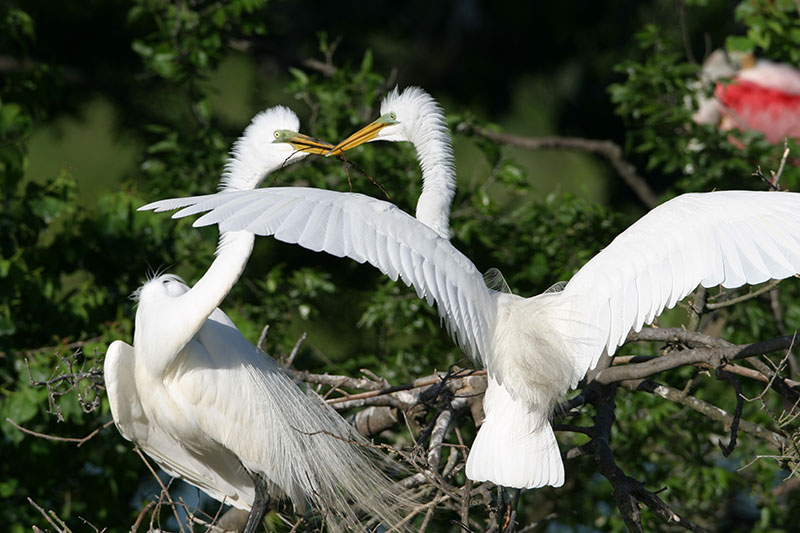
Great Egret Courtship
Many species also “dance.” For example, the Red-capped Manakin is famous for its “moonwalk” dance, where the male rapidly slides backward along a branch while giving wing snaps. Sandhill Cranes dance by bowing, jumping, wing flapping, and tossing sticks or vegetation into the air. One could argue that birds are even more expressive dancers than humans!
Messy nesters
In general, birds prefer to keep their nests clean to avoid attracting predators’ attention; however, some are downright messy.
Eurasian Wrynecks are such birds, and to be fair, with their cryptic plumage, they are not too easy to notice. They have a distinctive flexible neck that they can twist in a snake-like manner, hence the name “wryneck.”
They prefer to nest in tree cavities, often using old woodpecker holes, natural tree hollows, or artificial nest boxes. Unlike many birds, wrynecks do not build an elaborate or even a nest-shaped nest. They use the existing cavity with minimal modification, maybe adding some wood chips or leaves to the cavity floor.
However, this is not the main reason they are known as messy nesters. The main reason is that they do not clean the nest at all. This is unusual among birds, but they have adapted to survive in these conditions.
They may even reuse the same nest cavity in subsequent years, adding to the accumulation of droppings and debris, or lay their own eggs on top of chicks of other birds they killed to acquire this nest! Their messy habits may actually help deter other cavity-nesting species from taking over their nesting sites.
Aggressive matings
Some bird species engage in aggressive or forceful mating, most often seen in waterfowl. Forced copulation may be an alternative mating strategy for males to pass on their genes, especially if they are unable to secure a mate through courtship.
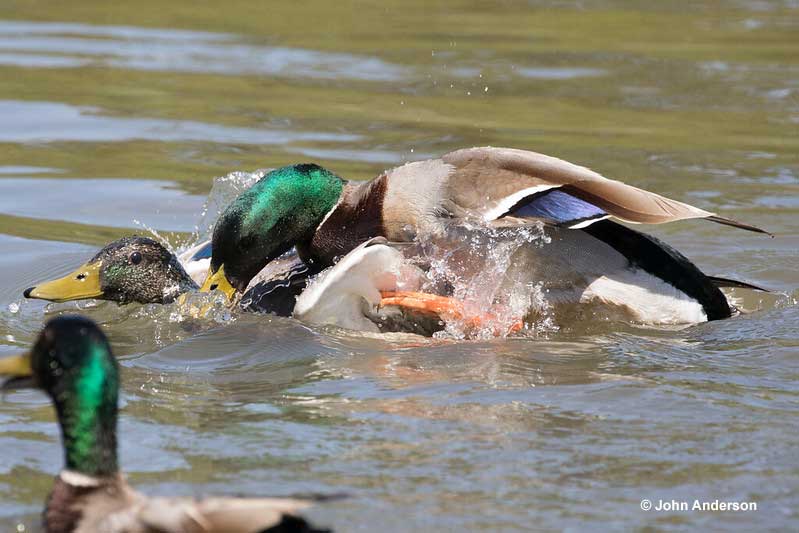
In some species, it may get as bad as groups of males chasing and forcibly mating with a single female, potentially leading to the injury or death of the female. Male Mallards are especially notorious for this. Males may sometimes also force themselves on females who are already paired.
As a defense, some female birds have evolved anatomical defenses against forced copulations, like complex vaginal structures, and yes, male ducks do have penises. The mates of the females are also on high alert and aggressively defend their mates to prevent other males from mating with them.
