

Bird identification can be a delightful yet perplexing hobby, often complicated by differences between males and females of the same species. As you peer through your binoculars, trying to match the bird in your view with the one in your field guide, you might find yourself wondering whether that brown bird is a female of one species or a non-breeding male of the other. But why do some males and females of the same species look different?
What Is Sexual Dimorphism?
Sexual dimorphism is a fascinating phenomenon where males and females of the same species exhibit different physical characteristics beyond their sexual organs.
In the avian world, these differences can be quite striking and are often seen in size, plumage, coloration, ornaments, and even behavior.
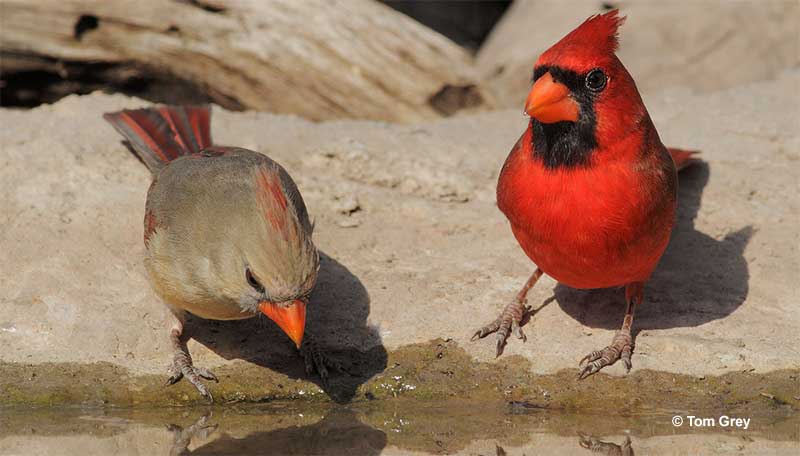
Imagine a cardinal, for instance. The male cardinal is a vibrant red, designed to attract mates and deter rivals, while the female sports more subdued, brownish tones, helping her blend into the environment and protect her nest.
But why does this happen? In birds, sexual dimorphism usually evolves because of the different roles males and females play in reproduction.
Males often need to stand out to attract females, so they develop bright plumage, elaborate songs, or complex courtship dances.
Peacocks, with their magnificent tail feathers, are a prime example. Females, on the other hand, typically need to be more camouflaged to protect themselves and their offspring from predators, leading to more muted colors and smaller sizes.
Plumage
Different plumage patterns and colors are one of the most noticeable expressions of sexual dimorphism. In many bird species, especially during the breeding season, males and females exhibit markedly different plumage, with males often sporting more vivid and striking colors.
Take the American Goldfinch, for example. The male goldfinch is a brilliant yellow during the breeding season, with contrasting black wings and a cap, making him highly visible and attractive to females.
This vibrant plumage signals the male’s health and genetic quality, increasing his chances of attracting a mate. Conversely, female goldfinches are more subdued in color, sporting olive-brown tones that provide them with better camouflage while nesting.
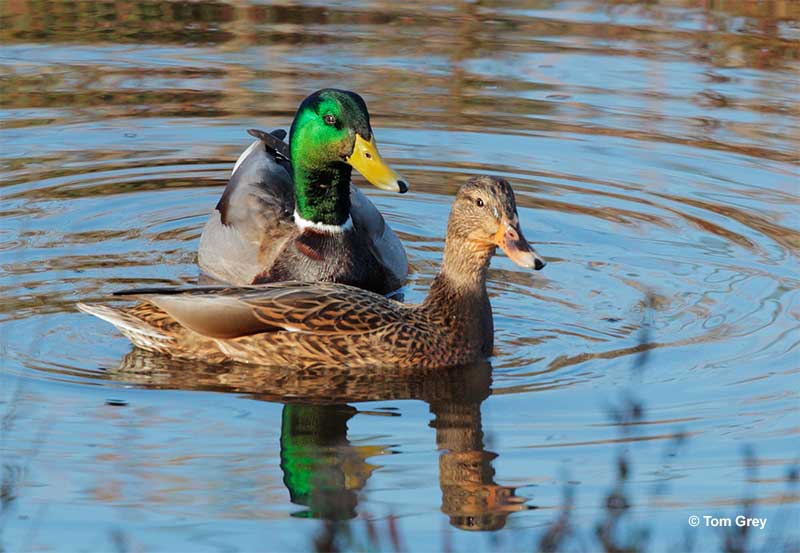
In species like Mallards, males have bright green heads and flashy patterns, while females are mottled brown, blending seamlessly with their surroundings. This difference not only aids in mate attraction but also plays a vital role in survival. The male’s bright colors can distract predators, drawing attention away from the more camouflaged female and her nest.
Plumage also plays a role in social hierarchy and competition among males. For instance, in the House Sparrow, males display a distinctive black throat patch. The size and intensity of this patch can indicate the male’s dominance, age, and fitness, influencing mating success. Thus, plumage is more than just a pretty sight; it’s a vital tool for reproduction and survival in the avian world.
Size
Size is another very common expression of sexual dimorphism in birds, although the degree of it varies.
In most bird species, males are larger and more robust, which helps them defend their territory and attract females through displays of strength and vigor.
In contrast, the smaller females benefit from their reduced size through increased agility and energy efficiency, which are advantageous for nesting and caring for their young. Their small size may also make them less conspicuous to predators.

On the other hand, for most birds of prey, the females are often larger than males; this is known as reverse sexual dimorphism. This size difference allows females to better fend against intruders and hunt larger prey, while the smaller, more agile males primarily focus on hunting while their offspring are small, capturing smaller, quicker prey.
Why Are Some Birds Sexually Dismorphic While Others Aren’t?
The presence or absence of sexual dimorphism in birds is shaped by various factors, including sexual selection, fertility and health, niche divergence between sexes, and allometry and often correlates with the social mating system of a species.
For instance, species with polygamous mating systems or species where one mate provides less parental care or where the mate abandons the other soon after mating tend to exhibit more pronounced dimorphism.
This is because the other half, often females, bear greater reproductive risks and are thus choosing mates more carefully. Males therefore usually become flashier and bigger.
Conversely, in species where males and females look similar, like many penguins and some species of gulls, sexual dimorphism is less pronounced due to different evolutionary pressures.
These birds often have monogamous mating systems, where both parents equally invest in raising their young. In such scenarios, there is less need for males to develop showy traits to compete for females. Instead, both sexes benefit from traits that enhance survival and parental care.
Additionally, ecological and environmental factors play a significant role; the reproductive benefits of any trait have to outweigh the costs imposed by natural selection.
In environments where predation is high, both males and females may benefit from cryptic coloration and similar sizes to avoid detection by predators. On the other hand, larger males often cope better with migration challenges, leading to higher reproductive success.
Reverse Sexual Dimorphism And Other Fun Facts
- In certain species, males develop their full, colorful plumage only after reaching a certain age. Younger males may resemble females or have less vibrant colors until they mature, reducing competition with older males.
- In some species, the coloration of the bird’s plumage reflects their fitness and healthiness and can change from breeding season to breeding season. This is the case for the males of the Red-backed Fairywren, which can be divided into three categories: black breeders, brown breeders, and brown auxiliaries. The healthier the bird, the more androgens they produce, leading to striking differences in appearance and helping the female make an informed choice.
- Size dimorphism doesn’t only refer to adult birds and sexual selection; it also influences how bird parents choose to invest in their chicks. For example, the female Blue-footed Booby chick grows faster than the male, so when food is scarce, the parents tend to produce and favor male chicks since they require less food.
- Reverse sexual dimorphism can also manifest itself in plumage. In phalaropes, females are larger and more colorful, competing for mates, while the smaller males incubate the eggs and care for the chicks.
- Females often choose males that appear strong and healthy. However, in some species, the females mate with males that do not appear the best or even may reduce the offspring’s survival rates. This can be explained by two hypotheses: the sexy son hypothesis, which suggests females choose such traits to ensure their sons are attractive to future mates, and the handicap principle, which proposes that a male’s survival despite a handicap signals superior genetic fitness.
Frequently Asked Questions
Are birds of prey sexually dimorphic?
Birds of prey are sexually dimorphic, with females typically being larger than males.
How many birds are monomorphic?
The exact number of bird species that are monomorphic (where males and females look alike) varies. It is estimated that around 50% of bird species exhibit little to no sexual dimorphism, meaning males and females appear very similar or identical.
Are chickens sexually dimorphic?
Chickens are sexually dimorphic, with males (roosters) typically having larger combs, wattles, and more colorful plumage than females (hens).
