


Turkeys are known for their impressive courtship displays and flocking together in the winter months. Not to mention, millions of people love to eat these tasty birds, especially on a couple’s choice holidays.
This brings us to the question – how long do turkeys live, and what are the biggest factors behind their longevity?
How Long Do Turkeys Live?
Turkeys are such big birds, it seems like they should have long lifespans. However, the truth of the matter is much different. For the most part, Wild Turkeys don’t live much longer than most songbirds!
On average, most Wild Turkeys don’t live much longer than a year. Baby turkeys are very susceptible to predation as are young adult turkeys.
They just haven’t learned to survive as well as older turkeys and end up getting caught by foxes and other predators.
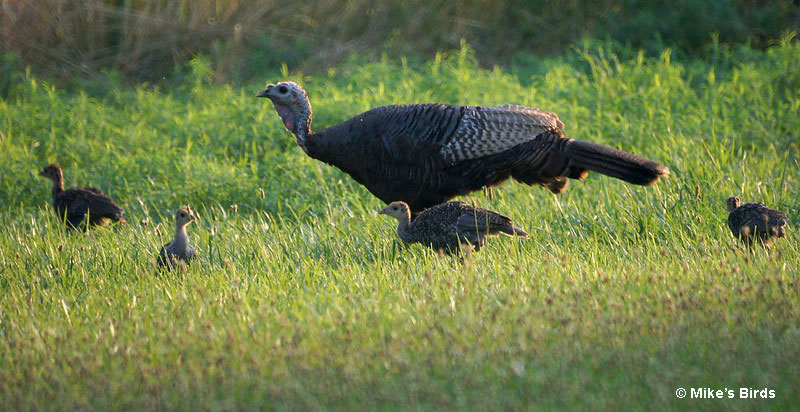
Even if a bird lives more than two years, female Wild Turkeys live three years on average, and the average males live up to four years.
In captivity, as with most birds, life expectancies are much higher. Pet turkeys and farm birds spared for the Thanksgiving table can live for 10 or even 12 years. Of course, such captive birds don’t have to worry about predators and finding food and shelter.
Biggest Dangers
Wild Turkeys don’t have an easy life. A lot of animals prey on this big bird, and baby turkeys are especially susceptible to cold weather.
Raccoons, opossums, crows, and skunks hit the jackpot when they find a Wild Turkey nest. If they can scare the mother bird away, these animals can feast on 9 to 13 big eggs!
As for the eggs that escape predation and hatch, baby Wild Turkeys face even more predators. Despite their mother’s protection, baby turkeys fall prey to a wide variety of animals. Rat Snakes and other snake species that prey on rodents and small animals can go after them.
When they get the chance, foxes, Coyotes, Bobcats, and weasels also prey on young turkeys. The same goes for Red-tailed Hawks, Cooper’s Hawks, and other hawk species, as well as Barred and Great Horned Owls.
As turkeys get bigger, fewer animals can prey on them but they still have to be very careful. Bobcats continue to be a main predators, even on adult birds. Coyotes and foxes will also try to catch adult Wild Turkeys but they don’t catch as many as Bobcats.
The Life-Cycle Of Turkeys
Like grouse and other chicken-like birds, Wild Turkeys leave their nest shortly after hatching. They start to run around about a day after they leave the egg. The babies can’t fend for themselves but do follow their mother around and hide underneath her. They also forage on their own, but for the first few days, their mother gives them insects to eat.
As they grow, the baby turkeys eventually switch to eating seeds and other plant matter. They also eat more acorns as they get bigger. For the first five weeks, they also shelter or “brood” with their mother, but after that time, they roost on their own.
Wild Turkeys grow pretty quick, reaching 2.2 pounds 8 weeks after hatching. At three months of age, they are around 4 pounds, and at seven months males can weigh 19 pounds and hens can weigh 9 pounds.
Young turkeys spend most of their time on the ground but they can fly a little bit just ten days after hatching. By two weeks, they can fly up into trees; an important skill to evade the many predators trying to catch them!
Wild Turkeys become adults and can mate when they are seven months old (males), or one to two years old (females).

Territories & Other Fun Facts
- At one point, Wild Turkeys were nearly hunted to extinction. By the early 20th century, just 30,000 birds were left!
- Effective conservation and management have helped Wild Turkeys become common birds in many parts of North America.
- There are two species of turkey; the familiar Wild Turkey of North America and the colorful Ocellated Turkey of the Yucatan Peninsula.
- A Wild Turkey can range over 1,000 acres and knows and remembers aspects of its territory very well.
- Turkey lifespans are related to the quality of their habitat. The best wild areas for turkeys have lots of insects, seeds, and acorns.
- Wild Turkeys have been domesticated for at least 2,000 years!
- In the 1500s, European explorers brought turkeys back to Europe. The birds might have gotten their name from birds that passed through old shipping routes that traversed the country of Turkey.
- After mating, male Wild Turkeys don’t have anything to do with their young. The hen turkey takes care of all incubation and brood rearing duties.
Frequently Asked Questions
How long do turkeys live as pets?
As pets, turkeys can live for 10 or 12 years.
What is the natural lifespan of a turkey?
The natural lifespan of a turkey is anywhere from 1.5 to 4 years of age.
How old was the oldest turkey?
The oldest turkey was a 15 year old male from Massachusetts.
How old are turkeys when they are killed?
Turkeys are just 14 to 20 weeks old when they are killed for food.