
Duck Identification
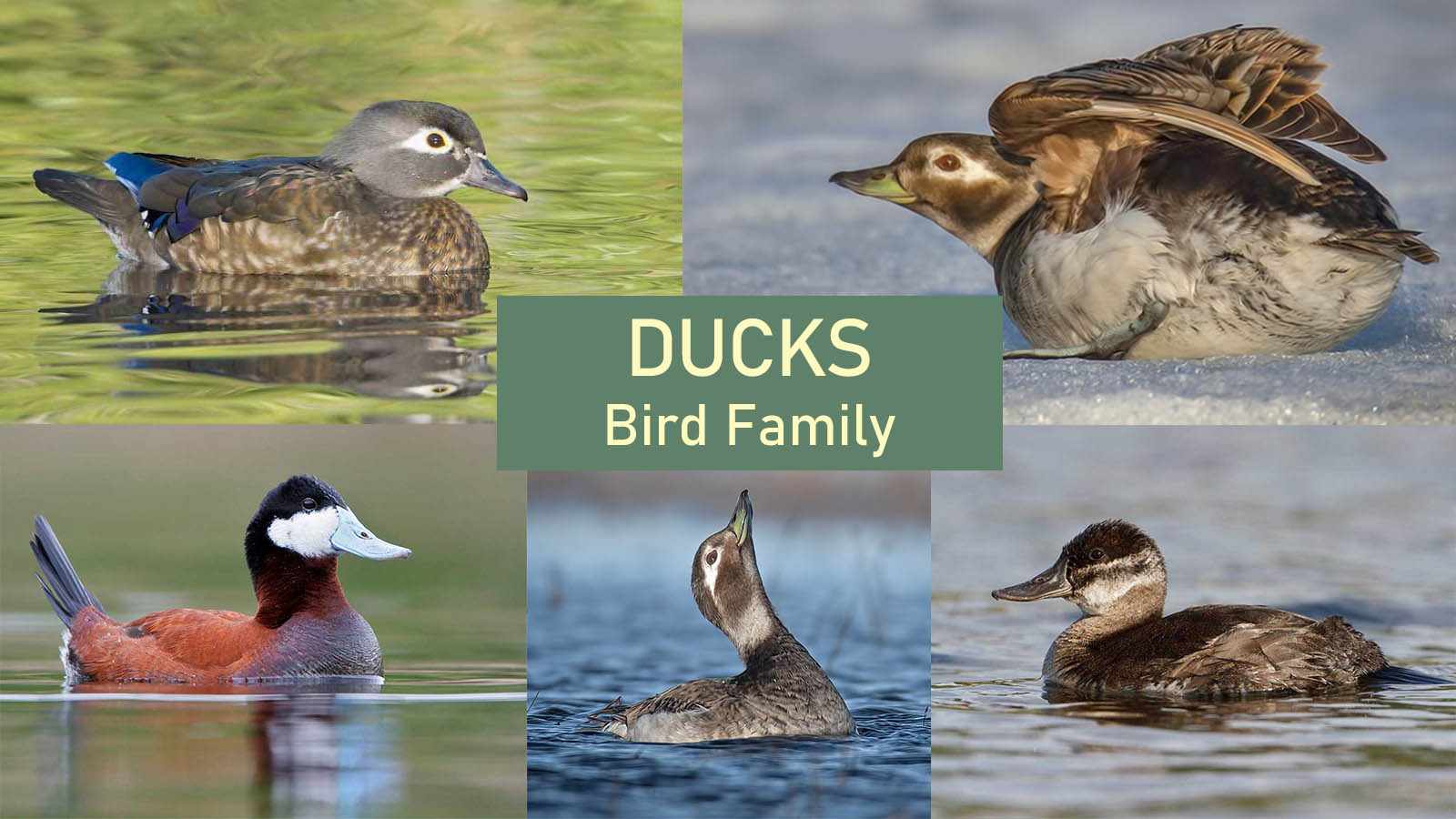
There are 36 duck species covered in this section. An individual page is provided for each species.
Ducks are often classified in one of several general categories, as shown below.
Click on the name below and see the ducks in that category.
We also added a short description so you see that these are quite similar and quite different in behaviour, appearance and diet.
Whistling Ducks – have long legs, slender necks, and distinctive whistling calls. They prefer to perch in trees and shrubs, and are known for their strong social bonds.
Perching Ducks – have long, pointed wings and strong legs, and they are adept at perching in trees and shrubs. They often have brightly colored plumage and are known for their ability to fly at high altitudes.
Dabbling Ducks (Puddle Ducks) – have a flat bill, webbed feet. These ducks are often found in shallow water, feeding on vegetation and insects. They are strong fliers and are known for their quick takeoff abilities.
Diving Ducks – have a streamlined body, webbed feet. They are excellent swimmers and divers. They feed on fish and other aquatic prey and are known for their ability to stay underwater for several minutes.
Eiders – have a stocky body and a broad beak They are found in coastal regions. They feed on mollusks and crustaceans and are known for their soft down feathers.
Sea Ducks – have thick waterproof feathers and strong webbed feet. They are found in coastal regions where they feed on fish and other prey they can find in water.
Mergansers – have a narrow serrated bill and a shaggy crest on their head. They are excellent swimmers and divers who feed primarily on fish.
Stiff-tailed Ducks – Pond Ducks – have a distinctive stiff tail and are often found in open water. They have webbed feet and are strong swimmers, diving to catch fish and other similar.
What you should know:
1. Male and female duck species usually exhibit a high degree of sexual dimorphism, with the females being much plainer (generally brown) in appearance.
2. Both sexes of many species undergo a molt in mid-to-late summer in which they loose their flight feathers. During this period the males resemble the females and both sexes loose the ability to fly.
They are considered to be in their “eclipse” plumage at this time. The return to breeding coloration varies in species and individuals of each species.
Blue-winged Teal and shovelers, for example, may retain the eclipse plumage until well into the winter.
3. Identification challenges: There are several identification challenges among the ducks. Notes are provided on the Category pages.
For example, do you know the key differences between geese and ducks