


Human activities threaten birds worldwide, leading to documented declines in global and national bird populations. Unnecessary bird deaths are primarily caused by habitat loss, predation from free-range domestic cats, window glass collisions, and vehicle collisions. Additionally, climate change is increasingly impacting bird populations each year.
While it is difficult for individuals to influence the big picture, we can all do seemingly little things to help the bird population. If many people join in, these “little things” create a huge positive force that prevents excessive bird deaths.
How To Make Our World Safer For Birds
I promise that the most effective things you can do to prevent bird deaths are also extremely simple, straightforward, and in most cases – easy.
Keep your cats inside
Outdoor cats have a terrifying impact on local bird populations, with billions of wild birds killed by free-roaming cats each year (2.5 billion, on average, in the US only). As top predators, they prey on more than 2000 animal species, with 981 of those being birds.
All of this feline-avian macabre isn’t a natural phenomenon because:
- Thanks to humans, cats have unnatural densities and are the most numerous top predators. Birds, or no other creatures, have evolved to put up with that kind of pressure from predation.
- Domestic cats are not natural predators in most parts of the world, but an invasive species. The precious home feline is a descendant of the African wildcat and has spread around the world alongside humans practicing agriculture for the last nine millennia.
Responsible cat ownership based on keeping your cat indoors can help protect birds and ensure the safety and welfare of the cats themselves. Some research suggests that cats kept indoors can live a lifetime longer than their free-roaming counterparts (20 vs. 10 years).

That is because freerange cats face many dangers—cars, diseases, parasites, dogs, stray cats, and unfriendly humans. Studies reveal that 5.4 million cats get hit by vehicles every year in the United States only; 97% of them die from their injuries.
With that being said, adopting a stray cat is one of the most impactful things you can do to save bird lives.
Make your windows visible
Glass collisions take up to one billion avian lives per year in the US. Fortunately, taking individual action to tackle the problem is very easy.
Put up simple window stickers or decals on the glass. The choice of design is completely up to you. The only thing to be mindful of is that the decals should be 2-4 inches apart to be effective.
The good news is that you don’t have to go through buying and applying decals on your windows if you prefer to avoid the gluing.
My personal favorite is one very creative option – drawing lines, patterns, or shapes with acrylic pens. The idea is far from unconventional – many people already decorate their windows with white pens for the holiday season. The drawings are long-lasting but temporary. You can scrape and rub them off when needed.
Close your blinds
Regularly closing your blinds and curtains at night or when you’re not at home prevents the birds from flying into windows because they see the obstacle is there. Closing blinds at night when the rooms are lit is especially effective in preventing nighttime collisions.
Installing mosquito screens is also an excellent solution to avoid bird collisions and mosquito bites.
Oh, and here is one uneasy fact for plant lovers. Having plants next to your windows increases the chance of a daytime collision because birds have even more reasons to believe it’s a natural space, not a window, in front of them. The good news is that applying simple prevention measures on the window glass allows you to keep plants where they are.
Avoid using pesticides
Pesticides affect birds in more ways than one. First, many strains of pesticides directly influence bird metabolism and can lead to poisoning and body malfunctions. DDT, the insecticide widely used to suppress mosquitoes and thought to be perfectly safe, had a horrible impact on many bird species.
Secondly, pesticides are likely the main driver behind the so-called insectagedon. It is a popular name for a staggering drop in the number of flying insects that seems to be global and instills fears about the insect population crash.
Both insecticides (that directly destroy insects) and herbicides (that kill main insect food and important bird food – native freely-growing plants) are a part of the problem. Because flying insects and their larvae are the main sustenance for most birds, pesticide overuse is effectively robbing the birds of their crucial and most nutritious food.
There are many, many ways to decrease pest load in your garden without pesticides – and making your garden a bird haven is one of them!
Create a bird haven in your backyard
There are several things you can do to put your backyard on the map of your local birds – and maybe create a favorite spot for them.
I’ve already mentioned a few:
- Planting native plants that provide food and shelter for birds,
- Avoiding pesticide use, and
- Make your yard cat-free, and keep your own little ball of fur indoors.
What needs to be added to that picture is a bird feeder (or more, because different types serve different birds) and a water source. A small fountain or a bird bath would be ideal because running water is healthier than stagnant water.
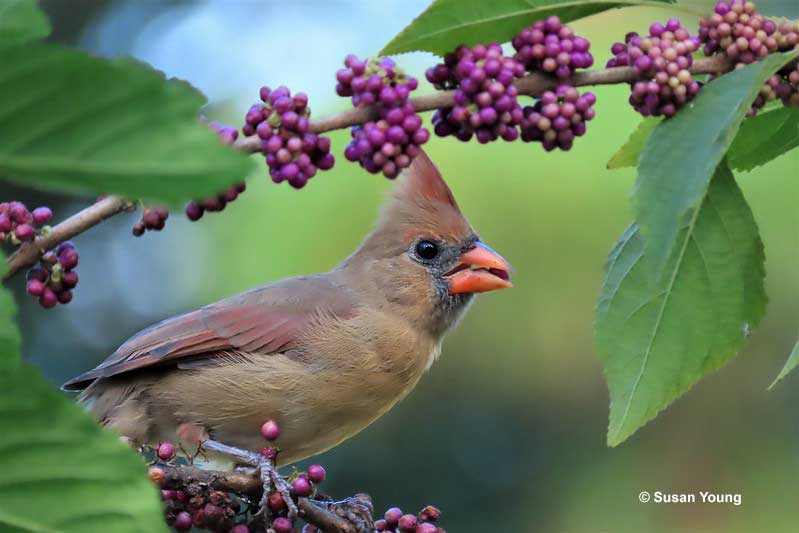
When planting bird-friendly plants, try to simulate natural canopy layers or forest stories found in nature. That means having a tall canopy layer (a large tree or trees), shrub layer (with shrubs and small trees, preferably producing berries), tall grasses and flower layer, and open area with short plants.
As for the last point, birds definitely benefit from having an open area next to vegetation – polinator friendly lawns are ideal for that.
Don’t litter
Humans continuously create waste, much of it made from non-degradable, synthetic, and/or toxic materials that harm wildlife. It is almost ironic that some of the world’s largest birds die each day and are in danger of extinction because of our tiny plastic trash.
Small plastic waste, from cigarette butts to pieces of larger broken items, is especially dangerous to many animals, including birds, because they get confused with natural food items.
You have probably heard about the toll floating plastic debris in the ocean takes on baby Albatrosses. But did you know that trash ingestion is also the leading cause of death in condor juveniles? Parents accidentally mistake it for small bone pieces and feed it to their offspring. The artificial items then cause impaction, starvation, and, ultimately, death.
This is why it is important to take our trash problem seriously. Sort your garbage and make sure your operators take good care of where the unrecyclable waste ends up. For example, it is much better to end up incinerated in a well-operated waste power plant than disposed of somewhere across the ocean or in a landfill near a river.
Despite all the publicity, I believe that recycling won’t solve our waste crisis (that doesn’t mean we shouldn’t do it, though!). The only true solution is the one least popular—less consumption and less production of short-lasting plastic goods.
Oh, and last but not least – never, ever throw garbage in the environment, even if it’s just one piece. That small item may be nothing for you, but it can mean a death sentence for at least one bird.
Plant native flowers and plants
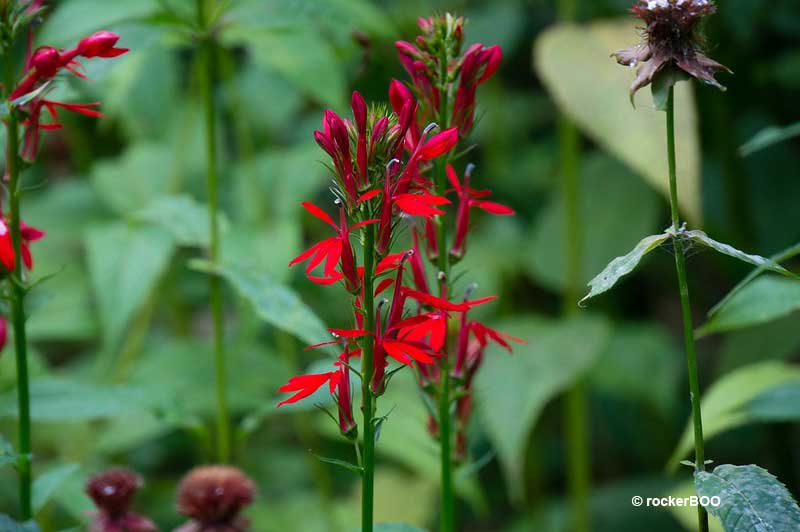
Native flowers, “weeds,” shrubs, and trees all increase bird survival by providing them with natural food and shelter. The food is plant matter like seeds and insects, which you’ll find in wildlife gardens in abundance.
As an environmental analyst who often advises people about wildlife-friendly gardening, I wholeheartedly recommend the Mosaic Mowing practice for backyards. As the name (maybe) suggests, this mowing technique means leaving a section of your yard unmowed, allowing native plants to flower and seed.
Mosaic mowing doesn’t have to be all rampant weeds and wilderness – you can mow in decorative patterns, for example. How you want to and how long you leave the plants growing before mowing them is up to you – the main rule is that you never mow everything at once
Just be aware of your local council regulations on backyard maintenance. There are unnerving stories about wildlife garden enthusiasts experiencing problems in the community and getting sued for their efforts.
If that’s the case where you live, you may have to get smarter about your small-scale garden rewilding. For example, you can plant wild native plants and let them grow in raised beds instead of having an “overgrown lawn”
Mark down which species you have seen
Bird watching and recording the species you were lucky to see isn’t just a fun hobby. It is a way of helping ornithologists study and understand bird populations – if you choose to make your results available to the public and to scientists.
Here are a few recommendations I personally like.
- You can make birding lists on eBird, which is led and used by Cornell University’s Ornithology lab.
- iNaturalist is also excellent citizen science wildlife findings, including birds. It has a helpful community, too.
- You can report dead or injured birds to Dbird, a database led by the Audubon Society (and yes, that’s a wordplay based on popular eBird).
- Ask your local university if there are any ongoing citizen science projects you can participate in. Local research is perhaps the most meaningful for your immediate natural surroundings, plus you are helping and giving back to your scientific community.
See more: Birding apps that help you keep track of your findings
Worldwide Conservation Efforts
Luckily for birds, there are many people and organizations looking out for them and aiming to reduce bird deaths. There are quite powerful non-government organizations that exist solely for bird conservation.
Let me mention a few initiatives.
- American Bird Conservancy has many conservation initiatives, including the Cats Indoors campaign.
- Audubon Society focuses on habitat conservation, among other things.
- Vulture Conservation Foundation has many projects around the world aimed at reducing vulture and raptor deaths from illegal, medicinal, and lead poisoning, as well as electrocution and collisions.
- Crowd-funded conservation is growing increasingly popular. Let me mention Planet Wild and their Little Owl Reintroduction project and Mossy Earth’s rewilding and raptor restoration efforts.
Frequently Asked Questions
How many birds die every day?
It would be very difficult- if not impossible – to conclude how many birds exactly die every day. If we take the figures for the top three human-caused bird casualties – outdoor cat predation, window collisions, and vehicle collisions – we conclude that there are up to 10,787,000 unnecessary and excessive bird deaths daily in the United States only!
And that’s just for the three main reasons for bird mortality, excluding all others.
Do bird deaths have an effect on their populations?
Individual bird deaths can be much more influential for threatened and endangered species than for common and numerous ones.
For example, even if a hundred European starlings die at once from a collision or electrocution, the global population of one billion birds, having 4-7 young every year, won’t suffer.
However, a single Californian Condor that accidentally dies affects a whole population because of their small numbers and “slow” reproductive ecology. This critically endangered vulture starts mating only at age six and has only one chick every other year, so each lost bird is a blow to the whole species.
However, it doesn’t mean abundant birds are also safe from harm and their deaths don’t matter. Research shows that the most numerous species on both sides of the Atlantic – the House Sparrow in the Old World and the Dark-eyed Junco in the New World – are facing drastic population declines (50% and 40%, respectively).
How many birds are there in the world?
Fresh research from 2021 tells us that there are between 50 billion and 430 billion birds in the world. The most numerous wild birds are the House Sparrow (1.6 billion), the European Starling (1.3 billion), and the Ring-billed Gull (1.2 billion). The study included 92% of over 11,000 bird species.

Donna Ross
Wednesday 21st of August 2024
Are there laws in the U. S. A. that PROTECT Canada Geese ??
Patrick O'Donnell
Friday 23rd of August 2024
@Donna- Yes, Canada Geese are protected under the Federal Migratory Bird Act.